5th International Electronic Conference on Entropy and Its Applications
the chair
You are cordially invited to participate in the 5th International Electronic Conference on Entropy and Its Applications. The conference aims to bring together researchers to present and discuss their recent contributions, without the need for travel. This e-conference is hosted on the MDPI Sciforum platform, which allows online presentation and discussion of participants’ work.
The concept of entropy is key in a broad range of research activities related to the understanding of (complex) dynamic systems, statistical mechanics, and information theory. Entropy also plays a crucial role in many practical applications. This conference aims to bring together researchers of different backgrounds—with a common interest in clarifying the role of entropy in their respective fields—to discuss ideas across different domains and expand their knowledge on the variety of possible applications of entropic methods.
The format of the conference is as follows. After abstract acceptance, the authors of oral contributions will submit a pre-recorded video presentation or series of narrated slides which will be accessible, online, during the entire conference and remain available after the e-conference. Alternatively, there is a track for posters, which will also be made available via the online platform.
In addition, authors are invited to submit a full description of their work (max. 8 pages), optionally along with a PowerPoint presentation and/or poster. Conference papers will be peer-reviewed and, upon acceptance, published in Proceedings. Paper submission is not a requirement for active conference participation.
Finally, authors may submit extended papers to be considered for publication in a Special Issue of Entropy, with a 20% discount on the APC. Entropy is an open-access publication journal of MDPI in the field of entropy and information theory.
Conference Chair

Conference Session Chairs




Important Dates
13 Oct
2019
20 Oct
2019
8 Nov
2019
Meet Our Speakers
University of Sheffield, Sheffield, UK;Dr Kim obtained her BSc in Physics from Yonsei University in Seoul, Korea, and PhD in Physics from the University of Chicago, USA. She held postdoctoral positions at the Universities of Leeds and Exeter in UK, High-Altitude Observatory in Boulder, USA and University of California, San Diego, USA. She is currently an Associate Professor at the University of Sheffield, UK. Dr Kim is interested in complexity, self-organisation and non-equilibrium processes, and has a unique track record in multidisciplinary research, with applications to astrophysical and laboratory fluids/plasmas and biosystems. In particular, Dr. Kim is keen on the information theory (information length) to model complexity and self-organisation in nonlinear dynamical systems, fluid/plasma turbulence, and biosystems. She is a holder of a Leverhulme Trust Research Fellowship. She published over 110 refereed journal papers (51 as first author)

Hokkaido University, Hokkaido, Japan;Dr. Convertino is an Associate Professor in the Graduate School of Information Science and Technology at Hokkaido University, Sapporo (JP), where he is the PI of the Nexus Group. Dr. Convertino is also a faculty member of the Station for Big-Data & Cybersecurity (Environmental and Biomedical Data Science research) and in the Department of Information Engineering at Hokkaido University. Additionally he is also Adjunct Professor position at the Institute on the Environment and the Bioinformatics and Computational Biology program at the University of Minnesota. Dr. Convertino expertise is in biocomplexity focused on environmental dynamics (in particular ecohydrogeomorphological processes) and its nexus with population patterns at multiple scales of biological organization. Research is sought via process- & pattern-oriented theoretical and computational models based on information, network, and decision sciences. Models are applied to a variety of ecosystems for understanding their biological, ecological, and socio-technological function as well as for value-based ecosystem design.
Research Scientist in data science and machine learning, Corteva Agrisciences, Indianapolis, Indiana, USA;Pritam Chanda received his PhD in Computer Science from the State University of New York, Buffalo, NY in 2010 and MS in Computer Engineering from the University of Cincinnati, OH in 2005. He has held post-doctoral position at the department of Biomedical Engineering, Johns Hopkins University (2010-2013). Since 2013, he has joined Dow Agrosciences (subsidiary of Dow Chemical Company) as Research Scientist in Data mining and Machine Learning. Currently he is a senior member of the global Data Science group in Corteva Agriscience, a market shaping agricultural company with leading positions in seed technologies, crop protection and digital agriculture. His work focuses on machine learning and information theoretic methods and its applications in computational biology and multi-omics data sciences (genetics, genomics, proteomics, transcriptomics). His research also involves deep learning methods and their uses in biological and chemical sciences.
University of Manchester, Manchester, UK;Dr. Eleonora Di Valentino is a postdoctoral research associate at the University of Manchester. Her area of research is focused on cosmology, mainly on Cosmic Microwave Background anisotropies, and cosmological data analysis to constrain properties of the early and recent Universe and fundamental physics. A major goal of her research is to constrain neutrino physics and other light fundamental particles such as axions with cosmology, using different observables and methods that offer complementary informations. Moreover, she is investigating the main tensions present between the different cosmological probes and models, trying to understand if they can have a physical explanation, going beyond the standard LCDM cosmological model.
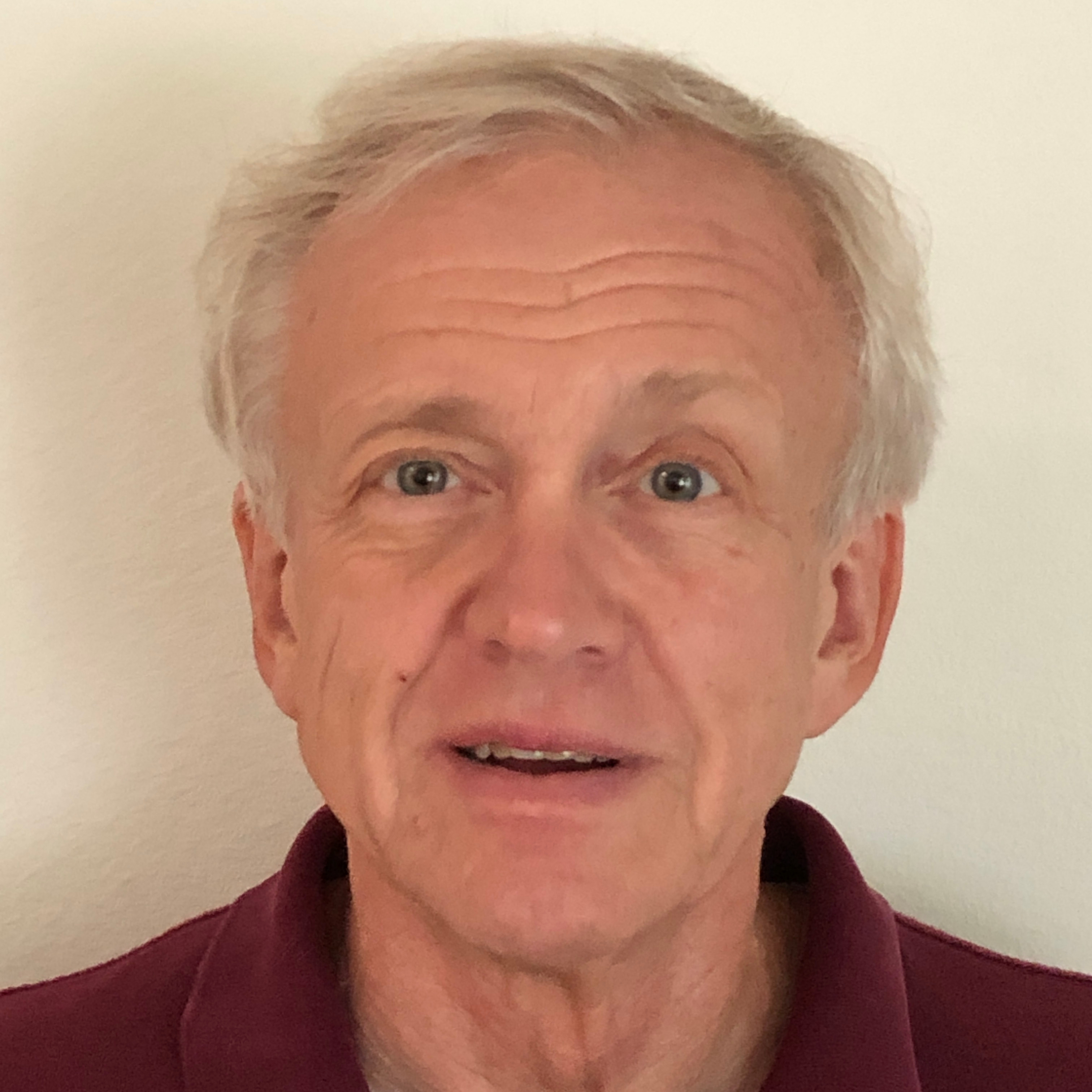
New College of Florida, Sarasota, FL, USA;Dr. Ruppeiner is a Professor of Physics and Astronomy at New College of Florida (ruppeiner@ncf.edu). Dr. Ruppeiner received his Bachelor’s Degree in Physics at Louisiana State University in 1975, and his PhD in Experimental Low Temperature Physics at Duke University in 1980. In his PhD work, Dr. Ruppeiner developed a great appreciation for high quality experimental data, and for the need of theory to interpret such data. In his professional research, Dr. Ruppeiner has been mostly theoretical, focusing on what is nowadays called information geometry, in the area of thermodynamics. Specifically, Dr. Ruppeiner has investigated the thermodynamic Ricci curvature scalar R, and contributed to the case that this quantity provides essential information about the microscopic interactions in systems including fluids, magnets, and even black holes.
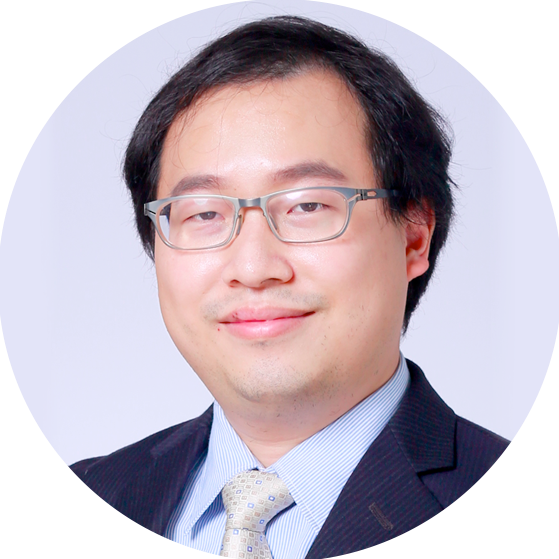
Tsinghua-Berkeley Shenzhen Institute, Shenzhen, China;Shao-Lun Huang received the B.S. degree with honor in 2008 from the Department of Electronic Engineering, National Taiwan University, Taiwan, and the M.S. and Ph.D. degree in 2010 and 2013 from the Department of Electronic Engineering and Computer Sciences, Massachusetts Institute of Technology. From 2013 to 2016, he was working as a postdoctoral researcher jointly in the Department of Electrical Engineering at the National Taiwan University and the Department of Electrical Engineering and Computer Science at the Massachusetts Institute of Technology. Since 2016, he has joined Tsinghua-Berkeley Shenzhen Institute, where he is currently an assistant professor. His research interests include information theory, communication theory, machine learning, and social networks.
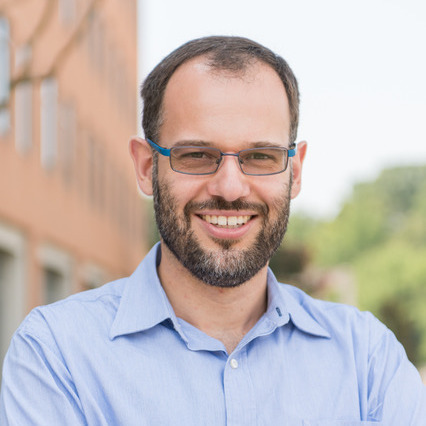
Department of Physics, UMBC, Baltimore, MD, USA;Dr. Sebastian Deffner received his doctorate from the University of Augsburg in 2011 under the supervision of Eric Lutz. From 2011 to 2014 he was a Research Associate in the group of Chris Jarzynski at the University of Maryland, College Park and from 2011 to 2016 he was a Directorʼs Funded Postdoctoral Fellow with Wojciech H. Zurek at the Los Alamos National Laboratory. Since 2016 he has been on the faculty of the Department of Physics at the University of Maryland Baltimore County (UMBC), where he leads the quantum thermodynamics group. As a theoretical physicist, Dr. Deffner employs tools from statistical physics, open quantum dynamics, quantum information theory, quantum optics, quantum field theory, condensed matter theory, and optimal control theory to investigate the nonequilibrium properties of nanosystems operating far from thermal equilibrium.
Université de Cergy-Pontoise, CNRS, Cergy-Pontoise Cedex, France;

Consorzio RFX (CNR, ENEA, INFN, Universita’ di Padova, Acciaierie Venete SpA), Padova, Italy;


Keynotes
Multispecies Emergence of Collective Behavior: Microbiome Connectome, Diversity and Services
Relate Paper:
Multispecies Emergence of Collective Behavior: Microbiome Connectome, Diversity and Services
Cosmology in Tension
Relate Paper:
Cosmology in Tension
Social Conflicts Studied by Statistical Physics Approach and Monte Carlo Simulations
Relate Paper:
Social Conflicts Studied by Statistical Physics Approach and Monte Carlo Simulations
Spin Waves and Skyrmions in Magneto-Ferroelectric Superlattices: Theory and Simulation
Relate Paper:
Spin Waves and Skyrmions in Magneto-Ferroelectric Superlattices: Theory and Simulation
Quantum Thermodynamics: An Introduction to the Thermodynamics of Quantum Computers
Relate Paper:
Quantum Thermodynamics: An Introduction to the Thermodynamics of Quantum Computers
Quantifying Total Correlations between Variables with Information Theoretic and Machine Learning Techniques
Relate Paper:
Quantifying Total Correlations between Variables with Information Theoretic and Machine Learning Techniques
An Information-theoretic Approach to Unsupervised Feature Selection for High-Dimensional Data
Relate Paper:
An Information-theoretic Approach to Unsupervised Feature Selection for High-Dimensional Data
 |
 |
 |
 |
 |
 |
 |
 |
 |
Ms. Connie Xiong
MDPI Branch Office, Wuhan
E-Mail: ecea@mdpi.com
Ms. Stefanie Li
MDPI Branch Office, Wuhan
E-Mail: ecea@mdpi.com
Sponsoring Opportunities
For information regarding sponsoring opportunities, please contact the conference secretariat.