
3rd Annual Meeting Of Atmospheric Environmental Remote Sensing Society(AERSS)
10–13 May 2026, 罗马, Italy
31 January 2026
5 February 2026
20 March 2026
20 March 2026
20 April 2026
Development of Atmospheric Remote Sensing Instruments, Radiative Transfer Theory and Modeling, Retrieval Algorithms and Data Assimilation, Applications in Air Quality and Climate Research, Health and Sustainable Development Implications, Integration of Multi-Source Observations and Modeling, Emerging Technologies and Digital Innovation
- Go to the Sessions
-
- Session1. Hyperspectral Remote Sensing Monitoring and Retrieval Techniques for Trace Gases
- Session2. Aerosol Passive Remote Sensing: Retrieval and Applications
- Session3. Cloud-Aerosol Satellite Lidar Retrieval and Applications
- Session4. Air Quality and Environmental Health
- Session5. Data Assimilation and Application for Atmospheric Environment
- Session6. Observation and Quantification of Methane Emissions and Their Climate-Environmental Effects
- Session7. Enhancing the Data Quality of Atmospheric Satellite Remote Sensing Products
- Session8. Ground-Based Atmospheric Environmental Remote Sensing- Instruments and Techniques
- Session9. Greenhouse Gas Satellite Product Retrieval and Multi-Source Cross-Scale Fusion
- Session10. Calibration, Characterization and Validation of Satellite Sensors for Atmospheric Observations
- Event Details
Welcome from the Chairs
The 3rd Annual Meeting of the Atmospheric Environmental Remote Sensing Society (AERSS 2026) will be held from May 10–12, 2026, at the National Research Council of Italy (CNR) in Rome. This international gathering will bring together researchers, engineers, and students to exchange ideas and present advances in atmospheric environmental remote sensing. The meeting will cover key themes such as instrument development, radiative transfer modeling, retrieval algorithms, and remote sensing applications in air quality, climate, and sustainable development. Hosted at the historic CNR Headquarters, AERSS 2026 offers a dynamic forum for collaboration, innovation, and the promotion of young scientists through the Postgraduate and Best Presentation Awards. Participants will also enjoy networking opportunities and cultural experiences in one of Europe’s most inspiring scientific and historical cities.
Event Organizers
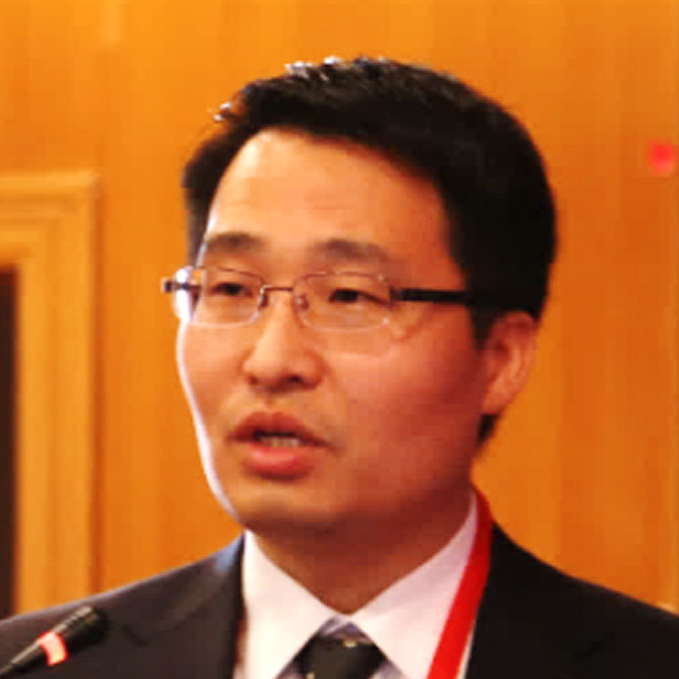
凯 秦
中国矿业大学
秦凯,男,中国矿业大学教授、博士生导师、江苏省煤基温室气体减排与资源化利用重点实验室副主任,环境遥感应用山西省重点实验室主任,国际大气环境遥感学会创始理事、秘书长,国际摄影测量与遥感学会大气遥感工作组组长。研究方向为大气环境遥感,重点从事大气污染物与温室气体遥感数据质量提升、能源行业温室气体排放遥感核算。近五年,主持国家科技重大专项课题、联合国环境规划署科学研究、国家自然科学基金、省重大/国合、企事业委托等项目10余项,在Remote Sens Environ、npj Clim Atmos Sci 、Geophys Res Lett、Atmos Chem Phys、Earth Syst Sci Data等SCI期刊发表论文30余篇,主编专著入选十四五国家重点出版物出版规划项目并获国家出版基金资助,申请/授权发明专利6件。
qinkai@cumt.edu.cn
Event Chairs
中国科学院空天信息创新研究院
Italian National Research Council
Event Committee
Central South University
University of Science and Technology of China
Hefei Institutes of Physical Science, CAS
Nanjing University
Peking University
East China Normal University
Dalian University of Technology, China
International Research Center of Big Data for Sustainable Development Goals
Ningxia University
Peking University
Wuhan University
Beijing Normal University
National University of Defense Technology
Lanzhou university, China
Sessions
SESSION2. Aerosol Passive Remote Sensing: Retrieval and Applications
SESSION3. Cloud-Aerosol Satellite Lidar Retrieval and Applications
SESSION4. Air Quality and Environmental Health
SESSION5. Data Assimilation and Application for Atmospheric Environment
SESSION6. Observation and Quantification of Methane Emissions and Their Climate-Environmental Effects
SESSION7. Enhancing the Data Quality of Atmospheric Satellite Remote Sensing Products
SESSION8. Ground-Based Atmospheric Environmental Remote Sensing- Instruments and Techniques
SESSION9. Greenhouse Gas Satellite Product Retrieval and Multi-Source Cross-Scale Fusion
SESSION10. Calibration, Characterization and Validation of Satellite Sensors for Atmospheric Observations
Event Schedule
| May 10 | May 11 | May 12 | May 13 |
|---|---|---|---|
|
14:00 - 16:00
AERSS School
Approximately 3 lecturers. Participants need to register in advance.
16:00 - 18:00
Expanded Council Meeting
Attendees: Council Members + Conference Organizing Committee Members
|
08:30 - 09:30
Registration
09:30 - 10:00
Opening Ceremony
Speech by Organizer Representative
Announcement of New AERSS Council Members
10:00 - 11:00
Plenary Sessions
2 presentations, 25 minutes each.
11:00 - 11:30
Coffee Break
11:30 - 12:30
Plenary Sessions
2 presentations, 25 minutes each
14:00 - 15:30
Parallel Oral Sessions
Themed Sessions 1-2
15:30 - 16:30
Poster Session / Coffee Break
16:30 - 18:00
Parallel Oral Sessions
Themed Sessions 3-4
|
08:30 - 09:00
Registration
09:00 - 10:15
Parallel Oral Sessions
Themed Sessions 5-6
10:15 - 10:45
Coffee Break
10:45 - 12:00
Parallel Oral Sessions
Themed Sessions 7-8
12:00 - 14:00
Lunch break
14:00 - 15:30
Parallel Oral Session
Themed Sessions 9-10
15:30 - 16:30
Poster Session / Coffee Break
16:30 - 18:00
Council Meeting
|
08:30 - 09:00
Registration
09:00 - 11:00
Plenary Sessions
4 presentations, 25 minutes each
11:00 - 11:30
Closing Ceremony
Award Ceremony
Announcement: "2026 Conference on Atmospheric Environment Remote Sensing and Collaborative Analysis"
|
Registration
The registration fee includes the following:
-
Full access to all conference sessions
-
Conference materials package
-
Fouth coffee services
-
Two lunch services
-
One social dinner event
Venue, Travel and Accommodation
The 3rd Annual Meeting of AERSS (2026) will be hosted at the Headquarters of the National Research Council of Italy (CNR), located at Piazzale Aldo Moro, Rome. Established in 1933, this historic red-brick and travertine landmark stands as a symbol of Italy’s long-standing commitment to scientific excellence and innovation. Situated in the heart of Rome’s academic district—just steps from Sapienza University—the CNR Headquarters provides a prestigious and inspiring setting for scientific exchange. Its elegant architecture, modern conference facilities, and proximity to Rome’s cultural and historical treasures make it an ideal venue for an international meeting that bridges tradition and technological advancement. Participants will enjoy not only world-class discussions on atmospheric remote sensing but also the unique opportunity to experience the rich heritage and timeless charm of the Eternal City.
This historic red-brick and travertine landmark stands as a symbol of Italy’s long-standing commitment to scientific excellence and innovation. Situated in the heart of Rome’s academic district—just steps from Sapienza University—the CNR Headquarters provides a prestigious and inspiring setting for scientific exchange. Its elegant architecture, modern conference facilities, and proximity to Rome’s cultural and historical treasures make it an ideal venue for an international meeting that bridges tradition and technological advancement. Participants will enjoy not only world-class discussions on atmospheric remote sensing but also the unique opportunity to experience the rich heritage and timeless charm of the Eternal City.
Event Awards
-
The Awards
Number of Awards Available: 9
Each Thematic session may nominate up to one candidate
Number of Awards Available: 9
Recipients shall not exceed 20% of the total number of presenters
SESSION1. Hyperspectral Remote Sensing Monitoring and Retrieval Techniques for Trace Gases
Conveners:
Chengzhi Xing (Hefei Institutes of Physical Science, CAS)
Chengxin Zhang (University of Science and Technology of China)
Session Scope & Topics:
This special issue focuses on advanced technologies and methodologies in hyperspectral remote sensing of trace gases. Topics of interest include, but are not limited to:
- Advances in retrieval algorithms for satellite, airborne, and ground-based platforms
- Developments in novel detection instruments and observational techniques
- Applications of trace gases in atmospheric environmental and global climate change research
It aims to foster deep integration and innovation across multi-scale hyperspectral observation, retrieval, and mechanistic studies.
SESSION2. Aerosol Passive Remote Sensing: Retrieval and Applications
Conveners:
Linlu Mei (International Research Center of Big Data for Sustainable Development Goals)
Xing Yan (Beijing Normal University)
Lu She (Ningxia University)
Session Scope & Topics:
This session focuses on retrieval algorithms, products, and applications of aerosol passive remote sensing. Key topics include: advances in radiative transfer models for aerosol passive optical remote sensing; aerosol parameter retrieval techniques, from physics-based to fully data-driven methods; validation of aerosol retrieval products and uncertainty analysis; and representative applications of aerosol products in climate and environmental research.
SESSION3. Cloud-Aerosol Satellite Lidar Retrieval and Applications
Conveners:
Feiyue Mao, Wuhan University
Jiqiao Liu, Shanghai Institute of Optics and Fine Mechanics, Chinese Academy of Sciences
Session Scope & Topics:
This session focuses on high-precision calibration, retrieval, validation and applications of cloud-aerosol satellite lidars. Topics of interest include, but are not limited to:
- Signal calibration, layer identification and parameter retrievals of cloud-aerosol satellite lidars (e.g., CALIPSO, ACDL, ATLID);
- Uncertainty analysis and validation under diverse scenes (day/night, ocean/land, polar regions);
- Synergistic observations and data fusion with multiple satellite and ground-based sensors;
- Applications of lidar products in atmospheric environment and climate research.
SESSION4. Air Quality and Environmental Health
Conveners:
Bin Zou (Central South University)
Jing Wei (Peking University)
Session Scope & Topics:
This session focuses on the formation, monitoring, and population health impacts of air pollutants. Topics of interest include, but are not limited to:
- Multi-platform observations and remote sensing applications for air quality monitoring.
- Integration of physical models and advanced machine learning for air pollutant (e.g., PM2.5, NO2, O3, CO) modeling and forecasting.
- Numerical and chemical transport modeling of pollutant transport, transformation, and spatial distribution.
- Mechanistic and source attribution analysis of pollution episodes.
- Population exposure assessment and quantification of health risks.
We aim to foster interdisciplinary collaboration and provide scientific evidence for environmental management and public health policy.
SESSION5. Data Assimilation and Application for Atmospheric Environment
Conveners:
Zengliang Zang, National University of Defense Technology
Fei Jiang, Nanjing University
Session Scope & Topics:
This session focuses on the data assimilation of air pollutants and greenhouse gases, as well as their applications in model forecasting, emission inversions, and other areas. Topics of interests include, but are not limited to:
- Assimilation for multi-source atmospheric environment observations from ground-based, satellite, radar, aircraft, balloons, and other sources
- Variational assimilation, ensemble Kalman filtering, machine learning and other data assimilation methods
- Application of data assimilation in numerical forecasting, emission inversions, and pollution control.
SESSION6. Observation and Quantification of Methane Emissions and Their Climate-Environmental Effects
Conveners:
Kai Qin (China University of Mining and Technology)
Lulu Shen (Peking University)
Qiansi TU(Tongji University)
Session Scope & Topics:
This session focuses on the observation, quantification, and comprehensive impacts of methane emissions. Topics of interest include, but are not limited to:
- Multi-platform methane observation technologies (satellite, aircraft/UAV, ground-based, and underground, e.g., mines)
- Emission quantification methods such as top-down and bottom-up approaches
- Impacts of methane emissions on the climate system and ecological
SESSION7. Enhancing the Data Quality of Atmospheric Satellite Remote Sensing Products
Conveners:
Kaixu Bai (East China Normal University)
Qiangqiang Yuan (Wuhan University)
Session Scope & Topics:
This session aims to explore advanced techniques—including spatiotemporal fusion, data assimilation, and machine learning—to comprehensively improve the data quality, spatial–temporal resolution, and consistency of atmospheric satellite remote sensing products. Core topics focus on:
- multi-source satellite data spatiotemporal fusion
- reconstruction of missing observations
- multimodal observation data fusion and assimilation methodologies,
- other pathways to enhance data quality for atmospheric composition and climate applications.
SESSION8. Ground-Based Atmospheric Environmental Remote Sensing- Instruments and Techniques
Conveners:
Zhongwei Huang (Lanzhou university, China)
Liang Mei (Dalian University of Technology, China)
Session Scope & Topics:
This session focuses on the instruments, techniques, algorithms of ground-based atmospheric environmental remote sensing. Topics of interest include, but are not limited to:
- Development and calibration of remote sensing instruments
- Retrieval algorithms and their validation
- multimodal observation data fusion and assimilation methodologies,
- Data quality control and multi-source data fusion techniques
SESSION9. Greenhouse Gas Satellite Product Retrieval and Multi-Source Cross-Scale Fusion
Conveners:
Zhengqiang Li, Aerospace Information Research Institute, CAS
Kai Qin, China University of Mining and Technology
Dacheng Wang, Aerospace Information Research Institute, CAS
Session Scope & Topics:
This session focuses on the retrieval algorithms, validation, and multi-source synergistic fusion of greenhouse gas (GHG) satellite remote sensing products. Topics of interest include, but are not limited to:
- Retrieval theory, methods, and algorithms for greenhouse gas (e.g., CO₂, CH₄) satellite products;
- Calibration, validation, and uncertainty quantification of GHG satellite observations;
- Multi-source data fusion and cross-scale integration from satellite, airborne, and ground-based observations.
SESSION10. Calibration, Characterization and Validation of Satellite Sensors for Atmospheric Observations
Conveners:
Nan Hao, European Organisation for the Exploitation of Meteorological Satellites (EUMETSAT)
Frank Ruethrich, European Organisation for the Exploitation of Meteorological Satellites (EUMETSAT)
Lin Chen, National Satellite Meteorological Center, China Meteorological Administration (CMA)
Session Scope & Topics:
This session focuses on the calibration, in-orbit characterization, and validation activities essential for ensuring the accuracy and long-term stability of Level-1 data from atmospheric composition satellites. Emphasis is placed on experiences and lessons from recently launched and newly operational missions. Topics of interest include, but are not limited to:
- Pre-launch characterization and in-flight calibration (radiometric, spectral) for atmospheric spectrometers;
- Onboard calibration systems, strategies, and long-term stability monitoring;
- Characterization of instrumental effects (e.g., spectral response, radiometric sensitivity, stray light, polarization, detector non-uniformity);
- Cross-calibration and consistency analysis between different sensors (e.g., LEO and GEO);
- Calibration and validation practices supporting missions such as EPS-SG/Sentinel-5, MTG-S/Sentinel-4, MicroCarb, FY3H, FY4B, DQ-1 and other new atmospheric satellites.