
MDPI’s Journal Cluster of Agricultural Science | Sustainable Soil Health for Food Security: The Role of Soil Carbon
the chair
MDPI's Journal Cluster of of Agricultural Science
Sustainable Soil Health for Food Security: The Role of Soil Carbon
The transition to sedentary, agriculture-based societies was the main catalyst in human history that facilitated the establishment of stable communities and the emergence of complex civilizations. Today, as we face the systemic pressures of climate change, resource depletion, and a burgeoning global population, agriculture remains the fundamental driver of human survival and societal stability. Addressing these new challenges requires a transition toward resilient production systems, driven by the synergy between soil health, crop innovation, and the use of new technologies required to navigate a shifting environmental landscape.
The agricultural science cluster serves as a strategic hub for researchers dedicated to these advancements. By consolidating these interconnected disciplines, we provide authors with a streamlined editorial pathway that enhances the discoverability and cross-disciplinary impact of their work. This initiative assists the scientific community in navigating the extensive agricultural literature, ensuring that specialized research is positioned alongside relevant studies to maximize visibility and facilitate the translation of theory into field-level solutions.
Date: 24 November 2026
Time: 06:00 AM CEST | 08:00 am EDT
Webinar ID: 823 4396 7601
Webinar Secretariat: journal.webinar@mdpi.com
Meet Our Chair
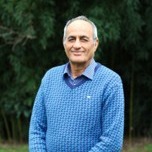
School of Agriculture and Food Sustainability, The University of Queensland, Brisbane 4067, Australia;Dr Yash Dang is a Principal Research Fellow at The University of Queensland, Australia, with extensive experience in soil science, soil health, soil carbon management, and sustainable agricultural systems. His research focuses on identifying and managing soil constraints, improving soil carbon measurement and monitoring, and enhancing agricultural productivity and resilience to climate variability. He has published over 180 scientific papers and two edited books and has led and contributed to major national and international research projects worth more than AUD 50 million. He is also the Editor-in-Chief of Farming Systems and Associate Editor of the MDPI journal Agronomy. His research integrates innovative technologies, field experimentation, and practical soil management strategies to improve soil health, agricultural sustainability, and food security.
|
Speaker/Presentation |
Time in AEST |
Time in CET |
|
Dr. Yash Dang (Chair) Chair Introduction |
3:00–3:10 p.m. |
7:00–7:10 a.m. |
|
Dr Lucy Burkitt (Speaker 1) Diverse pasture and regenerative management impacts on soil health under New Zealand grazing systems
|
3:10–3:30 p.m. |
7:10–7:30 a.m. |
|
Prof Woo-Jung Choi (Speaker 2) Impacts of warming on rice productivity and methane emissions in organic farming systems |
3:30–3:50 p.m. |
7:30–7:50 a.m. |
|
Dr Ruixia Han (Speaker 3) Redox transformation of arsenic during microbial reduction and oxidation of iron-organic matter complexes |
3:50–4:10 p.m. |
7:50–7:10 a.m. |
|
Dr Tong Li (Speaker 4) SOC monitoring, emerging sensing technologies and implications for sustainable soil management |
4:10–4:30 p.m. |
7:10–7:30 a.m. |
|
Q&A |
4:30–4:45 p.m. |
7:30–7:45 a.m. |
|
Closing of Webinar Dr. Yash Dang (Chair) |
4:45–4:50 p.m. |
7:45–7:50 a.m. |
Meet Our Speakers
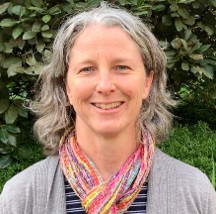
School of Agriculture and Environment, Massey University, Palmerston North Private Bag 11-222, New Zealand;Dr. Lucy Burkitt’s research focuses on soil health and nutrient management in pastoral agriculture, with a specific focus on loss of phosphorus and nitrogen from agricultural soils, water quality, strategies to attenuate/mitigate nutrient loss and the impacts of diverse pasture and regenerative management on soil health and the environment. She is the Soil Research Lead for the Whenua Haumanu regenerative agriculture program. She also co-ordinates undergraduate Integrated Farm and Environmental Management, in addition to the Intermediate and Advanced Freshwater Farm Planning professional development courses, and teaches on both the Intermediate and Advanced Sustainable Nutrient Management courses at Massey University.
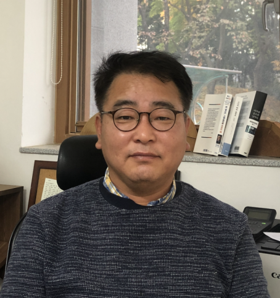
1. Department of Rural and Bio-Systems Engineering (Brain Korea 21), Chonnam National University, Gwangju 61186, Republic of Korea 2. AgriBio Institute of Climate Change Management, Chonnam National University, Gwangju 61186, Republic of Korea;Dr. Woo-Jung Choi has been a professor at Chonnam National University, South Korea, since 2005. He earned his B.S., M.S., and Ph.D. in Agricultural Environment (Soil Science) from Seoul National University and completed his postdoctoral research at the University of Alberta, Canada. His research interests encompass soil management, water pollution source tracing, and climate change mitigation, with a specialization in the application of stable carbon and nitrogen isotopes for environmental studies. Dr. Choi has published over 200 scientific papers and authored six books or book chapters. He has also served as an Associate Editor for various journals, including Biology and Fertility of Soils, Journal of Soils and Sediments, Canadian Journal of Soil Science, and Communications in Soil Science and Plant Analysis.
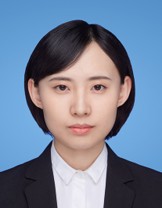
Dr. Ruixia Han
1. State Key Laboratory of Regional and Urban Ecology, Ningbo Observation and Research Station, Institute of Urban Environment, Chinese Academy of Sciences, Xiamen, 361021, China 2. Zhejiang Key Laboratory of Pollution Control for Port-Petrochemical Industry, CAS Haixi Industrial Technology Innovation Center in Beilun, Ningbo, 315830, China;Dr. Ruixia Han’s research focuses on microbially driven iron redox processes, reactive oxygen species (ROS) formation, and their roles in contaminant transformation in soils. Her work has elucidated the mechanisms of hydroxyl radical production during microbial iron cycling, identified key environmental controls on soil ROS generation, and revealed ROS-mediated arsenic oxidation and transformation. These studies contribute to a better understanding of soil biogeochemical processes that regulate contaminant mobility, soil environmental quality, and the safety of agricultural ecosystems. She has published more than 30 SCI papers, including first-author articles in Environmental Science & Technology and Water Research. She has led projects funded by the National Natural Science Foundation of China. Her current research aims to advance mechanistic understanding of soil redox processes and support sustainable soil management, contaminant risk mitigation, and food security.
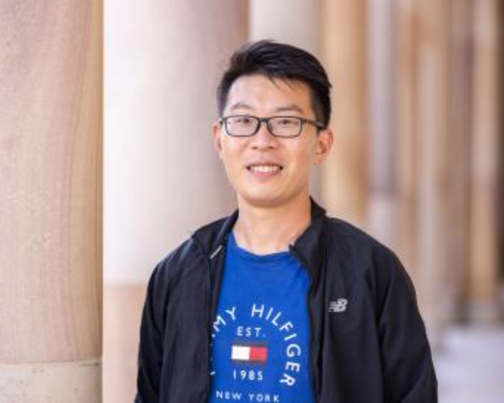
School of Agriculture and Food Sustainability, The University of Queensland, Brisbane 4067, Australia;Dr. Tong Li is an Early Career Research Fellow at The University of Queensland, Australia. His research focuses on soil health, soil organic carbon, digital soil science, and sustainable agricultural systems, with expertise in proximal and remote sensing, soil spectroscopy, spatial analysis, and machine learning. To date, he has published more than 90 peer-reviewed papers and has a Google Scholar h-index of 28. He also holds editorial roles at several international journals, including serving as an Associate Editor for Ecological Indicators and Land Degradation & Development and as an editor for Engineering and Geography and Sustainability. His work aims to integrate advanced sensing and data-driven approaches to support sustainable soil and land management.