Agriculture Webinar | Biological Control of Plant Diseases: Challenges and Opportunities
the chairs
6th Agriculture Webinar
Biological Control of Plant Diseases: Challenges and Opportunities
Dear Colleagues,
Plant pathogens cause severe yield losses worldwide and are increasingly showing reduced sensitivity to conventional agrochemicals. At the same time, climate change and the growing demand for more sustainable agricultural systems are highlighting the urgent need for alternative and/or integrated disease management strategies.
Beneficial microorganisms represent promising eco-friendly solutions capable of reducing dependence on synthetic products. However, the effectiveness of currently available bioformulations may vary according to environmental conditions and crop management practices.
To achieve a more efficient sustainable plant protection, advances in molecular and biotechnological tools can significantly improve the selection and characterization of novel biocontrol products or microbial consortia, as well as deepen the understanding of their mechanisms of action and optimize their practical application in crop disease management.
Simplifying regulatory and registration procedures is also essential to accelerate the introduction of innovative and efficient bioproducts in the market in order to promote and adopt more efficient environmental and safer solutions for pest and disease management.
This webinar addresses some important issues in the actual trends of the biological control of plant diseases.
The first presentation relates to the potential of synthetic microbial communities as innovative tools for the sustainable management of plant diseases.
Invited Speaker: Antonino Malacrinò (Clemson University, USA)
Title Presentation: Potential role of synthetic microbial communities in sustainable plant disease management
The second contribution explores the use of the well-established Fusarium oxysporum f. sp. lycopersici–tomato pathosystem as a model to investigate the interactions between fungal pathogens and biocontrol agents.
Invited Speaker: Antonio di Pietro (University of Cordoba, Spain)
Title Presentation: Decoding Rhizosphere Multitrophic Networks Linking Fungal Pathogens and Biocontrol Agents in the Fusarium oxysporum–Tomato System
The third presentation addresses challenges and opportunities in the registration and commercialization of biocontrol products through the case study of YSY®, an innovative bioformulation based on the beneficial yeast Papiliotrema terrestris strain PT22AV.
Invited Speaker: Bruno Folchi (AgroVentures srl-llc (Italy-USA))
Title Presentation: Global Regulatory and Commercial Development of Microbial Biocontrol Agents—Challenges and Opportunities
We hope these three contributions will stimulate a discussion with attendees, fostering inputs, new insights and collaborations.
Giuseppe LIMA, Antonio IPPOLITO and Carmine DEL GROSSO
Date: 18 June 2026
Time: 10:00 am EDT | 3:00 pm BST | 4:00 pm CEST | 10:00 pm CST Asia
Webinar ID: 835 3102 1486
Webinar Secretariat: journal.webinar@mdpi.com
Meet Our Chairs
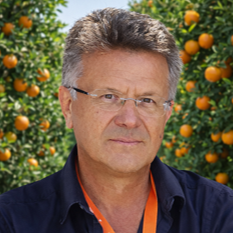
Department of Soil, Plant and Food Sciences, University of Bari “Aldo Moro”, Bari, Italy;He is a Full Professor of Plant Pathology at the University of Bari Aldo Moro, where he has long pursued a broad and rigorous research program in the field of postharvest pathology. His work focuses on developing sustainable, environmentally responsible strategies to control diseases affecting fresh fruit and vegetables after harvest, with the aim of providing reliable, practical alternatives to conventional synthetic fungicides. RESEARCH Over the course of his career, he has built deep expertise in integrated disease management, exploring a wide range of innovative approaches. His research encompasses the evaluation of biological control agents, the use of natural compounds, the application of physical treatments, and the design of combined strategies—all directed at suppressing postharvest pathogens while minimizing the chemical burden on fresh horticultural produce. A common thread runs through his entire body of work: the conviction that phytosanitary efficacy, product quality, and consumer safety can be achieved together, without relying on the chemical residues that conventional production systems still leave on fresh commodities. The central goal of his research is to achieve zero fungicide residues in fresh produce, advancing production systems that are safer for consumers and more respectful of the environment. CURRENT DIRECTIONS Prof. Ippolito’s most recent activities are focused on the development of integrated approaches that combine biological, physical, and natural-product-based means. This vision — which favors the synergy of complementary techniques over any single solution—represents one of the most promising frontiers in sustainable postharvest disease management, and places his laboratory among the leading reference points in the international landscape of applied plant pathology.
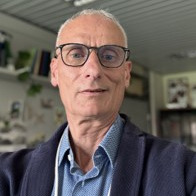
Department of Agricultural, Environmental and Food Sciences, University of Molise, Campobasso, Italy;Giuseppe Lima is a Full Professor of Plant Pathology at the University of Molise (UNIMOL), Campobasso, Italy. He received his Degree in Agricultural Sciences from the University of Palermo in 1986 and his Ph.D. in Plant Pathology from the University of Bari “Aldo Moro” in 1992. Since 1988, he has been teaching undergraduate and graduate courses in Plant Pathology, Forest Pathology, Biological Control, Mycology, and Integrated Disease Management, while supervising numerous undergraduate, master's, and doctoral students. His research focuses on sustainable management strategies for fungal and bacterial diseases of economically important crops, with particular emphasis on biological control agents (BCAs), natural compounds, and innovative bio-based products. He has coordinated and participated in several national and international research projects dealing with plant disease epidemiology, microbial interactions, biological control, and sustainable agricultural systems. Prof. Lima has authored or co-authored hundreds of scientific publications, book chapters, technical reports, and conference contributions. Scopus H-index (June 2026): 26; ORCID: 0000-0003-2785-4308; ResearchGate: Giuseppe Lima Profile; Web page: University of Molise Academic Profile. He is a member of the Italian Phytopathological Society and the Italian Society for Plant Protection and serves as a reviewer and editorial board member for international scientific journals. He is also Coordinator of the Master's Degree Program in Forestry and Environmental Sciences and Technologies at the University of Molise.
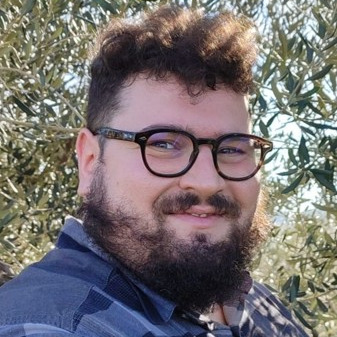
Institute for Sustainable Plant Protection, CNR, Bari, Italy;Dr. Carmine Del Grosso is a Postdoctoral Researcher at the Institute for Sustainable Plant Protection (IPSP) of the Italian National Research Council (CNR) in Bari, Italy. He obtained his Bachelor's and Master's degrees in Forestry Sciences from the University of Molise, where he carried out an experimental thesis in Forest Plant Pathology. He completed his Ph.D. in Agricultural Technologies and Biotechnology in 2022 at the same University, focusing his research on the selection and characterization of bioactive compounds effective against Xylella fastidiosa and other phytopathogenic bacteria. His research focuses on Plant Pathology, Bacteriology, and Integrated Pest Management, with particular expertise in the evaluation and efficacy of bioformulations, natural products, and biocontrol agents (BCAs) against plant pathogens, especially phytopathogenic bacteria. He has been actively involved in major research initiatives, including the international BIOVEXO project (Biocontrol of Xylella and its Vector in Olive Trees for Integrated Pest Management), and he is currently engaged in the REACH-XY project (Research Actions for Reducing the Impact on Agricultural and Natural Ecosystems of the Harmful Plant Pathogen Xylella fastidiosa) aimed at mitigating Xylella fastidiosa subsp. pauca infections in olive groves. He is the author or co-author of 13 scientific publications in international peer-reviewed journals and has contributed to national and international conferences. ORCID: 0000-0002-4933-0591 - Web page: http://www.ipsp.cnr.it/del-grosso-carmine/
This webinar explores the role of beneficial microorganisms in sustainable plant protection, highlighting recent advances in molecular and biotechnological tools for developing innovative biocontrol products. It also addresses key challenges affecting their efficacy and the need for streamlined regulations to support the adoption of safe and effective biological solutions for crop disease management.
The full recording can be found below. In order to learn about future webinars, you can sign up to our newsletter by clicking “Subscribe” at the top of the page.
Meet Our Speakers
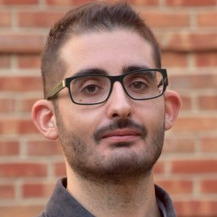
Department of Biological Sciences, Clemson University, Clemson, SC, USA;Antonino Malacrinò is an Assistant Professor of Microbiome Science at Clemson University (SC, USA) where his lab investigates the mechanisms underlying plant–microbiome interactions and how they can be leveraged to improve plant health. Before joining Clemson University, Dr. Malacrinò held positions at the University of Reggio Calabria (Italy), the University of Münster (Germany), the Ohio State University (USA), and Linköping University (Sweden). His research program has attracted more than USD 3 million in competitive funding, and his work has been published in high-impact journals including Science, PNAS, New Phytologist, and Global Change Biology. He is a Fellow of the Royal Entomological Society, recipient of Molecular Ecology’s Harry Smith Prize, and the Editor-in-Chief of Annals of Applied Biology

Department of Genetics - University of Cordoba, Campus Rabanales, Edificio Gregor Mendel, Cordoba, Spain;Antonio Di Pietro received an M.Sc. degree in Biology in 1987 from University of Basel, Switzerland, and completed his Ph.D. at the same University in 1990. In 1991/92, he obtained a Swiss National Science Foundation Postdoctoral Fellowship to perform a postdoctoral stay in the lab of Gary Harman at Cornell University, USA. After returning to Europe, he joined the Department of Genetics at University of Córdoba, Spain, as a postdoc, initially with support from the Spanish Ministry of Science and Education (MEC) and then with a Marie Curie Individual Fellowship. In 2000, he and his family spent 5 months in Davis, California, where he was a visiting scientist at Novozymes Biotech. Back in Córdoba, he was awarded a Ramon y Cajal tenure-track Junior Professorship from the Spanish Ministry of Science and Innovation (MICINN). In 2005, he became an Assistant Professor, in 2007 Associate Professor, and in 2010 Full Professor of Genetics at the University of Córdoba. He has been coordinator and participant in several trans-national Marie Curie Training Networks funded by the EU. In 2017, he was elected Fellow of the American Academy of Microbiology. Antonio's research interests are in fungal biology and pathology with a focus on the genetic and cellular mechanisms of adaptation and interaction with the host and the environment.

Dr. Bruno Folchi
AgroVentures srl/llc (Italy - USA), Latina, Italy;Dr. Bruno Folchi is an agribusiness executive and entrepreneur with extensive experience in plant protection, agricultural biotechnology, and international business development. He is the founder and General Manager of AgroVentures, a biotechnology company focused on the development of innovative biocontrol solutions for sustainable agriculture. He also serves as Managing Director of VextaChem. Over the years, he has developed a strong expertise in the registration, commercialization, and strategic development of biological and chemical crop protection products across European and international markets. His professional activities include regulatory strategy, market expansion, technology transfer, and the development of integrated pest management solutions for sustainable agriculture. Dr. Folchi has been actively involved in the development of innovative biocontrol technologies based on beneficial yeasts, including the patented Papiliotrema terrestris PT22AV platform for the control of plant pathogens, nematodes and crop biostimulation. He is also co-inventor of international patents related to yeast-based biocontrol agents for the management of phytopathogens and various chemical plant protection technologies. His current activities are focused on promoting sustainable agricultural practices through the development and international deployment of environmentally friendly biological solutions for crop protection and plant health management.


Biological Control of Plant Diseases: Challenges and Opportunities
Edited by Prof. Dr. Giuseppe Lima, Prof. Dr. Antonio Ippolito and Dr. Carmine Del Grosso
Deadline for manuscript submissions: 10 August 2026