Agronomy Webinar | Sustainable Agricultural Systems: Enhancing Efficiency and Reducing Environmental Impact
the chair
14th Agronomy Webinar
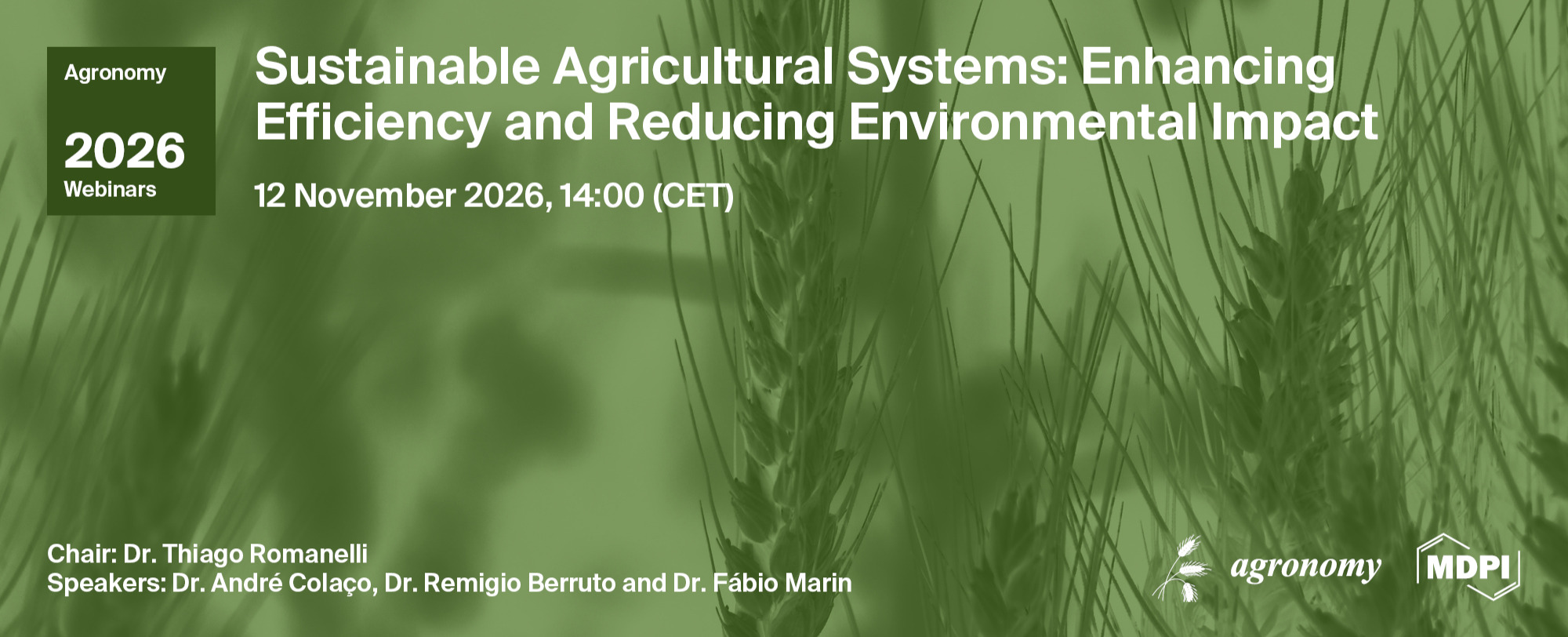
Sustainable Agricultural Systems: Enhancing Efficiency and Reducing Environmental Impact
Welcome, everyone! Thank you for joining us today for this special webinar on Sustainable Agricultural Systems: Enhancing Efficiency and Reducing Environmental Impact.
As global awareness around environmental issues accelerates, sustainability has shifted from a secondary goal to a central driver shaping policy, international trade, and market opportunities. Today, agricultural and biological production systems are at the center of this shift, creating a critical need for rational input use and quantifiable efficiency.
In this webinar, we will bring the vision of our upcoming Special Issue directly to you. We will explore cutting-edge, systemic approaches to reducing environmental impacts across production chains, diving into key solutions such as:
Quantifiable metrics: How technology can support the measuring and lowering of environmental, carbon, and water footprints.
Innovative practices: (Bio)technological adoptions and alternative production methods.
Circular solutions: Waste utilization and navigating the food–water–energy nexus.
Whether you are an author looking to contribute your research, a researcher seeking sustainable methodologies, or an industry practitioner driving higher efficiency in biosystems, today’s session is designed to inspire actionable solutions. We will also cover the scope of our Special Issue and outline how you can submit your manuscripts to join this critical scientific conversation.
Date: 12 November 2026
Time: 14:00 CET | 10:00 BRT | 15:00 IDT
Webinar ID: 860 9634 8806
Webinar Secretariat: journal.webinar@mdpi.com
Meet Our Chair
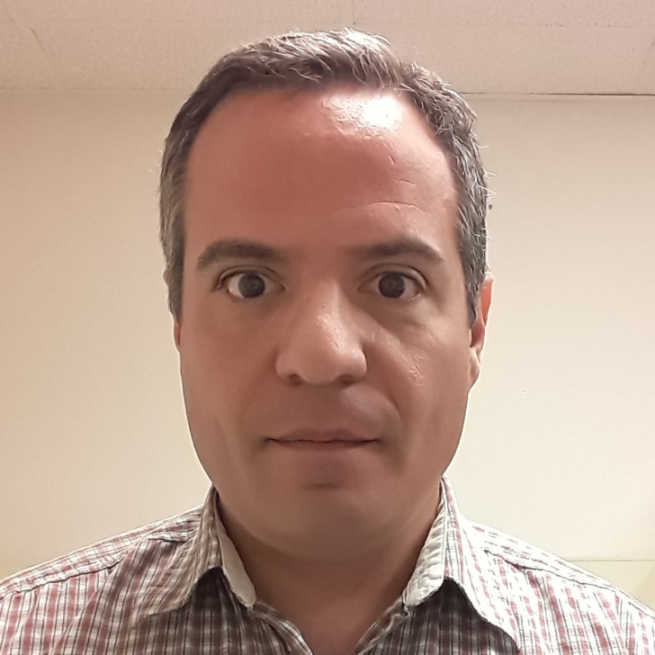
University of Sao Paulo, Brazil;Professor of the Department of Biosystems Engineering (LEB), Esalq/USP. He does research on themes: Material and energy flows in production systems, Sustainability, Life Cycle Assessment and Economic viability of technological adoption. Agronomist by the University of Sao Paulo, M.Sc. in Agricultural Machinery by the University of Sao Paulo and Ph.D. in Forest Resources by the University of Sao Paulo, with a period as a Research Associate of the Center for Environmental Policy of the University of Florida. Fulbright Scholar - Chair of Agricultural Sciences at the University of Nebraska/Lincoln (2017).
This is a FREE webinar. After registering, you will receive a confirmation email containing information on how to join the webinar. Registrations with academic institutional email addresses will be prioritized.
Certificates of attendance will be delivered to those who attend the live webinar.
Can't attend? Register anyway, and we'll let you know when the recording is available to watch.
Register for free here!
Meet Our Speakers
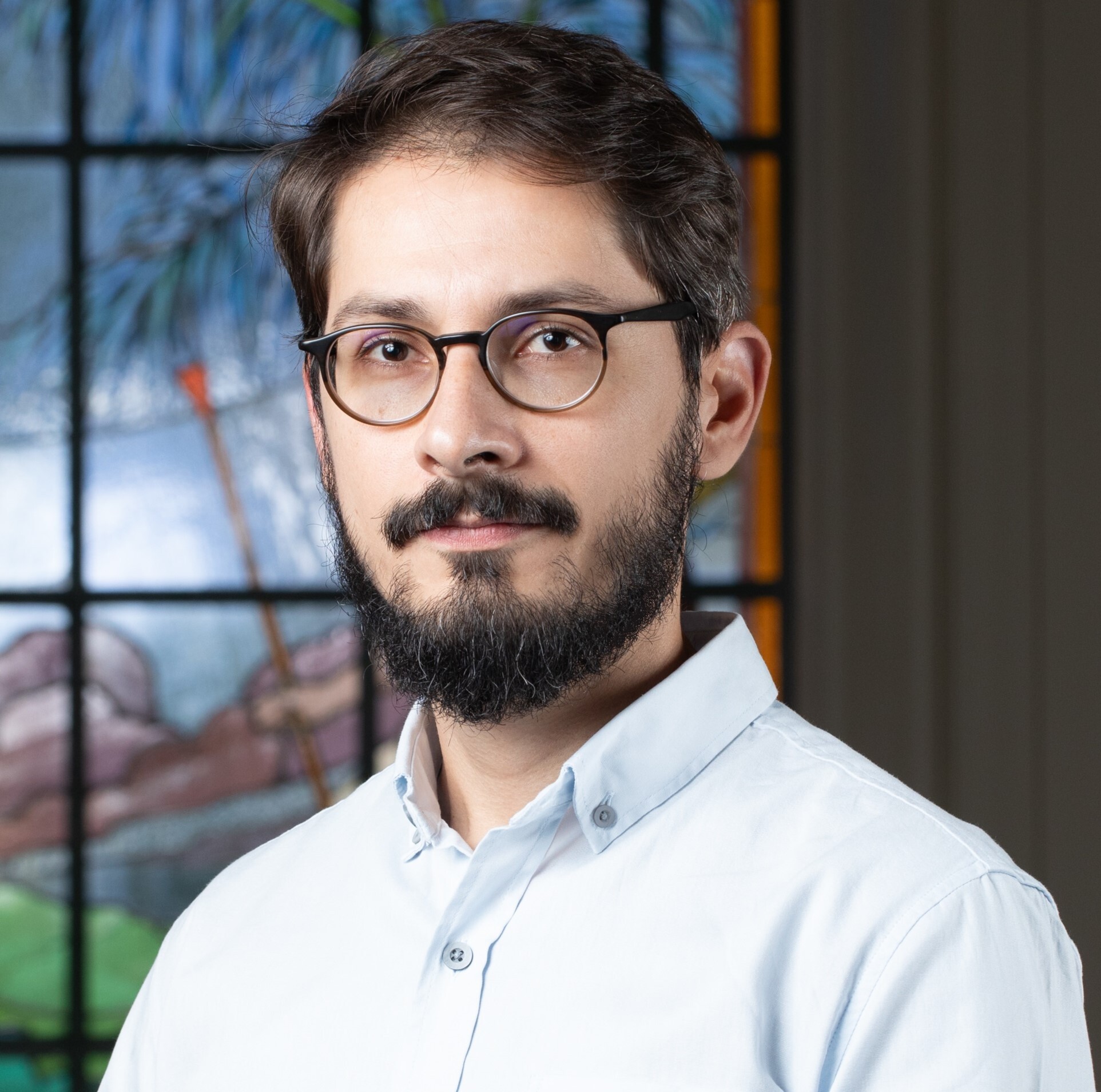
Dr. André Colaço
University of São Paulo, Brazil;Dr André Colaço is a Professor in the Biosystems Department at the University of São Paulo, Brazil, specializing in Precision and Digital Agriculture, Artificial Intelligence, On-Farm Experimentation, and Intelligent Decision Support Systems. He holds a bachelor's degree in Agronomy, as well as master's and doctorate degrees in Agricultural Systems Engineering from the University of São Paulo. He has gained international academic experience at the University of Florida, USA, and the University of Lleida, Spain. Before his current position, Professor Colaço served as a Research Scientist at the Australian National Research Agency, CSIRO. He is also an Associate Editor for the Precision Agriculture journal, one of the leading scientific journals in his field. Prof. Colaço's primary goal is to promote sustainable agrifood development and global food security through research and education in digital agriculture technologies.
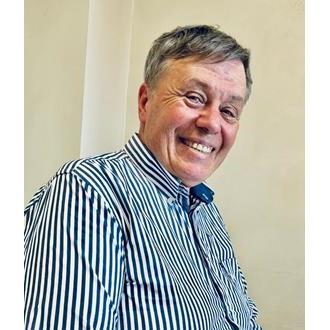
Dr. Remigio Berruto
University of Turin, Italy;Polytechnic University of Turin, Italy;Dr. Remigio Berruto is an academic specialized in agricultural systems engineering, supply chain logistics, and digital transformation in agriculture. He is a Professor within the Department of Agricultural, Forest, and Food Sciences (DISAFA), University of Turin and Interuniversity Department of Regional and Urban Studies and Planning (DIST), at Politechnical of Turin. His focus and research expertise approach Precision Agriculture & Digitalization: Focuses on IoT application in farming, satellite remote sensing, AI and machine learning for yield prediction, and automated machinery navigation. Agri-Food Logistics & Energy Optimization: Studies biomass supply chains, optimized route planning for field machinery, post-harvest operations, and carbon farming strategies. He presents International Leadership in leadership roles across international engineering networks, including the International Commission of Agricultural and Biosystems Engineering (CIGR) and the European Society of Agricultural Engineers (EurAgEng)
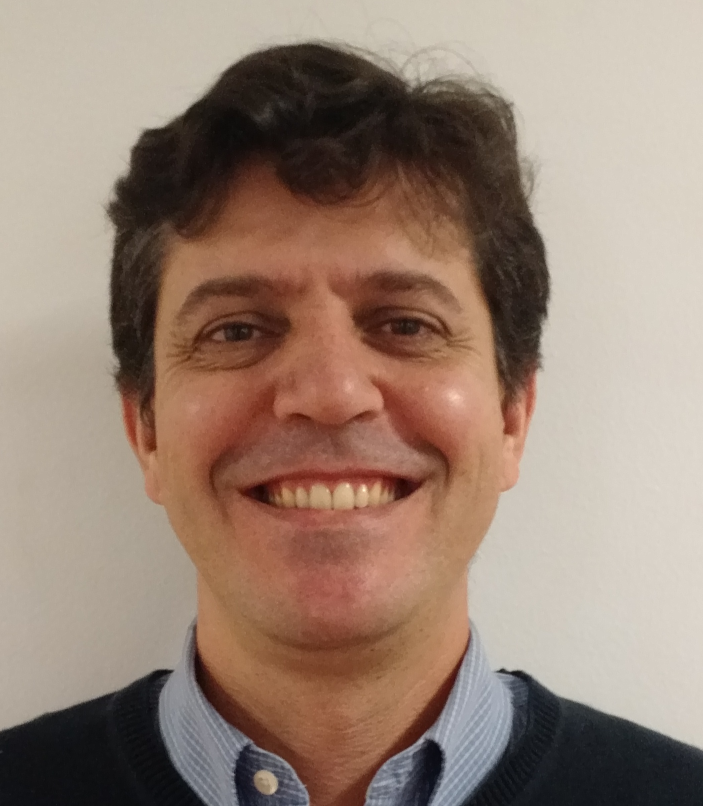
University of Sao Paulo, Brazil;Agronomist, M.Sc. (2000) and Ph.D. (2003) in Agronomy at University of Sao Paulo. He held postdoctoral positions in the United States, at the University of Florida (2010-2011) and the University of Nebraska-Lincoln (2018), and completed an MBA in Artificial Intelligence and Big Data at USP. Since 2013 he has been a faculty member of the Department of Biosystems Engineering at Esalq/USP. He has held a Research Productivity Fellowship from CNPq, the Brazilian National Council for Scientific and Technological Development, since 2010, and has an extensive scientific output, with more than 170 peer-reviewed journal articles, six books and sixteen book chapters. Internationally active, he has taken part in scientific missions in 23 countries and led global initiatives such as the Brazilian Yield Gap Atlas and AgMIP-Sugarcane. In Brazil, he coordinates the Tempocampo System, a leading platform in agrometeorology and crop modeling for supporting growers' decision-making, and serves as Principal Investigator at the Research Centre for Greenhouse Gas Innovation in Tropical Agriculture (CCARBON), a FAPESP-funded Research, Innovation and Dissemination Centre hosted at Esalq/USP. He served two consecutive terms as President of the Brazilian Society of Agrometeorology (2021-2023 and 2023-2025) and coordinated Esalq's Brazil-China Agricultural Innovation Centre (2019-2021). He is currently Coordinator of the Graduate Program in Agricultural Systems Engineering at Esalq/USP (2023-present).
“Sustainable Agricultural Systems: Enhancing Efficiency and Reducing Environmental Impact—2nd Edition”
Guest Editor: Prof. Dr. Thiago Libório Romanelli
Deadline for Manuscript Submission: 31 January 2027