
Applied Sciences Webinar | Innovations in Autonomous Driving and Vehicle Intelligence
the chair
Good morning, good afternoon, and good evening to everyone joining us from different parts of the world.
On behalf of the editorial team, it is my pleasure to welcome you to this webinar discussing the topic of the Special Issue "Innovations in Autonomous Driving and Vehicle Intelligence".
I am Dr. Manoj K. Jha, the Guest Editor of this Special Issue, and I will be chairing today’s session. With me, I have Dr. Corey Harper, who is an Assistant Professor of Civil & Environmental Engineering and Heinz School of Public Policy at Carnegie Mellon University. Thank you for taking the time to join us and for your interest in contributing to this important and rapidly evolving area of research.
During today’s webinar, I will present my latest research in connected and autonomous vehicle navigation and cybersecurity. I will then briefly introduce the scope and objectives of the Special Issue, highlight the types of contributions we are seeking, and share guidance on what makes a strong submission.
Afterwards, Dr. Harper will present his work on using machine learning (ML)- SHAP interpretations to better understand how individual factors (e.g., weather) play a role in the severity of crashes involving autonomous vehicles.
We will conclude with an open Q&A session, and I strongly encourage you to use that time to ask questions about topic fit, submission expectations, and the review process.
Once again, thank you for joining us. We look forward to your participation today and to receiving your contributions to this Special Issue.
Date: 5 February 2026
Time: 4:00 pm CET | 10:00 am EST
Webinar ID: 829 0526 0938
Webinar Secretariat: journal.webinar@mdpi.com
Meet Our Chair
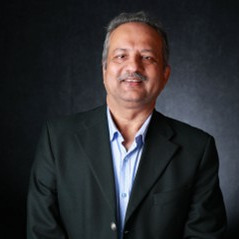
Department of Data Science, University of Maryland Global Campus (UMGC), USA;Prof. Dr. Manoj K. Jha is the Founder and CEO of MKJHA Consulting, Inc., a U.S.-based deep-tech startup developing quantum-inspired cybersecurity technologies for data centers, transportation systems, and critical infrastructure. He also serves as Associate Adjunct Professor of Information Technology at the University of Maryland Global Campus and Adjunct Professor of Civil Engineering at George Washington University. Prof. Dr. Jha has published over 200 technical papers in leading international journals and conferences and is listed among the Top 2% Researchers in the World by Stanford University–Elsevier (2025). His research focuses on quantum-randomized secure computation (Q-SMPC), quantum random number generation (Q-RNG), and quantum-randomized anomaly detection (Q-RAD) to achieve quantum-level cybersecurity without requiring quantum hardware. He serves as Associate Editor of the Journal of Computational and Cognitive Engineering, Guest Editor of the MDPI–Applied Sciences special issue on “Innovations in Autonomous Driving and Vehicle Intelligence,” and Editorial Board Member of the Journal of Data Science and Intelligent Systems. Dr. Jha collaborates with Georgetown University, Carnegie Mellon University, and the University of Maryland College Park to advance the integration of AI, cybersecurity, quantum computing, and transportation resilience.
Important Dates
5 Feb
2026
Meet Our Speakers
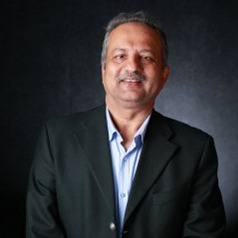
Department of Data Science, University of Maryland Global Campus (UMGC), USA;Dr. Manoj K. Jha is the Founder and CEO of MKJHA Consulting, Inc., a U.S.-based deep-tech startup developing quantum-inspired cybersecurity technologies for data centers, transportation systems, and critical infrastructure. He also serves as Associate Adjunct Professor of Information Technology at the University of Maryland Global Campus and Adjunct Professor of Civil Engineering at George Washington University. Dr. Jha has published over 200 technical papers in leading international journals and conferences and is listed among the Top 2% Researchers in the World by Stanford University–Elsevier (2025). His research focuses on quantum-randomized secure computation (Q-SMPC), quantum random number generation (Q-RNG), and quantum-randomized anomaly detection (Q-RAD) to achieve quantum-level cybersecurity without requiring quantum hardware. He serves as Associate Editor of the Journal of Computational and Cognitive Engineering, Guest Editor of the MDPI–Applied Sciences special issue on “Innovations in Autonomous Driving and Vehicle Intelligence,” and Editorial Board Member of the Journal of Data Science and Intelligent Systems. Dr. Jha collaborates with Georgetown University, Carnegie Mellon University, and the University of Maryland College Park to advance the integration of AI, cybersecurity, quantum computing, and transportation resilience.

Department of Civil & Environmental Engineering and Heinz College of Information Systems and Public Policy, Carnegie Mellon University, United States;Dr. Corey Harper is an Assistant Professor of Civil & Environmental Engineering and Heinz School of Public Policy at Carnegie Mellon University. In his role as the director of the Future Mobility Systems Lab he leads a team of researchers who explore the infrastructure and policy implications of emerging transportation technologies (e.g., autonomous vehicles and micromobility). The affordability analysis side of his team applies equity metrics to assess how policy and regulation could affect the distribution of transportation resources. The modeling and simulation side of his group is focused on incorporating new mobility modes (e.g., micromobility and e-commerce) into regional traffic demand models to promote better long-range planning of the transportation system. Dr. Harper is a recipient of multiple Mobility 21 Research awards and a Pennsylvania Infrastructure Technology Alliance Grant and is an Associate Editor for the Journal of Transportation Engineering, Part A: Systems. Before becoming a professor, Dr. Harper was a consulting at Booz Allen Hamilton, helping USDOT and DOD with the integration of connected and automated vehicles.

The webinar was hosted via Zoom and required registration to attend. The full recording can be found below. In order to learn about future webinars, you can sign up to our newsletter by clicking “Subscribe” at the top of the page.
Watch the full recording below:
| Speaker | Presentation | Time in CET | Time in EST |
| Prof. Dr. Manoj Jha | Chair Introduction | 4:00 – 4:10 pm | 10:00 – 10:10 am |
| Prof. Dr. Manoj Jha | Connected and Autonomous Vehicle Navigation, Data Structure Issues, and Cybersecurity | 4:10 – 4:30 pm | 10:10 – 10:30 am |
| Dr. Corey Harper | Incorporating New Mobility Modes into Regional Traffic Demand Models | 4:30 – 4:50 pm | 10:30 – 10:50 am |
| Q&A | 4:50 – 5:10 pm | 10:50 – 11:10 am | |
| Prof. Dr. Manoj Jha | Closing of Webinar | 5:10 – 5:15 pm | 11:10 – 11:15 am |
"Innovations in Autonomous Driving and Vehicle Intelligence"
Special Issue Editors: Dr. Manoj K. Jha
Deadline for manuscript submissions: 20 May 2026