
Horticulturae Webinar | Innovations, Insights, and Impacts of Plant Phenotyping Technologies for Climate-Responsive Crops
the chair
8th Horticulturae Webinar
Innovations, Insights, and Impacts of Plant Phenotyping Technologies for Climate-Responsive Crops
On behalf of MDPI and our organizing committee, I am pleased to invite you to our upcoming international webinar: Innovations, Insights, and Impacts of Plant Phenotyping Technologies for Climate-Responsive Crops.
Developing climate-resilient crops is one of the most urgent priorities in modern agricultural science. As shifting weather patterns and environmental stressors increasingly threaten global food security, bridging the gap between genomic potential and real-world field performance is crucial.
Plant phenotyping technologies stand at the forefront of this mission. By leveraging non-destructive imaging, remote sensing, automated platforms, and AI-driven data analytics, researchers can now capture complex physiological traits with unprecedented speed and precision.
This webinar brings together leading scientists and pioneers in phenomics to showcase breakthrough methodologies, share actionable biological insights, and highlight how these technologies impact climate-responsive crop breeding.
Whether you are a researcher, breeder, educator, or industry expert, join us for an inspiring session of multi-disciplinary discussion aimed at shaping the future of sustainable agriculture.
We look forward to welcoming you.
Dr Georgios Koubouris
Webinar Chair
Date: 19 October 2026
Time: 15:00 CEST | 9:00 EDT
Webinar ID: 830 3510 6711
Webinar Secretariat: journal.webinar@mdpi.com
Meet Our Chair

Institute for Olive Tree, Subtropical Crops, and Viticulture, Hellenic Agricultural Organization DIMITRA, Greece;Dr. Georgios Koubouris is Research Director at ELGO DIMITRA and Head of the Olive Cultivation Laboratory of the Institute of Olive Tree, Subtropical Crops, and Viticulture. He specializes in olive varieties, holistic olive grove management, and climate change adaptation using agroecological practices. He has published more than 100 scientific papers and has implemented over 40 research projects. Notably, he is the scientific director of LIFE Oliveclima, which was awarded as the title of Best Climate Action in Europe. As an expert reviewer for scientific journals and international organizations, he promotes sustainability and resilience in olive cultivation worldwide.
Meet Our Speakers
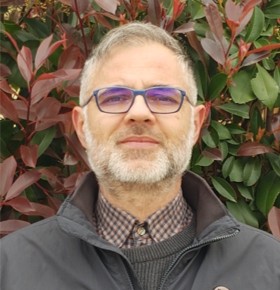
Università degli Studi della Basilicata, Italy;Dr. Giuseppe Montanaro is an Associate Professor at the Agricultural, Forestry, Foof and Environmental Dept. at the University of Basilicata in Italy, where he also earned his PhD in 2006. As a plant physiologist and ecologist, his research focuses heavily on sustainable agriculture, plant–environment interactions, abiotic stress, and water relations in Mediterranean perennial crops like grapevines and olives. He has authored +80 peer-reviewed scientific publications, and his highly-cited work on adapting orchards to climate change and restoring soil health can be explored on Google Scholar and ResearchGate. He is merging his plant-physiology background with affordable image-based plant phenotyping for identification of suitable proxies contributing to digital agriculture. He is involved in Phen-Italy, the Italian node of the of the European Infrastructure EMPHASIS.

Forschungszentrum Jülich (Jülich, Germany);Dr. Roland Pieruschka is a Senior Scientist at Forschungszentrum Jülich within the Institute of Bio- and Geosciences (IBG-2: Plant Sciences). As a leading expert in plant phenotyping, non-destructive sensing, and stress physiology, his research centers on understanding plant performance, photosynthesis, and transpiration under environmental stress to support climate-resilient crop breeding. He plays a major role in international plant phenomics initiatives, such as the German Plant Phenotyping Infrastructure (DPPN). Additionally, he provides key operational management and coordination for multiple EU-funded projects that aim to advance plant phenomics methods and technology (PHENET) and enable the use of these technologies to address scientific questions (AgroServ, Microbes-4-Climate).
This is a FREE webinar. After registering, you will receive a confirmation email containing information on how to join the webinar. Registrations with academic institutional email addresses will be prioritized.
Certificates of attendance will be delivered to those who attend the live webinar.
Can’t attend? Register anyway and we’ll let you know when the recording is available to watch.