Third International Conference on Fire Behavior and Risk
the chairs
Dear Colleagues,
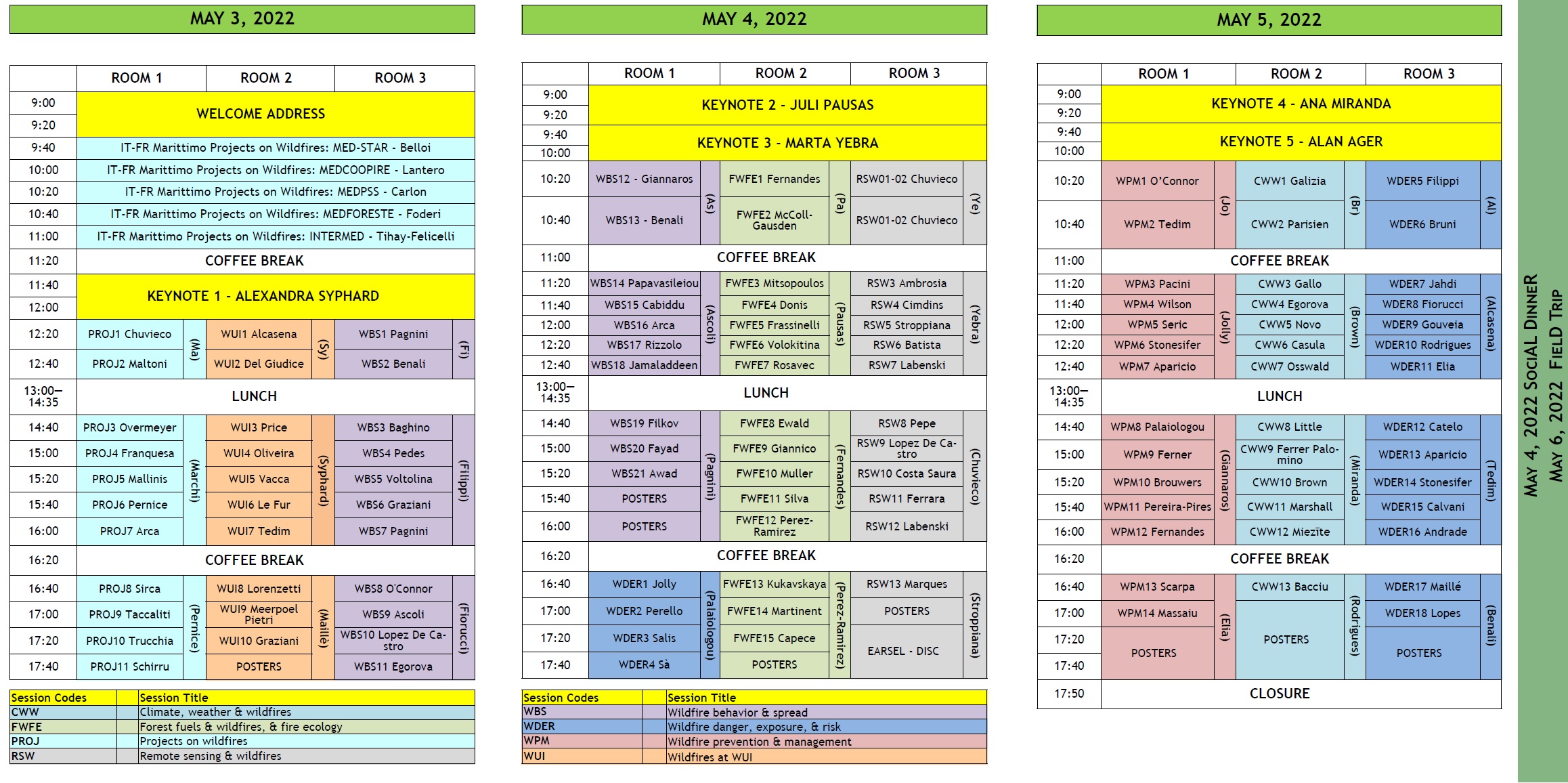
It is a pleasure for us to organize and welcome you to the third edition of the International Conference on Fire Behaviour and Risk, to be held in Alghero (Sardinia, Italy) from 3 to 6 May 2022. ICFBR2022 is organized by the Institute of Bioeconomy of the National Research Council of Italy (CNR IBE, Sassari) and the Departments of Agriculture of the University of Sassari, in collaboration with Fondazione CMCC and EARSEL, with the purpose of involving scientists, researchers, and policymakers whose activities are focused on different aspects of wildland fires and their impacts.
The conference is organized within the MED-Star project "Strategies and measures for the mitigation of fire risk in the Mediterranean area"(https://interreg-maritime.eu/web/med-star), funded by the EU Italy-France Maritime Program (2014-2020), and under the patronage of Regions involved in the project and the Italian Society of Silviculture and Forest Ecology (SISEF).
The conference is linked to a Special Issue of the journal Forests entitled “Wildfire Behavior and Risk: From Fundamental Research to Pioneering Modeling Approaches”, and we plan to publish an open access book of abstracts.
We are closely monitoring the COVID-19 situation and as of today, we are planning to hold the conference in presence, following recommendations concerning travel and public events. However, we will review this on an ongoing basis as well as engage in contingency planning. We are also working on alternatives to the physical conference. We will update you on any decisions promptly.
We thank you for your understanding. If you have any questions please do not hesitate to contact us at info@icfbr2022.it.
On behalf of everyone concerned with the organization of the Congress, we wish you, your family, friends, and colleagues good health during this challenging period.
Meet Our Chairs
National Research Council, Institute of BioEconomy (CNR-IBE);
University of Sassari, Department of Agriculture;
Important Dates
20 Dec
2021
31 Jan
2022
Meet Our Speakers
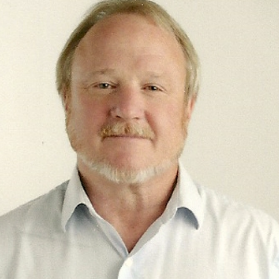
U.S.D.A. Forest Service (USA);Alan Ager has a PhD in Forest Genetics at University of Washington (USA). He is research scientist at the Rocky Mountain Research Station of the USDA Forest Service. His interests are in the design, development, and testing of quantitative models to disentangle conflicting policies and understand management tradeoffs at multiple scales and across social and biophysical domains. System-level drivers are studied from both a socioeconomic and ecological perspective to gain governance level understanding of fire management. Landscape modeling software is used to conduct scenario planning to understand large scale interactions between natural disturbances and wildfire over time. Current focus is on transboundary wildfire risk from public lands to developed areas, and how risk transmission is amplified on landscapes fragmented by ecological conditions and risk governance systems. This information is used to analyze how the scale of planning and governance affect progress towards reducing socioeconomic and ecological impacts from wildfires. Of particular interest are identifying functional, spatial, and temporal scale mismatches in transboundary wildfire risk governance, and using this information to design planning frameworks that address the spectrum of fire ecology and management issues on mixed tenure landscapes.
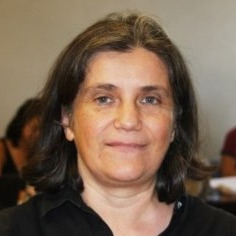
University of Aveiro (Portugal);Ana Isabel Miranda is full professor at the Department of Environment and Planning at the University of Aveiro, Portugal. She is nowadays the Director of the Department of Environment and Planning and she is a member of the Associated Laboratory CESAM (Centre for Environmental and Marine Studies) coordinating the Research Line “Integrated Environmental Systems”. She coordinated the Sustainability Group of the University of Aveiro. Her working areas include: air quality modelling, urban metabolism, health effects of environmental pollution, climate change, and wildland fires. She participated in 30 Portuguese and 25 European research projects. She was a reviewer of the FP7-ENV-2010 and 2011, and of the H2020-EO-1-2014 and 2016, project applications. Her research work includes over 600 scientific and technical publications, 100 published in peer-reviewed international journals.
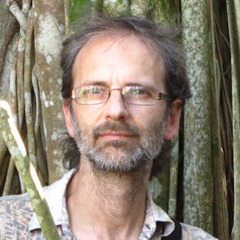
Dr. Juli G. Pausas
Spanish National Research Council (CSIC);Juli Pausas has a PhD in ecology at the University of Barcelona. He is currently a scientist at Centro de Investigación sobre Desertificación (CIDE, Valencia, Spain) of the Spanish National Research Council (CSIC). His research focuses on ecology and evolution of mediterranean and fire-prone ecosystems, and specifically on understanding the role of fire in shaping populations, species (i.e., fire traits), communities (i.e., assembly processes), landscapes, and biomes. He has most experience in the Mediterranean Basin but his work has a global perspective. He has written more than 150 scientific papers, and wrote or edited 3 books (Cork oak woodlands, Fire ecology in Mediterranean ecosystems, Incendios forestales).

Sage Insurance Holdings LLC (USA);Alexandra D. Syphard, Ph.D. is chief scientist at Sage Insurance Holdings LLC and additionally serves as an affiliate of the Conservation Biology Institute and an adjunct professor in Geography at San Diego State University. Alexandra is a research scientist who has spent more than two decades analyzing the ecological and social drivers and impacts of landscape change, particularly focusing on wildfire. Using a variety of mapping, statistical, and modeling approaches, Alexandra investigates how change has occurred in the past, how it is likely to occur in the future, and how different policy or management scenarios may impact ecological and social well-being. For the last decade, Alexandra has concentrated intensely on wildfire risk to communities and identifying the best approaches for balancing fire risk reduction with biodiversity conservation. Her research also focuses on the interactions among wildfire patterns, land use change and urban growth, climate change, vegetation dynamics and biodiversity, invasive species, and species’ range shifts.
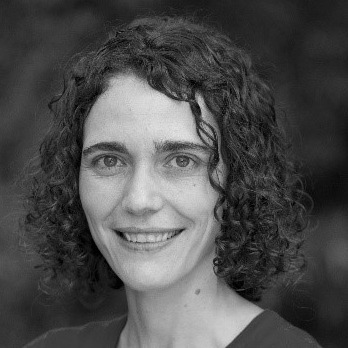
Australian National University;Dr Marta Yebra is a Senior Lecturer in Environment and Engineering at the Fenner School of Environment & Society and Research School of Aerospace, Mechanical, and Environmental Engineering and Mission Specialist of the Institute for Space, all at the Australian National University. She is also Associate editor for Remote Sensing of Environment. Her research focuses on using remote sensing data to monitor, quantify and forecast bushfire hazard and impacts at local, regional and global scales. From 2004-2010 she was employed at the University of Alcala (Spain) working in two large multidisciplinary projects which integrated the main fire risk factors. During her research, she spent time at the Centre for Spatial Technologies and Remote Sensing (University of California at Davis, USA); the National Institute of Agricultural Technology (INTA, Argentina) and the School of Environmental and Life Sciences of Salford (UK). From 2010 to 2013 Marta was a postdoctoral fellow at CSIRO Land and Water as developing innovative methods to predict carbon-water coupling. Dr Yebra has been awarded the 2017 Max Day Environmental Science Fellowship from the Australian Academy of Science, the 2013 CSIRO Pyne-Scott Career Award and the 2019 Bushfire and Natural Hazards CRC’s Outstanding Achievement in Research Utilization award





"MED-Star - Strategies and measures for the mitigation of fire risk in the Mediterranean area" is a thematic integrated strategic project that faces the challenge of strengthening the forecasting, prevention and suppression capabilities of fires in the cooperation area, to protect and enhance the environmental, cultural and tourist resources of the Maritime space.
The general objective of MED-Star is to contribute to the improvement of the capacity of the public institutions involved to jointly prevent and manage the growing risk of fire deriving from climate change, in areas with a high anthropogenic presence and of significant naturalistic interest, also through appropriate adaptation actions.
In particular, the project intends:
- Develop innovative governance models, with the implementation of joint prevention plans;
- Transfer innovative models and methodologies from the scientific world to public administrations;
- Create a joint monitoring and coordination system for the fight against fires;
- Develop communication, awareness and training actions aimed at the resident population, tourists and operators in the sector.
The intervention strategy is based on specific investments and involves the implementation of joint action plans (CAPs) on monitoring networks and data sharing platforms, on fire forecasting and prevention, on strategic planning and management, including adaptation plans to climate change.
The cross-border approach is essential for the integration of public risk management systems and for more effective cooperation between the competent administrations in the field of fire risk. The project partnership is therefore particularly extensive and includes the relevant and competent subjects in terms of prevention and fight against fire risk of the Regions of the cross-border cooperation area.
The MED-Star project is part of the priorities established by Axis 2, Lot 1, Investment Priority 5A of the Italy-France Program; was financed under the III Notice for a total amount of 6,790,523.12 euros (of which 5,771,944.65 euros of EU contribution - European Regional Development Fund - ERDF; / 1,018,578.47 euros of national contribution).