The 1st International Online Conference on Analytica
The IOCANA 2027 is Now OPEN for Abstract Submission and Registration.
Instruction for Authors are available online.
Submit your abstracts HERE.
For any inquiries, please contact us at iocana2027@mdpi.com.
the chair
Dear Colleagues,
It is my great pleasure to welcome you to the 1st International Online Conference on Analytica (IOCANA 2027), organized by MDPI open access journal Analytica (ISSN 2673-4532; IF: 7.4, CITESCORE: 7.2). This inaugural gathering brings together researchers, professionals, and industry experts from around the world to explore the latest advancements in the dynamic field of Analytical Chemistry and all related fields. Our virtual platform enables global accessibility and encourages the sharing of insights, techniques, and innovations that drive progress across various domains of the field.
The IOCANA 2027, held during 10–12 March 2027, will explore a diverse range of cutting-edge topics, including extraction, instrument configurations, green analytical chemistry, sorbents, sample preparation, and applications. With these focus areas, the conference promises to provide a comprehensive overview of the methods and materials that are shaping the future of the Analytical Chemistry.
Our program is organized into six specialized sessions:
S1. Sample Preparation and New Trends
S2. Hyphenated Instrument Configurations
S3. Advances in Analytical Spectroscopy and Spectrometry: Innovations in Instrument Configuration
S4. Advanced Chromatographic Techniques: Instrument Configuration, Optimization, and Performance
S5. Innovations and Applications of Electroanalytical Instrumentation: From Bench-Top to Portable Systems
S6. Applications of Analytical Chemistry
Each session provides a unique opportunity to engage deeply with specific aspects of Analytical Chemistry, examining both fundamental principles and practical applications.
We look forward to the lively discussions and collaborations that will emerge from this gathering and to the shared commitment to advancing our field through innovation and sustainable practices. Thank you for joining us for this exciting event, and we wish you a productive and inspiring conference experience.
Kind regards,
Prof. Dr. Marcello Locatelli
Department of Science, University "G. d'Annunzio" of Chieti-Pescara, Chieti, Italy



Meet Our Chair
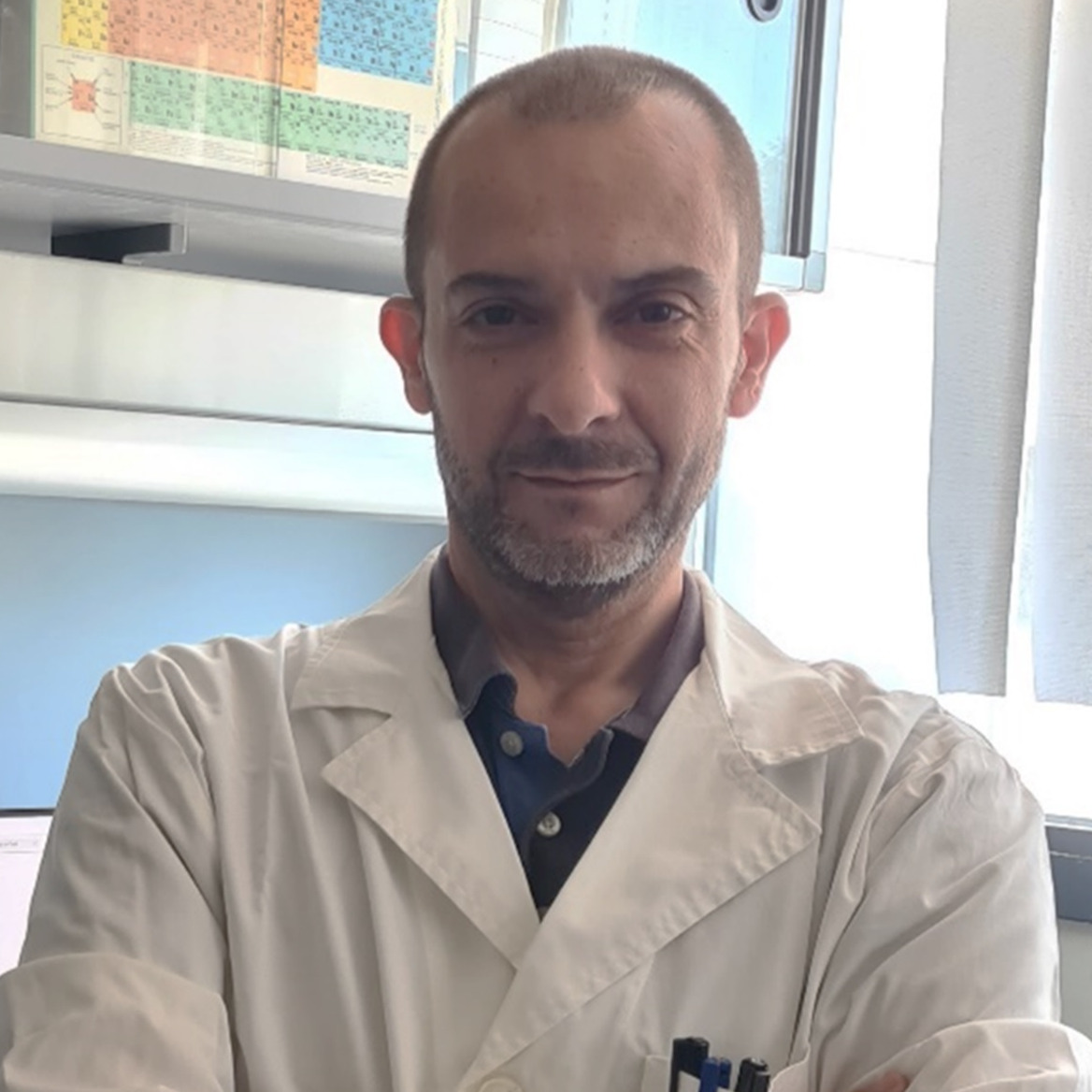
Department of Science, University “G. d’Annunzio” of Chieti-Pescara, Chieti, Italy;The research activity is aimed at the development and validation of chromatographic methods for the qualitative and quantitative determination of drugs and drug associations in complex matrices. In addition to the study of all the processes related to the preanalytic stages, the application of conventional analytical and hyphenated methods (HPLC-MS and HPLC-MS/MS) for accurate, sensitive and selective determinations were applied. These procedures have been applied finding also application in clinical and pre-clinical studies aimed at the evaluation of ADME profiles, in order also to characterize new drug delivery systems to improve their pharmacological properties. In the method development, predictive and chemometric models were applied both for the optimization of extraction protocols and for the final data processing. Particular attention is paid to innovative (micro)extraction techniques and new instrumental configurations for quantitative analysis as well as forensic applications. In the development of HPLC methods, in addition to the classic RP chromatography, are also used normal, chiral, and ion exchange chromatography. Applications (apps) are also developed for the standardized evaluation of analytical methods and procedures. The research activity is mainly focused on chromatographic techniques, but also contemplates the application of spectroscopy and voltammetric techniques for the determination of trace and ultra-trace analytes in complex matrices. Additionally, the application of the Green Chemistry, Green Analytical Chemistry, and Green Sample Preparation principles are always evaluated and considered in the scientific activity. This extends the research activity not only to a single topic, but to several topics of interest that involve the use of the main instrumental analytical techniques. Scientific activity is proven by more than 310 publications in International peer-reviewed Journals, by 33 book chapters and 10 books, by more than 200 oral and poster communications at National and International conferences.
Important Dates
2 Nov
2026
2 Dec
2026
4 Mar
2027
Meet Our Speakers
Department of Medical, Oral, and Biotechnology Science, University “G. d’Annunzio” Chieti-Pescara, Chieti, Italy;My research interests spam from general pathology, clinical pathology and immunology through and experimental and translational pharmacology. As an independent group leader, I coordinate research projects focusing on the elucidation of roles, and functions of endogenous specialized pro-resolving lipid mediators (SPM) resolvins, lipoxins, protectins, and maresins that promote the resolution of inflammation. SPM serve as bioactive mediators in resolution of mucosal, vascular, and tumor-associate inflammatory reaction. Our mission is to define bioactivities of SPM within the inflammatory and immune response and to promote the development of innovative therapies for the treatment of inflammation-based human pathologies such as cystic fibrosis, cardiovascular diseases, and cancer.
Department of Analytical Chemistry, Faculty of Pharmacy, Ankara University, Ankara, Turkey;Prof. Sibel A. OZKAN has been serving as a Professor at Ankara University, Faculty of Pharmacy since 2003. She represents the Turkish Chemical Society within the Analytical Chemistry Division of the European Chemical Society (EuChemS). Her project portfolio includes COST projects, Horizon multi-consortium projects, and bilateral cooperation projects. Her primary research areas include: Electroanalytical Drug Analysis; Sensor development, including nanosensors, biosensors, and MIP sensors; Chromatographic and environmental Analysis; Green and sustainable analytical chemistry; and Method development and validation processes. She has authored more than 525 articles indexed by ISI Web of Science. Her publications also include 12 international books and 75 international book chapters, and she maintains an h-index of 58. She is the recipient of numerous national honors and 1 EU patent. She is the editor of the Journal of Pharmaceutical and Biomedical Analysis (SCI), Section Editor for Essential Chemistry, and the European Regional Editor for Current Pharmaceutical Analysis (SCI).
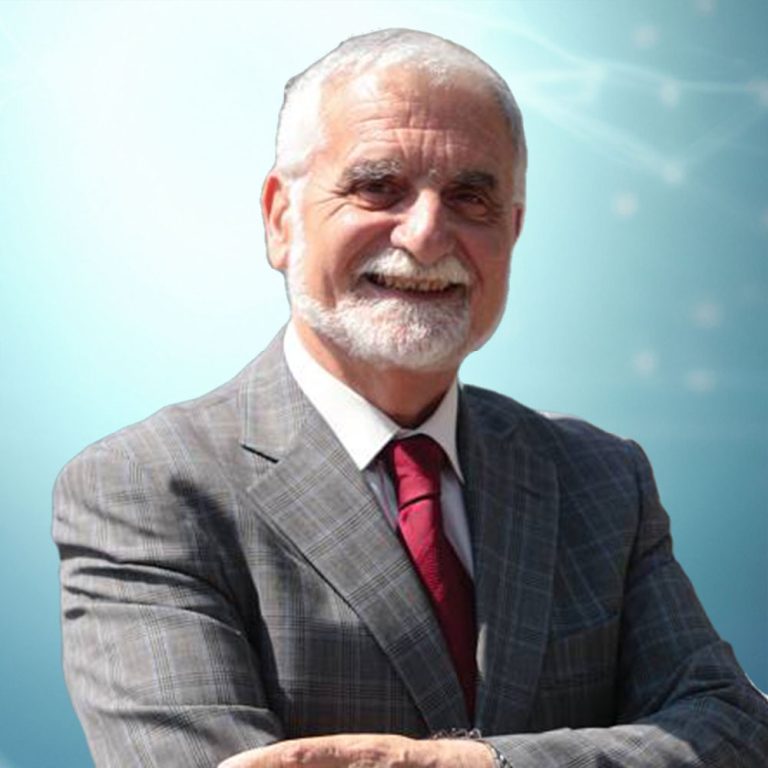
Prof. Dr. Salvatore Fanali
School of Exact and Natural Sciences, Tbilisi State University, Tbilisi, Georgia; Natural Science and Engineering , University of Verona, Verona, Italy;Salvatore Fanali is a Senior Researcher at the Institute of Physical and Analytical Chemistry, School of Exact and Natural Sciences, Tbilisi State University, Tbilisi, Georgia. He was head of the “Capillary Electromigration and Chromatographic Methods” Unit at Institute of Chemical Methodologies-C.N.R., Monterotondo, Italy and member of the Scientific Board at the PhD School in Natural Science and Engineering at University of Verona, Italy. His research focus on i studies on molecular recognition chiral and achiral interactions applying capillary chromatographic and electromigration methods; ii development of new separation techniques electromigration and chromatographic methods such as CZE, MEKC, CEC, nano-LC, and HPLC, respectively and hyphenation with mass spectrometry MS; iii synthesis of new chiral stationary phases for CEC and nano-LC. Preparation of packed capillaries with different stationary phases; iv preparation of monolithic columns and frits; v method optimization for applications to drug, peptides, enantiomers, herbicides, food, environment, biomedical and forensic compounds analysis. He published more than 360 papers in the above mentioned fields. Author of several chapters’ books and co-editor of the three books “Liquid Chromatography” Elsevier, 2013, 2017, 2023. He was Editor of the J. Chromatography A 2007-2023 and Editor-in-Chief of the J. Separation Science. He obtained some international Awards, e.g., Liberti medal in Analytical Chemistry, Nota medal for the contribution given in the field of capillary liquid chromatography. In 2015 he was voted as one of “the Top 100 most influential people in the world of analytical science” Analytical Scientists Power List.
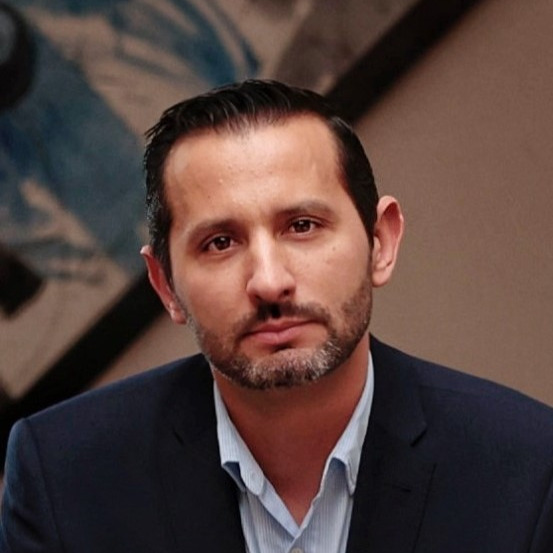
Department of Chemistry, Analytical Chemistry Division, Faculty of Science, University of La Laguna (ULL), San Cristóbal de La Laguna, Spain;Javier Hernández-Borges is Full Professor of Analytical Chemistry (2022) of the Department of Chemistry at the University of La Laguna (ULL) in Tenerife (Canary Islands, Spain). He has published around 155 papers in international indexed journals and 34 book chapters, most of them dealing with analytical method development, in particular, with the determination of microplastics, pesticides, antibiotics, phthalates and estrogenic compounds residues in Environmental and food matrices using mainly chromatographic and electromigration techniques also coupled to mass spectrometry detection. He has directed 11 PhD Thesis, 8 of them awarded with the ULL’s PhD Extraordinary Award. Since 2018, he is coordinator of the Applied Analytical Chemistry Research Group (AChem) at the ULL, which incorporated from the very beginning a pioneer research line at the university devoted to microplastics research, trying to follow a multidisciplinary approach. In particular, his group has been studying the presence of microplastics in air, soils, food, coastal and deep-sea sediments and also in the water column, monitoring environmental contaminants in microplastics, and determining the microplastic content in different living organisms as well as improving analytical methodologies for microplastics determination and analysis.
Center for Intelligent Chemical Instrumentation, Clippinger Laboratories, Department of Chemistry and Biochemistry, Ohio University, Athens, USA;Peter de Boves Harrington is Professor of Chemistry and Biochemistry at Ohio University, where he has taught since 1989. An internationally recognized analytical chemist and chemometrician, his research combines spectroscopy, mass spectrometry, pattern recognition, artificial intelligence, and machine learning to solve problems in forensic science, food and botanical authentication, and chemical instrumentation. He earned his PhD in analytical chemistry from the University of North Carolina at Chapel Hill and his BS in chemistry from Randolph-Macon College. Harrington has directed Ohio University’s forensic chemistry programs and the Center for Intelligent Chemical Instrumentation, mentored numerous graduate students and postdoctoral researchers, and collaborated internationally with academic, government, and industrial laboratories. His honors include the Eastern Analytical Symposium Award for Outstanding Achievement in Chemometrics, election as a Fellow of the Society for Applied Spectroscopy, and recognition as an Ohio University President’s Research Scholar. He remains active in research, teaching, publishing, and professional leadership.
Ms. Ann Li
Ms. Cassia Mao
Email: iocana2027@mdpi.com
For inquiries regarding submissions and sponsorship opportunities, please feel free to contact us.