Please login first

The 2nd International Online Conference on Atoms

Part of the International Online Conference on Atoms series
27–29 January 2027
Event's Timezone: Central European Time
Abstract Submission Deadline
27 October 2026
Abstract Acceptance Notification
27 November 2026

Registration Deadline
25 January 2027

Artificial Intelligence, Atomic Spectra, Atomic Collisions, Astrophysical Applications, Laboratory Plasma Applications, Cold Atoms
Bookmark
Bookmark event Remove event from bookmarks
Add this event to bookmarks
Event Registration Contact Us Become a Sponsor

The IOCAT 2027 is Now OPEN for Abstract Submission and Registration.

Instructions for authors are available online.
Submit your abstracts HERE.

For any inquiries, please contact us at iocat2027@mdpi.com.

Welcome from the Chair

Dear Colleagues,

Following the success of the 1st International Online Conference on Atoms (IOCAT2026), it is my pleasure to welcome you to the 2nd International Online Conference on Atoms (IOCAT2027), which will take place online from 27 to 29 January 2027. The conference is organized by the MDPI open access journal Atoms (ISSN: 2218-2004; Impact Factor: 1.5).

The first edition of IOCAT demonstrated the strong interest of the community in an international forum dedicated to atomic physics and its applications. Building on this success, the 2027 edition will extend over three days, allowing for a broader scientific program and more opportunities for discussion and interaction among participants.

IOCAT2027 aims to bring together researchers working in the diverse areas of atomic physics and related fields, providing a platform to present recent advances in and exchange ideas on both theoretical and experimental developments.

The conference will feature the following sessions:
S1. Atomic structure and spectroscopy: theory and experiment;
S2. Atomic collisions and strong field processes;
S3. Atomic data for astrophysics and laboratory plasmas;
S4. Cold atoms, quantum control and quantum technologies;
S5. Computational and AI methods in atomic physics;
S6. Fundamental tests and precision measurements with atoms.

These topics reflect the breadth and vitality of modern atomic physics, from fundamental studies of atomic structure and interactions to emerging applications in quantum technologies, astrophysics, and precision measurements.

As an online international conference, IOCAT2027 offers researchers from around the world the opportunity to participate and to exchange ideas without the need for travel, enabling a wide and diverse participation.

I would like to thank all members of the scientific and organizing committees for their efforts in preparing this conference, as well as all speakers and participants for contributing to its success.

I look forward to welcoming you to IOCAT2027 for three days of stimulating scientific exchange.

Kind regards,
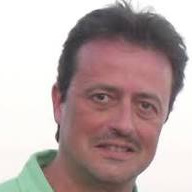
Prof. Dr. Pascal Quinet
Atomic Physics and Astrophysics, University of Mons, Belgium.

Follow the conference organizer on Social Media

Event Chair

F.R.S.-FNRS Research Director, Lecturer Head of the Department of Atomic Physics and Astrophysics, University of Mons, Belgium, Department of Physics, Faculty of Science, University of Liege, Belgium

Introduction
Bio
Pascal Quinet has teaching activities in the fields of Atomic and Molecular Physics, Plasma Physics, Spectroscopy and Astrophysics at the Bachelor and Master levels in Physical Sciences. Pascal Quinet is Research Director of the F.R.S.-FNRS and part-time Professor. He is Head of the Atomic Physics and Astrophysics Unit and has research activities in the study of atomic (radiative and collisional) processes of particular interest in astrophysics, plasma physics and material sciences. He is also Editor-in-Chief of Atoms, an international peer-reviewed journal in Atomic Physics.

Session Chairs

Prof. Dr. Anil Pradhan

Department of Astronomy, The Ohio State University, Columbus, USA

Introduction
Bio
Anil Pradhan is professor of astronomy, chemical physics, and biophysics at the Ohio State University in Columbus Ohio USA. He specializes in atomic astrophysics and applications to astronomy and plasma fusion diagnostics. Other works also include nanobiotechnology using radiation therapy and diagnostics (theranostics). He has over 300 publications and co-author of the textbook "Atomic Astrophysics and Spectroscopy" with Sultana Nahar (Cambridge University Press 2011). He is member of two major international projects, the Opacity Project and the Iron Project.

Prof. Sultana Nurun Nahar

Department of Astronomy, The Ohio State University, Columbus, USA

Introduction
Bio
Prof. Sultana Nurun Nahar is a Bangladeshi-American physicist. She is a research scientist in the Department of Astronomy at Ohio State University. Her research is on atomic processes of photoionization, electron-ion recombination, photoexcitation, collision. Her contributions include development of the unified method for total electron-ion recombination, theoretical spectroscopy for Breit-Pauli R-matrix method, resonant nano-plasma theranostics (RNPT) method for cancer treatment.

Dr. Omar Ariel Fojón

Rosario Physics Institute (National Research Council, CONICET-UNR); National University of Rosario (UNR), Argentina

Introduction
Bio
Omar Fojón is professor of Quantum Mechanics at the Universidad Nacional de Rosario and researcher at CONICET in the field of Atomic Collisions. His field of theoretical research includes positron impact on atoms and molecules, (e,2e) reactions, fast ion impact on atomic and molecular targets, basic reactions involving molecules of biological interest, two-center interferences in electron emission from molecules, photoionization and interaction of attopulses with atomic and molecular systems.

Dr. (Emeritus) Anand K. Bhatia

NASA/Goddard Space Flight Center in Greenbelt, Maryland, USA

Introduction
Bio
Anand K. Bhatia is Scientist Emeritus at NASA/Goddard Space Flight Center in Greenbelt, Maryland, USA. Before receiving his PhD from the University of Maryland in 1963, he taught for a year at Wesleyan University in Connecticut. He was a National Academy Research Fellow from 1963 to 1965 and then joined the staff at Goddard. He developed the method of symmetric three-body Euler angle decomposition (with A. Temkin) for finite and infinite mass nucleus. He specializes in calculations of bound states, Feshbach resonances, and scattering of electrons and positrons using his hybrid theory. He has applied his theory to photoabsorption and has applied his results to the opacity of the Sun and opacity of the late-type stellar atmosphere, pointing out the importance of positrons in addition to electrons. He is a Fellow of the American Physical Society.

Committee Members

National Research Council, Rome, Italy

Introduction
Bio
Master Degree in Chemistry (1997) and PhD in Environmental Sciences (2000) at the University of Bari. CNR Researcher since 2001. Research activity: theoretical calculation of dynamical data for elementary processes in plasmas, investigation of the role of excited states (vibrational and electronic) of target molecules in affecting the probability of electron-impact-induced processes, simplified approaches in electron scattering, post-HF methods for electronic structure calculations, derivation of elastic transport and resonant charge-exchange cross sections for transport properties of plasmas. Co-author of 106 papers in JCR journals, of many communications at international conferences and of two books of the Springer Series on Atomic, Optical, and Plasma Physics. Co-editor of the multi-author book “Hypersonic Meteoroid Entry Physics” IOP Series in Plasma Physics (2019). Member of the Team of the EquilTheTA tool, Administrator of the Phys4Entry database. Member of the International Advisory Board of QUANTEMOL Database and of the International Program Committee of the ICAMDATA conference. Member of the Editorial Board of Scientific Reports – section Atomic and Molecular Physics.
Research Keywords
S2. Atomic collisions and strong field processes.

Visiting researcher at the Physics Department, University of Lund, Sweden

Introduction
Bio
He received his PhD in Atomic Physics, specializing in beam-foil spectroscopy, under the guidance of Prof. Indrek Martinson in 1988. He remained at Lund until accepting a full professorship at the EBIT Laboratory of Fudan University in Shanghai, China. There, he spent more than 14 years studying the spectroscopy of highly charged ions using Electron Beam Ion Traps as a light source. One of his notable contributions to spectroscopy was the co-discovery of a magnetic-sensitive transition in the spectrum of Fe X. The resulting spectral line is sensitive to the magnetic field of the solar corona and has provided a valuable diagnostic tool for solar physics. Since retiring from Fudan University, he has remained active in education, first as a high school teacher and later as an internet educator and public science communicator.
Research Keywords
S3. Atomic data for astrophysics and laboratory plasmas.

The University of Western Australia, Perth, Australia

Introduction
Bio
Prof. Dr. Snezhana Abarzhi is a prominent researcher in Theoretical and Applied Physics, with a focus on the dynamics of complex systems. Her pioneering work addresses fluid instabilities and mixing, making significant contributions to scientific computing and applied mathematics. She earned her PhD in Mathematics & Physics in 1994 from the Landau Institute for Theoretical Physics and the Kapitza Institute for Physical Problems in Russia. Prior to that, she completed her MS in Applied Mathematics & Physics at the Moscow Institute for Physics & Technology in 1990, and obtained her BS in Applied Mathematics & Physics as well as Molecular Biology in 1987 from the same institution. Since 2016, Prof. Abarzhi has served as Professor and Chair of Applied Mathematics at the University of Western Australia. She has held prestigious positions, including Guest Professor at Caltech and Visiting Professor at Stanford University. Her previous roles include professorships at Carnegie Mellon University and the University of Chicago, among other leading institutions worldwide.
Research Keywords
S3. Atomic data for astrophysics and laboratory plasmas.

Research Professor Astronomical Observatory Volgina 7, Belgrade, Serbia

Introduction
Bio
Milan S. Dimitrijevic is retired (2012) astronomer of Astronomical Observatory in Belgrade. Director of Belgrade Astronomical Observatory 1994-2002. Editor in Chief of ''Serbian Astronomical Journal'' (and its precursor) and of Publications of Astronomical Observatory of Belgrade 1987-2002, President of Astronomical Society ''Rudjer Boskovic'' 1982-2004, Editor in Chief of the journal „Vasiona (Universe)“ 1985-2004, President of the Society of Astronomers of Serbia 2008-2014. Federal Minister for Science, Technology and Development 1993-94. Member of the Council of European Astronomical Society (2008-2012), Co-president of Euro-Asian Astronomical Society (2024-). Since 2009 Affiliated Fellow of the Paris Observatory. Author of ~ 350 papers in international scientific journals and of more than ten books. Scientific papers of Milan S . Dimitrijević, are primarily in the field of astronomy, but also in certain areas of physics, applied mathematics, information technology, and the history and philosophy of science. Main scientific interests: Stark broadening, Line profiles, Line broadening, Astronomical spectroscopy, Atomic and molecular collision processes in Stellar atmospheres, Astroinformatics, History and Philosophy of Astronomy, Astronomy in Culture.
Research Keywords
S2. Atomic collisions and strong field processes

Istituto per la Scienza e Tecnologia dei Plasmi (ISTP), Italy,
Consiglio Nazionale delle Ricerche (CNR), Italy

Introduction
Talk
S2. Atomic collisions and strong field processes.
Bio
Vincenzo Laporta earned a master’s degree in physics in 2003 and a Ph.D. in High-Energy Physics in 2007 from the University of Bari. Following the completion of his doctoral studies, he pursued postdoctoral research in France, working at the École Polytechnique, the Institut de Physique de Lyon, and the University of Le Havre, where he obtained the Habilitation à Diriger des Recherches (HDR). He also held research positions at University College London and in the United States. In 2018, he was appointed Research Scientist at the National Research Council of Italy and is currently based at the University of Bari. His research focuses on molecular dynamics and the modeling of systems under thermodynamic non-equilibrium conditions. In particular, he employs ab initio quantum chemistry methods to investigate electron-induced processes in molecules and molecular ions. His work addresses phenomena such as molecular dissociation, vibrational excitation, and ionization. The resulting theoretical and computational models have applications across a broad range of fields, including plasma-assisted combustion, atmospheric entry of spacecraft into planetary environments, controlled nuclear fusion, the physics and chemistry of the interstellar medium, and the prebiotic synthesis of biomolecules.

Registration


The registration for IOCAT 2027 will be free of charge! The registration includes attendance to all conference sessions.

If you are registering several people under the same registration, please do not use the same email address for each person, but their individual university email addresses. Thank you for your understanding.

Please note that the submission and registration are two separate parts. Only scholars who registered can receive a link to access the conference live streaming. The deadline for registration is 25 January 2027.

Instructions for Authors

Procedure for Submission

IOCAT 2027 will accept abstracts only. The accepted abstracts will be available online on Sciforum.net during and after the conference.

Important Deadline

1. Deadline for abstract submission: 27 October 2026.
2. Abstract acceptance notification: 27 November 2026.

Please note:
An abstract acceptance email only confirms that your abstract has been accepted. Oral or poster presentation invitations are determined separately by the conference chairs, and you will receive an additional email with the presentation result.

Abstract Submission

If you do not have an account, please register at www.sciforum.net. After logging in, submit your abstract using the “Submit Abstract” button on the conference homepage. No template is required.

Abstract Requirements

1. Types of Submissions
- Accepted: Original research abstracts; systematic reviews or meta-analyses abstracts (must comply with PRISMA 2020).
- Not accepted: Narrative, scoping, comparative, perspective, opinion, or essay-style reviews.

2. Content Requirements
- Length: 200-300 words.
- Structure: Introduction, Methods, Results, Conclusions.
- Language: Clear, publication-ready English.
- Originality: Must be original and unpublished; previously published abstracts will not be considered.

3. Authorship
- The submitting author must ensure all co-authors approve the content.
- Authors may submit multiple abstracts, but only one abstract per author may be selected for an oral presentation.

Presentation Requirements

1. Each abstract must designate one presenter. To change the presenter, please contact us after you receive the oral/poster presentation invitation.
2. Only live presentations are accepted.
3. Presenters who do not attend the live session will not be eligible for awards or presentation certificates.

Oral Presentation and Slides Preparation

The slot for the oral presentation is 15 mins. We advise that your presentation lasts for a maximum of 12 mins, leaving at least 3 mins for the Q&A session.

Authors are encouraged to prepare presentations using PowerPoint or equivalent software for online display alongside their abstract. If provided, slides will be presented directly on the conference website via the Sciforum.net slide viewer and should be prepared in the same format as a traditional conference presentation of research results. All slides must be converted to PDF format prior to submission to ensure accurate online display.

Each presentation should:

- Communicate the research question or objective, methodology, key results, and scientific novelty;
- Use a clear and logical structure, typically Introduction-Methods-Results&Discussion structure (IMRaD) or a field-appropriate alternative;
- Emphasize the relevance of the work;
- Support key findings with clear figures or tables where appropriate;
- Conclude with a critical interpretation of the results and their impact.

Poster Presentation

Posters should be designed to allow independent understanding of the research and clearly present the essential elements of the study.

Each poster should include:

- Title, authors, affiliations, and contact details (clearly displayed at the top);
- Brief introduction outlining the research objective;
- Concise methodology summary;
- Main results, supported by clear, well-labeled figures or tables where appropriate;
- Short conclusion summarizing key findings and their relevance.

Technical specifications:
Dimensions (cm): 84.1 × 118.9 (A0 - portrait)
Resolution:300 dpi
Pixel size (portrait, 300 dpi):9933 × 14043 px
Minimum font size:≥24

The poster template can be downloaded HERE. We will reach out to you closer to the dates of the conference with more information.

Note: The uploaded poster may be used as provided and serves as a reference. However, as long as the technical specifications are followed, scholars are welcome to use any poster template of their choice.
Potential Conflicts of Interest

It is the author's responsibility to identify and declare any personal circumstances or interests that may be perceived as inappropriately influencing the representation or interpretation of clinical research. If there is no conflict, please state "The authors declare no conflicts of interest." This should be conveyed in a separate "Conflict of Interest" statement preceding the "Acknowledgments" and "References" sections at the end of the manuscript. Any financial support for the study must be fully disclosed in the "Acknowledgments" section.

Copyright

MDPI, the publisher of the Sciforum.net platform, is an open access publisher. We believe authors should retain the copyright to their scholarly works. Hence, by submitting an abstract to this conference, you retain the copyright to the work, but you grant MDPI the non-exclusive right to publish this abstract online on the Sciforum.net platform. This means you can easily submit your full paper (with the abstract) to any scientific journal at a later stage and transfer the copyright to its publisher if required.

Publication Opportunities

1. Atoms Journal Publication
Participants in this conference are cordially invited to contribute a full manuscript to the conference's Special Issue, published in Atoms (ISSN 2218-2004, Impact Factor 1.5), with a 20% discount on the publication fee. Conference discounts cannot be combined with reviewer vouchers. All submitted papers will undergo MDPI’s standard peer-review procedure. The abstracts should be cited and noted on the first page of the paper.
More details about the Special Issue to be announced.

2. Proceeding Paper Publication
Authors of accepted abstracts are highly encouraged to submit an extended proceeding paper (ideally 4–8 pages in length) for the conference's dedicated proceedings volume in the Physical Sciences Forum (ISSN: 2673-9984) for free, please submit it after the conference.

Proceeding paper submission deadline: 16 March 2027

Please click HERE to submit your proceeding paper to the Physical Sciences Forum, and be sure to disclose the conference information in your cover letter or mention the conference name in your submission.

IOCAT 2027 -proceeding template

Publication Notice: Proceeding papers will undergo peer-review procedure. Acceptance at the conference does not ensure final publication.

Event Awards

To acknowledge the support of the conference's esteemed authors and recognize their outstanding scientific accomplishments, we are pleased to announce the establishment of the Best Oral Presentation Award and Best Poster Award.

The Awards
Best Oral Presentation Award and Best Poster Award

Number of Awards Available: 3

1. Best Oral Presentation Award
Eligibility: Open to all authors selected as oral speakers who have delivered their presentation. Failure to present, delegation of the presentation to another person, or use of AI-generated voice or similar substitutes will result in disqualification.
Criteria: Evaluation considers scientific rigor (clear, literature-supported research question or hypothesis, appropriate methodology, robust analysis and critical discussion of the results), IMRaD/field-appropriate structure, clarity of presented data (clear, well-labeled figures and tables), presentation skills and audience engagement, demonstrated scientific novelty and impact.
Prize: An award of CHF 300, a free publication and a certificate in recognition of your outstanding contribution.

2. Best Poster Award
Eligibility: Open to all authors who have presented their work through posters. Failure to present, delegation of the presentation to another person, or use of AI-generated voice or similar substitutes will result in disqualification.
Criteria: Evaluation considers scientific rigor (clear, literature-supported research question or hypothesis, appropriate methodology, robust analysis, and critical discussion of the results), IMRaD/field-appropriate structure enabling independent understanding, clarity of presented data (clear, well-labeled figures and tables), presentation skills (if orally presented), demonstrated scientific novelty and impact.
Prize: Two awards of CHF 300, a free publication and a certificate each, in recognition of your outstanding contribution.
Winner Announcement: The award winners will be evaluated and selected by the scientific committee after the conference. Results will be announced on the website and all winners will be individually contacted via email.

Sponsors and Partners

For information regarding sponsorship and exhibition opportunities, please click here.

Organizers


Media Partners

Conference Secretariat

Ms. Teodora Sandru, PhD
Mr. Ionut Spatar
Mr. Russell Wang

Email: iocat2027@mdpi.com

For inquiries regarding submissions and sponsorship opportunities, please feel free to contact us.

Top