The 3rd International Online Conference on Biomimetics
IOCB2026 : Call For Registration
Thank you for submitting your abstract to the IOCB 2026.
The abstract acceptance notification will be sent by 20 September 2024.
Registration remains open. Secure your spot and join us for a stimulating conference. Register for free HERE.
For any enquiries, please contact us at iocb2026@mdpi.com.
the chair
S2. Biomimetic Materials—Structures, Surfaces and Interfaces
S3. Bioinspired Robotics and Locomotion
S4. Bioinspired Sensorics, Information Processing and Control
S5. Biological Optimisation and Management



Meet Our Chair

Department of the Functional Morphology and Biomechanics, Zoological Institute of the University of Kiel, Kiel, Germany;Stanislav Gorb is Professor and Director at the Zoological Institute of the Kiel University, Germany. He received his PhD degree in zoology and entomology at the Schmalhausen Institute of Zoology of the Ukrainian Academy of Sciences in Kiev (Ukraine). Gorb was a postdoctoral researcher at the University of Vienna (Austria), a research assistant at University of Jena, a group leader at the Max Planck Institutes for Developmental Biology in Tübingen and for Metals Research in Stuttgart (Germany). Gorb’s research focuses on morphology, structure, biomechanics, physiology, and evolution of surface-related functional systems in animals and plants, as well as the development of biologically inspired technological surfaces and systems. He received the Schlossmann Award in Biology and Materials Science in 1995, International Forum Design Gold Award in 2011 and Materialica "Best of" Award in 2011. In 1998, he was the BioFuture Competition winner for his works on biological attachment devices as possible sources for biomimetics. In 2018, he received Karl-Ritter-von-Frisch Medal of German Zoological Society. Gorb is Corresponding member of Academy of the Science and Literature Mainz, Germany (since 2010) and Member of the National Academy of Sciences Leopoldina, Germany (since 2011). Gorb has authored several books, more than 500 papers in peer-reviewed journals, and five patents.
Important Dates
6 Sep
2026
20 Sep
2026
18 Nov
2026
Meet Our Speakers
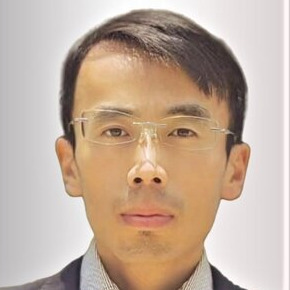
The Hong Kong University of Science and Technology, Hong Kong, China;Prof. Yang received his Ph.D. degree from the University of Toronto and his bachelor's degree from the Harbin Institute of Technology. His research interests are Vibration and Mechatronics, with a special focus on developing smart materials and dynamic systems for sensors, actuators, and energy harvesters. This interdisciplinary research area requires combining knowledge and skills in Mechanical Engineering, Electrical Engineering, and Materials Science and Engineering. He has applied for over 30 patents in China and the USA, and authored over 160 academic articles in high-impact journals such as Nature, Nature Comm., Science Robotics, Science Advances, Joule, EES, AM, etc. Prof. Yang is an IEEE Senior Member, recipient of the NSFC Young Scientist Scheme (Type B), and has been recognized as one of the “Top 2% Scientists in the World” by Stanford University.

School of Engineering, Computing and Mathematical Sciences, Auckland University of Technology, Auckland, New Zealand;Professor Nikola K Kasabov is a Life Fellow of IEEE, Fellow of the Royal Society of New Zealand, Fellow of the INNS College of Fellows, DVF of the Royal Academy of Engineering UK. He has Doctor Honoris Causa from Obuda University, Budapest. He is the Founding Director of KEDRI and Professor Emeritus at the School of Engineering, Computing and Mathematical Sciences at Auckland University of Technology, New Zealand. He is also Visiting Professor at the Institute for Information and Communication Technologies of the Bulgarian Academy of Sciences and Dalian University, China. Kasabov is Director of Knowledgeengineering.ai and member of the advisory board of Conscium.com. He is Past President of the Asia Pacific Neural Network Society (APNNS) and the International Neural Network Society (INNS). Kasabov holds MSc in computer engineering and PhD in mathematics from TU Sofia. His main research interests are in the areas of neural networks, intelligent information systems, soft computing, neuroinformatics, spiking neural networks. He has published more than 750 publications, highly cited internationally. He has extensive academic experience at various academic and research organisations in Europe and Asia. Kasabov has received a number of awards, among them: INNS Ada Lovelace Meritorious Service Award; NN journal Best Paper Award; APNNA ‘Outstanding Achievements Award’; INNS Gabor Award for ‘Outstanding contributions to engineering applications of neural networks’; EU Marie Curie Fellowship; Medal “Bacho Kiro” and Honorary Citizen of Pavlikeni, Bulgaria; Honorary Member of the Bulgarian-, the Greek- and the Scottish Societies for Computer Science.
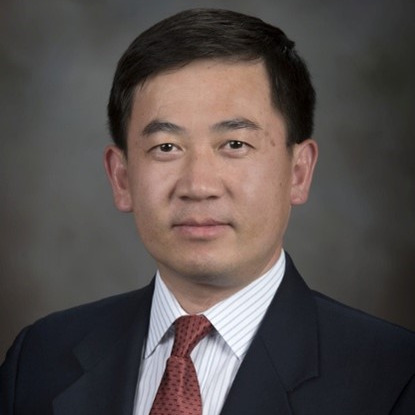
Department of Mechanical Engineering, Virginia Tech, Blacksburg, USA;Dr. Jiangtao Cheng received his Ph.D. degree in Physics from Purdue University in 2002. Prior to joining the Department of Mechanical Engineering at Virginia Tech in 2015 as Associate Professor, Dr. Cheng was a research scientist at Teledyne Scientific Company (formerly Rockwell Science Center). He has extensive experience in micro/nano-fluidics, optofluidics, thermal-fluid science, multiphase fluid flow, MEMS, and CFD. He has published more than 90 papers in these fields. He has won 6 times of Best Paper/Best Poster Awards in international conferences. Dr. Cheng has been on the editorial boards of 8 international journals. Dr. Cheng became elected fellow of the American Society of Mechanical Engineers (ASME) in 2021. He won the New Directions award of American Chemical Society (ACS) Petroleum Research Foundation in 2026. His recent work on “Bubble-burst-induced puddle jumping and jet printing” was reported as editor’s choice by Physics World of Institute of Physics (IOP).
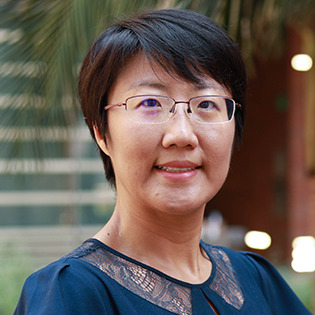
Department of Materials Science and Engineering, University of California, Los Angeles, USA;Dr. Ximin He is an Assistant Professor at the University of California, Los Angeles. She received her Ph.D. Degree in Chemistry, Nanoscience, and Optoelectronics from the University of Cambridge in 2010. She worked as a Research Associate at Harvard University (2010–2013). In 2014, she moved to Arizona State University and was promoted to Assistant Professor. She has been awarded the CIFAR Azrieli Global Scholar (2019–2021), the International Society of Bionic Engineering (ISBE) Outstanding Youth Award (2019), and the Hellman Fellows Award (2018). Her research topics mainly include Optical sensing of chemical and biological molecules, Bioinspired self-regulating materials, Chemo-mechanically modulated separation of metal ions and cancer cells, Novel stimuli-responsive polymers for soft robots, Photo-responsive materials for optics, photonics, waveguides, and photo-harvesting, Biomaterials for controlled cell adhesion and migration, and 3D printing technology.

Hangzhou International Innovation Institute, Beihang University, China;Dr. Linlin Kang is an Associate Professor at the Hangzhou International Innovation Institute, Beihang University, where she leads the research group on bio-inspired fluid mechanics. She received her B.S. in Theoretical and Applied Mechanics from the University of Science and Technology of China (2014) and her Ph.D. in Fluid Mechanics from Peking University (2020). She then spent five years at Westlake University as a Postdoctoral Fellow and later Associate Researcher. Her research interests include biomimetic propulsion of swimming and flying organisms, vortex dynamics, fluid–structure interaction, and reinforcement-learning-based flow control. She has published more than 30 SCI-indexed papers, including recent articles in the Journal of Fluid Mechanics and Physics of Fluids. She currently serves as a young editorial board member of several journals, including Theoretical and Applied Mechanics Letters, and as Guest Editor for Biomimetics. She has led more than ten research projects as Principal Investigator, including grants from the National Natural Science Foundation of China (General and Young Scientists Programs), the Zhejiang Provincial Natural Science Foundation, and the Zhejiang Young Talent Support Program.

Blacksburg Virginia Tech, USA;Prof. Dr. Giorgia Cannici is an Assistant Professor at Virginia Tech’s School of Architecture whose research focuses on engineered living materials. She is a registered architect in Europe, trained at Politecnico di Milano and Rensselaer Polytechnic Institute, and has worked at Zaha Hadid Architects, Foster + Partners, and UNStudio. After more than a decade in practice, she retrained in biology and engineering to investigate biomaterials and their translation into architecture. She holds a Master of Liberal Arts in Extension Studies in Biology from Harvard University, an MSc in Biomedical Engineering from Tufts University, and a PhD in Biological Systems Engineering from Virginia Tech. Her research focuses on protein-based materials, biomineralization, and the engineering of biological systems to control hierarchical material organization. She investigates how biological control at the molecular and cellular levels can translate into material organization at the microscale and, ultimately, into geometry and material behavior at larger scales, aiming to reduce reliance on extractive, energy-intensive production methods and advance a more sustainable built environment.

BioTRIZ Ltd., Avon, United Kingdom;Dr. Olga Bogatyreva is an acclaimed expert in inventive problem solving and bio-inspired design, with extensive expertise in behaviour and social psychology, biology, and complex system theory. She holds a DSc in Complexity Theory and a PhD in Biology and is also a certified TRIZ expert by MATRIZ. As the Director of BioTRIZ Ltd., Olga collaborates with educational institutions in Europe, Asia and the UK, such as University College London, King’s College London, and the University of Oxford. Dr. Olga Bogatyreva developed a problem-solving tool for astronauts on missions to Mars and the Moon (and this course is based on this work!), commissioned by the European Space Agency. This tool, based on her research of ant behaviour, understands messages in multiple languages and detects early signs of off-nominal situations. It has the potential to greatly improve our knowledge of how natural information systems work Dr. Olga Bogatyreva's field of interest centres on bio-inspired organisational behaviour and group decision-making. Her pioneering work on the individual behaviour of ants in their natural environments is groundbreaking: She discovered how ants resolve social and ecological crises. With over 100 scientific publications, two patents and three books to her name, she actively implements her research in business coaching and consultancy across industries in the UK, Europe and Japan.
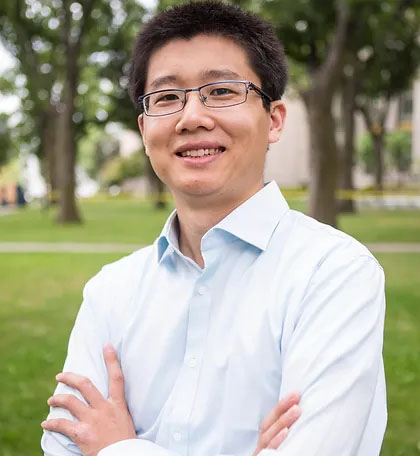
Department of Materials Science and Engineering, University of Pennsylvania, Philadelphia, Pennsylvania, USA;Prof. Dr. Li Ling is an Associate Professor and Graduate Group Chair in the Department of Materials Science and Engineering at the University of Pennsylvania. He joined the department in 2024, and before this, he served as a faculty member and Mary V. Jones Faculty Fellow in the Department of Mechanical Engineering at Virginia Tech from 2017 to 2023. He earned his undergraduate degree from the National University of Singapore, where he researched nano- and micro-particle synthesis. He completed his Ph.D. at MIT in 2014, focusing his dissertation research on the multifunctional designs of biomineralized structures. Following his Ph.D., he undertook postdoctoral research at Harvard University, specializing in colloidal self-assembly and bio-inspired designs.
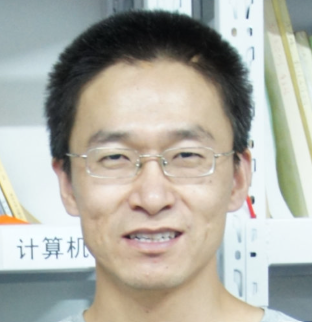
Prof. Dr. Zhihua Zhao
Tsinghua University, Beijing, China;

Prof. Yao Yuxing
Department of Chemical and Biological Engineering, Hong Kong University of Science and Technology, Hong Kong;

Coastal Carolina University, Conway, USA;






Q1. After I submit an abstract, how can I be the oral or poster presenter?
After the reviewing process, if it is accepted, you feel free to request for the type of presentation, then our Chairs will select oral presenters firstly, if you are not selected as oral presenter, you also have chance to present your poster.
Q2. I have been selected for an oral/poster presentation. When will it take place, and how can I join?
You can check the exact schedule on the 'conference program' available on the official website. Within one week before the conference, you will receive multiple reminders with the login link and session details. Please make sure to check your email regularly.
Q3. My abstract was accepted as a poster presentation. How should the Poster Presentation be?
Poster presentations will be conducted online in the “Flash Poster” format, which includes a 5-minute live presentation to share your screen and quick present your poster, without a Q&A session.
Q4. I cannot find the option or link to upload my oral presentation slides/poster. When and how can I upload it?
Only the submitting author has access to the “upload” function on Sciforum. If you cannot upload your file, please send it along with your Sciforum ID to iocb2026@mdpi.com. Please upload your file to the Sciforum platform earlier before the conference begins.
Q5. Will I receive a Certificate of Participation? How and when will the certificates be issued?
Yes. All participants to the event and attendees to the live session are entitled to a certificate after the conference. Certificates will be available for download in the My Certificates section on Sciforum after conference closing, and you will be notified by email once they are ready.
Q6. My abstract has been accepted but I did not receive a notification for an oral or poster presentation. Can I still present my work?
Due to limited time slots, not all accepted abstracts can be included as oral or poster presentations, which are selected by scientific committee. However, all accepted abstracts are eligible to upload a poster via your author dashboard. All uploaded posters will be displayed in the Poster Gallery section on the conference website from the start of the event, where participants can view and comment during the conference.
Ms. Coco Hou
Ms. Heather Han Hnin Soe
For inquiries regarding submissions and sponsorship opportunities, please feel free to contact us.
Email: iocb2026@mdpi.com