Please login first

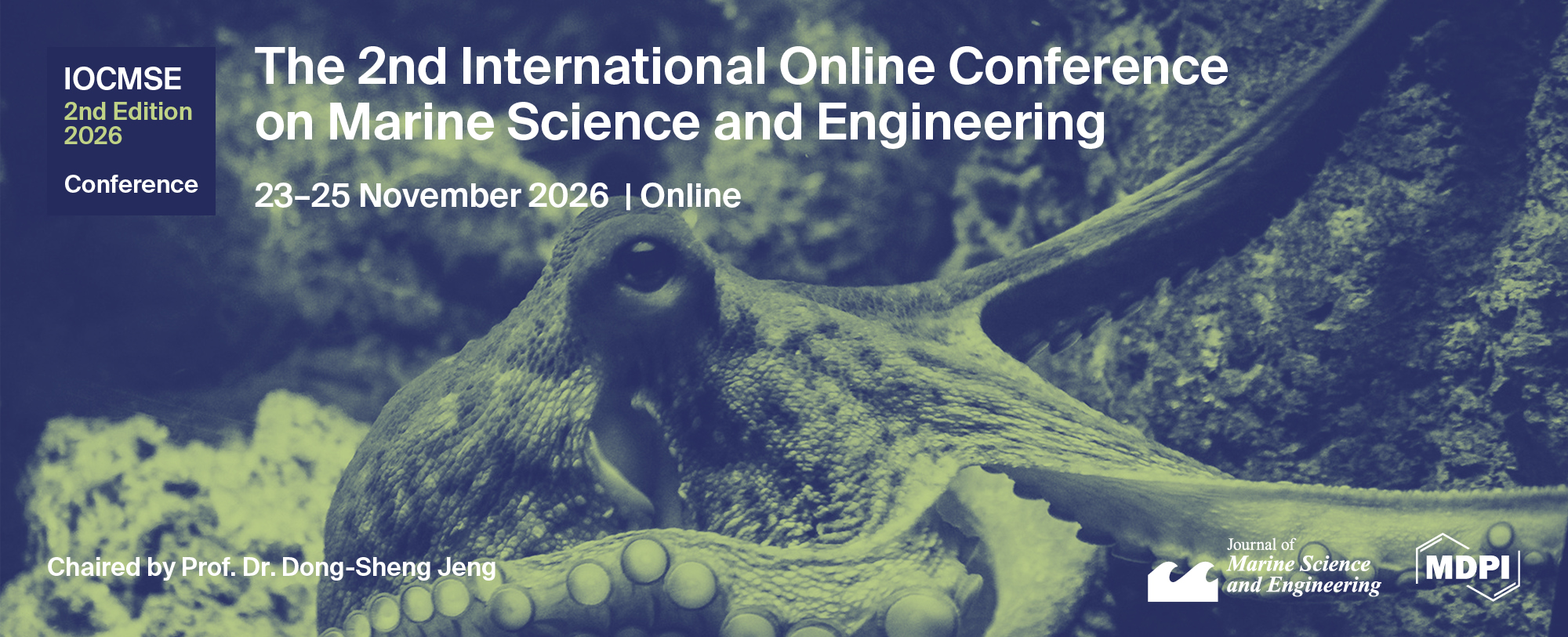
The 2nd International Online Conference on Marine Science and Engineering

Part of the International Online Conference on Marine Science and Engineering series
23–25 November 2026
Event's Timezone: Central European Time
Abstract Submission Deadline
10 July 2026
Abstract Acceptance Notification
4 September 2026

Registration Deadline
18 November 2026

Marine Biology, Physical Oceanography, Ocean Engineering, Coastal Engineering, Geological Oceanography, Marine Environmental Science, Marine Pollution, Marine Aquaculture
Bookmark
Bookmark event Remove event from bookmarks
Add this event to bookmarks
Event Registration Contact Us Become a Sponsor
The IOCMSE 2026 is Now OPEN for Abstract Submission and Registration.

Instructions for authors are available online.
Submit your abstracts HERE.

For any inquiries, please contact us at iocmse2026@mdpi.com.

Welcome from the Chair

Dear Marine Science and Engineering Community,

It is our great pleasure to welcome you to the 2nd International Online Conference on Marine Science and Engineering (IOCMSE 2026), organized by MDPI’s Journal of Marine Science and Engineering and held online on 23–25 November, 2026.

Building on the success of IOCMSE 2025, this conference continues to serve as an international platform for the exchange of ideas and recent advances in marine science and engineering. With growing environmental and technological challenges facing marine and coastal systems, interdisciplinary research and international collaboration are more important than ever.

IOCMSE 2026 will feature sessions covering a wide range of core and emerging topics, including the following:
S1. Ocean Engineering;
S2. Coastal Engineering;
S3. Geological Oceanography;
S4. Marine Biology and Aquaculture;
S5. Marine Environmental Science and Pollution;
S6. Physical Oceanography.

We warmly invite researchers and practitioners worldwide to participate in IOCMSE 2026 by sharing original research and practical advancements. We look forward to another engaging and impactful conference.

Sincerely,
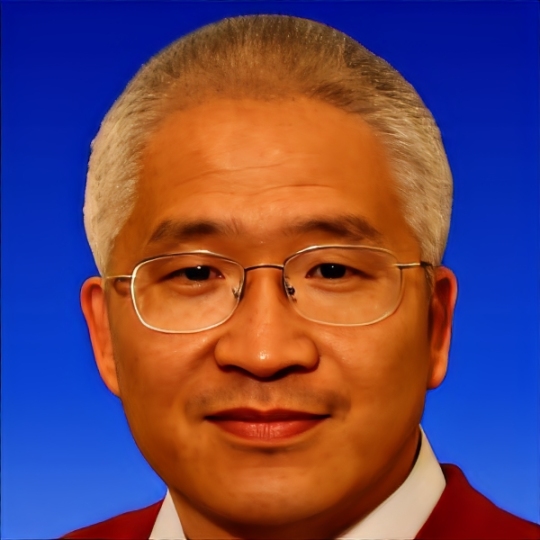
Prof. Dr. Dong-Sheng Jeng
Griffith University, Australia
Conference Chair of the 2nd International Online Conference on Marine Science and Engineering

Follow the conference organizer on Social Media


Event Chair

School of Engineering and Built Environment, Griffith University, Southport, Australia

Introduction
Bio
Professor Dong-Sheng Jeng is Professor, School of Engineering and Built Environments, Griffith University Gold Coast Campus, Australia. He awarded his PhD at The University of Western Australia, Australia in 1997. Then, he worked at several universities including The University of Western Australia (1997-1999), Griffith University (1999-2004), University of Sydney (2004-2007), University of Dundee (Scotland, UK, 2007-2013) and returned to Griffith University in 2013. Dong has been working in numerous research fields, including porous flow, offshore geotechnics, ocean/coastal engineering, groundwater, artificial neural network and offshore wind energy. Professor Dong Jeng has ben active in International academic society and have served as Editor-in-Chief/Associate Editor for several journals such as Journal of Marine Science and Engineering, Soil Dynamics and Earthquake Engineering, Applied Ocean Research, Journal of Waterways, Port, Coastal and Ocean Engineering (ASCE) and International Journal of Offshore Mechanics and Arctic Engineering (ASME) etc.

Session Chairs

Prof. Dr. Mike Meylan

School of Mathematical and Physical Sciences, The University of Newcastle, Callaghan, Australia

Introduction
Research keywords
wave interactions with sea ice and ice sheets; complex scattering problems; generalized eigenfunction and spectral methods; differential equations; hydroelasticity; wave scattering

Prof. Dr. Weicheng Cui

Deep Sea Technology Research Lab, School of Engineering, Westlake University, Hangzhou, China

Introduction
Research keywords
multidisciplinary design optimization and its application; deep-sea equipment development; manned/unmanned submersibles; lander/buoy development; manipulator/propeller/high-pressure seawater pump/underwater camera and other important components development; metal/organic glass/solid buoyancy material damage mechanism; strength and fatigue life prediction of structures

Prof. Dr. María Isabel Lamas Galdo

Escola Politécnica de Enxeñaría de Ferrol, Campus Industrial de Ferrol, University of Coruña, Ferrol, Spain

Introduction
Research keywords
computational fluid dynamics; hydrodynamics

Event Committee

Dipartimento di Ingegneria, Università degli Studi di Messina, Messina, Italy

Introduction
Research Keywords
welded and adhesive joints for marine applications; shipbuilding; high-cycle fatigue and low-cycle fatigue; full-field techniques; digital image correlation; infrared thermography; dissimilar welded joints; non-linear FE analyses

Department of Ocean Engineering and Marine Sciences, Florida Institute of Technology, 150 W University Blvd, Melbourne, FL, USA

Introduction
Research Keywords
Submerged Floating Tunnel, Wave Energy Converter, Fluid-Structure Interaction, Hydro-Elasticity, Floating Bridge; machine learning; optimization; fishing gear; underwater monitoring

National Institute for Aerospace Technology (INTA-CEHIPAR), Madrid, Spain

Introduction
Research Keywords
maritime efficiency, hydrodynamics, fluid mechanics

Department of Engineering, University of Messina, Messina, Italy

Introduction
Research Keywords
light-weight and additively manufactured structures in shipbuilding; biomimetics for ship design; experimental characterization of materials and structures; non-destructive analysis

School of Civil Engineering, Chongqing University, Chongqing, China

Introduction
Research Keywords
wind turbine aerodynamics; wind farm control; wind power prediction; wind farm optimization; offshore wind turbine; fluid–structure interaction

Institute of Automotive Engineering, Brno University of Technology, Brno, Czech Republic

Introduction
Bio
Prof. Václav Píštěk, DrSc., is a distinguished Czech academic and engineer at Brno University of Technology (VUT), specializing in automotive engineering. He is widely recognized for his extensive research in mechanics, dynamics, vibrations, and automotive systems. Throughout his career, he has held numerous prominent positions within academic councils and scientific bodies. He earned his degrees in mechanical engineering from VUT, where he also served as Director of the Institute of Automotive Engineering. His professional trajectory reflects a strong integration of research, teaching, and academic leadership.

School of Engineering, Liverpool John Moores University, Liverpool, UK

Introduction
Research Keywords
Marine engineering, Marine technology

College of Marine Science and Technology, China University of Geosciences, Wuhan, China

Introduction
Research Keywords
pore structure characterization; fluid occurrence; water–rock interaction; nuclear magnetic resonance; unconventional oil/gas

Oceanography and Marine Environment Division, Sea and Marine Resources Department, Portuguese Institute for the Sea and Atmosphere (IPMA), Lisbon, Portugal

Introduction
Research Keywords
marine environments; pollutants; aquatic ecosystems; rare earth elements; inductively coupled plasma mass spectrometry (ICP-MS)

Pacific Northwest National Laboratory, Seattle, USA; Department of Civil & Environmental Engineering, University of Washington, Seattle, USA

Introduction
Research Keywords
estuarine and coastal hydrodynamics; numerical modeling; marine renewable energy; storm surge and coastal flooding; climate change; nearshore transport processes

Laboratório Nacional de Engenharia Civil, Lisbon, Portugal

Introduction
Research Keywords
environmental quality in coastal areas; water quality and hydrodynamic modeling; nowcast–forecast systems for water quality; in situ data acquisition and online monitoring networks; effects of climate change on water quality and ecological dynamics

Euro-Mediterranean Center on Climate Change, Bologna, Italy

Introduction
Research Keywords
open ocean circulations at small and large scales; polar ocean dynamics; sea ice-ocean-atmosphere interplay; ocean modeling

State Key Laboratory of Coastal and Offshore Engineering, Dalian University of Technology, Dalian, China

Introduction
Research Keywords
wave energy; floating breakwaters; spar platforms; mooring system; Fish farming vessel; hydrodynamic analysis; Linear porous boundary condition; Porosity discharge coefficient; potential flow theory

Institute of Oceanography, Hellenic Centre for Marine Research, Athens, Greece

Introduction
Research Keywords
marine environment; biogeochemical cycling of natural and anthropogenic hydrocarbons in the water column and sediments; sedimentary record studies of natural and anthropogenic hydrocarbons; organic contaminants; lipid biomarkers

Third Institute of Oceanography, Ministry of Natural Resources, Xiamen, China

Introduction
Research Keywords
sediments; marine geology

Institute of Marine Sciences, National Research Council (CNR-ISMAR), Lerici, Italy

Introduction
Research Keywords
plastic pollution; marine litter; microplastics; microfibers; marine debris

CNR ISMAR Sezione Secondaria di Napoli, Napoli, Italy

Introduction
Research Keywords
seismic stratigraphy; sedimentology; marine geology and geophysics; stratigraphic geology; sedimentary geology

Physics Department, CESAM, University of Aveiro, Aveiro, Portugal

Introduction
Research Keywords
estuarine and coastal physical oceanography; stratification/mixing; estuarine biogeochemistry; hydrodynamic and biogeochemical modelling; atmosphere-ocean interaction

Department of Marine Studies, University of Split, Split, Croatia

Introduction
Research Keywords
fisheries; ichthyology; fisheries science; stock assessment; fisheries management; fish ecology; marine ecology; population dynamics; marine environment; fisheries sustainability

Faculty of Engineering, China University of Geosciences, Wuhan, China

Introduction
Research Keywords
flow dynamics; numerical simulation; multiscale flow; multifield coupling modeling; CCUS; unconventional oil and gas resources (NGH, shale gas, shale oil, etc.) development

Independent Researcher, Ann Arbor, United States

Introduction
Research Keywords
water pollution; hydrodynamic modeling; water quality modeling

Italian Institute for Environmental Protection and Research (ISPRA), Rome, Italy

Introduction
Research Keywords
coastal engineering; wave measurements; run up; wave energy; SWAN numerical model; physical modelling

Department of Civil Engineering, FCTUC, University of Coimbra, Coimbra, Portugal

Introduction
Research Keywords
hydrodynamics; morphodynamics; coastal processes; coastal management; marine pollution; waves and currents; storms; natural hazards; climate change; numerical modeling

National Laboratory for Civil Engineering (LNEC), Lisbon, Portugal

Introduction
Research Keywords
coastal hydrodynamics; sediment transport and morphological modelling; shoreline evolution; data acquisition and coastal monitoring; coastal hazards; coastal vulnerability and risk assessment and mapping; remote sensing of coastal parameters and bathymetr

Department of Biology, Ecology and Earth Sciences, University of Calabria, Cosenza, Italy

Introduction
Research Keywords
cultural heritage; characterization and diagnostics of stone building materials and their decay processes; experimentation of innovative protective products for materials; archaeometry; underwater archaeology

Department of Civil, Environmental Engineering and Architecture (DICEAA), University of L’Aquila, L’Aquila, Italy

Introduction
Research Keywords
geomatic; GNSS; UAV photogrammetry

Invited Speakers

Newcastle University, Newcastle, United Kingdom

Introduction
Talk
Offshore Wind and Artificial Intelligence: Steps to real-time monitoring and predictive maintenance for offshore wind turbines
Bio
Dr Zhiqiang Hu, Lloyds Professor of Offshore Engineering, School of Engineering, Newcastle University, UK. Zhiqiang received his Doctoral degree at Shanghai Jiao Tong University. He is the Deputy editor of journal Ocean Engineering, and member of ISSC2028 V.4 Offshore Renewable Energy Committee. His research focuses on offshore renewable energy, AI in Ocean Engineering, offshore hydrodynamics, offshore basin experiment, and collision and grounding of ships and offshore structures.
Institute of Molecular and Cell Biology, University of Tartu, Tartu, Estonia

Institute of Ocean Engineering and Technology, Ocean College, Zhejiang University, China

Registration


The registration for IOCMSE 2026 will be free of charge! The registration includes attendance to all conference sessions.

If you are registering several people under the same registration, please do not use the same email address for each person, but their individual university email addresses. Thank you for your understanding.

Please note that the submission and registration are two separate parts. Only scholars who registered can receive a link to access the conference live streaming. The deadline for registration is 18 November 2026.

Instructions for Authors

Procedure for Submission

IOCMSE 2026 will accept abstracts only. The accepted abstracts will be available online on Sciforum.net during and after the conference.

Important Deadline
1. Deadline for abstract submission: 10 July 2026.
2. Abstract acceptance notification: 4 September 2026.

Please note:

An abstract acceptance email only confirms that your abstract has been accepted. Oral or poster presentation invitations are determined separately by the conference chairs, and you will receive an additional email with the presentation result.

Abstract Submission
If you do not have an account, please register at www.sciforum.net. After logging in, submit your abstract using the Submit Abstract button on the conference homepage. No template is required.

Abstract Requirements
1. Types of Submissions
- Accepted: Original research abstracts; systematic reviews or meta-analyses abstracts (must comply with PRISMA 2020).
- Not accepted: Narrative, scoping, comparative, perspective, opinion, or essay-style reviews

2. Content Requirements
- Length: 200–300 words
- Structure: Introduction, Methods, Results, Conclusions
- Language: Clear, publication-ready English
- Originality: Must be original and unpublished; previously published abstracts will not be considered

3. Authorship
- The submitting author must ensure all co-authors approve the content.
- Authors may submit multiple abstracts, but only one abstract per author may be selected for an oral presentation.
Presentation Requirements

1. Each abstract must designate one presenter. To change the presenter, please contact us after you receive the oral/poster presentation invitation.
2. Only live presentations are accepted.
3. Presenters who do not attend the live session will not be eligible for awards or presentation certificates.

Oral Presentation and Slides Preparation
The slot for the oral presentation is 15 mins. We advise that your presentation lasts for a maximum of 12 mins, leaving at least 3 mins for the Q&A session.

Authors are encouraged to prepare presentations using PowerPoint or equivalent software for online display alongside their abstract. If provided, slides will be presented directly on the conference website via the Sciforum.net slide viewer and should be prepared in the same format as a traditional conference presentation of research results. All slides must be converted to PDF format prior to submission to ensure accurate online display.

Each presentation should:
- Communicate the research question or objective, methodology, key results, and scientific novelty;
- Use a clear and logical structure, typically Introduction-Methods-Results&Discussion structure (IMRaD) or a field-appropriate alternative;
- Emphasize the relevance of the work;
- Support key findings with clear figures or tables where appropriate;
- Conclude with a critical interpretation of the results and their impact.
Poster Presentation
Posters should be designed to allow independent understanding of the research and clearly present the essential elements of the study.

Each poster should include:
- Title, authors, affiliations, and contact details (clearly displayed at the top);
- Brief introduction outlining the research objective;
- Concise methodology summary;
- Main results, supported by clear, well-labeled figures or tables where appropriate;
- Short conclusion summarizing key findings and their relevance.

Technical specifications:
Dimensions (cm): 84.1 × 118.9 (A0 - portrait)
Resolution:300 dpi
Pixel size (portrait, 300 dpi):9933 × 14043 px
Minimum font size:≥24

The poster template can be downloaded HERE. We will reach out to you closer to the dates of the conference with more information.

Note: The uploaded poster may be used as provided and serves as a reference. However, as long as the technical specifications are followed, scholars are welcome to use any poster template of their choice.

Potential Conflicts of Interest

It is the author's responsibility to identify and declare any personal circumstances or interests that may be perceived as inappropriately influencing the representation or interpretation of clinical research. If there is no conflict, please state "The authors declare no conflicts of interest." This should be conveyed in a separate "Conflict of Interest" statement preceding the "Acknowledgments" and "References" sections at the end of the manuscript. Any financial support for the study must be fully disclosed in the "Acknowledgments" section.

Copyright

MDPI, the publisher of the Sciforum.net platform, is an open access publisher. We believe authors should retain the copyright to their scholarly works. Hence, by submitting an abstract to this conference, you retain the copyright to the work, but you grant MDPI the non-exclusive right to publish this abstract online on the Sciforum.net platform. This means you can easily submit your full paper (with the abstract) to any scientific journal at a later stage and transfer the copyright to its publisher if required.

Publication Opportunities

1. Journal of Marine Science and Engineering Journal Publication
Participants in this conference are cordially invited to contribute a full manuscript to the conference's Special Issue (to be updated), published in Journal of Marine Science and Engineering (ISSN: 2077-1312, Impact Factor: 2.8), with a 20% discount on the publication fee. Conference discounts cannot be combined with reviewer vouchers. All submitted papers will undergo MDPI’s standard peer-review procedure. The abstracts should be cited and noted on the first page of the paper.

2. Proceeding Paper Publication
Authors of accepted abstracts are highly encouraged to submit an extended proceeding paper (ideally 4–8 pages in length) for the conference's dedicated proceedings volume in the Environmental and Earth Sciences Proceedings (ISSN: 3042-5743) for free, please submit it after the conference.

Proceeding paper submission deadline: 1 January 2027.

Please click HERE to submit your proceeding paper to the Environmental and Earth Sciences Proceedings, and be sure to disclose the conference information in your cover letter or mention the conference name in your submission.
eesp-template.dot

Publication Notice: Proceeding papers will undergo peer-review procedure. Acceptance at the conference does not ensure final publication.

Event Awards

To acknowledge the support of the conference's esteemed authors and recognize their outstanding scientific accomplishments, we are pleased to announce the establishment of Best Oral Presentation Award and Best Poster Award.

The Awards
Best Oral Presentation Award and Best Poster Award

Number of Awards Available: 4

1. Best Oral Presentation Award
Eligibility: Open to all authors selected as oral speakers who have delivered their presentation. Failure to present, delegation of the presentation to another person, or use of AI-generated voice or similar substitutes will result in disqualification.
Criteria: Evaluation considers scientific rigor (clear, literature-supported research question or hypothesis, appropriate methodology, robust analysis and critical discussion of the results), IMRaD/field-appropriate structure, clarity of presented data (clear, well-labeled figures and tables), presentation skills and audience engagement, demonstrated scientific novelty and impact.
Prize: An award of CHF 200 and a certificate in recognition of your outstanding contribution.

2. Best Poster Award
Eligibility: Open to all authors who have presented their work through posters. Failure to present, delegation of the presentation to another person, or use of AI-generated voice or similar substitutes will result in disqualification.
Criteria: Evaluation considers scientific rigor (clear, literature-supported research question or hypothesis, appropriate methodology, robust analysis, and critical discussion of the results), IMRaD/field-appropriate structure enabling independent understanding, clarity of presented data (clear, well-labeled figures and tables), presentation skills (if orally presented), demonstrated scientific novelty and impact.
Prize: An award of CHF 200 and a certificate in recognition of your outstanding contribution.

Winner Announcement: The awards winners will be evaluated and selected by the science committee after the conference. Results will be announced on the website and all winners will be individually contacted via email.

Sponsors and Partners

For information regarding sponsorship and exhibition opportunities, please click here.

Organizers


Media Partners

Conference Secretariat

Ms. Ann Li
Ms. Valerie Lai
Email: iocmse2026@mdpi.com

For inquiries regarding submissions and sponsorship opportunities, please feel free to contact us.
Top