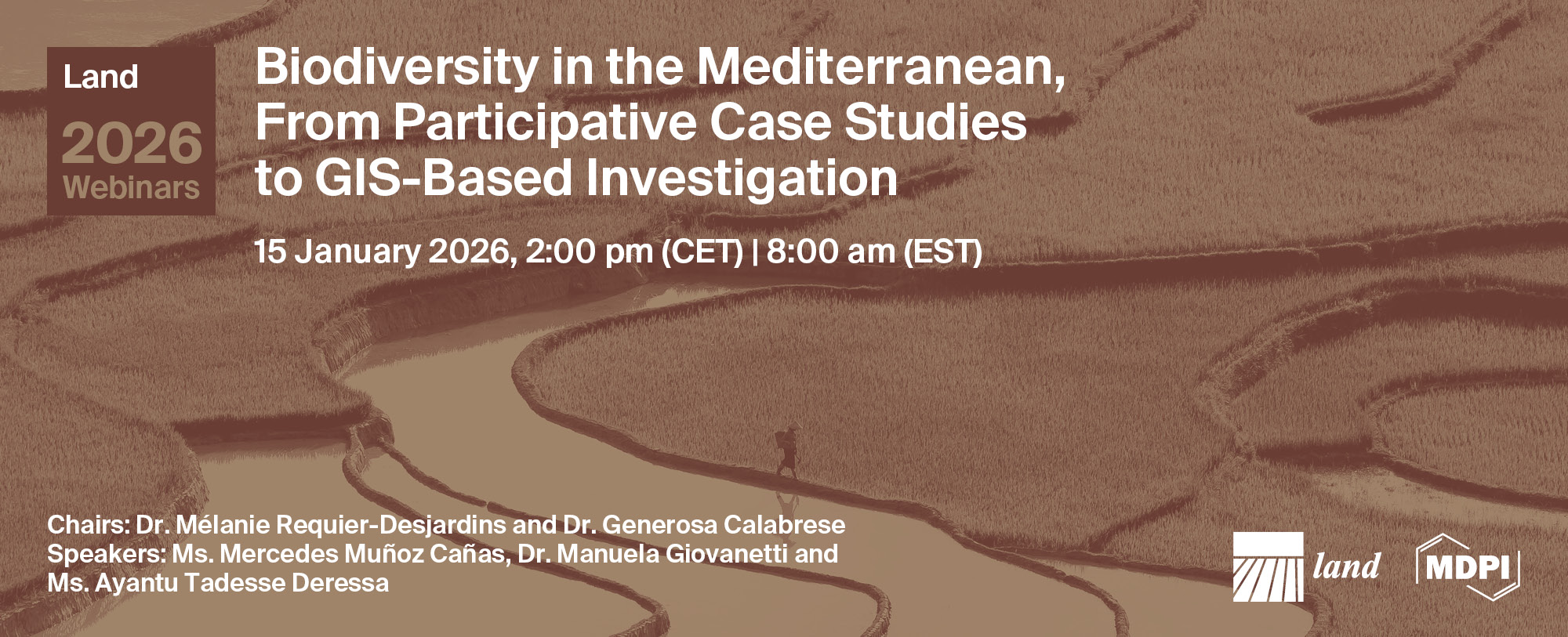
Land Webinar | Biodiversity in the Mediterranean, From Participative Case Studies to GIS-Based Investigation
the chairs
The level of provision of ecosystem services is a decisive factor for the livelihood of people and a key aspect to be considered to increase the resilience of populations in the Mediterranean area (MedECC, 2024). Ensuring the provision of the ecosystem services and functions most relevant to farmers and agricultural activities can also accelerate the transition paths towards a more sustainable food system.
Food insecurity in the Mediterranean is expected to rise in the upcoming years and decades (Worldbank, 2014) and this process can be linked with the degradation of natural resources, ecosystem services and functions and the loss of biodiversity as it disrupts key services like soil fertility, pollination, and water regulation.
The integration of different management practices and approaches including and connecting the farm level with the landscape level would help to find solutions to the complex challenges mentioned above, allowing a higher level of provision of ecosystem services relevant to the sustainability of the food system. The adoption of an integrated approach to land management requires attention to all levels of sustainability and a strong collaboration between different groups of local actors, land managers and stakeholders that leads to the achievement of multiple objectives and to a greater resilience of local populations.
Date: 15 January 2026
Time: 2:00 PM CET | 8:00 AM EST
Webinar ID: 832 8658 1191
Webinar Secretariat: journal.webinar@mdpi.com
Meet Our Chairs
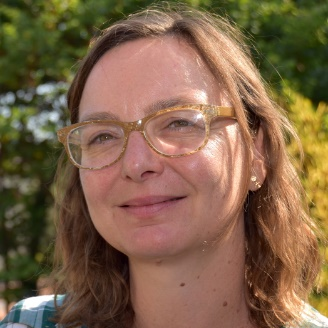
1 CIHEAM-IAMM, Univ Montpellier, 34090 Montpellier, France 2 SENS, Univ Montpellier, CIRAD, IRD, Univ Paul Valery Montpellier 3, 34960 Montpellier, France;I am an economist of natural resources, with 20 years of expertise on the costs and benefits linked to desertification process as well as to the assessment of projects to combat desertification, with a specialty on the socio-economics of rural development, applied to land tenure in the Sahel, to land neutrality in the international negotiations (UNCCD), and more recently to the agroecological transition in North Africa (HE NATAE project).

CIHEAM – IAMB, via Ceglie,9 Valenzano (BA), Italy;Generosa Calabrese is a senior researcher and lecturer specializing in agricultural biodiversity and sustainability assessment of agricultural systems. She has 27 years of experience in drafting and coordinating national and European research projects. She has been with the Department of Organic Agriculture at CIHEAM Bari since 1998, where she developed expertise in sustainable and organic agriculture. Her work focuses on: a) agroecology; b) biodiversity assessment at multiple spatial scales; c) methodological development for biodiversity monitoring; d) support for biodiversity management in protected areas and Natura 2000 sites; e) studies on the impacts of agriculture on land resources. As a lecturer, she teaches biodiversity, ecology, agroecology, ecosystem services, landscape analysis, and participatory approaches to natural resource management. She contributes to various courses and disciplines, including: a) Conservation practices, agroecology, and biodiversity in the SARD training programs; b) biodiversity modules in the Master's in Mediterranean Organic Agriculture; c) agroecology. He serves on evaluation committees for master's degree programs and contributed to a doctoral program in Environment, Resources, and Sustainable Development (2010-2012), serving as a teacher, tutor, advisor, and member of the admissions committee. Calabrese has participated in and coordinated multidisciplinary national and European projects, particularly leading studies on biodiversity and the environmental impacts of agriculture.
Meet Our Speakers
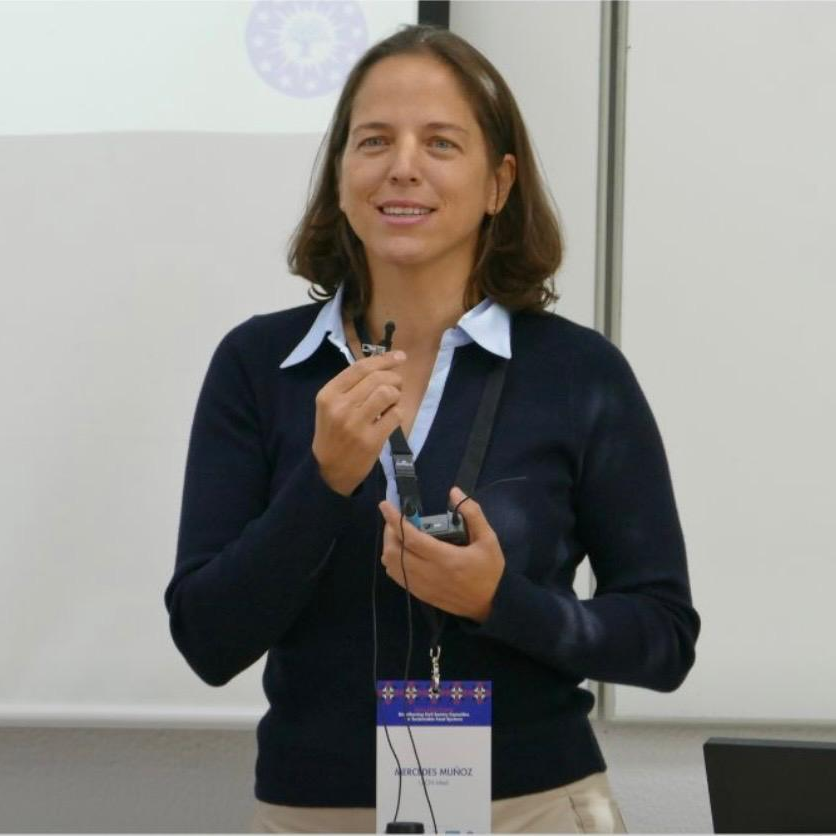
Ms. Mercedes Muñoz Cañas
International Union for Conservation of Nature- Centre for Mediterranean Cooperation;Mercedes Muñoz Cañas is Programme Manager at the IUCN Centre for Mediterranean Cooperation, leading the Nature Conservation & Food Systems portfolio. With 20+ years of experience in conservation across the Mediterranean and beyond, her work focuses on sustainable agriculture, biodiversity mainstreaming and nature-positive food systems. She is the author of IUCN’s Monitoring Land Health in Agricultural Landscapes-guidance note and collaborates widely with ministries, research institutions and regional partners.
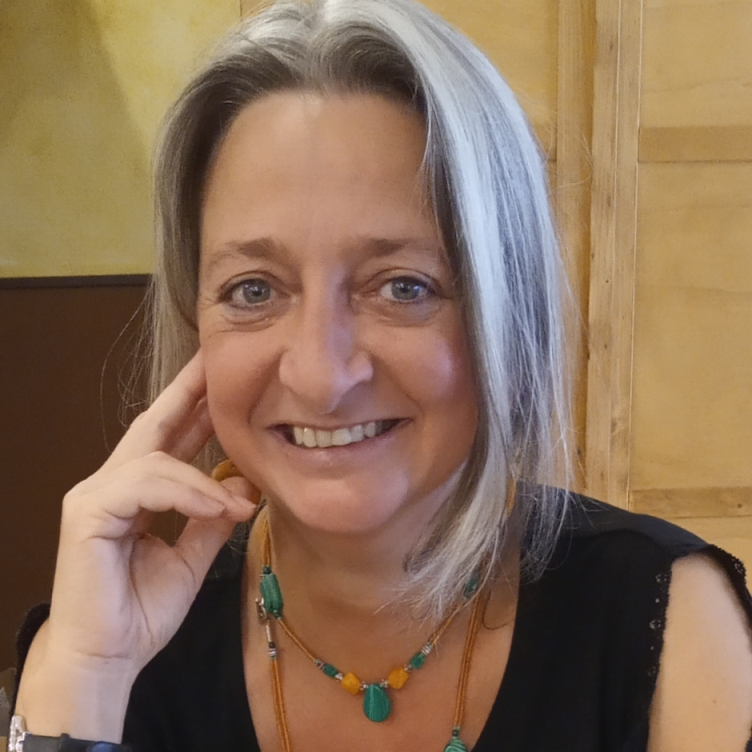
CREA Research Centre for Agriculture and Environment, Italy;From a scientific perspective, I have built my career on the conviction that mobility, across research groups, countries, and disciplines, is a powerful engine for innovation. This mindset has allowed me to explore the behavioural ecology of Hymenoptera through an exciting variety of lenses: pollination ecology, endangered and invasive plants, chemical communication, food production, landscape ecology, and even socio-political dynamics.My recent roles have ranged from field and laboratory researcher to project manager of major national (BeeNet) and international (REALMed) initiatives. To date, I have authored more than 50 peer-reviewed publications (including one in PNAS), over 40 outreach and technical reports, and more than 80 conference contributions, each reflecting my enthusiasm for discovery and communication. My societal engagement is equally important to me. My involvement in science policy, particularly at the European level, has been deeply enriching. I organized events for the Marie Curie Fellows Association (having received two Marie Curie Fellowships myself), served as an expert panelist at the EU2013 Research and Career Mobility Conference, and led a project on Dual Careers for Mobile Researchers selected for ESOF 2018.
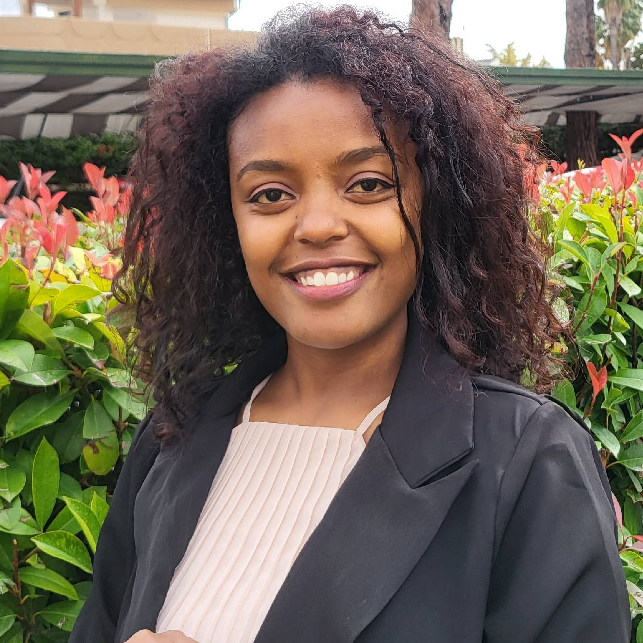
Ms. Ayantu Tadesse Deressa
University of Bari Aldo Moro, Italy;Ayantu Tadesse Deressa is a PhD candidate in Sustainable Territory Management at the University of Bari Aldo Moro, Italy. Her doctoral research focuses on the use of remote sensing to study land cultivation practices. She holds a Master’s degree in Mediterranean Organic Agriculture from CIHEAM Bari, where her thesis on assessing agricultural biodiversity using remote sensing techniques was awarded Best Thesis of the Year. She also earned a first Master’s degree in Food Science and Nutrition and a Bachelor’s degree in Horticulture. Ayantu has over two years of professional experience as an agronomist in Ethiopia and completed a one-year internship at AICAT SAPER in Israel, as well as professional experience in a flower production center. Her work bridges agriculture, biodiversity, and geospatial analysis, supporting sustainable farming systems.


6th Land Webinar
Biodiversity in the Mediterranean, From Participative Case Studies to GIS-Based Investigation
In this section, you will find the recordings of this webinar to watch, re-watch and share with your colleagues!
Land Use, Ecosystem Services and Environmental Management in Mediterranean Climate Areas
Edited by Mélanie Requier-Desjardins and Generosa Calabres
Deadline for manuscript submissions: 30 June 2026