MAKE Webinar | Clinical AI
the chair
1st MAKE Webinar
Clinical AI
Dear Colleagues,
In recent years, we have witnessed a substantial increase in machine learning research focused on medical diagnostics, with numerous studies reporting high accuracies on benchmark datasets. However, many of these studies do not sufficiently report the learning dynamics of model training or address critical issues such as overfitting, data leakage, or the absence of external validation. As a result, models that demonstrate strong performance in controlled settings frequently fail to generalize to real-world clinical environments, often due to methodological shortcomings or insufficient transparency in the training and evaluation processes.
This brings us to the Catch-22 of Clinical AI Diagnostics: to safely deploy AI systems in clinical workflows, we require physician oversight to verify outputs and catch errors; yet this is precisely the burden AI was designed to alleviate. We face a paradox where the clinical supervision necessary for safe AI use negates the efficiency gains that motivated adoption in the first place. Meanwhile, research has shown that automation bias can lead clinicians to trust system outputs without thorough verification, while negative experiences can cause algorithm aversion that excludes AI from decision-making entirely. Neither extreme serves patients well.
This webinar aims to address these challenges directly. We are here not only to discuss advances in accuracy but to examine how we can systematically demonstrate learning dynamics, avoid common pitfalls, and provide evidence for real-world clinical applicability. Our goal is to elevate methodological standards across the field and enable reproducibility, transparency, and genuine translation into clinical workflows.
The first presentation explores the mechanistic interpretability of brain-computer interface models.
Invited Speaker: Dr. Min Wang
Title Presentation: Mechanistic Interpretability of Brain-Computer Interface Models
The second presentation explores the mechanistic interpretability of brain-computer interface models.
Invited Speaker: Dr. Joshua Li
Title Presentation: Population-Scale Serial PSA Analysis with Deep Learning: Cancer Risk and Temporal Prediction in Hong Kong
The third presentation discusses predicting text understanding from beta-band EEG.
Invited Speaker: Dr. Dror Malka
Title Presentation: Predicting Text Understanding from Beta-Band EEG
The fourth presentation focuses on AI-assisted medical diagnostics, from modelling to implementation.
Invited Speaker: Dr. Ka Man Cheung
Title Presentation: AI assisted medical diagnostics - From modelling to implementation
We hope these contributions will stimulate a discussion with attendees, fostering inputs, new insights and collaborations.
Date: 12 October 2026
Time: 10:00 am – 11:30 pm CEST
Webinar ID: 851 3967 6448
Webinar Secretariat: journal.webinar@mdpi.com
Meet Our Chair

Dr. Milan Toma has authored two foundational books (AI-Assisted Medical Diagnostics (2025) and Diagnosing AI (2026)) and led over 50 peer-reviewed publications demonstrating data leakage effects, domain shift failures, LLM diagnostic limitations, and methodological best practices across cardiology, ophthalmology, orthopedics, and neurology.
Meet Our Speakers
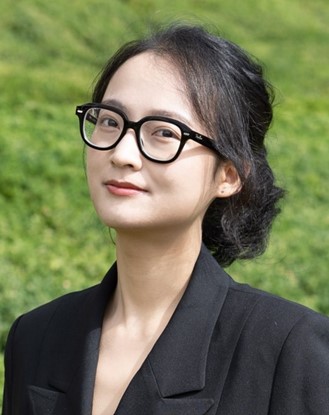
Collaborative Robotics Lab, Faculty of Science and Technology, University of Canberra, Canberra, ACT 2617, Australia;Dr Min Wang is a Lecturer in Artificial Intelligence at the University of Canberra and Research Lead for Intelligent Computing and Robot Perception within the Collaborative Robotics Lab. Her research focuses on artificial intelligence and machine learning, with particular interests in its applications on brain–computer interfaces, biometrics, and human-centred intelligent sensing and computing. She is also interested in privacy-preserving and explainable AI. She has published many papers in leading journals, including IEEE Transactions on Information Forensics and Security, Pattern Recognition, and ACM Computing Surveys. Dr Wang serves as an Associate Editor for IEEE Transactions on Artificial Intelligence and is Chair of the IEEE Computational Intelligence Society ACT Chapter. She actively leads and contributes to interdisciplinary research projects spanning trustworthy AI, neural signal computing, biometric security, and collaborative robotics, while supervising research students and fostering collaborations across academia and industry.
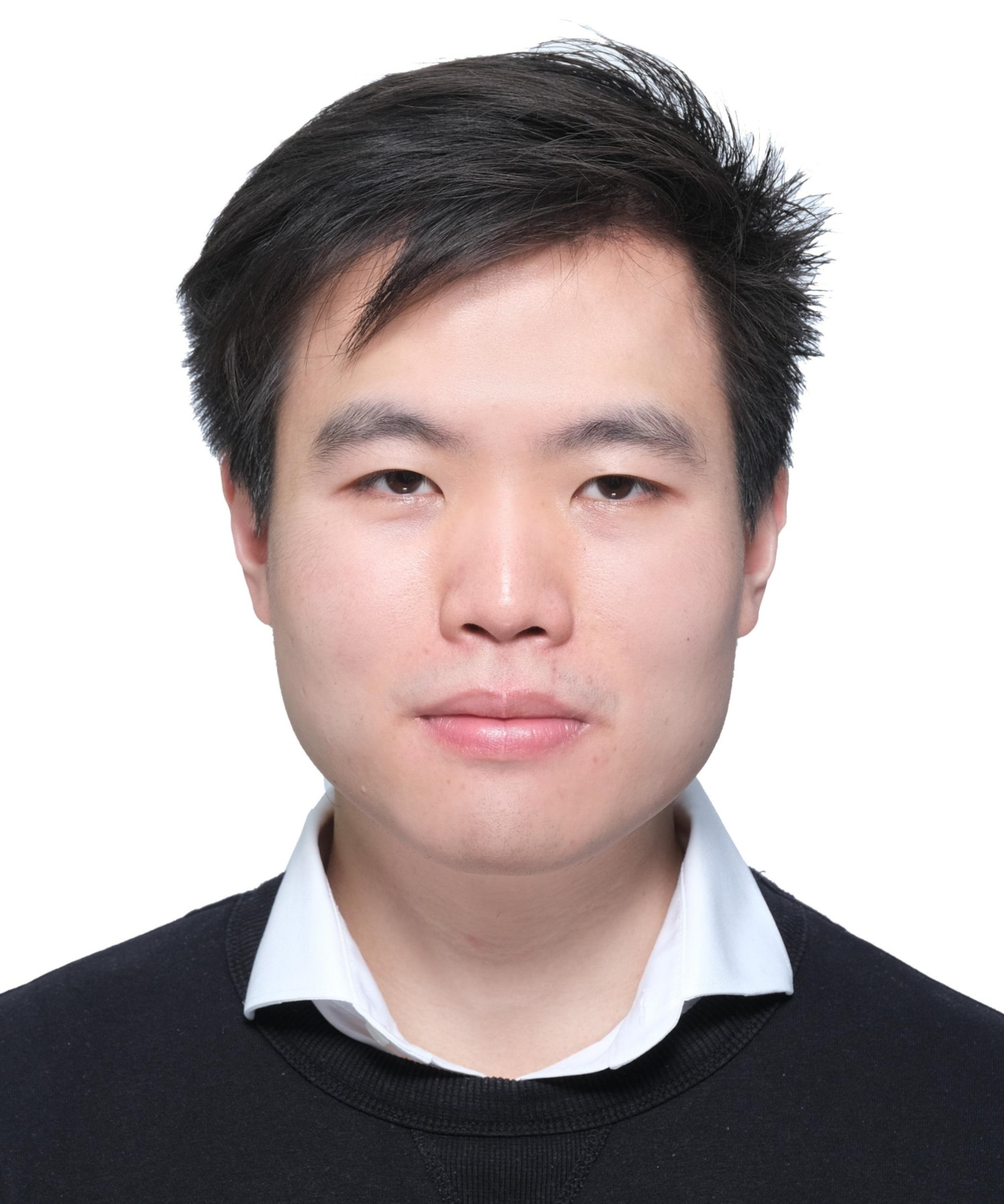
Department of Pathology, Queen Mary Hospital, The University of Hong Kong, Hong Kong SAR, China;Dr. Li is an early career academic histopathologist currently a clinical assistant professor at the Department of Pathology, School of Clinical Medicine, The University of Hong Kong. His research interests are in biopsy assessment, tumor biomarkers and prognostic modelling, supported by advanced tissue imaging with digital image analysis and clinical big data. He currently has published over 100 indexed manuscripts and more than 10 book chapters. He currently leads a research team in his laboratory at the University of Hong Kong with expertise in both clinical laboratory methods and data sciences.
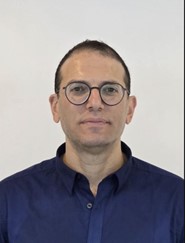
Faculty of Engineering, Holon Institute of Technology (HIT), Holon 5810201, Israel;Dror Malka received his BSc and MSc degrees in electrical engineering from the Holon Institute of Technology (HIT), Israel, in 2008 and 2010, respectively. He also completed a BSc degree in Applied Mathematics at HIT in 2008 and received his Ph.D. degree in electrical engineering from Bar-Ilan University (BIU), Israel, in 2015. Currently, he is a Senior Lecturer in the Faculty of Engineering at HIT. His major fields of research are nanophotonics, super-resolution, AI silicon photonics, fiber optics, medical imaging, and AI-based biomedical signal processing. His research also includes patented developments in PET-CT imaging, AI-based EEG analysis for neurological and cognitive applications, and MRI-based methods for the detection of multiple sclerosis. He has published around 80 refereed journal papers and 80 conference proceedings papers.
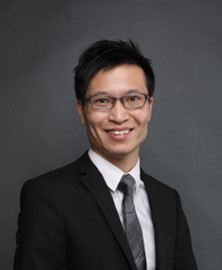
Department of Clinical Oncology, Queen Elizabeth Hospital, Hong Kong SAR, China;Dr Ken Cheung is an oncologist at Queen Elizabeth Hospital, Hong Kong, a statistician and innovator. He holds both medical degree and Graduate Statistician qualification in Royal Statistical Society, UK. His work bridges clinical oncology, artificial intelligence and translational research, including collaborations with HKUST on routine blood-based AI models for gastric and liver cancer detection. He developed an AI biostatistician algorithm awarded a Gold Medal with Jury Congratulations at Inventions Geneva 2025. He also holds honorary academic appointments at CUHK and HKU. His interests include clinically meaningful AI applications and translating innovative technologies into practical improvements in patient care.
Clinically Robust and Transparent AI-Assisted Medical Diagnostics: From Learning Dynamics to Real-World Deployment
Edited by Dr. Milan Toma and Prof. Dr. Constantinos Pattichis
Deadline for manuscript submissions: 30 April 2027