
30th Anniversary of Molecules—Recent Advances in Photochemistry
the chair
40th Molecules Webinar
30th Anniversary of Molecules—Recent Advances in Photochemistry
On behalf of the organizing committee, we are delighted to invite you to the Molecules webinar "30th Anniversary of Molecules—Recent Advances in Photochemistry", which will take place online on July 30, 2026. This webinar will bring together internationally recognized researchers to share and discuss cutting-edge advances in photochemistry, covering applications from materials to life sciences. Topics will include, among others, phosphorescent metal complexes, heavy atom-free photosensitizers, and the kinetic modelling of photoreactions and drug photostability. As photochemistry drives innovation in energy, medicine, and synthesis, this event aims to highlight new directions and foster interdisciplinary exchange.
We are honored to host three distinguished speakers:
- Prof. Dr. Simon Pope (Cardiff University, UK), an expert in phosphorescent transition metal complexes, using steady‑state and transient spectroscopy, and triplet‑triplet annihilation upconversion.
- Dr. Mikhail Filatov (Technological University Dublin, Ireland), a specialist in organic photosensitizers, developer of heavy atom‑free triplet photosensitizers via SOCT‑ISC mechanism for sustainable triplet generation.
- Dr. Mounir Maafi (De Montfort University, UK), a Senior Lecturer, experienced in modelling photoreactions, spectrokinetics, thermochromic and photochromic materials, and drug photodegradation and stabilization.
We warmly invite you to join us for an inspiring discussion on the future of photochemistry.
Date: 30 July 2026
Time: 9:00 am CEST | 3:00 pm CST Asia
Webinar ID: 886 2219 0736
Webinar Secretariat: journal.webinar@mdpi.com
Meet Our Chair
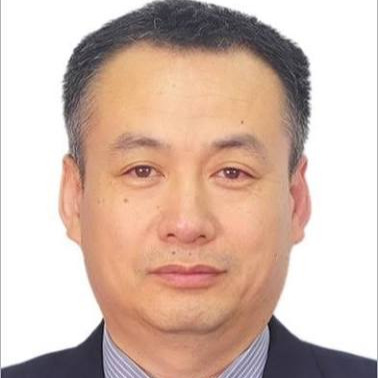
School of Chemical Engineering, Dalian University of Technology, China;Jianzhang Zhao received his PhD degree from Jilin University in 2000. After postdoctoral research at Pohang University of Science and Technology, the Max Planck Research Unit of Enzymology of Protein Folding and the University of Bath, he took up his current position at Dalian University of Technology. His research interests include charge, energy, and spin transport in organic molecules by transient absorption spectra and pulsed laser excited time-resolved electron paramagnetic resonance spectroscopy. He is also interested in applications of photochemistry in industry.
Meet Our Speakers
-6a607381cfcd5.png)
Prof. Dr. Simon Pope
School of Chemistry, Cardiff University, UK;Prof. Dr. Simon Pope studied for his BSc (Chemistry) and PhD (awarded in 2000, supervisor Prof Gillian Reid) at the University of Southampton. The latter involved research on the coordination chemistry of phosphine-containing polydentate and macrocyclic ligands. Following postdoctoral positions at the University of Bristol (supervisor Prof. Michael D. Ward) and the University of Manchester (supervisor Prof. Stephen Faulkner), he developed an interest in the synthesis and photophysical properties of transition metal, lanthanide and actinide metal ion complexes. Since his appointment (in 2006) at Cardiff University (promoted to Personal Chair in 2017), he has continued to investigate a wide range of photofunctional molecular and material systems, especially in the context of sensors, bioimaging and energy upconversion.

School of Chemical and Biopharmaceutical Sciences, Technological University Dublin, Ireland;Dr. Mikhail Filatov obtained his PhD in organic chemistry, specializing in porphyrin chemistry, from Moscow State University. He subsequently carried out postdoctoral research at CNRS, the Max Planck Institute for Polymer Research, and Trinity College Dublin. He is currently a Lecturer at Technological University Dublin. His research focuses on the photophysics of pyrrolic dyes, particularly photoinduced electron transfer and intersystem crossing, with applications in optical materials and molecular probes.
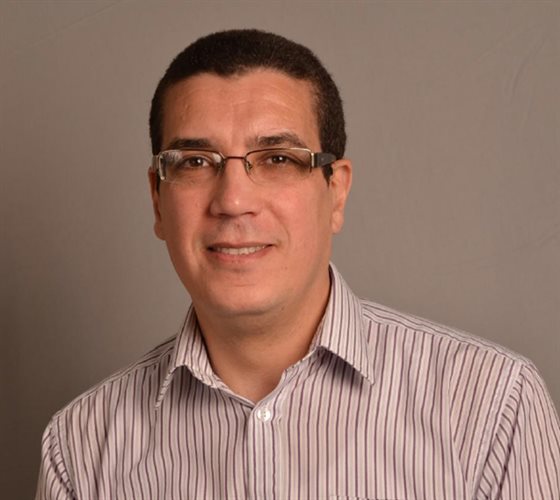
Leicester School of Pharmacy, De Montfort University, UK;Mounir Maafi is the author of Photokinetics: A New Perspective (Springer, 2025), a registered UN consultant/UNIDO international expert, an editor for three journals, and an active peer reviewer for more than 30 scientific journals. He has a varied research experience based on a chemical engineering background and a postgraduate diploma in spectroscopic methods for analyses of materials. His PhD (at Paris 7 University) focused on storage of sunlight energy in electro-polymers. This was followed by four postdoctoral positions in France, Spain, the UK, and the Karolinska Institutet, in Sweden. He has worked as an academic in four European universities, where he mainly taught chemistry, pharmacy, pharmaceutical, and forensic students. Since he joined De Montfort University, he has successfully supervised to completion (as first supervisor) several national and externally funded international Ph.D. and MSc research students. His research programmes focus on versatile skills in physical and analytical chemistry, mathematics and mathematical modelling of chemical systems, coding and simulation, numerical integration methods, and experimental design. His current research focuses on photokinetics and actinometry. His contribution is devoted to rationalising photokinetics along the generally established standards of kinetics. He invented Φ-order kinetics, representing a paradigm shift in the field, which proved that the rebirth and harmonisation of photokinetics are possible.
This is a FREE webinar. The number of participants to the live session is limited but the recording will be made available on Sciforum shortly afterwards. Registrations with academic institutional email addresses will be prioritized.
Certificates of attendance will be delivered to those who attend the live webinar.
Can’t attend? Register anyway and we’ll let you know when the recording is available to watch.
Register for free here!
30th Anniversary of Molecules: Recent Advances in Photochemistry
Edited by Prof. Dr. Marcelo Guzman, Prof. Dr. Youhong Tang and Prof. Dr. Michael Moustakas
Deadline for manuscript submissions: 31 December 2026
Environment or Energy-Related Photochemistry and Photocatalysis—A Theme Issue in Honor of Professor Pierre Pichat
Edited by Prof. Dr. Matthew A. Tarr
Deadline for manuscript submissions: 31 March 2027
Photochemistry
A section of Molecules (ISSN 1420-3049).
Section Information
This section of Molecules (ISSN 1420-3049) will provide an open platform for research into all aspects of photochemistry. The subject stands as the principal artery into the heart of interactions of UV, visible, and IR radiation with molecules and materials. Photochemistry has important associations across a wide spectrum of science including physics, organic and inorganic chemistry, materials science, biology and medicine. Photochemical transformations of molecules may be constructive or degradative and are often quite distinct from conventional thermal ones. Absorption of matching radiation can enable large activation barriers to be readily surmounted and thermally disfavoured products to be accessed. The Sun delivers a huge gift of green energy every day to planet Earth’s surface. About 50% of this is in the UV and visible wavelength range. Photochemistry is therefore in the forefront of the huge environmental challenges of sustainability, energy harnessing and energy conversion. This Photochemistry section of Molecules will showcase the latest advances, developments and applications in all these important spheres.