
Materials Webinar | Current Developments in Glassy Polymer Physics
the chair
The physics of glassy polymers has made enormous progress over the past 25 years. These advances have been made possible by the development of new experiments involving the dynamics of confined polymers, the dynamics of fluorescent probes, in situ dielectric spectroscopy or NMR spectroscopy, or calorimetric experiments. New techniques combining atomic force microscopy and dielectric or Raman spectroscopy are being developed to study the properties of polymers at the local scale. Studies on ultimate properties and the corresponding microscopic mechanisms have benefited from advances in electron microscopy, small-angle scattering techniques, and acoustic detection. For all these issues, experimental progress has been accompanied by theoretical developments and numerical simulation studies that have led to a better understanding of relaxation processes, mechanical and ultimate properties.
Date: 13 July 2026
Time: 3:00 pm CEST | 9:00 am EDT
Webinar ID: 867 6995 9684
Webinar Secretariat: journal.webinar@mdpi.com
Meet Our Chair
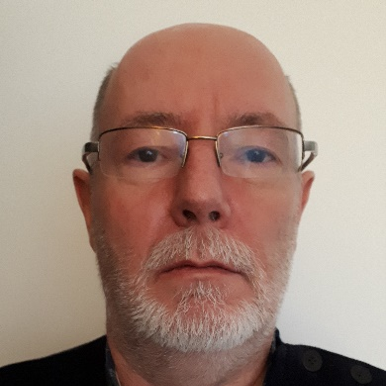
CNRS/INSA Lyon, France;Didier Long entered CNRS in 1996 as a researcher and has been research director since 2005. He co-founded a joint unit between CNRS and Solvay (Rhodia at the time) and has been the deputy director of this lab from 2006 to 2020 which has counted up to 20 members. He is a specialist in polymer physics. Didier Long has collaborated with numerous researchers in France, in the US, in the UK, in Canada, in the Netherlands, in Spain, in Germany and in Japan. He has made major contributions regarding the physics of the glass transition, which is the topic of this proposal. He has published 100 articles and one book chapter, with ca. 6000 citations and an h-index of 40 (Google Scholar).
We recently held a webinar on “Current Developments in Glassy Polymer Physics”, which featured presentations from the following scholars:
Prof. Dr. Simone Napolitano (Université Libre de Bruxelles (ULB), Belgium)
“Macroscopic Equilibration Beyond Cooperative α-modes: From Collective
Small Displacements to the Slow Arrhenius Process (SAP)”
Prof. Dr. Valeriy V. Ginzburg (Michigan State University, United States)
"Two-State Theories of Glass Transition—Current Status and New Opportunities"
Prof. Dr. Shi-Qing Wang (University of Akron, United States)
"From Brittle-Ductile Transition to Fracture Mechanics of Glassy Polymers: the Latest Progress"
Dr. Didier Long (NRS/INSA Lyon, France)
“2025-1995: Thirty Years of Experiments that Changed Our View of the Glass Transition in Polymers”
The webinar covered many aspects of interesting theories, modeling, simulations, and experiments regarding the physics of glassy polymers and the important progress made over the past 25 years. About 35 people attended the webinar and asked numerous questions, allowing for a lively debate, and making this online meeting a success.
“Macroscopic Equilibration Beyond Cooperative α-modes: From Collective
Small Displacements to the Slow Arrhenius Process (SAP)”
Prof. Dr. Valeriy V. Ginzburg (Michigan State University, United States)
"Two-State Theories of Glass Transition—Current Status and New Opportunities"
Prof. Dr. Shi-Qing Wang (University of Akron, United States)
"From Brittle-Ductile Transition to Fracture Mechanics of Glassy Polymers: the Latest Progress"
Dr. Didier Long (NRS/INSA Lyon, France)
“2025-1995: Thirty Years of Experiments that Changed Our View of the Glass Transition in Polymers”
The webinar covered many aspects of interesting theories, modeling, simulations, and experiments regarding the physics of glassy polymers and the important progress made over the past 25 years. About 35 people attended the webinar and asked numerous questions, allowing for a lively debate, and making this online meeting a success.
Meet Our Speakers
Prof. Dr. Simone Napolitano
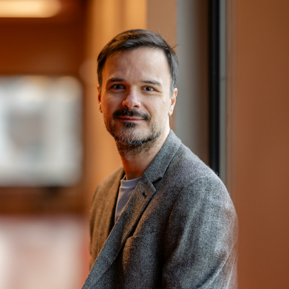
Université Libre de Bruxelles (ULB), Belgium;Simone Simon Napolitano was born in Cosenza, Italy, in 1981 and is currently Professor of Experimental Soft Matter Physics at the Université libre de Bruxelles (ULB), Belgium. He earned his Master’s degree in Materials Science from the University of Pisa in 2005 and completed his PhD in Polymer Physics at KU Leuven in 2007. After early postdoctoral training, he joined ULB in 2011 as a faculty member, where he established the Laboratory of Polymer and Soft Matter Dynamics and later co-founded the Laboratory of Experimental Soft Matter and Thermal Physics. His research group studies molecular mobility in polymers and small organic molecules with the aim of clarifying how microscopic motion across different length and time scales gives rise to macroscopic relaxation and nonequilibrium phenomena, providing direct experimental tests for theories of the glass transition and the liquid state. Beyond these fundamental questions, the group also explores how purely physical routes, such as processing history and confinement, can be exploited to enhance material performance without modifying chemical composition.
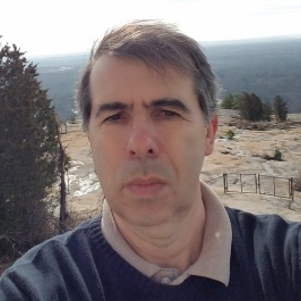
Michigan State University, United States;Valeriy Ginzburg was born in Kharkiv (USSR, now Ukraine) in 1966. He has earned his B. S. (Physics) in 1989, and Ph. D. (Polymer Physics) in 1992 at the Moscow Institute of Physics and Technology (“FizTech”) in Russia. After postdoctoral fellowships at the University of Colorado (1993-97) and the University of Pittsburgh (1998-2000), he worked at The Dow Chemical Company (2001-2020). Today, he is a visiting professor at Michigan State University and founder of a consulting company VVG Physics Consulting LLC. Dr. Ginzburg is a co-inventor on 15 US patents and author or co-author of about 100 journal publications, including several in Physical Review Letters, Science, and Progress in Polymer Science. Dr. Ginzburg is a co-editor of a book, “Theory and modeling of nanocomposites” (published by Springer Nature in 2020). He has been elected Fellow of the American Physical Society (2014) and awarded the Dow Core R&D Excellence in Science award (2015). His mail research interests are polymer glass transition and polymer statistical physics.
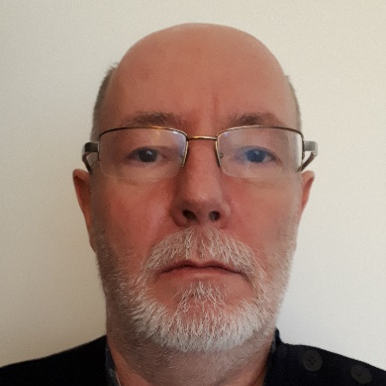
CNRS/INSA Lyon, France;Didier Long entered CNRS in 1996 as researcher and has been research director since 2005. He co-founded a joint unit between CNRS and Solvay (Rhodia at the time) and has been the deputy director of this lab from 2006 to 2020 which has counted up to 20 members. He is specialist of polymer physics. Didier Long has had collaborations with numerous researchers in France, in the US, in the UK, in Canada, in the Netherlands, in Spain, in Germany and in Japan. He has major contributions regarding the physics of the glass transition which is the topic of this proposal. He has published 100 articles and one book chapter. ca. 6000 citations and an h-index of 40 (Google Scholar).

Prof. Dr. Shi-Qing Wang
University of Akron, United States;Shi-Qing Wang received his PhD in physics from the University of Chicago in 1987 and has been doing teaching and research for 37 years. He is Kumho and Distinguished Professor in School of Polymer Science and Polymer Engineering of University of Akron. He published his first book, Nonlinear Polymer Rheology (Wiley, 2018) to present a new paradigm in the field. Before plunging into fracture mechanics, he has extensively worked on the basic picture for brittle-ductile transition in plastics. He is preparing book two and aiming to publish in 2026: Polymer Physics - Ductility, Fracture and Adhesion that summarizes his transformative ideas on mechanical behavior of solid polymers and develops a stress-based perspective in fracture and adhesion of polymers.
Current Development in Glassy Polymers Physics
Guest Editor: Dr. Didier Long
Deadline for manuscript submissions: 20 March 2027