Materials Webinar | Concrete with Waste Materials
the chair
22nd Materials Webinar
Concrete with Waste Materials
The use of waste materials can greatly contribute to the sustainability of concrete, one of the most used materials in the world. The constituents of traditional concrete are Portland cement, natural aggregates and water. These traditional constituents have low sustainability because during their production there are huge CO2 emissions. Also, with the increase of concrete utilization the natural raw materials are missing. With the use of waste raw materials it will be possible to decrease the use of traditional raw materials, contributing to a circular economy instead of a linear economy.
This webinar has the aim to present examples of waste materials that can be used to produce concretes maintaining their physical and mechanical properties. The durability of these concretes will be also discussed. Different types of concretes will be discussed, particulary the alkali-activated concrete that can be produced without Portland cement and with high quantities of waste materials. All these aspects will contribute to the sustainability of concrete.
Date: December 11th, 2026
Time: 9:00 CST | 3:00 pm WET | 4:00 CET
Zoom ID: 861 6441 7280
Webinar Secretariat: journal.webinar@mdpi.com
Meet Our Chair
José Aguiar is a Full Professor of the Department of Civil Engineering at the University of Minho, Portugal. He previously served as Director of the Centre for Territory, Environment and Construction and as Director of the Doctoral Programme in Waste Management and Treatment. His main research interests include sustainable construction, functional materials, waste management, and the use of wastes in concrete. He has research on sustainable concretes, particularly the incorporation of wastes into mortars and concrete. He published over 185 scientific papers in international journals, 4 books, 20 book chapters, 170 conference papers and 6 patents. He has also participated in and coordinated several national and international research projects. Between 2020 and 2025, he was awarded the University of Minho Diploma of Merit for Scientific Publication.
|
Speaker/Presentation |
Time in CET |
|
Prof. Dr. José Barroso de Aguiar (Chair) Chair Introduction + Materials Journal Introduction |
4:00 - 4:15 pm |
|
Prof. Dr. José Barroso de Aguiar Concrete with Waste Phase Change Material |
4:15 - 4:35 pm |
|
Q&A |
4:35 - 4:45 pm |
|
Prof. Dr. Jialai Wang From Carbon Storage to Carbon Avoidance: Engineering Cement Slurry through Admixture-Directed Pre-Carbonation |
4:45 - 5:05 pm |
|
Q&A |
5:05 - 5:15 pm |
|
Prof. Dr. Rui Vasco Silva Alkali-activated Wastes for Mortar and Concrete Production: Enhancing Performance through CO2 Curing |
5:15 - 5:35 pm |
|
Q&A |
5:35 - 5:45 pm |
|
Prof. Dr. Gregor Kravanja Accelerated Carbonation for Concrete Recycling and Reuse |
5:45 - 6:05 pm |
|
Q&A |
6:05 - 6:15 pm |
|
Dr. Daniel Eden Ramírez-Arreola Presentation Title: Matrix Composition and Aggregate Modification in Concrete, Mortar and Alkali-Activated Hybrids: Polyethylene and Agave-Fibre Aggregates |
6:15 - 6:35 pm |
|
Q&A |
6:35 - 6:45 pm |
|
Final discussion if necessary Closing of Webinar Prof. Dr. José Barroso de Aguiar (Chair) |
6:45 - 7:00 pm |
Meet Our Speakers

CERIS - Civil Engineering Research and Innovation for Sustainability, Department of Civil Engineering, Architecture and Environment, Instituto Superior Técnico, University of Lisbon, Lisbon, Portugal;Rui Vasco Silva is a researcher at CERIS and Invited Assistant Professor at Instituto Superior Técnico (IST), University of Lisbon, where he obtained his MSc (2012) and PhD (2015) in Civil Engineering. His research focuses on sustainable construction materials, namely the use of recycled aggregates from construction and demolition waste, alternative mineral additions as partial cement replacement, and alkali-activated aluminosilicate wastes as sole binder in mortar and concrete. He was Managing Director of the FCT-funded project RInoPolyCrete (PTDC/ECI-CON/29196/2017), on the valorisation of municipal solid waste incinerator bottom ash in cement-free concrete, and Principal Investigator of the project ECO2Alkrete (EXPL/ECI-EGC/0288/2021), on CO2-based curing of fully recycled alkali-activated concrete. He has authored numerous publications on sustainable construction and regularly serves as a reviewer for international journals.
Department of Civil, Construction, and Environmental Engineering, The University of Alabama, Tuscaloosa, AL, USA ;Dr. Jialai Wang is a Professor of Civil, Construction, and Environmental Engineering at The University of Alabama. His research focuses on developing low-carbon and multifunctional construction materials through CO₂ mineralization, circular manufacturing, waste valorization, critical mineral recovery, and molecular and interfacial engineering of cementitious materials. His group is particularly interested in transforming industrial and mineral wastes into high-value cementitious materials, chemicals, hydrogen, carbon materials, and other useful products through coupled chemical transformations. He is also developing the concept of Chemical Transformation Convergence to integrate traditionally separate waste-to-resource pathways into more efficient manufacturing systems. Dr. Wang has published more than 120 journal papers, holds multiple U.S. patents, and has licensed concrete decarbonization technology to commercial application. He is a Fellow of the American Society of Civil Engineers.
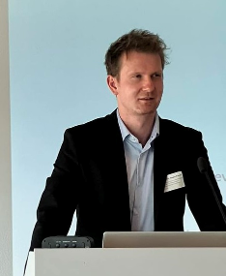
Chair of Materials, Faculty of Civil Engineering, Transportation Engineering and Architecture, University of Maribor, Maribor, Slovenia ;Gregor Kravanja is an Assistant Professor at the Faculty of Civil Engineering, Transportation Engineering and Architecture, University of Maribor, and a member of RILEM. He earned his PhD in Chemical Engineering from the same university in 2018. His research focuses on sustainable and multifunctional construction materials, accelerated carbonation, concrete recycling, and ultra-high-performance concrete. He is the Principal Investigator of the ARIS-funded SCORE project (L7-70275), which investigates semi-dry and supercritical CO₂ carbonation for concrete recycling.
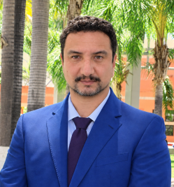
Department of Engineering, Centro Universitario de la Costa Sur, Universidad de Guadalajara, Autlán de Navarro, Jalisco, Mexico ;Daniel Edén Ramírez-Arreola is a Professor-Researcher at the Universidad de Guadalajara, Mexico, and Coordinator of the Doctoral Program in Materials Science and Engineering at Centro Universitario de la Costa Sur. He holds a PhD in Chemical Engineering and is a Level II member of Mexico’s National System of Researchers (SNII). His research focuses on polymer processing, recycling, and the development and characterization of sustainable composite materials. His current interests include the role of cementitious matrix composition and the characteristics and modification of waste-derived inclusions, particularly foamed polyethylene and polyethylene flakes used as aggregates, as well as natural fibers used as reinforcement. He also explores hybrid and alkali-activated binder systems as complementary pathways for resource-efficient construction materials.
This is a FREE webinar. After registering, you will receive a confirmation email containing information on how to join the webinar. Registrations with academic institutional email addresses will be prioritized.
Certificates of attendance will be delivered to those who attend the live webinar.
Can't attend? Register anyway, and we'll let you know when the recording is available to watch.
-6b06f71eac222.png)