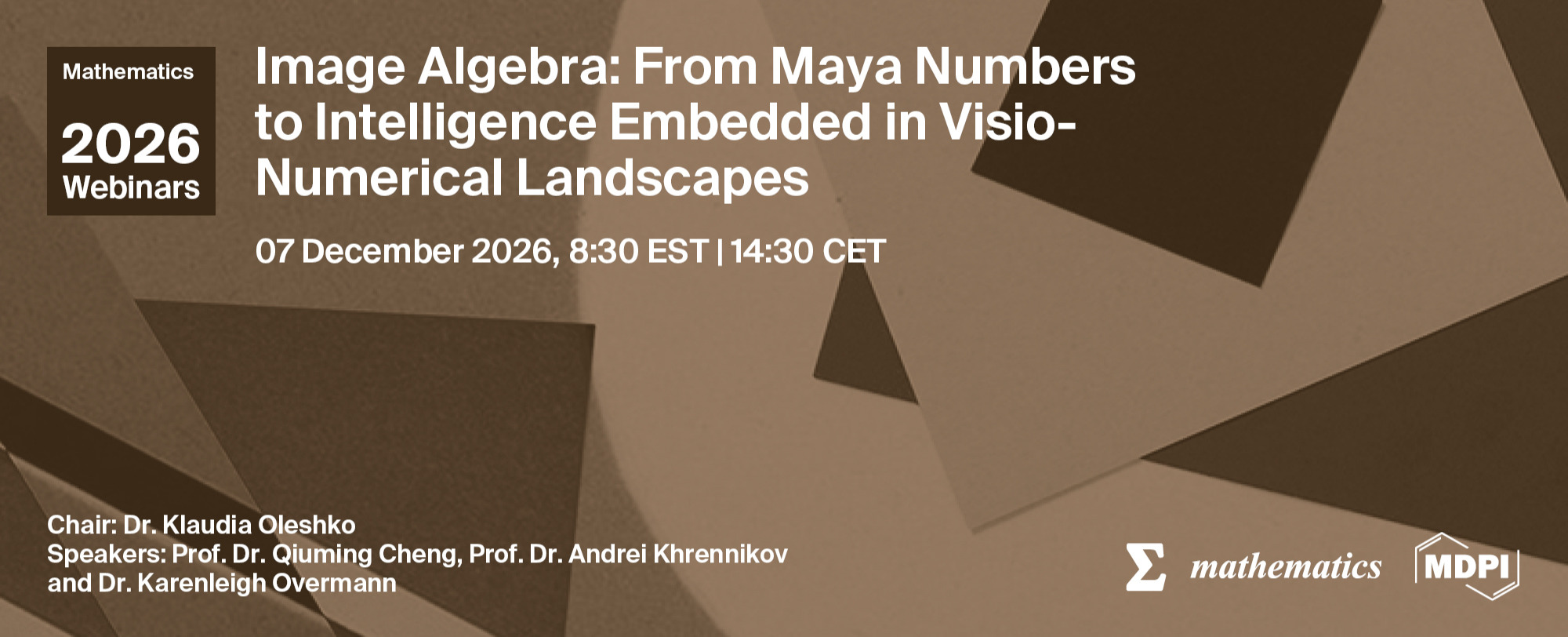
Mathematics Webinar | Image Algebra: From Maya Numbers to Intelligence Embedded in Visio-Numerical Landscapes
the chair
28th Mathematics Webinar
Image Algebra: From Maya Numbers to Intelligence Embedded in Visio-Numerical Landscapes
The primary objective of the webinar is to explore the potential of physics-informed visio-numerical primitives to extend the mathematical and computational frameworks for image algebra into the symbolic domain, recalling the pioneering woks of Ritter et al., (1990), Boole, G. (1847), Fermi, E. (1938) and von Newman (1993). We present the SYM-Fractron for interdisciplinary discussion—a physics-informed hybrid computational pipeline that integrates statistical and geostatistical meta-algorithms within the Digital Transformer (DiT) scheme and Digital Twins. This software enables position-preserving (geodesic) visualization and classification of measurements by jointly encoding the physical, numerical, visual, geometric, and topological attributes underlying the Big Data Architecture of Complexity. Statistical and geostatistical image operations draw upon tools from diverse areas of information mathematical representation and supergraphic theory and applications, as an integrated computational framework. Examples from fundamental scientific and industry applications, particularly to geosciences, social sciences, and archeology, will be presented for discussion. A fundamental question remains open and will be brought forward for discussion: How can we decode the messages of nature imprinted in different natural materials—particularly rocks—through diverse morpho-shaping physics-informed processes. The need to integrate computational physics and unconventional and high-performance computing will be discussed, with particular attention to the ancient symbolic and numerical systems of Indigenous Australian visual–symbolic approach, Mesoamerican numeral systems, and ancient Chinese oracle-bone inscription and special attention paid to Maya numbers. As a practical application of this approach, we will present the results of fracture modeling and classification in real-world geological systems, particularly petroleum reservoirs, raising a fundamental question: Can a physics-informed computational framework capture the multiscale complexity of geological and physical reality with precision, or are we still missing fundamental elements of its underlying mathematical representation? To address this question, we revisit the seminal work of A. Einstein, B. Podolsky, and N. Rosen (1935), together with N. Bohr’s response (1935), focusing on the question of whether physical quantities represented by non-commuting operators can be simultaneously determined with arbitrary precision. Does precise knowledge of one physical quantity necessarily preclude equally precise knowledge of another? This question provides a conceptual starting point for investigating uncertainty in seismic characterization of petroleum reservoirs, where estimates of subsurface depth and geological patterns remain inherently uncertain. Can these uncertainties be reduced by integrating seismic observations with higher-resolution data obtained from Formation Microimaging (FMI) logs, tomographic imaging, and electron microscopy? To investigate the compatibility and comparability of these measurements and models, considering their dual visual and numerical representations and underlying primitives, we revisited the principles of Mesoamerican numeral systems and scripts, beginning with Maya numerical systems. This exploration led us to develop a visuo-numerical arithmetic framework for the construction of a genetic taxonomy of fracture systems.
Date: 07 December 2026
Time: 2:30 pm CET | 9:30 pm CST (Asia) | 8:30 am EST
Webinar ID: 829 1659 9504
Webinar Secretariat: journal.webinar@mdpi.com
Meet Our Chair
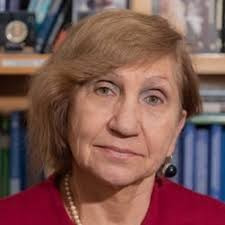
Centro de Geociencias, Universidad Nacional Autónoma de, México (UNAM), Querétaro, Mexico;Dr. Klaudia Oleshko graduated from Lomonosov Moscow State University and holds a B.S. and M.D. (1977) and a Ph.D. (1982), with theses on the influence of magnetic and electromagnetic fields on the microstructure of clay soils. With over 42 years of experience in Mexico—30 of them at the National Autonomous University of Mexico (UNAM)—she founded LAFSINA, the Laboratory for the Fractal Analysis of Natural Systems, at the Institute of Geology (now the Institute of Geosciences, UNAM, Juriquilla). She has coordinated more than 20 national and international research projects, including "Naturally Fractured Oil Reservoir as the Fractal Reactor," whose principal product is the bio-inspired software MIK: Muuk'il Kaab. She is a Member of Mexico's National System of Researchers (Level III, until 2035), has authored or co-authored over 100 articles and 12 book chapters with 1,300 citations, and has directed 32 theses. Her current research focuses on unifying machine learning, deep learning, and big data-driven modeling in Geosciences through number theory and physics-informed visualization; developing machine learning libraries and the Theory of Ecocide and Agro-Ecocides; democratizing Geosciences through cyber-physical tools and the Lab-on-a-Chip approach; and formalizing a new classification of clouds for climate and environmental projects.
Meet Our Speakers
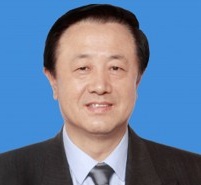
DDE Frontier Science Center, China University of Geosciences (Beijing), China;State Key Lab of Geological Processes and Mineral Resources, China University of Geosciences (Beijing), China;School of Earth Science and Engineering, Sun Yat-sen University, Zhuhai, China;Qiuming Cheng is an internationally distinguished geoscientist and Academician of the Chinese Academy of Sciences, currently serving as a professor at China University of Geosciences (Beijing) and director of the State Key Laboratory of Geological Processes and Mineral Resources. He earned his Ph.D. in Earth Sciences from the University of Ottawa in 1994 and subsequently held a postdoctoral fellowship at the Geological Survey of Canada before becoming a professor at York University in Toronto in 1995. His groundbreaking research on fractal density theory and local singularity analysis has significantly advanced mineral exploration, geochemical anomaly detection, and the study of extreme geological events, resulting in approximately 400 peer-reviewed publications and the discovery of several mineral deposits worldwide. He has held prominent leadership roles in the global geoscience community, including President of the International Association for Mathematical Geosciences from 2012 to 2016 and President of the International Union of Geological Sciences from 2016 to 2020, during which he initiated the Deep-time Digital Earth (DDE) big science program. His numerous honors include the Krumbein Medal (2008) and the AAG Gold Medal (2020), and he was elected a Foreign Member of the Academia Europaea in 2020.
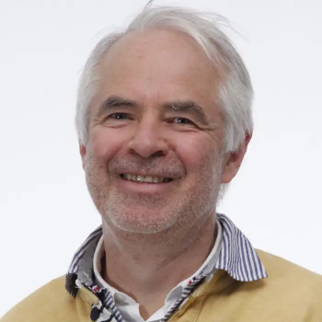
Department of Mathematics, Linnaeus University, Sweden;Andrei Khrennikov is Professor of Mathematics at Linnaeus University in Växjö, Sweden. He is also Director of the International Center for Mathematical Modeling (ICMM), which applies mathematical modeling and computer simulations to multidisciplinary studies in physics, cognitive science, economics, social science, and engineering . He has been organizing the “Växjö Conferences” on quantum foundations, information, and probability since 2000, the longest continuous conference series on the foundations of physics . His research is multidisciplinary, covering foundations of quantum physics, quantum-like modeling in cognition and decision making, ultrametric mathematics, and dynamical systems. He has authored approximately 500 papers and over 20 monographs.
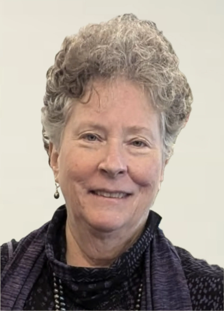
Center for Cognitive Archaeology, University of Colorado, USA;Karenleigh A. Overmann is an associate professor of anthropology (adjunct) and director of the Center for Cognitive Archaeology at the University of Colorado, Colorado Springs. She earned her doctorate in archaeology at the University of Oxford as a Clarendon scholar in 2016. She was an MSCA postdoctoral research fellow at the University of Bergen 2018–2020 (EU project 785793) and a visiting scholar at the University of Pittsburgh 2020–2021. Her research focuses on how societies become numerate and literate by using and modifying material forms over generations of collaborative effort, the effect this elaborational mechanism has on conceptual content, and how material forms become increasingly refined to elicit specific behavioral and psychological responses. To date, she has published 49 journal articles, 21 book chapters, and three special journal issues. She has also published six books, including The Materiality of Numbers (Cambridge, 2023), The Oxford Handbook of Cognitive Archaeology (Oxford, 2024), and Cultural Number Systems (Springer, 2025).
This is a FREE webinar. After registering, you will receive a confirmation email containing information on how to join the webinar. Registrations with academic institutional email addresses will be prioritized.
Certificates of attendance will be delivered to those who attend the live webinar.
Can’t attend? Register anyway and we’ll let you know when the recording is available to watch.
Register for free here!
In-Context Algebra, Token-Based Vision Transformers, and Digital Twins for Solving Partial Differential Equations
edited by Dr. Klaudia Oleshko and Prof. Dr. Andrei Khrennikov
Deadline for manuscript submissions: 31 January 2027
https://www.mdpi.com/journal/mathematics/special_issues/E4SZ21240E?webinar_id=552&_utm_from=38750cb51ehttps://www.mdpi.com/journal/mathematics/special_issues/E4SZ21240E?webinar_id=552&_utm_from=38750cb51ehttps://www.mdpi.com/journal/mathematics/special_issues/E4SZ21240E?webinar_id=552&_utm_from=38750cb51e