Medicina Webinar | Updates on Headaches: Challenges and Perspectives
the chair
13th Medicina Webinar
Updates on Headaches: Challenges and Perspectives
It is my great pleasure to welcome you to the webinar titled “Updates on Headaches: Challenges and Perspectives,” hosted by the journal Medicina on 18 June 2026. As headache disorders continue to evolve in clinical understanding and diagnostic challenges, our session aims to bring together experts to exchange insights on emerging concepts and future research directions. Our first speaker, Dr. Ayush Chandra, is an emerging neurology researcher from Nepal who will discuss his contributions to headache medicine and global health initiatives focused on migraine care. We will then hear from Dr. Alberto Ouro, who will present "Current and New Treatments for Headaches," focusing on his research regarding bioactive lipids and sphingolipids as theragnostic tools in neurological diseases. Together, these presentations will explore the integration of biomarkers, precision neurology, and the diagnostic challenges we face in modern headache classification. I hope this webinar encourages meaningful scientific dialogue and inspires collaborative efforts to improve headache care and neurological research globally. We invite your participation during the Q&A session on critical themes, such as artificial intelligence and emerging treatments. Thank you for joining us for this productive and insightful session.
Date: 18 June 2026
Time: 9:00 am EDT | 3:00 pm CEST
Webinar ID: 825 7708 9166
Webinar Secretariat: journal.webinar@mdpi.com
Meet Our Chair
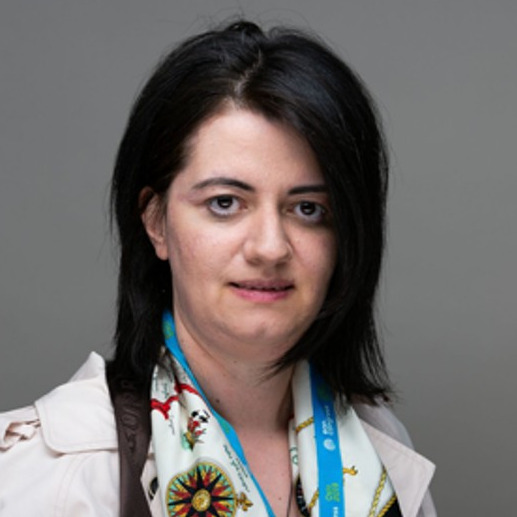
1st Department of Neurology, Medical School, National and Kapodistrian University of Athens, Athens, Greece;School of Electrical and Computer Engineering, National Technical University of Athens, Athens, Greece;Anastasia Bougea, is a Movement Disorder Specialist and researcher focusing on the identification of novel biomarkers for neurodegenerative diseases, including Alzheimer’s disease and synucleinopathies. Her work, spanning 150 papers often featured in Medicina and other high-impact journals, emphasizes bridging the gap between molecular research and clinical practice. Currently, she serves as an Expert Consultant and Clinical Researcher at the National and Kapodistrian University of Athens (NKUA), where she leads investigations into Transcranial Electric Stimulation and novel biomarkers. To further bridge the gap between medicine and technology, Anastasia Bougea is pursuing an Inter-institutional Master’s in Translational Engineering in Health and Medicine at the National Technical University of Athens (NTUA), specializing in AI in healthcare, neuroengineering, and medical robotics.
Meet Our Speakers
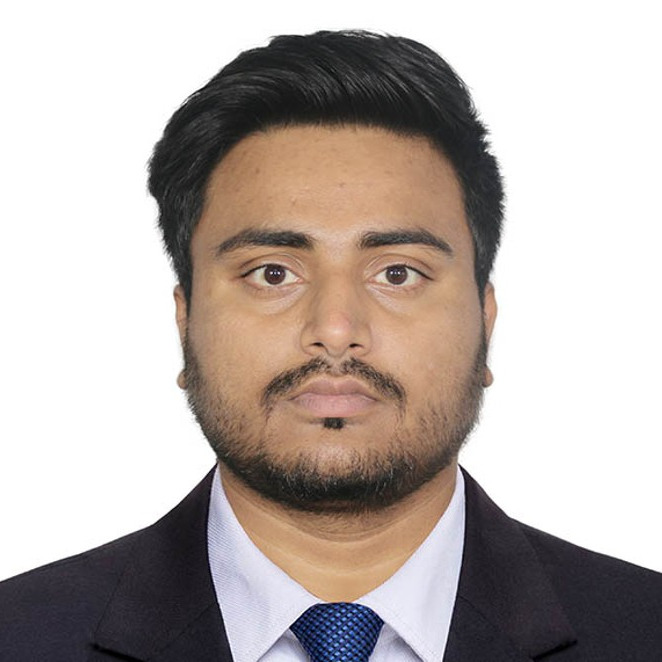
Dr. Ayush Chandra
Founder, Multiple Sclerosis Society Nepal, Kathmandu, Nepal;Department of Healthcare Management, Imperial Business College, Pokhara University, Kathmandu, Nepal;Dr. Ayush Chandra is a young medical professional and emerging neurology researcher from Nepal with active involvement in headache medicine, neuroimmunology, and global health initiatives. He has contributed to academic collaborations, awareness campaigns, and international scientific programs focused on neurological disorders, particularly migraines and multiple sclerosis. Passionate about advancing neuroscience research and education in Nepal, Dr. Chandra actively engages in leadership, advocacy, and cross-border collaborations to promote better neurological care and awareness.
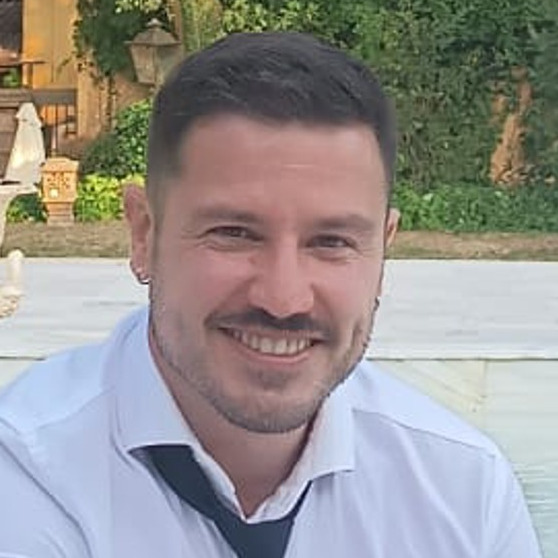
NeuroAging Laboratory Group (NEURAL);Clinical Neurosciences Research Laboratories (LINCs);Health Research Institute of Santiago de Compostela (IDIS);Dr. Ouro earned his degree in Biochemistry from the University of the Basque Country (UPV/EHU) in 2007, and obtained an International PhD (Cum Laude) from the same institution in 2013. He completed postdoctoral research at the Hebrew University of Jerusalem (Yosef Buganim Lab) and at Ben Gurion University of the Negev (Shira Knafo Lab). Dr. Alberto Ouro has focused his research career on the role of bioactive lipids in cancer, inflammation, and neurological diseases. He is currently working as a Miguel Servet researcher in the NeuroAging Group at the Health Research Institute of Santiago de Compostela (IDIS). His research line explores the role of sphingolipids and lysophospholipids as theragnostic tools in neurological disorders, such as Alzheimer’s disease, stroke, and migraine. He has published over 70 peer-reviewed articles in international journals ( >90% Q1, more than 30% as first and/or corresponding author) and 4 book chapters, and has presented his work in over 60 international and national conferences. He has participated in more than 30 competitive research projects, serving as Principal Investigator (PI) in several of them, including HeadLPAtx (Miguel Servet Program, ISCIII), HeadAtx (Generation of Knowledge Projects, MICINN), and NeurAlemab (PRIST Program, Xunta de Galicia).
The webinar 'Updates on Headaches: Challenges and Perspectives' bridged cutting-edge molecular research with clinical practice, addressing the current diagnostic biomarker gap and genetic classifications in headache medicineas Dr. Ayush Chandra presented in detail. According to the expert biochemist Dr. Ouro, a primary highlight was the exploration of novel translational science, specifically focusing on the Autotaxin-LPA axis and altered lipidomic profiles as promising new disease-modifying targets and biomarkers. Finally, the session underscored a revolutionary shift in migraine therapeutics, detailing the transition from established CGRP pathways to pioneering, next-generation mechanisms, including the PACAP pathway and various emerging ion channel and neuroimmune targets.

Medicina
Editor-in-Chief: Prof. Dr. Edgaras Stankevičius