Nanomaterials Webinar | Smart Nanomaterials for Biomedical Innovation: From Immunotherapy to Regenerative Medicine
the chairs
32nd Nanomaterials Webinar
Smart Nanomaterials for Biomedical Innovation: From Immunotherapy to Regenerative Medicine
Welcome to this MDPI Nanomaterials webinar dedicated to the latest advances in smart nanomaterials and nanocomposites for biomedical innovation. This event brings together leading researchers working at the intersection of nanotechnology, regenerative medicine, immunotherapy, and bioengineering.
Through three complementary scientific contributions, we will explore innovative approaches ranging from green chemistry-driven nanocomposites and nanoparticle-based immunotherapies to piezoelectric scaffolds for neural regeneration. Together, these presentations highlight the growing impact of functional nanomaterials in addressing current biomedical challenges and shaping next-generation therapeutic strategies.
We are delighted to host distinguished speakers from internationally recognized research institutions, and we hope this webinar will stimulate discussion, foster collaborations, and inspire new perspectives in the field.
Thank you for joining us, and we wish you an engaging and insightful webinar.
Date: 01 October 2026
Time: 09:00 am EDT | 3:00 pm CEST
Webinar ID: 880 0883 5380
Webinar Secretariat: journal.webinar@mdpi.com
Meet Our Chairs
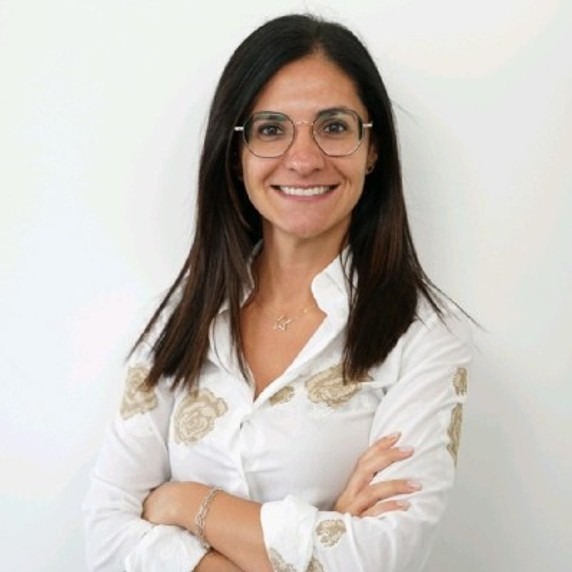
Institute of Polymers, Composites and Biomaterials (IPCB) National Research Council of Italy (CNR) Via John Fitzgerald Kennedy, Naples, Italy;Stefania Scialla is a Staff Researcher at the Institute of Polymers, Composites and Biomaterials of the Italian National Research Council (CNR-IPCB, Italy). She holds an MSc in Molecular and Industrial Biotechnology from the University of Naples Federico II (2011) and a PhD in Materials and Structures Engineering from the University of Salento (2017), focused on magnetic nanocomposites for bone regeneration. Her research is strongly interdisciplinary, bridging nanotechnology, tissue engineering, and sustainable biomaterials. Throughout her career, she worked as a post-doc at CNR-NANOTEC (Italy) and at the International Iberian Nanotechnology Laboratory (INL, Portugal), focusing on magnetic nanocomposites for cancer theranostics and MRI-based monitoring. She also acted as principal investigator in international collaborations (NRC—Egypt) on the conversion of agro-industrial waste into functional biomaterials for antimicrobial and pro-angiogenic scaffolds. As a summary of her scientific production, she has participated in over 20 conference communications, and she has published 1 chapter of a book, 9 reviews, and 21 research articles.

Materials for Medicine and Biotechnology Group (MaMBIO) Nanoscience and Nanotechnology Department, Institute of Materials Science of Madrid (ICMM-CSIC);María Salvador is a Juan de la Cierva fellow at the Institute of Materials Science of Madrid, ICMM-CSIC, Spain. She obtained her Chemical Engineering degree from the University of Valladolid (2013) and a Master’s in Biotechnology of the Environment and Health (2015) at the University of Oviedo, where she later obtained her PhD in Materials Science (2022). Her work focuses on magnetic nanoparticles and nanomaterials for biosensing, rapid diagnostics, tissue regeneration, and printed electronics, with a strong interest in connecting fundamental materials research with real-world applications. Beyond her research, she is actively involved in the IEEE Magnetics Society, contributing to outreach, early-career researcher initiatives, and international scientific events.
Meet Our Speakers
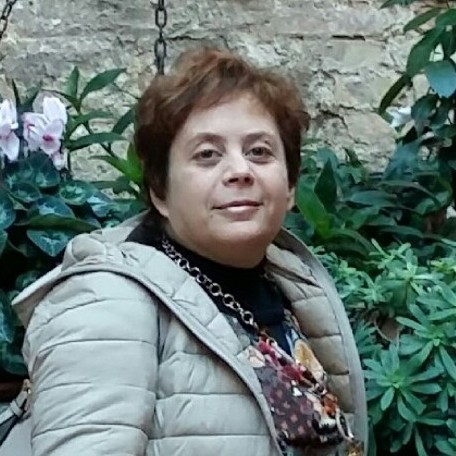
Institute of Polymers, Composites and Biomaterials (IPCB), National Research Council of Italy (CNR), Piazzale Enrico Fermi n. 1, 80055 Portici, Italy;Angela Longo is a Researcher at the Institute for Polymers, Composites and Biomaterials of the National Research Council of Italy (IPCB–CNR), Naples. She received her PhD in Materials and Structures Engineering with a background in chemical engineering. Her research focuses on the development of nanostructured materials and polymer based systems incorporating inorganic nanomaterials for electronic, optoelectronic, and biomedical applications. Her expertise includes chemical synthesis and advanced structural and morphological characterization using electron microscopy, X ray diffraction, and optical spectroscopy. She is the author of one hundred publications in high-impact international journals and has participated as a speaker in numerous international conferences.
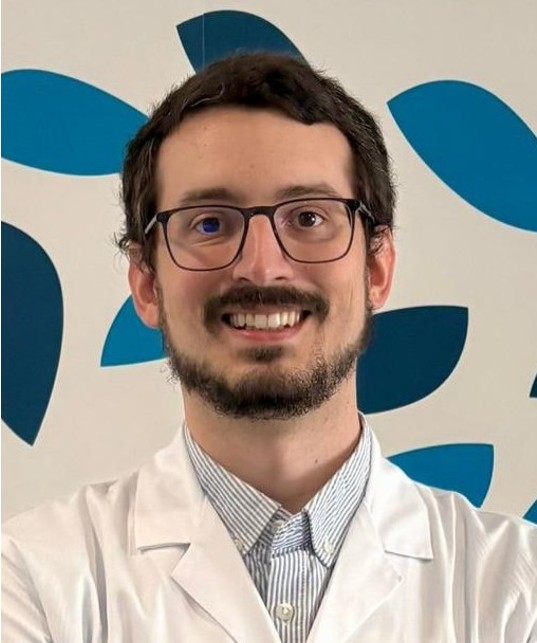
Precision Allergy Translational Hub (PATH), IBIMA Plataforma BIONAND, RICORS Inflammatory Diseases, Malaga, Spain;Allergy Unit, Hospital Regional Universitario de Malaga, Malaga, Spain;Juan L Paris is a Nicolás Monardes Principal Investigator at IBIMA Plataforma BIONAND (Málaga, Spain). He holds a BSc and a PhD in Pharmacy from Universidad Complutense de Madrid (2013 and 2017, respectively). His independent research line focuses on the use of bio- and nanomaterials to develop novel therapeutic approaches, mainly focused on cell therapies and on immune diseases. Throughout his career, he has worked at 8 different laboratories across Spain, Portugal, the USA and the UK. As a summary of his scientific production, he has participated in over 50 conference communications, he has published 2 book chapters and 41 research articles, and he is an inventor in a patent application. He has been the Principal Investigator of 5 Research Grants, including a recent ERC Starting Grant, with a total of over 2.5 M€ of funding obtained.
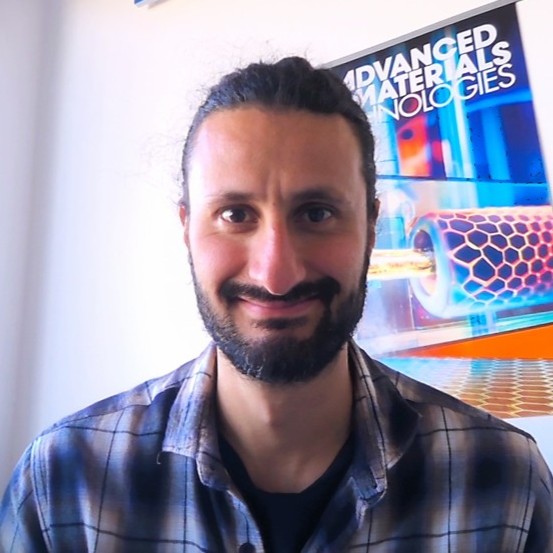
The BioRobotic Institute, Scuola Superiore Sant’Anna, Pisa, Italy;Eugenio Redolfi Riva is an Assistant Professor of Bioengineering at Scuola Superiore Sant’Anna in Pisa. After a PhD at the Italian Institute of Technology and a post-doc at the University of Cagliari, where he gained experience on bio-nanomaterials synthesis and fabrication for drug delivery and cancer nanomedicine, he joined the BioRootic Institute of Scuola Superiore Sant’Anna in 2020 under the supervision of Prof. Silvestro Micera. His research line and interests rely on the fabrication and validation of novel Functional Biomaterials in the framework of Bioelectronic Medicine and Neural Tissue Engineering.