Processes Webinar | Is Microkinetic Modeling the New Standard in Reaction Engineering?
the chair
22nd Processes Webinar
Is Microkinetic Modeling the New Standard in Reaction Engineering?
It is my great pleasure to welcome you to this Processes webinar entitled “Is Microkinetic Modeling the New Standard in Reaction Engineering?”
For decades, catalytic kinetics was often described using empirical or semi-empirical rate expressions. While these approaches remain useful for reactor design and process optimization, they provide limited insight into the molecular-level events that ultimately control activity, selectivity, and stability. Microkinetic modeling represents a profound shift: instead of assuming rate-determining steps or most abundant surface intermediates, it builds kinetics from elementary surface reactions, enforcing stoichiometric and thermodynamic consistency.
At its core, microkinetic modeling aims to bridge scales — from electronic structure and adsorption energetics to reactor performance. By integrating reaction networks, surface coverages, scaling relations, and increasingly data-driven or machine-learning tools, MKM allows us to move from describing kinetics to predicting catalytic behavior. In this sense, it is not merely a modeling tool but a framework for rational catalyst design.
However, with this power comes challenges. The construction of reaction networks requires a careful balance between completeness and tractability. The choice of energetics, approximations such as mean-field treatments, uncertainty quantification, and transferability across catalysts and conditions remain active research questions. As highlighted in recent literature, issues of stiffness, computational cost, and even the need for surrogate models continue to shape the field's evolution. At the same time, scaling relations and sensitivity analyses reveal both opportunities and intrinsic limitations imposed by thermodynamics and kinetics.
So we may ask:
Is microkinetic modeling simply a more detailed description of known kinetics?
Or is it becoming an essential, predictive tool for the next generation of catalytic processes?
Today’s speakers bring complementary perspectives — from fundamental kinetic modeling of catalytic reactions, to state- and site-specific microkinetic frameworks, to applications in CO₂ and nitrogen reduction. Together, they illustrate both the maturity of the methodology and the open questions that still drive research in this area.
I hope this webinar will stimulate discussion on the true potential of microkinetic modeling: its power, its limitations, and its role in shaping the future of reaction engineering.
Let us begin.
Date: 6 May 2026
Time: 02:00 pm CEST | 8:00 am EDT | 8:00 pm CST Asia
Webinar ID: 872 0162 1995
Webinar Secretariat: journal.webinar@mdpi.com
Meet Our Chair

IRCELYON – Lyon 1 University - France;Since 2025, Sébastien Leveneur is Full Professor at IRCELYON and the University of Claude Bernard Lyon 1 (France). He obtained two Master’s degrees in 2004 from INSA Rouen (Chemical Engineering & Fine Chemistry) and the University of Rouen (Risk Management of Chemical Hazards). In 2009, he received his PhD from Åbo Akademi University (Finland) under the supervision of Prof. Tapio Salmi. In 2010, he joined INSA Rouen as Assistant-Professor and obtained his Habilitation (HDR). Since 2015, he has also held a Docent position in Chemical Process Technology at Åbo Akademi University, specializing in reaction engineering, reactor modeling, and safety aspects. His research focuses on the development of kinetic models for complex chemical systems, process intensification, and risk analysis, with a strong emphasis on biomass valorization and sustainable processes.
Meet Our Speakers
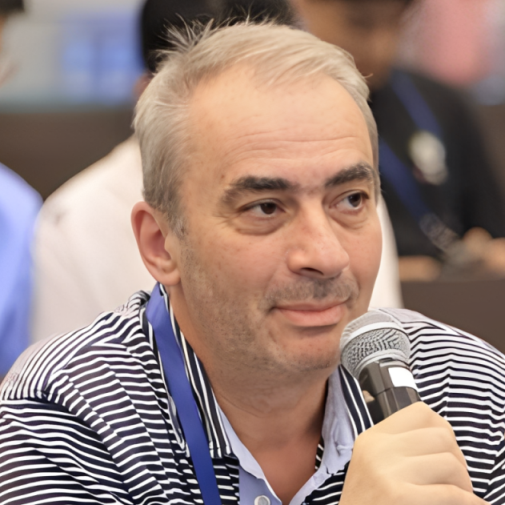
Åbo Akademi University, Turku/Åbo, Finland;Dmitry Yu. Murzin studied chemical engineering at the Mendeleev University of Chemical Technology. Since 2000 Prof. Murzin holds the Borgström Chair of Chemical Technology at Åbo Akademi University, Turku, Finland. He holds several patents, is an author of 4 books and an author or co-author of ca. 1000 peer-reviewed journal articles and book chapters covering various aspects of industrial chemistry, heterogeneous catalysis, chemical technology and reaction engineering.
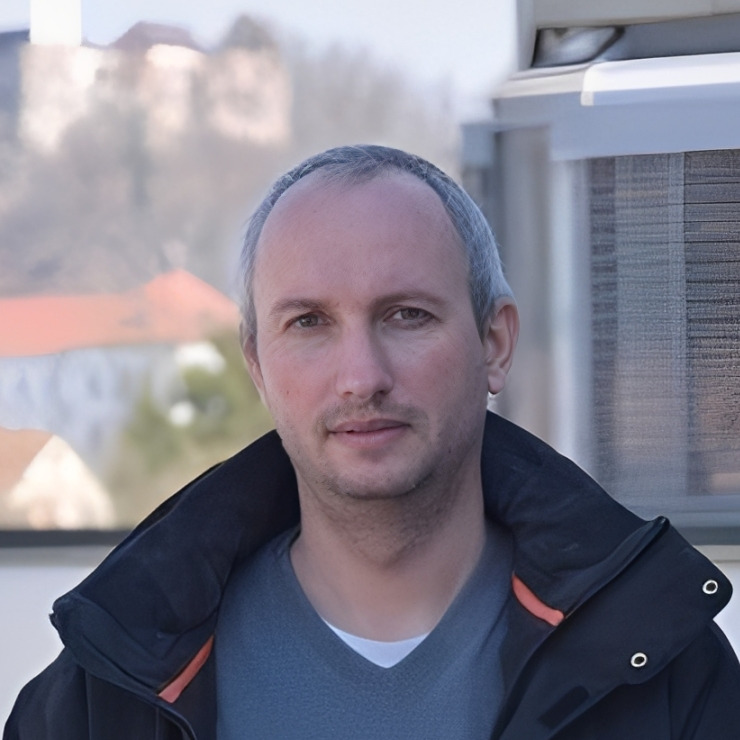
National Institute of Chemistry, Ljubljana, Slovenia;Prof. Blaz Likozar, is a head of the Department of Catalysis and Chemical Reaction Engineering at the National Institute of Chemistry (NIC), leading the programme “Chemical Reaction Engineering”, as well as numerous research projects (15 H2020 / >50 in Horizon Europe alone). His expertise lies (among others) in heterogeneous catalysis materials, modelling, simulation and optimization of process fluid mechanics, transport phenomena and chemical kinetics. He worked at the University of Delaware in 2014–2015 as a Fulbright Program researcher. He has authored >400 articles, was cited >10000 times, having a h-index of 61. He is also involved in many industrial projects, amongst others, with TotalEnergies, Evonik Industries, UPM, Novartis, Carbon Recycling International. He is a recipient of Pregl and Zois awards.

Delaware Energy Institute, University of Delaware, Newark, USA;Dionisios (Dion) G. Vlachos is the Unidel Dan Rich Chair in Energy Professor of Chemical & Biomolecular Engineering, a Professor of Physics and Astronomy at the University of Delaware, and the Director of the University of Delaware Energy Institute (UDEI). Vlachos’ research focuses on circular economy and waste derivatization, multiscale modeling and simulation, distributed (bio)chemical manufacturing, process intensification and novel catalytic reactors, renewable fuels and chemicals, catalyst informatics and in silico materials prediction, and kinetic modeling. He is a pioneer of the multiscale modeling field and the introduction of fundamental research in biomass.


In this section, you will find the recordings of this webinar to watch, re-watch and share with your colleagues!
Preparation, Characterization and Application of Heterogeneous Catalysts
Edited by Wladimir Reschetilowski
Deadline for manuscript submissions: 15 May 2026