Processes Webinar | From Biomass to Sustainable Materials: Case Studies, Life Cycle Thinking, and Computational Design
the chair
28th Processes Webinar
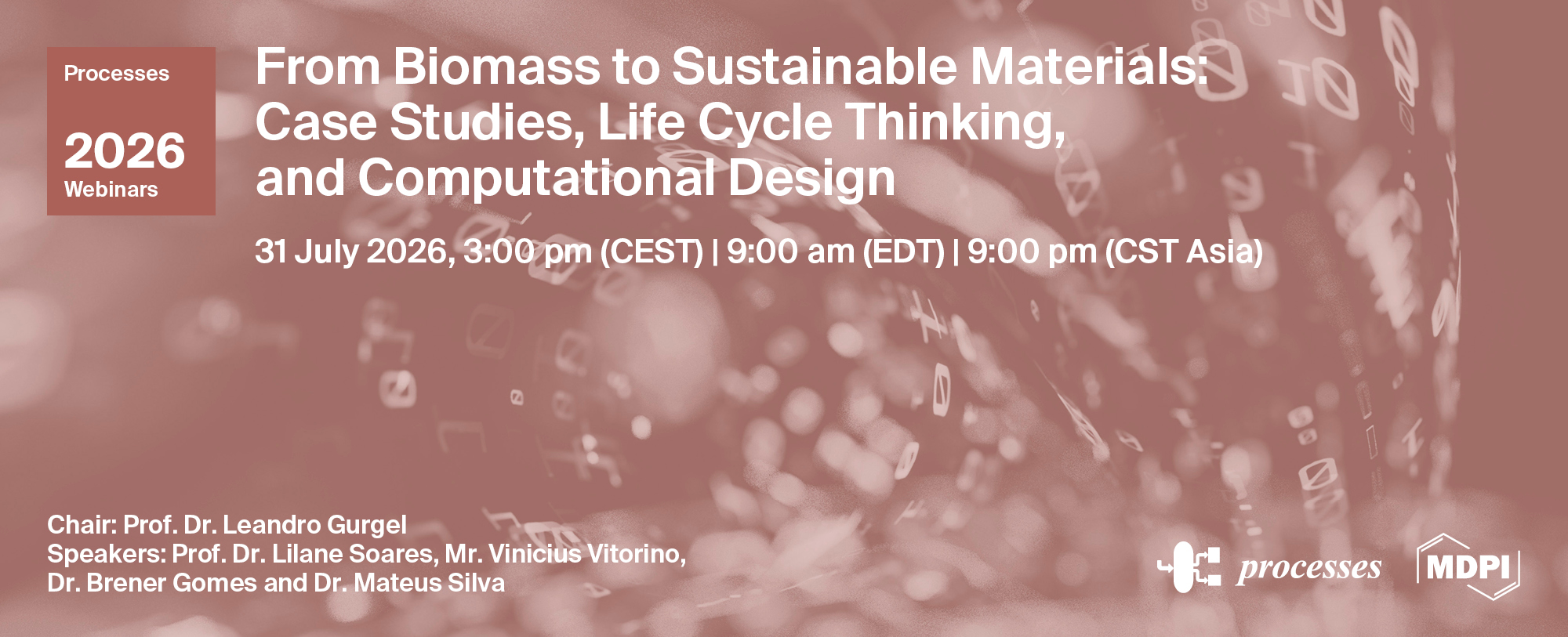
From Biomass to Sustainable Materials: Case Studies, Life Cycle Thinking, and Computational Design
Welcome, everyone. It is my pleasure to welcome you to this MDPI webinar, “From Biomass to Sustainable Materials: Case Studies, Life Cycle Thinking, and Computational Design.” My name is Leandro Gurgel, and I am an Associate Professor of Chemistry at the Federal University of Ouro Preto, Brazil. My research focuses on biomass-based materials, adsorption, catalysis, and environmental assessment, including life cycle assessment and computational approaches. The transition toward a more sustainable society requires innovative materials and processes that can balance environmental, economic, and technical performance. Biomass offers tremendous opportunities in this regard, serving as a renewable resource for the development of high-value materials and technologies. In today's webinar, our speakers will share perspectives and case studies that illustrate how life cycle thinking, experimental research, and computational design can support this transition.
Thank you all for joining us. I hope you enjoy the presentations, engage in the discussions, and find inspiration for your own research and professional activities.
Date: July 31st, 2026
Time: 3:00 pm CEST | 9:00 am EDT| 9:00 pm CST Asia
Zoom ID: 836 4148 1567
Webinar Secretariat: journal.webinar@mdpi.com
Meet Our Chair
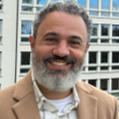
Department of Chemistry, Federal University of Ouro Preto, Ouro Preto, Brazil
Dr. Leandro Gurgel is an Associate Professor in the Department of Chemistry at the Federal University of Ouro Preto, where he has served since 2012. His research focuses on the valorization of biomass for applications in water and wastewater treatment, the production of bioenergy—including methane, hydrogen, and ethanol—and the development of catalytic materials for fine chemicals and the decomposition of volatile organic compounds. He currently holds an H index of 42 (Scopus) and has published 100 peer reviewed articles. His academic advising includes 35 completed master’s and doctoral theses.
Meet Our Speakers
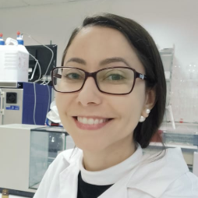
Department of Chemistry, Federal University of Ouro Preto, Ouro Preto, Brazil;
Professor Liliane Catone Soares holds a Ph.D. in Analytical Chemistry, an M.Sc. in Inorganic Chemistry, and a B.Sc. in Chemistry from the Federal University of Minas Gerais (UFMG), Brazil. She served as a Visiting Professor (2023–2024) at the Institut Lavoisier de Versailles, Université de Versailles Saint-Quentin-en-Yvelines, France. Her research interests include: (1) adsorption, with a focus on the development of lignocellulosic biomass-based adsorbents for the removal of contaminants from water and industrial effluents; (2) catalysis, with an emphasis on the design of lignocellulosic biomass-derived catalysts for applications in organic synthesis; and (3) scientific writing and the ethics of scholarly publication.
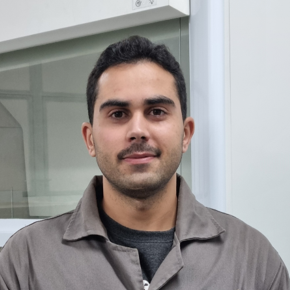
Mr. Vinícius Vitorino
Graduate Program in Environmental Engineering, Federal University of Ouro Preto, Ouro Preto, Brazil;
Vinícius Moura Vitorino holds an M.Sc. in Environmental Engineering and a degree in Chemistry from the Federal University of Ouro Preto (UFOP), Brazil. He worked with terpene conversion into high-value products using heteropolyacid catalysts at the Catalysis Laboratory (LabCat). He also completed an internship at Chemelot Innovation and Learning Labs (CHILL), Zuyd University of Applied Sciences, the Netherlands, working on the optimization of photochemical reactions in microflow reactors. He is currently a Ph.D. student in Environmental Engineering at UFOP, developing chemically modified bio-based adsorbents for water treatment applications. His research interests include organic synthesis, development of bioadsorbents and water treatment.
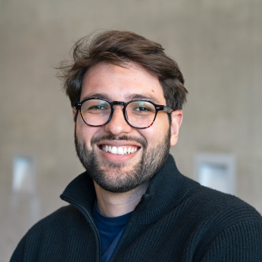
Dr. Brener Gomes
Division of Environmental Systems Analysis, Department of Environmental and Energy Sciences, Chalmers University of Technology, Gothenburg, Sweden;
Brener Gomes is a Postdoctoral Researcher at Chalmers University of Technology. His current research focuses on the application of prospective Life Cycle Assessment (LCA) to support the development of emerging bio-based materials and processes.
His academic and professional background spans environmental engineering, materials development, water and wastewater treatment technologies, and sustainability assessment. His work integrates process development, environmental systems analysis, and life cycle thinking to support the design, optimization, and scale-up of more sustainable materials, products, and industrial processes.
Through his research, Brener aims to bridge technological innovation and sustainability by helping researchers identify environmental hotspots, evaluate trade-offs, and guide decision-making during the early stages of technology development. His goal is to contribute to the creation of next-generation bio-based solutions.
Dr. Mateus Silva
Department of Chemistry, Federal University of Ouro Preto, Ouro Preto, Brazil;
Dr. Mateus Xavier Silva holds a Ph.D. and an M.Sc. in Chemistry, with an emphasis on physical chemistry and computational chemistry, from the Federal University of Minas Gerais (UFMG), Brazil. He also holds a bachelor’s degree in Chemistry from the same institution. His research experience includes the use of genetic algorithms as an energy minimization technique applied to metallic clusters and polynitrogen systems, employing both empirical potentials and first-principles methods, such as Møller-Plesset Perturbation Theory (MP2) and Density Functional Theory (DFT). He has also investigated adiabatic and nonadiabatic mechanisms involved in the formation and destruction of phosphorus-, silicon-, and sulfur-bearing molecules of astrochemical interest. He is currently a postdoctoral researcher in the Physical Organic Chemistry Group (GFQO) at the Department of Chemistry of the Federal University of Ouro Preto (UFOP), Brazil. His current research interests include the chemistry of phosphorus in molecular clouds in the interstellar medium and star-forming regions, and the development and elucidation of the mechanisms of action of biocatalysts and biosorbents derived from plant biomass for applications in organic synthesis and in the removal of contaminants from water bodies and wastewater.
This is a FREE webinar. After registering, you will receive a confirmation email containing information on how to join the webinar. Registrations with academic institutional email addresses will be prioritized.
Certificates of attendance will be delivered to those who attend the live webinar.
Can't attend? Register anyway, and we'll let you know when the recording is available to watch.