
Sensors Webinar | Optical Fiber Sensors for Biomedical/Chemical/Environmental Applications
the chair
32nd Sensors Webinar
Optical Fiber Sensors for Biomedical/Chemical/Environmental Applications
Optical sensing has become one of the most active areas of research in bio/chemical and environmental fields, driven by the need for analytical platforms that combine high sensitivity, reliability, and real-time operation with compact and cost-effective implementations. Advances in photonic technologies, functional materials, and data analysis are enabling new sensing concepts capable of addressing challenges in healthcare, environmental monitoring, food safety, and industrial applications.
Among the many approaches currently under investigation, optical fiber technologies continue to play a central role thanks to their versatility and excellent sensing performance. At the same time, emerging photonic platforms—including metasurfaces, optofluidic systems, and integrated optical devices—are expanding the range of available solutions for biochemical sensing. The combination of these platforms with innovative recognition layers, such as biological, biomimetic, and chemical receptors, together with machine learning techniques for signal processing and interpretation, is opening new perspectives for the development of next-generation biosensors.
This webinar will provide an overview of several complementary directions currently shaping the field. The invited presentations will explore recent developments and design challenges in optical fiber grating biosensing, discuss the opportunities offered by Brillouin optical frequency-domain analysis for advanced fiber sensing, and present innovative photonic tools for biochemical sensing. By covering these topics, the webinar aims to highlight both the technological advances and the scientific challenges that are defining the future of optical sensing for bio/chemical and environmental sensing applications.
Date: 2 September 2026
Time: 11:00 am CEST | 05:00 pm CST Asia
Webinar ID: 812 0359 5701
Webinar Secretariat: journal.webinar@mdpi.com
Meet Our Chair
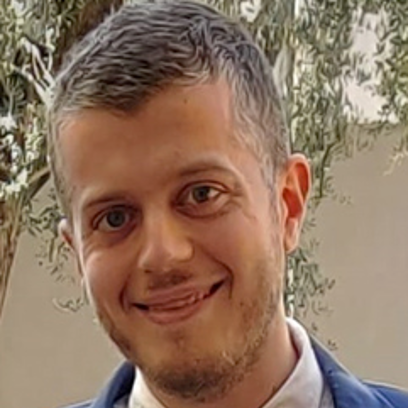
Department of Engineering, University of Campania Luigi Vanvitelli, Via Roma 29, 81031 Aversa, Italy;Francesco Arcadio was born in Italy, in 1991. He received his master’s degree in electronic engineering and his Ph.D. degree in Industrial and Information Engineering from the University of Campania “Luigi Vanvitelli”, Aversa, Italy, in 2018 and 2021, respectively. He is a Postdoctoral Researcher with the University of Campania “Luigi Vanvitelli” from 2021 to the current date. His current research interests include the design and fabrication of optical sensors, optical fiber sensors, chemical sensor and biosensors. He is the author of around 80 international journal and conference papers and 3 patents. He is also a Co-Founder of the spin-off companies “MoReSense srl”, Milan, Italy and “Ratio et Ars srl”, Capua, Italy.
Meet Our Speakers
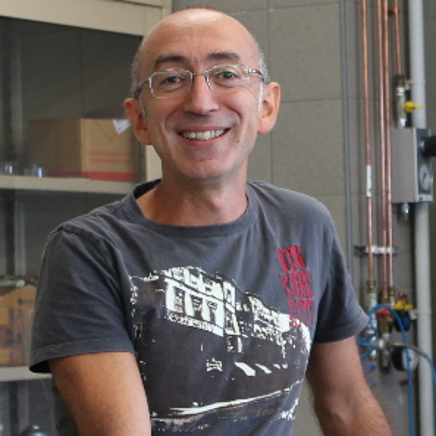
“Nello Carrara” Institute of Applied Physics, IFAC-CNR, Via Madonna del Piano 10, I-50019 Firenze, Italy;Cosimo Trono is a Senior researcher at the Istituto di Fisica Applicata “Nello Carrara” of the Consiglio Nazionale delle Ricerche. His professional profile is defined by extensive experience in the design and development of complex optoelectronic systems, with a particular focus on fiber‑optic sensors, spectroscopy, mechatronic measurement systems, and integrated platforms for non‑invasive diagnostics. Throughout his career at IFAC, he has developed competencies covering the entire design pipeline: from optical modeling to prototyping, and from control‑hardware development to data‑acquisition software, up to experimental validation in real measurement environments. A significant part of his scientific activity concerns the development of probes and devices based on optical fibers, including advanced configurations such as long period gratings and fiber bragg gratings, multi‑fiber systems, custom‑geometry probes for applications in large‑area diagnostics, biomedical analysis, development of optoelectronic and microfluidic platforms and materials characterization. He was the principal investigator and research unit leader of three Italian projects and participates in several Italian and international projects. He is the author of over 70 publications in peer reviewed scientific journals and of two international patents. His H-index is 27 according to Scopus.
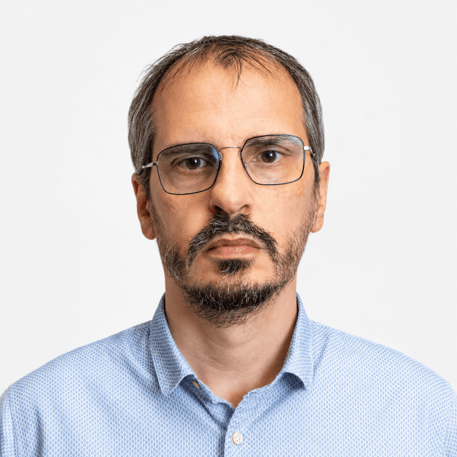
Department of Engineering, University of Campania "Luigi Vanvitelli", 81031 Aversa, Italy;Aldo Minardo is a Full Professor of Electronics at the University of Campania Luigi Vanvitelli. He received his M.Sc. degree (summa cum laude) in Electronic Engineering from the University of Naples Federico II in 2000 and his Ph.D. in Electronic Engineering from the Second University of Naples in 2003. In 2005, he received the IEEE Photonics Society Award for the best doctoral thesis in Optoelectronics defended in Italy during the 2003-2004 period. In 2010, he served as Scientific Coordinator, for the Research Unit of the Second University of Naples, of the FP7 Project "Fiber Optic Sensor Application for Structural Health Monitoring - FOSAS", aimed at the development of point and distributed optical fiber sensors for structural health monitoring in the aerospace sector. From 2014 to 2019, he was the Italian Substitute Member of the Management Committee of the COST Action TU1402, "Quantifying the value of structural health monitoring". From July 2016 to March 2019, he served as the Scientific Coordinator of the H2020 Project “Brillouin Distributed sensor for Aeronautical Structures - BRIDAS”, during which a prototype for high spatial resolution strain and temperature measurements was developed. He serves as a reviewer for several international scientific journals, and is a member of the Editorial Board of Sensors (ISSN 1424-8220). He is the co-founder of two spin-off companies, Optosensing and Sense&Learn. His teaching activity focuses on Digital Electronics. He has supervised numerous undergraduate and graduate theses. His research interests include the development of optical fiber sensors for applications in civil engineering, aerospace, geotechnical engineering, and environmental monitoring. He is the author of more than 200 publications in international journals and conference proceedings, as well as several national and international patents. According to SCOPUS, his current H-Index is 34.

Departamento de Física e Astronomia, Faculdade de Ciências da Universidade do Porto, Portugal.;Centre for Applied Photonics, INESC TEC—Institute for Systems and Computer Engineering, Technology and Science, Porto, Portugal;Pedro A. S. Jorge holds a PhD in Physics from the University of Porto, completed in 2006, following previous training in Applied Physics, Optoelectronics and Lasers. He is currently a Senior Researcher and team leader at the Centre for Applied Photonics of INESC TEC, and an Assistant Professor at the Department of Physics and Astronomy of the Faculty of Sciences of the University of Porto, where he also serves as Director of the MSc in Physics Engineering. His research explores the use of light-based technologies to sense, monitor and analyse complex physical, chemical and biological systems. His work spans optical fibre sensors, biosensors, laser-based spectroscopy, LIBS, spectral imaging, optical instrumentation and data-driven analytical systems, with applications in environmental monitoring, biomedicine, industrial inspection, mineral analysis, aquaculture and energy-related sensing. Pedro has led and contributed to a broad portfolio of national and international research projects, including FCT, European and industry-oriented initiatives, acting as Principal Investigator, Work Package leader and senior researcher. His recent work focuses on translating photonic concepts into robust experimental platforms and prototypes, often developed in collaboration with academic, technological and industrial partners. He has co-authored more than 120 scientific journal publications, contributed to a large number of conference communications, and holds several patents in photonic sensing technologies, including licensed intellectual property with translational impact. He is also actively involved in MSc and PhD supervision, scientific community service, conference organization and advanced training in optics, photonics and applied instrumentation.