
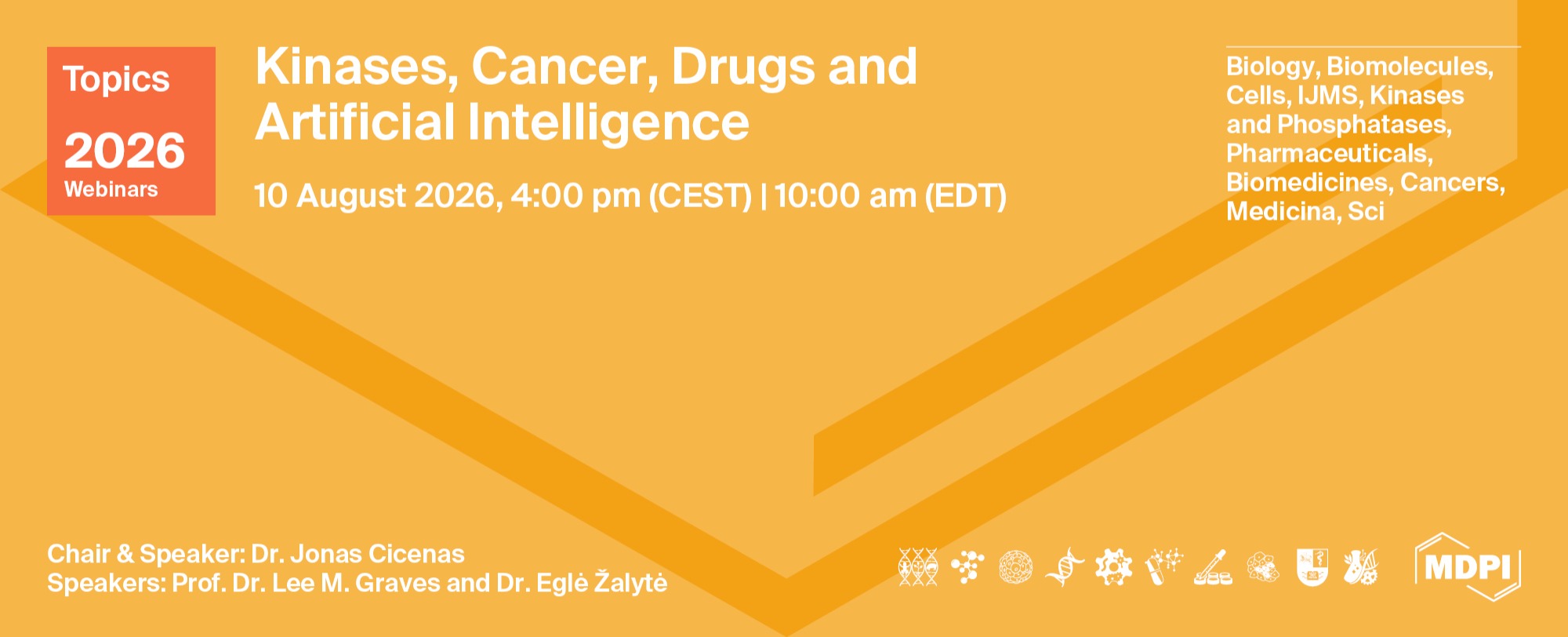
Topics Webinar | Kinases, Cancer, Drugs and Artificial Intelligence
the chair
Topics Webinar
Kinases, Cancer, Drugs and Artificial Intelligence
Good afternoon, and a very warm welcome to everyone joining us for today’s webinar, “Kinases, Cancer, Drugs, and Artificial Intelligence.” It is my distinct pleasure to open this session, and I want to extend a special thank you to each of you—whether you are joining from academia, the pharmaceutical industry, or clinical practice—for taking the time to be part of this important discussion.
Today, we turn our focus to a field that has become central to modern oncology: the study and therapeutic targeting of protein kinases. Over the past two decades, kinases have emerged as one of the most clinically successful classes of drug targets in cancer. These enzymes act as critical molecular switches, governing a vast network of signaling pathways that control cell proliferation, survival, and metabolism. When dysregulated—whether through mutation, overexpression, or chromosomal translocation—kinases drive the hallmark behaviors of malignancy.
It is no exaggeration to say that the discovery of kinase inhibitors has transformed the therapeutic landscape. From the groundbreaking success of imatinib in chronic myeloid leukemia to the latest generation of highly selective ATP-competitive and allosteric inhibitors, we have seen how a deep understanding of kinase biology can translate into life-saving drugs. However, we are also acutely aware of the persistent challenges: acquired resistance, off-target toxicity, and the daunting complexity of kinase signaling networks. The question is no longer simply which kinase to target, but how to target it more intelligently, more selectively, and for the right patient at the right time.
This is where artificial intelligence enters the picture, and while much of our conversation will be anchored in kinase biology, we will explore how AI is beginning to accelerate drug discovery—from structure prediction to virtual screening. Yet let us be clear: the biology remains the foundation. Our goal today is to ask how these powerful computational tools can help us navigate the complexity of the kinome and ultimately improve patient outcomes.
Date: 10 August 2026
Time: 4:00 p.m. CEST | 10:00 a.m. EDT
Webinar ID: 889 3819 0599
Webinar Secretariat: journal.webinar@mdpi.com
Meet Our Chair

1. Faculty of Informatics, Engineering and Technologies, Kauno Kolegija Higher Education Institution;2. SMK College of Applied Sciences, Kalvarijų ;3. UAB CDKjc, Kukučių ;Dr. Cicenas received his BSc and MSc degrees in biology from Vilnius Pedagogical University and a PhD in biochemistry in 2004 from the University of Basel. His research interests are focused on cell signalling (protein kinases in particular) and its role in both normal cells and cancers, biomarker discovery in cancer and other proliferative disorders, and proteomics. Dr. Cicenas works at the Faculty of Informatics, Engineering and Technologies, Kauno Kolegija Higher Education Institution, as a scientist informatician. He also teaches programming at SMK College of Applied Sciences. In addition, he is a Founder and CEO of the startup CDKjc, which concentrates on kinase inhibitors and bioinformatics/biostatistics.
Meet Our Speakers

1. Faculty of Informatics, Engineering and Technologies, Kauno Kolegija Higher Education Institution, Lithuania ;2. SMK College of Applied Sciences, Kalvarijų, Lithuania;3. UAB CDKjc, Kukučių, Lithuania ;Dr. Cicenas received his BSc and MSc degrees in biology from Vilnius Pedagogical University and a PhD in biochemistry in 2004 from the University of Basel. His research interests are focused on cell signalling (protein kinases in particular) and its role in both normal cells and cancers, biomarker discovery in cancer and other proliferative disorders, and proteomics. Dr. Cicenas works at the Faculty of Informatics, Engineering and Technologies, Kauno Kolegija Higher Education Institution, as a scientist informatician. He also teaches programming at SMK College of Applied Sciences. In addition, he is a Founder and CEO of the startup CDKjc, which concentrates on kinase inhibitors and bioinformatics/biostatistics.

Department of Pharmacology, University of North Carolina at Chapel Hill, NC;Dr. Graves received a BS in Biochemistry from Iowa State University and a PHD in Biochemistry from the University of Illinois at Champaign-Urbana. He completed post-doctoral studies with Dr. Edwin G. Krebs at the University of Washington. He is a Professor in the Department of Pharmacology where he is the Faculty Director of the Metabolomics and Proteomics Core. Over the last 30 years his lab has applied affinity-based proteomics to study drug action with a focus on protein kinases and most recently mitochondrial proteases. Using kinase inhibitor beads combined with mass spectrometry, his lab has identified kinome responses in cancer, drug resistance and other diseases. His lab has also used this technology to profile kinase inhibitor specificity in model and parasitic organisms.
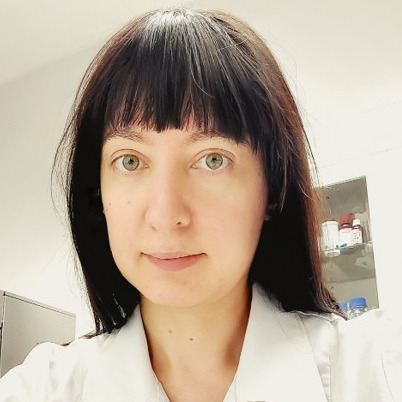
Institute of Biosciences, Life Sciences Center, Vilnius University, Lithuania;Dr. Eglė Žalytė obtained a PhD in Biochemistry in 2022. Her PhD thesis investigated molecular mechanisms that drive pancreatic cancer cell resistance to ferroptosis, a newly discovered cell death type. Currently, Dr. Žalytė works as a researcher and assistant at Vilnius University, Lithuania, as well as a researcher at the Center for Physical Sciences and Technology, Lithuania. Dr. Žalytė’s main work areas include investigation of the mechanisms of cancer cell resistance (innate and acquired), as well as the development of preclinical cancer models and anticancer therapy individualization.
This is a FREE webinar. After registering, you will receive a confirmation email containing information on how to join the webinar. Registrations with academic institutional email addresses will be prioritized.
Certificates of attendance will be delivered to those who attend the live webinar.
Can’t attend? Register anyway and we’ll let you know when the recording is available to watch.
Register for free here!
|
Speaker/Presentation |
Time in CEST |
Time in EDT |
|
Chair Introduction Dr. Jonas Cicenas |
4:00 - 4:10 pm |
10:00 - 10:10 am |
|
AI and Machine Learning in Kinase Inhibitor Development Dr. Jonas Cicenas |
4:10 - 4:30 pm |
10:10 - 10:30 am |
|
Applying Affinity Proteomics to Profile Kinome Dynamics and Inhibitor Specificity Prof. Dr. Lee M. Graves |
4:30 - 4:50 pm |
10:30 - 10:50 am |
|
Targeting Kinases in Gynecological Cancers: From Molecular Pathways to Clinical Practice Dr. Eglė Žalytė |
4:50 - 5:10 pm |
10:50 - 11:10 am |
|
Q&A |
5:10 - 5:25 pm |
11:10 - 11:25 am |
|
Closing of Webinar Dr. Jonas Cicenas |
5:25 - 5:30 pm |
11:25 - 11:30 am |
Kinases in Cancer and Other Diseases, 2nd Edition
Edited by: Dr. Jonas Cicenas, Dr. Anna M. Czarnecka
Abstract submission deadline: 31 July 2026
Deadline for manuscript submissions: 31 August 2026
Kinases and GTPases in Cancer: The Role of Mutations and sRNAs
Edited by: Dr. Jonas Cicenas, Prof. Dr. Lee M. Graves
Abstract submission deadline: 31 October 2027
Deadline for manuscript submissions: 31 December 2027
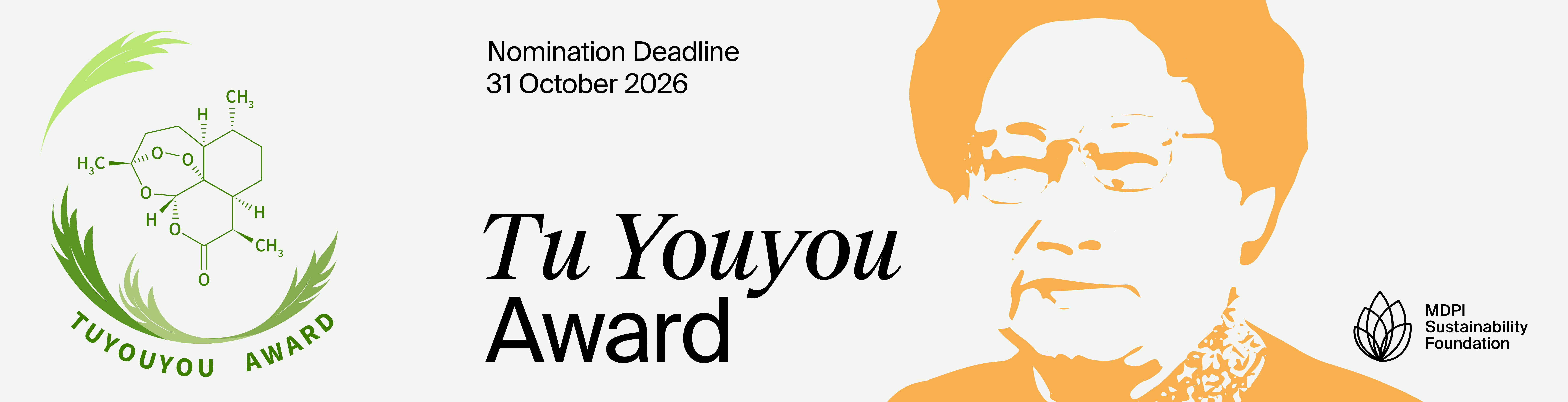
To honor Professor Tu Youyou's remarkable contributions to human health and build upon her achievements, MDPI established the Tu Youyou Award in 2016. This award aims to acknowledge exceptional scholars committed to the research fields of natural product chemistry and medicinal chemistry.
Prize:
- CHF 100,000 (to be divided equally should multiple recipients be awarded).
- An award medal and a certificate.
Nomination Deadline: 31 October 2026
For further information, please visit the Tu Youyou Award website (https://tuyouyouprize.org/).
For any inquiries, please contact the Tu Youyou Award Team at tuyouyouaward@mdpi.com.