
Topics Webinar | GeoAI - Prospects and Challenges
the chair
Topics Webinar
GeoAI – Prospects and Challenges
This webinar series represents a collection of online presentations that brings together scholars from around the world with expertise in the field of Geospatial Artificial Intelligence (GeoAI) and its diverse range of applications. The talks will provide an opportunity to share knowledge, exchange research ideas and discuss the emerging opportunities and challenges that GeoAI presents across different geospatial fields and application domains. Invited leading scholars will communicate their research results and share their perspectives and experiences on the current state and future directions of GeoAI.
MDPI has successfully hosted several well-received webinars in the Earth Observation & Geosciences (EOGEO) series, attracting thousands of researchers worldwide. Building on this momentum, we continue to collaborate with MDPI journals such as IJGI, Geomatics, Remote Sensing, Drones, Land, Fire, and Applied Sciences, to name a few, to promote high-quality academic exchanges in the fast-growing field of GeoAI.
Date: Tuesday, 30 June 2026
Time: 9:00 am to 10:10 am PDT | 12:00 pm to 1:10 pm EDT
Webinar ID: 831 3524 3925
Webinar Secretariat: journal.webinar@mdpi.com
Meet Our Chair

Geography Department, Simon Fraser University, Canada;Suzana Dragićević is a Professor in the Department of Geography and Director of the Spatial Analysis and Modeling (SAM) Research Laboratory at Simon Fraser University (SFU). She works within the multidisciplinary domains of geographic information systems and science (GIS), complexity science, geospatial artificial intelligence (GeoAI) and soft computing for the analysis and modeling of complex dynamic geospatial systems. She is a co-editor of the Springer book series on “Advances in Geographic Information Science” and is a member of numerous international journal editorial boards.
Meet Our Speakers

Geographic Analytics, Technology and Open Research (GATOR) Lab;Geomatics Sciences, Fort Lauderdale Research and Education Center;University of Florida, USA;Levente Juhász, Ph.D., is an Assistant Professor of Geospatial Analytics at the University of Florida and the Director of the GATOR Lab. His research focuses on GIScience, spatial data quality, and the development of rigorous GeoAI. He is a member of the editorial board for the ISPRS International Journal of Geo-Information and was the recipient of its 2026 Young Investigator Award.
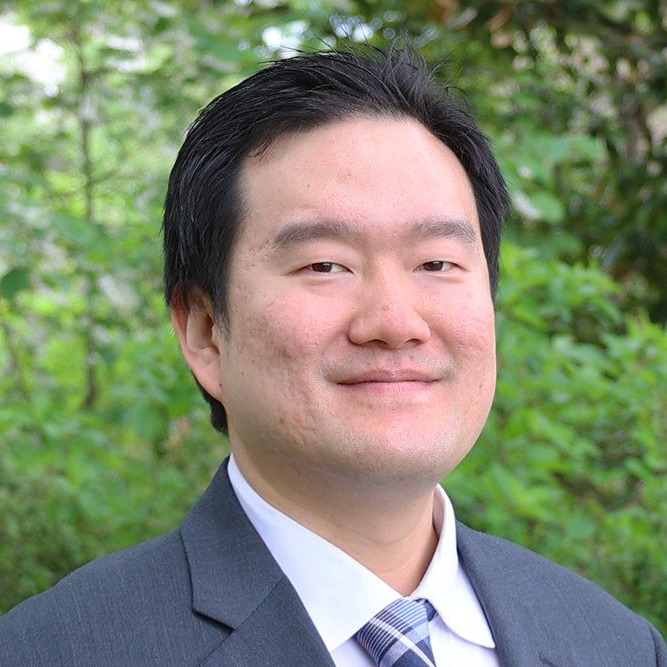
Assistant Professor, Department of Geography, Virginia Tech, USA;Director, Smart Cities for Good (SCG);Affiliated Faculty, School of Public and International Affairs (SPIA), Virginia Tech;Faculty Affiliate, Center for Human-Computer Interaction (CHCI), Virginia Tech;
The webinar features two scholars, Drs. Juhász and Kim, who have presented research that spans from how GeoAI can assist in standardizing spatial operations across different spherical grids for representation at global scale to the challenges of Generative AI when used for analysis and policy in urban and health applications.
The beginning of the video explains our MDPI Topics initiative, then after the webinar recording is shown.
"Novel Theories and Applications on Geo-Spatial Databases, Models and AI in Urban Science, Planning, Development and Governance"
Edited by Prof. Dr. Guoqiang Shen, Dr. Qiuxiao Chen, Prof. Dr. Yanguang Chen, Dr. Long Zhou, Dr. Yu Liu, and Dr. Xindong He.
Deadline for manuscript submissions: 31 December 2026
"Innovative Approaches in Geospatial Analysis and Modeling of Urban Environments"
Edited by Dr. Shivanand Balram, Prof. Dr. Eric Vaz, and Prof. Dr. Suzana Dragićević.
Deadline for abstract submissions: 31 January 2027
Deadline for manuscript submissions: 31 March 2027