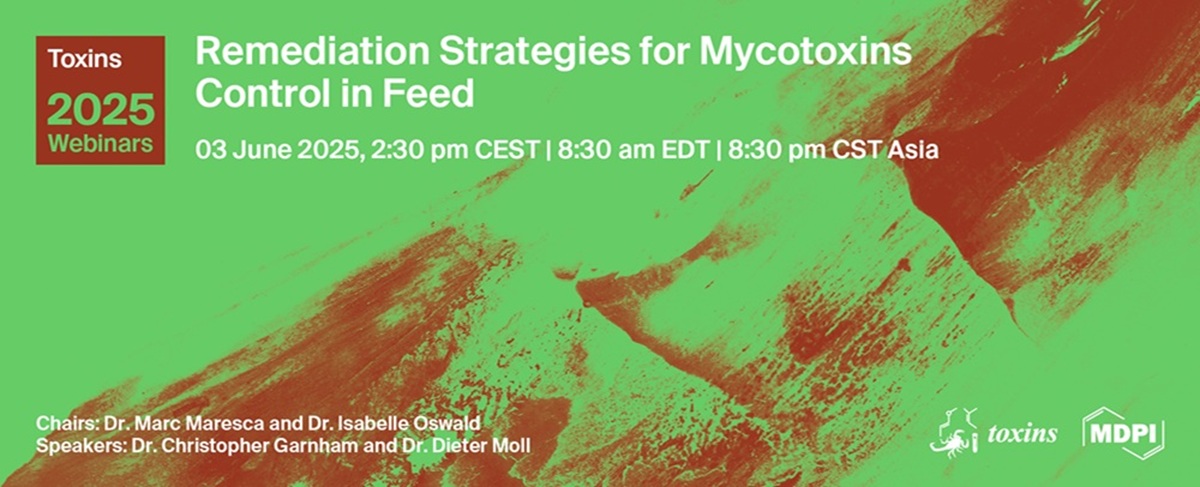
Toxins Webinar丨Remediation Strategies for Mycotoxins Control in Feed
the chairs
Mycotoxins are fungal secondary metabolites produced by fungi infecting and/or colonizing various agricultural commodities. As a result, they contaminate human food and animal feed and cause both economic and health issues in relation to their toxicity. Since it is hard to counteract their toxic effect once they have been ingested, strategies are needed to control and reduce their presence in feed. Such remediation strategies include physical, chemical, and/or biological process able i) to degrade the mycotoxins and/or ii) to adsorb them in order to reduce their intestinal bioavailability. Today, the webinar will present two elegant and innovative approaches to reduce the presence of mycotoxins in feed.
Date: 3 June, 2025
Time: 2:30 pm CEST | 8:30 am EDT | 8:30 pm CST
Webinar ID: 810 4682 3561
Webinar Secretariat: journal.webinar@mdpi.com
Meet Our Chairs
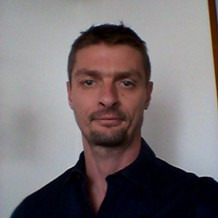
Institut des Sciences Moléculaires de Marseille (ISM2) – BiosCiences – UMR 7313 CNRS Aix Marseille Université, France.;Dr. Marc Maresca is currently a researcher at the Aix-Marseille Université. He received his P.h.D in Biochemistry at the Université Paul Cézanne (France, 2003) working on food contaminants named mycotoxins. In 2003, he moved to England to work on enteropathogenic E coli in Brendan Keny’s lab. Then, he moved back to France to continue his work on mycotoxins and their effects on human health. He is currently working at the Aix-Marseille Université and his research, in addition to work on mycotoxins, aims to identify and develop new molecules— natural, synthetic, or bio-inspired—with therapeutic properties. He focuses on antimicrobial peptides and their mimics as well as on plant derivatives, as in addition to their antimicrobial effects, they may possess additional activities such as anti-inflammatory and anti-tumorigenic effects. Dr Maresca published more than 110 articles in scientific journals and seven patents in relation to his research.
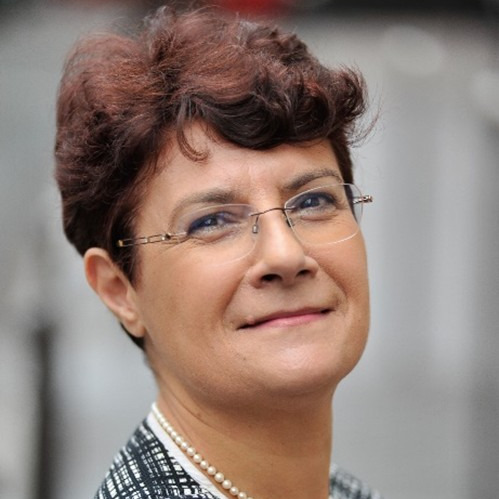
Research Center in Food Toxicology (Toxalim), University of Toulouse, INRAE, EI-Purpan, ENVT 180 Chemin de Tournefeuille F-31027 Toulouse, France;Dr. Isabelle Oswald is the former director of the INRAE Research Center in Food Toxicology, Toxalim, in Toulouse, France. She works in the team “Biosynthesis and Toxicity of mycotoxins” whose main objectives are (1) to characterize the production of secondary metabolites by fungal species (2) to determine the toxic effects of mycotoxins using pig as a model and a target species. Dr. Oswald has more than 250 international publications. She is an expert for EFSA, the European Food Safety agency; ANSES, the French Agency for Food, Environmental and Occupational Health & Safety and JEFCA, the Joint FAO/WHO Expert Committee on Food Additives. Since 2018, she has been among the top 1% highly cited researchers in the Web of Science. In 2018, she received the INRAE “Lauriers” a lifetime achievement award for her work on mycotoxin and in 2022 the Legion of Honor from the French government.
Meet Our Speakers
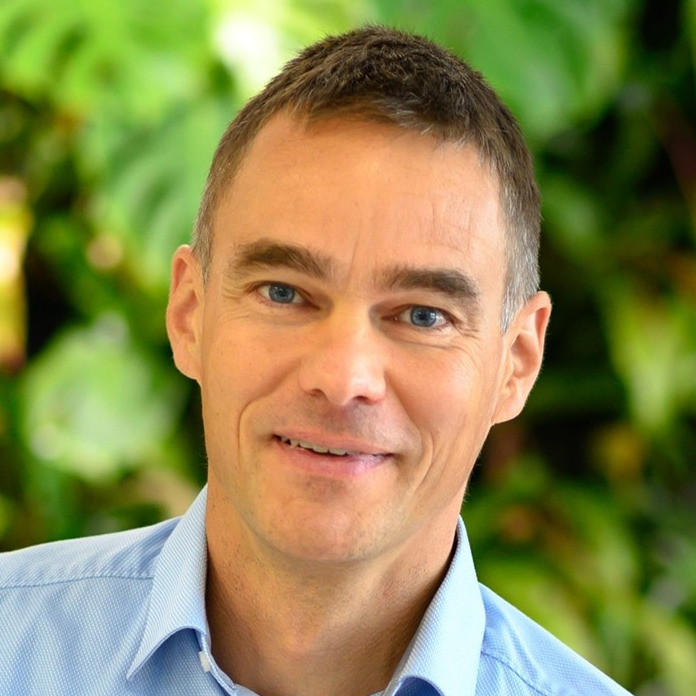
Dr. Dieter Moll
dsm-firmenich Animal Nutrition and Health Research Center Tulln, Austria;Dieter began his research career with structural investigation and engineering of crystalline bacterial cell surface layers for his PhD degree at BOKU University, Vienna, Austria, and of a bacteriophage DNA packaging motor for his post-doctorate research at Purdue University, West Lafayette, Indiana, USA. When he returned to Austria, he re-focused on agriculture-related research, matching his academic background, and in particular on mycotoxins, by joining the Biomin Research Center Tulln. He set up a research group working on mycotoxin degrading enzymes, and, with his team and collaboration partners, pioneered animal feed enzyme technology development for gastrointestinal detoxification of fumonisins and zearalenone. As Biomin is now part of dsm-firmenich, Dieter continues to focus on basic and applied enzyme research for remediation of mycotoxin contamination. In his spare time, Dieter also lectures for the biotechnology course of the University of Applied Sciences Tulln / Wr. Neustadt, Austria. He is married and has three grown-up children.
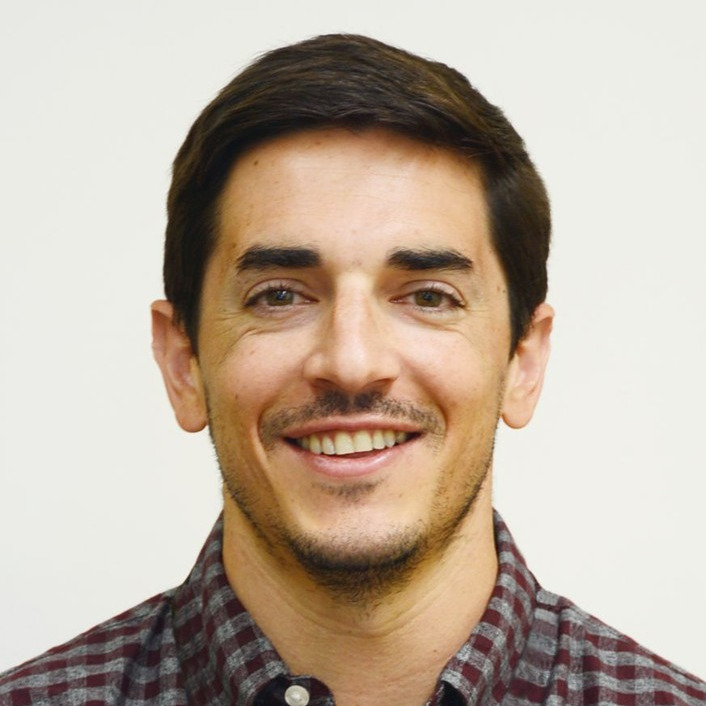
Research Scientist ,London Research and Development Centre Agriculture and Agri-Food Canada, London, Canada;I am a biochemist and structural biologist by training. I completed my doctoral studies in the Department of Biochemistry at Queen’s University in Kingston, Ontario, and my postdoctoral studies at the National Institute of Neurological Disorders and Stroke (NINDS) at the NIH in Bethesda, Maryland. I am currently a Research Scientist at Agriculture and Agri-Food Canada at the London Research and Development Centre in London, Ontario. I started my lab at Ag-Can in 2017, and currently, one of my main areas of focus is on the enzymatic biotransformation of mycotoxins.

The webinar was hosted via Zoom and required registration to attend. The full recording can be found below. In order to learn about future webinars, you can sign up to our newsletter by clicking “Subscribe” at the top of the page.
Editorial Board Members’ Collection Series: Fungal Metabolites: From Toxins to Therapeutics
Guest Editors : Dr. Marc Maresca, Dr. Isabelle P. Oswald