Solar-Stellar Seismology Forum: Waves in Space Plasmas Ⅱ
the chair
The Solar & Stellar Seismology Forum: Waves in Space Plasmas is a community-driven initiative dedicated to fostering open discussion and collaboration in the study of waves and oscillatory phenomena in the solar and stellar plasma environment. The Forum aims to provide an inclusive and accessible platform for researchers across institutions, career stages, and related disciplines to exchange ideas, share new results, and explore emerging challenges in the study of waves in space plasmas.
Built on strong community interest and broad international participation, the Forum will feature a combination of traditional research talks with extended discussion, methods-focused and tutorial-style sessions, and dedicated early-career spotlight presentations. The goal is to encourage scientific dialogue, constructive debate, and the development of new collaborations within a friendly and supportive environment.
We warmly invite you to join us in shaping this platform and contributing to a vibrant and collaborative space for solar–stellar seismology research.
We look forward to welcoming you to the Forum.
Date: 16 July 2026
Time: 3:00 pm CEST | 9:00 am EDT
Webinar Secretariat: journal.webinar@mdpi.com
Meet Our Chair
<a href="https://fisica.unical.it/storage/teachers/giuseppe.nistico.fis/">Website</a>;Department of Physics, University of Calabria, Italy;Giuseppe Nisticò has been an Associate Professor at the Department of Physics of the University of Calabria since 2023. He received his PhD in Physics of Complex Systems from the same university in 2011 and has conducted postdoctoral research in Germany and the United Kingdom. His scientific activity focuses on solar and coronal physics, including the study of coronal jets, magnetohydrodynamic (MHD) waves, plasma turbulence, and coronal seismology. These topics are addressed through observational approaches—using data from space missions such as SoHO, STEREO, SDO, PSP, and SolO—as well as theoretical models and three-dimensional simulations. He has authored over 40 publications in peer-reviewed journals, and his work has received over 1,800 citations. Awards received include the Rita Levi Montalcini Research Fellowship, a COSPAR Committee Award, and the NASA Group Achievement Award given to the Parker Solar Probe team.
Meet Our Speakers
Dr. Sudip Mandal
Max Planck Institute for Solar System Research;Sudip Mandal is a postdoctoral researcher at the Max Planck Institute for Solar System Research in Göttingen, Germany. His research centers on waves and oscillations in the solar atmosphere, with particular emphasis on their excitation and propagation. He integrates high-resolution observations from Solar Orbiter and other space missions with numerical simulations to examine the physical processes that govern the Sun’s outer atmosphere. As a Co-Investigator of the Extreme Ultraviolet Imager onboard Solar Orbiter, he also contributes to the planning of Solar Orbiter observing campaigns.
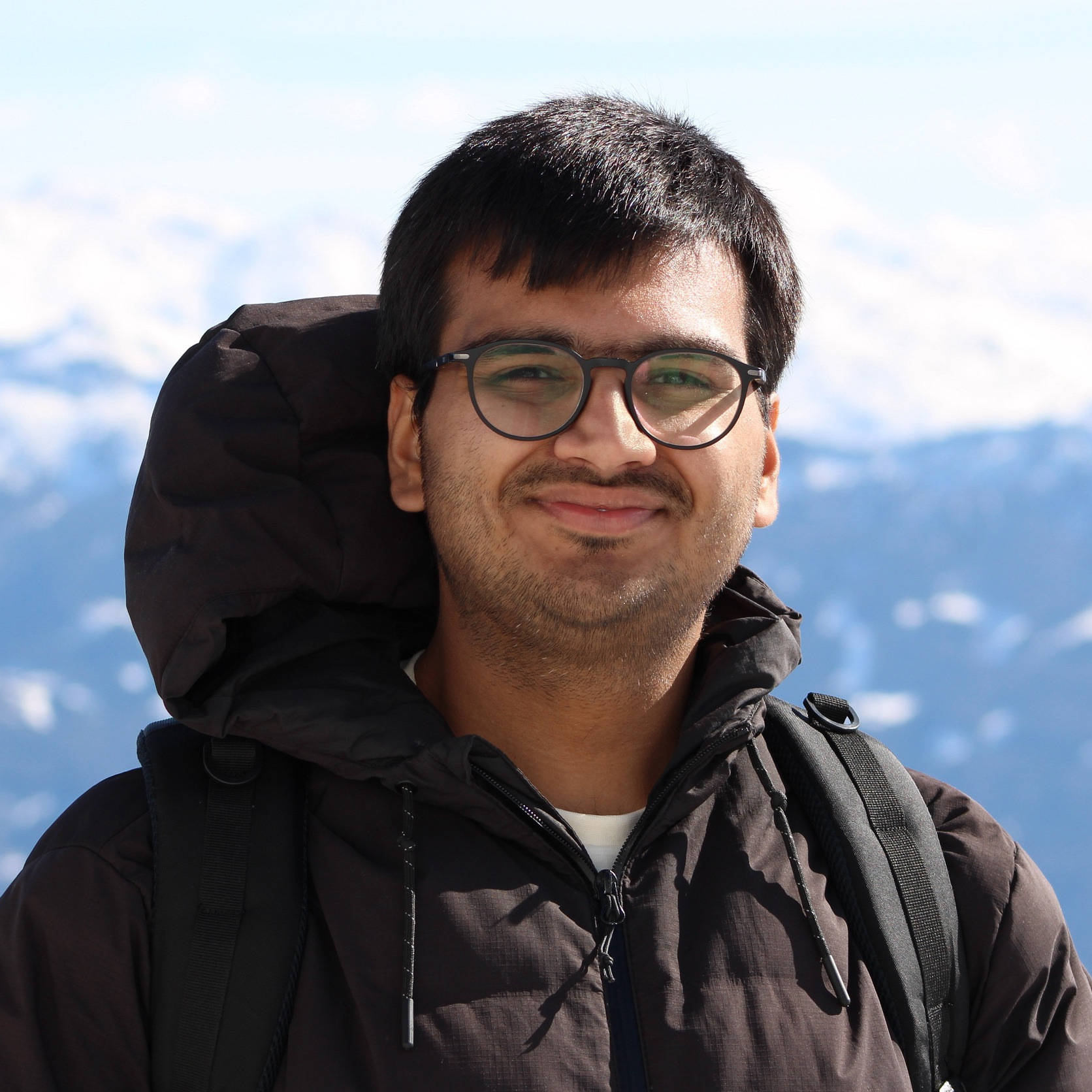
Dr. Anmol Kumar
School of Mathematics and Statistics, University of St. Andrews, UK;Dr. Anmol Kumar has recently finished his PhD from the University of St Andrews, UK. His doctoral research involved the modelling of MHD waves in an extended solar atmosphere, thus studying their evolution, propagation and the formation of small-scale structure. Before moving to St Andrews, he did a 5-year BS-MS Dual Degree Programme in Physics from the Indian Institute of Science Education and Research (IISER) Kolkata, India. In the final year of this programme, he worked on a statistical survey of switchbacks and the solar wind, thus investigating their key characteristics and potential role in solar wind acceleration.
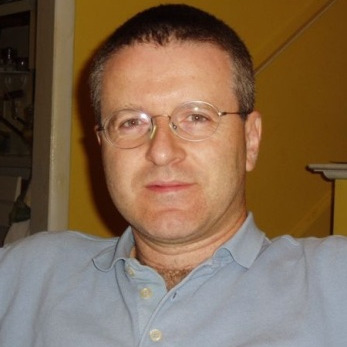
Dr. Leon Ofman
Catholic University of America & NASA-Goddard Space Flight Center, USA;Prof. Leon Ofman received his B.Sc. in Physics in 1986 and M.Sc. in Physics in 1988 from Tel Aviv University, Israel, and his Ph.D. in Physics in 1992 from the University of Texas at Austin. He held National Research Council Postdoctoral Research Associateship at NASA Goddard Space Flight Center from 1992 to 1994. Since 1994 Prof. Ofman continued working at NASA GSFC, as a contractor via Hughes and Raytheon corporations, and in 2001 he became a Research Associate Professor at Catholic University of America, Associate Professor (2005-2007), and a university affiliate at NASA GSFC to present. From 2007 Prof. Ofman became Visiting Associate Professor at Tel Aviv University. In 2009 Prof. Ofman became Research Professor at CUA’s Department of Physics and Institute for Astrophysics and Computational Sciences (IACS). His main research interests are in solar plasma physics, MHD, waves and instabilities, and kinetic processes related to coronal heating and solar wind acceleration. His main expertise is in numerical modeling of the solar coronal and wind plasma, driven by space based observations. Prof. Ofman has authored and coauthored over 150 publications in solar physics and related fields in refereed journals, and in conference proceeding. Prof. Ofman is the Principal Investigator on NASA and NSF grants supervising postdocs and students that work in solar physics. Prof. Ofman was a member of NASA Science Definition Team for the Solar Probe Plus mission. He is serving as a referee for leading journals in the field, and a reviewer for US and international science funding agencies. Prof. Ofman is a member of the AAS/SPD, AGU, IAU, and COSPAR.