
MDPI World Cancer Day 2026 Webinar Series | March—Colorectal Cancer Awareness Month
the chair
To commemorate World Cancer Day 2026, MDPI is pleased to introduce the “World Cancer Day 2026 Webinar Series.” Reflecting the global theme “United by Unique,” this series highlights how every story, discovery, and voice contributes to strengthening the global fight against cancer.
In our March session, we welcome leading voices in colorectal cancer research to share impactful insights, raise awareness, and highlight recent advances in prevention, diagnosis, and treatment.
Through this series, we aim to empower the global community with knowledge, inspire collaboration, and support ongoing efforts to address cancer worldwide. Together, we honour every patient’s journey, recognize every researcher’s contribution, and reinforce the power of collective action in the fight against cancer.
Date: 31 March 2026
Time: 3:00 pm CEST | 9:00 am EDT | 9:00 pm CST Asia
Webinar ID: 812 1306 3619
Webinar Secretariat: journal.webinar@mdpi.com
Meet Our Chair
'%3e%3cpath%20d='M12.6647%2010.9104C12.4176%2010.325%2012.0589%209.7933%2011.6088%209.34485C11.16%208.89511%2010.6283%208.53653%2010.0432%208.28891C10.038%208.28629%2010.0327%208.28498%2010.0275%208.28236C10.8437%207.69282%2011.3743%206.73252%2011.3743%205.64907C11.3743%203.85423%209.92005%202.40002%208.12522%202.40002C6.33038%202.40002%204.87618%203.85423%204.87618%205.64907C4.87618%206.73252%205.40677%207.69282%206.22296%208.28367C6.21772%208.28629%206.21248%208.2876%206.20724%208.29022C5.62031%208.53783%205.09365%208.89287%204.64167%209.34616C4.19192%209.79496%203.83334%2010.3266%203.58573%2010.9117C3.34247%2011.4846%203.21128%2012.0987%203.19925%2012.721C3.1989%2012.735%203.20135%2012.7489%203.20646%2012.7619C3.21157%2012.7749%203.21924%2012.7868%203.22901%2012.7968C3.23877%2012.8068%203.25045%2012.8148%203.26334%2012.8202C3.27623%2012.8256%203.29007%2012.8284%203.30406%2012.8284H4.09012C4.14776%2012.8284%204.19362%2012.7825%204.19493%2012.7262C4.22113%2011.7148%204.62726%2010.7676%205.34519%2010.0497C6.08802%209.30686%207.07452%208.89811%208.12522%208.89811C9.17592%208.89811%2010.1624%209.30686%2010.9052%2010.0497C11.6232%2010.7676%2012.0293%2011.7148%2012.0555%2012.7262C12.0568%2012.7839%2012.1027%2012.8284%2012.1603%2012.8284H12.9464C12.9604%2012.8284%2012.9742%2012.8256%2012.9871%2012.8202C13%2012.8148%2013.0117%2012.8068%2013.0214%2012.7968C13.0312%2012.7868%2013.0389%2012.7749%2013.044%2012.7619C13.0491%2012.7489%2013.0515%2012.735%2013.0512%2012.721C13.0381%2012.0947%2012.9084%2011.4856%2012.6647%2010.9104ZM8.12522%207.90243C7.52388%207.90243%206.95792%207.66793%206.53214%207.24215C6.10636%206.81636%205.87185%206.2504%205.87185%205.64907C5.87185%205.04773%206.10636%204.48177%206.53214%204.05599C6.95792%203.63021%207.52388%203.3957%208.12522%203.3957C8.72655%203.3957%209.29252%203.63021%209.7183%204.05599C10.1441%204.48177%2010.3786%205.04773%2010.3786%205.64907C10.3786%206.2504%2010.1441%206.81636%209.7183%207.24215C9.29252%207.66793%208.72655%207.90243%208.12522%207.90243Z'%20fill='%235D1EE1'/%3e%3c/g%3e%3c/svg%3e)
MDPI;////
Important Dates
31 Mar
2026
Meet Our Speakers
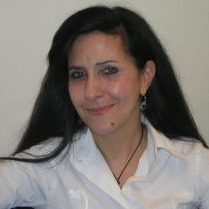
Department of Neuroscience, Imaging and Clinical Sciences, Systems Pharmacology Laboratory (CAST), “G. d’Annunzio” University School of Medicine, Chieti, Italy;Paola Patrignani, Professor of Pharmacology at "G. d'Annunzio" University in Chieti and Head of the Laboratory of Systems Pharmacology and Translational Therapeutics at CAST, is a distinguished pharmacologist specializing in cardiovascular disease and cancer. Dr. Patrignani graduated from the Faculty of Biological Sciences at "La Sapienza" University of Rome, Italy, and subsequently pursued a doctoral program in Pharmacology at the Catholic University of Rome, Italy. She served for two years as a Postdoctoral Research Fellow at Le Centre Hospitalier of Laval University and at Merck Frosst in Canada. Her research achievements have garnered international recognition, including the 2018 International Aspirin Foundation Senior Science Award and her selection as one of the Top Italian Women Scientists. Her scientific contributions are evidenced by over 250 peer-reviewed publications, an H-index of 70, 19840 citations, and more than 20 chapters in international textbooks. She was among the first to demonstrate that platelets induce mesenchymal transformations in cancer cells, thereby increasing their migratory capacity and metastatic potential, effects which can be mitigated through low-dose aspirin administration. In 2025, her research published in Nature elucidated that aspirin inhibits cancer metastasis by blocking platelet TXA2 biosynthesis, thus facilitating the immune response.

Department of Cancer Biology, Wake Forest School of Medicine, North Carolina, USA;Prof. Dr. Gmeiner is a Professor in the Department of Cancer Biology at WFUSM with secondary appointments in the Departments of Physiology and Pharmacology, Wake Forest Institute of Regenerative Medicine (WFIRM), and Molecular Medicine, and a joint appointment with the Wake Forest/Virginia Tech Biomedical Graduate Sciences Graduate Program. His research focuses on cancer biology and fluoropyrimidine biochemistry and emphasizes translational science, particularly for colorectal cancer and gastrointestinal malignancies. Prof. Dr. Gmeiner has or has been the PI on multiple R01 awards, as well as U01, R21, R29, R41, and R42 awards from NIH-NCI and grants from the DoD, the NC Biotechnology Center, and other agencies. He has authored and co-authored >120 peer-reviewed publications related to his research with >10 issued patents and several pending patent applications. His work intersects with drug discovery/development and translation to clinical trials. He is passionate about mentoring and educational activities and am the course director for two graduate courses in the Cancer Biology curriculum, advisor for seven PhD students and four MS students, and served on the dissertation and thesis committees for 14 graduate students and trained 10 post-doctoral researchers.

ProCURE and CARE programs from the Catalan Institute of Oncology and the Germans Trias i Pujol Research Institute (IGTP), Barcelona, Spain;Dr. Eva Martínez-Balibrea is the Head of the Resistance, Chemotherapy and Predictive Biomarkers group at the Catalan Institute of Oncology and the Germans Trias i Pujol Research Institute (IGTP), where she has led research for the past 13 years within the ProCURE and CARE programs. Her research focuses on mechanisms of treatment resistance in colorectal cancer and the identification of predictive biomarkers to guide personalized therapy. Over the years, her work has combined clinical studies with preclinical models to understand chemotherapy resistance, particularly to oxaliplatin, and to identify novel therapeutic targets. More recently, her research has expanded to chromatin regulators and systemic chemokines as biomarkers, as well as to the development of advanced immuno-oncology models. She currently coordinates the European COST Action IMMUNO-model, an international network dedicated to improving preclinical models to evaluate immunotherapy response and toxicity.
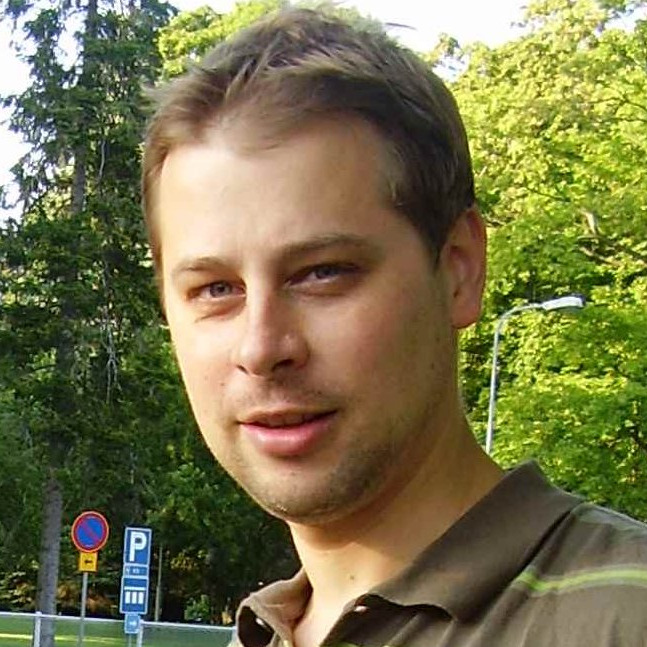
Dr. Zoltán Wiener
Institute of Genetics, Cell- and Immunobiology, Semmelweis University, Budapest, Hungary;Zoltán Wiener is a cancer biologist and professor at the Institute of Genetics, Cell and Immunobiology of Semmelweis University in Budapest, Hungary. After earning his PhD from the Molecular Medicine Doctoral School of Semmelweis University, he conducted postdoctoral research at the University of Helsinki, supported by a Marie Curie Intra-European Fellowship. He later returned to Hungary and established the Molecular Cancer Biology Research Group at Semmelweis University with independent grant funding. His research focuses on the molecular mechanisms underlying colorectal cancer and pancreatic ductal adenocarcinoma using organoid technology. A central theme of his work is extracellular vesicles and intercellular communication within the tumor microenvironment, particularly the interactions between fibroblasts and cancer cells and the role of cellular heterogeneity in tumor progression. His scientific achievements have been recognized with several awards, including distinctions from the Hungarian Academy of Sciences and the PhD Mentor Award of Semmelweis University. In addition to his research, he is actively involved in graduate and undergraduate education, teaching cell biology and genetics and serving as a program leader in the PhD School of Semmelweis University. His publications have a cumulative impact factor of approximately 300, with about 9,000 independent citations and an H-index of 25.



In this section, you will find the recordings of this webinar to watch, re-watch and share with your colleagues!
|
Speaker |
Presentation |
Time in CEST |
Time in CDT (US) |
|
MDPI Introduction |
3:00–3:10 pm |
8:00–8:10 am |
|
|
Prof. Dr. Paola Patrignani |
The Crucial Role of Platelet Eicosanoids in Cancer: An Opportunity to Prevent Cancer Development and Metastasis Through Targeted Therapeutic Interventions |
3:10–3:30 pm |
8:10–8:30 am |
|
Prof. Dr. William H. Gmeiner |
Improving Efficacy and Overcoming Resistance in Treatment of Liver-Metastatic Colorectal Cancer with CF10 |
3:30–3:50 pm |
8:30–8:50 am |
|
Dr. Eva Martínez-Balibrea |
Translational Research in Colorectal Cancer: From Biomarkers to Therapeutic Targets and Immuno-Oncology Models |
3:50–4:10 pm |
8:50–9:10 am |
|
Dr. Zoltán Wiener |
Interactions in the Tumor Microenvironment to Promote Colorectal Cancer Progression |
4:10–4:30 pm |
9:10–9:30 am |
|
Q&A |
4:30–4:55 pm |
9:30–9:55 am |
|
|
Closing of Webinar |
4:55–5:00 pm |
9:55–10:00 am |
Cancers
"Novel Strategies in the Prevention/Treatment of Colorectal Cancer: 2nd Edition"
Guest Editor: Prof. Dr. William H. Gmeiner
Deadline for manuscript submissions: 20 June 2026
"Gut Microbiota and Inflammation in Colorectal Tumor Development and Progression"
Guest Editors: Prof. Dr. Giovanni Monteleone and Dr. Irene Marafini
Deadline for manuscript submissions: 30 September 2026
Current Oncology
"Recent Advances in Surgical Strategies for Managing Metastatic Colorectal Cancer"
Guest Editors: Dr. Fabrizio D'Acapito and Dr. Marco Vaira
Deadline for manuscript submissions: 15 June 2026
International Journal of Molecular Sciences (IJMS)
"Molecular Mechanisms and Therapeutic Strategies of Colorectal Cancer"
Guest Editor: Dr. Daniel Gabriel Pons
Deadline for manuscript submissions: 20 September 2026