
MDPI World Diabetes Day 2026 Session #2 | Early Action on Diabetes
the chair
World Diabetes Day, observed annually on 14 November, serves as a global reminder of the importance of diabetes awareness, prevention, and care. It brings together healthcare professionals, researchers, policymakers, and communities to address the growing impact of diabetes and promote better health outcomes for people living with the condition. Guided by this year’s theme, “Early Action on Diabetes,” the campaign emphasises the importance of recognising risk factors, seeking timely screening, and taking proactive steps towards better health. It underscores how early intervention can make a meaningful difference in preventing complications and improving the lives of people affected by diabetes.
As part of this global initiative, we are pleased to present Session 2 of our World Diabetes Day webinar series, bringing together experts to share insights, exchange knowledge, and explore current developments in diabetes research and care. Through informed discussions and evidence-based perspectives, this webinar aims to foster greater understanding of diabetes and encourage meaningful conversations that can contribute to better prevention, management, and support for those affected. Join us as we mark World Diabetes Day and work towards a future where everyone living with diabetes can lead healthier, more fulfilling lives.
Date: 13 November 2026
Time: 15:30 CET | 09:30 EST
Webinar ID: 869 0633 6761
This is a FREE webinar. After registering, you will receive a confirmation email containing information on how to join the webinar. Registrations with academic institutional email addresses will be prioritized.
Certificates of attendance will be delivered to those who attend the live webinar.
Can’t attend? Register anyway and we’ll let you know when the recording is available to watch.
Register for free here!
Meet Our Speakers
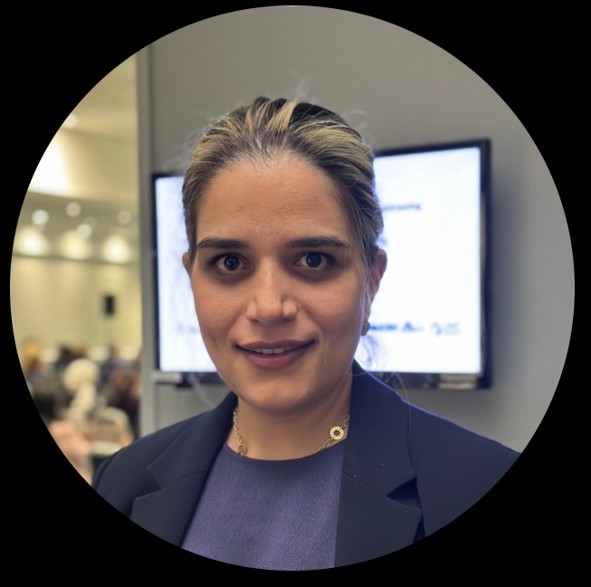
Faculty of Biology, Medicine and Health, University of Manchester, Manchester, UK;

Research Unit of Molecular Epidemiology, Institute of Epidemiology, Helmholtz Zentrum München, Germany;Research Center for Environmental Health, 85764 Neuherberg, Germany;PD Dr. Rui Wang-Sattler leads a research group at the Institute of Translational Genomics, Helmholtz Munich. She trained in physics at Heidelberg University, conducted doctoral research in mosquito genetics at EMBL Heidelberg, and completed her habilitation at LMU Munich in 2023. Her team develops machine learning methods to improve proteomics and metabolomics data analysis and investigates candidate biomarkers for metabolic syndrome, type 2 diabetes, and diabetes-related complications.

James A. Haley Veteran’s Hospital, 13000 Bruce B Downs Blvd, Tampa, FL 33612, USA; Department of Molecular Medicine, University of South Florida, Tampa, FL 33612, USA;Dr. Niketa Patel is a Research Career Scientist (RCS) at JAH Veterans Hospital and a Professor in the Department of Molecular Medicine, Morsani College of Medicine at the University of South Florida (USF). She is a Fellow of prestigious societies including the American Association for the Advancement of Sciences (FAAAS) and the National Academy of Inventors (FNAI). She is the Director of the Molecular Core laboratory at JAHVH, a Research Service where state-of-the-art instruments support innovative research programs. She has established a strong program in translational research integrating human epidemiological studies with biomarker discovery, pre-clinical elucidation of molecular mechanisms, targeted drug discovery and validation culminating in personalized medicine. Dr. Patel’s research team was the first to establish that lncRNA GAS5 levels in the blood correlated with type 2 diabetes (T2D), which is now validated by labs worldwide. Using an unbiased transcriptomic screen, the lab discovered that the regulatory lncRNA GAS5 decreased in diabetic patients and determined that GAS5 regulates the expression of the insulin receptor. This was the first report to show that a lncRNA regulated this kind of expression and provided evidence that GAS5 is a druggable RNA for therapeutic intervention in metabolic and neurodegenerative diseases. This work further led to an innovative RNA--targeting therapy to stabilize GAS5 levels, a forefront in drug discovery and development. Recent innovations include a blood-direct rapid assay to measure GAS5 in clinics. Dr. Patel currently holds 17 USPTO patents, including parent/priority patents, representing breakthrough patents in the field; eight provisional patents and two patents are licensed to industry.