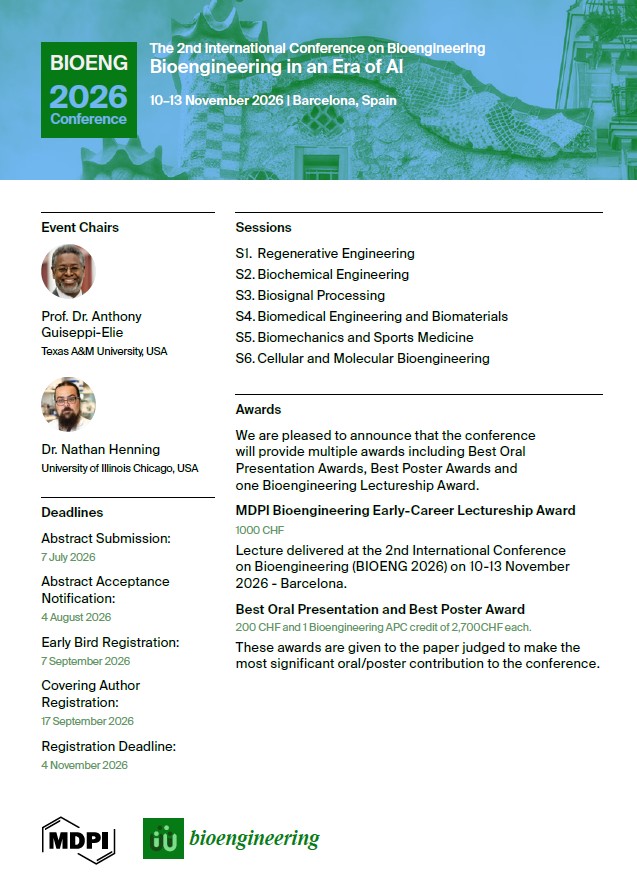
The 2nd International Conference on Bioengineering
Bioengineering in an Era of AI
If you missed the initial deadline, this is your final opportunity to present your research as part of our poster sessions. The submission portal will remain open for a limited time.
Submit your abstract |
Register |
For inquiries, contact us at bioeng2026@mdpi.com
Share BIOENG 2026 with Your Network!
Help us spread the word about BIOENG 2026 by forwarding the event flyer to your colleagues, collaborators, society members, and students. Your support in promoting the conference and encouraging participation within your network is greatly appreciated.
....
Security Notice
Please note that all official conference emails will be sent exclusively from the @mdpi.com and @sciforum.com domains. Please do not respond to any suspicious emails or share personal or financial information through unverified channels.
We are delighted to announce the European Society of Biomechanics (ESB) as a Supporting Organization. Through this collaboration, ESB members can benefit from special opportunities to participate in BIOENG 2026.
ESB members are eligible for a 20% discount on the conference registration fee. In addition, five registration grants of EUR 400 each will be offered to selected ESB members. The five recipients will be selected by the Event Chair.
*To request the ESB member discount or be considered for registration support, please indicate that you are an ESB member in the comments section during registration and provide your ESB Member ID. Membership status will be verified with ESB before any discount or registration support is granted.
Early Bird Registration Deadline: 10 September 2026.
Click to Register |
Invited Speaker Opportunity for an ESB Member
As part of this collaboration, BIOENG 2026 is also pleased to offer one Invited Speaker position to an ESB member.
ESB members interested in this opportunity are invited to submit an application by email to bioeng2026@mdpi.com with the subject line:
[BIOENG 2026] ESB Speaker Application
Applications should include:
- Proposed talk title;
- Presentation description/abstract;
- CV.
Application Deadline: 24 September 2026
Applications will be reviewed by the Event Chair, Prof. Dr. Anthony Guiseppi-Elie, together with the BIOENG 2026 International Organizing Committee.
the chairs
Dear Participants,
As Chairman, I take great pride in facilitating this convergence of expertise and fostering an environment that encourages rigorous scientific discourse, cross-sector collaboration, and visionary thinking. I urge you to engage deeply in the sessions, symposia, and collaborative exchanges that define the spirit of this congress.
Your active participation is pivotal in shaping the future of bioengineering and its translational impact in the clinic and in wider society.
With sincere appreciation,
Anthony Guiseppi-Elie, Sc.D.
Chairman, International Conference on Bioengineering (BIOENG-2026)
TEES Research Collaborator, Texas A&M University
President and Sr. Fellow, AIIMSEI.org



Meet Our Chairs
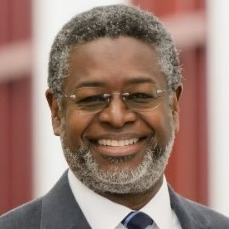
Founding Editor-in-Chief, Bioengineering;TEES Research Collaborator, Texas A&M University, USA;President and Sr. Fellow, AIIMSEI;Prof. Dr. Anthony Guiseppi-Elie is an international medical sciences, engineering, and innovation consultant at the American International Institute of Medical Sciences, Engineering, and Innovation. A former Vice President and Chief Academic Officer at Tri-County Technical College. He has 15 years of industrial research and product development experience and 18 years of experience as a tenured, titled, and endowed full professor at universities that include Virginia Commonwealth University, Clemson University, Texas A&M University, and Anderson University, where he was the Founding Dean of the College of Engineering. He has been associated with three startup companies and is Founder, President, and Scientific Director of ABTECH Scientific, Inc. A US citizen who was born in Trinidad and Tobago, he holds the Sc.D. in Materials Science and Engineering from MIT, the M.Sc. in Chemical Engineering from the University of Manchester (UMIST), and the B.Sc. (First Class Honors) in Applied, Analytical, and Biochemistry from the University of the West Indies (UWI). He has published over 225 peer-reviewed journal articles, holds 8 patents, and is a fellow of IEEE, AIMBE, BMES and the RSC. His research interests are in physiological monitoring during hemorrhagic trauma and allotransplantation, polymeric nanobiomaterials in drug delivery and tissue regeneration, and microanalytical systems in the service of human health and medicine.
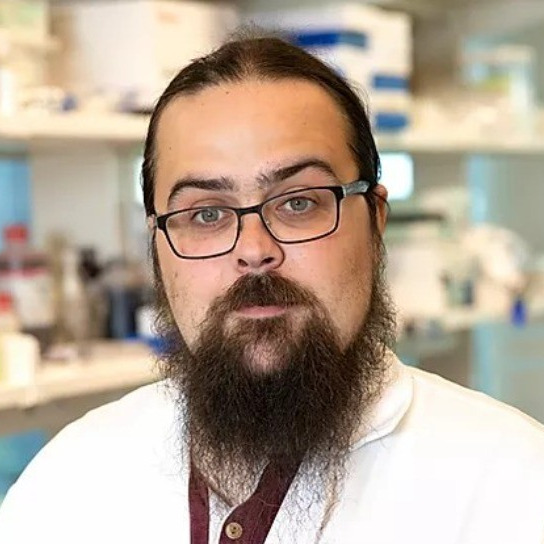
Assistant Chair, BIOENG2026;Assistant Editor-in-Chief, Bioengineering;School of Dentistry, University of Illinois Chicago, USA;
Important Dates
10 Sep
2026
18 Sep
2026
27 Oct
2026
1 Nov
2026
4 Nov
2026
4 Nov
2026
Chief Plenary Speaker
|
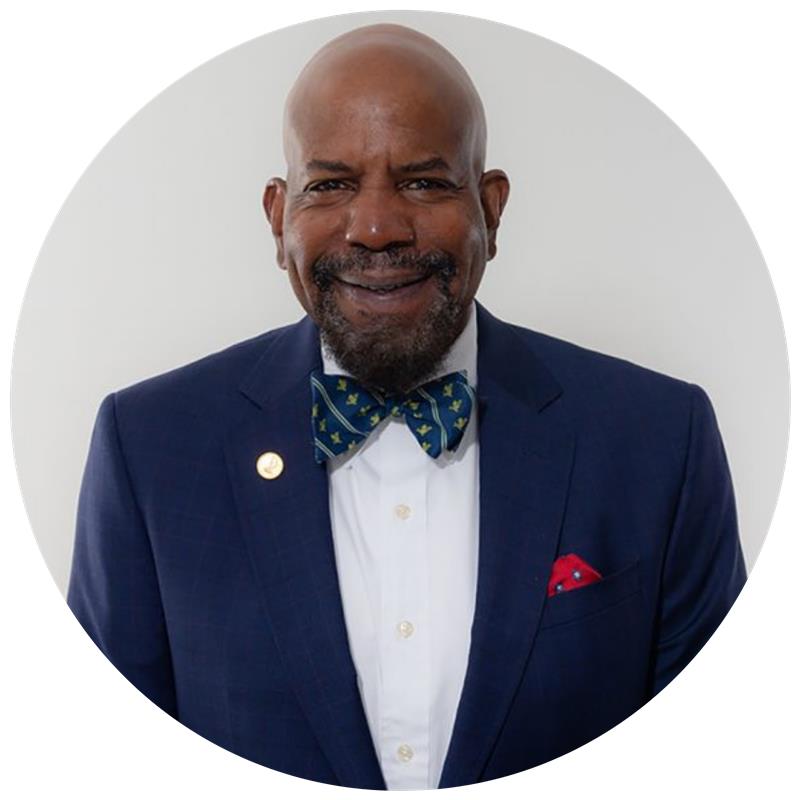
Prof. Dr. Sir Cato T. Laurencin |
Professor Sir Cato T. Laurencin, M.D., Ph.D., is the University Professor and Albert and Wilda Van Dusen Distinguished Endowed Professor of Orthopaedic Surgery at the University of Connecticut. He serves as the Chief Executive Officer of The Cato T. Laurencin Institute for Regenerative Engineering. Prof. Laurencin earned a B.S.E. in Chemical Engineering from Princeton University, an M.D. (Magna Cum Laude) from Harvard Medical School, and a Ph.D. in Biochemical Engineering/Biotechnology from Massachusetts Institute of Technology. He is a practicing sports medicine and shoulder surgeon recognized among America’s Top Doctors for over 15 years and holds fellowships in multiple leading surgical and orthopaedic societies. He pioneered the field of Regenerative Engineering, integrating biomaterials science, stem cells, and nanotechnology, and has received several top scientific awards including the NIH Director’s Pioneer Award. Click to expandProf. Laurencin is an elected member of the National Academy of Sciences, an elected member of the National Academy of Engineering, an elected member of the National Academy of Medicine, and an elected fellow of the National Academy of Inventors. He is the first surgeon in history elected to all four of these academies. Prof. Laurencin is the recipient of the National Medal of Technology and Innovation, America’s highest honor for technological achievement, awarded by President Barack Obama in ceremonies at the White House. |
Plenary Speaker
|
Prof. Dr. Dame Molly Stevens |
Professor Dame Molly Stevens FREng FRS is the John Black Professor of Bionanoscience at the Department of Physiology, Anatomy & Genetics. She is Deputy Director of the Kavli Institute for Nanoscience Discovery and a member of the Department for Engineering Science and the Institute for Biomedical Engineering. Click to expandProfessor Stevens has won >40 awards, including the Novo Nordisk Award in 2023, and the MRS Mid-Career Researcher Award in 2022. Prof Stevens is a Fellow of 8 Professional Bodies, including the Royal Society (FRS) and Royal Academy of Engineering (FREng). Amongst many leadership roles, Professor Stevens is Director of the UK Regenerative Medicine Hub for Acellular Smart Materials and Deputy Director of the EPSRC-Interdisciplinary Research Collaboration i-sense for biosensing. Professor Stevens’ research programme uses innovative bioengineering approaches to pursue the vision of solving key problems in regenerative medicine, biosensing and therapeutics. This work is inherently interdisciplinary, so the Stevens Group is made up of a diverse cast of materials scientists, engineers, chemists, biologists, physicists and surgeons. |
|
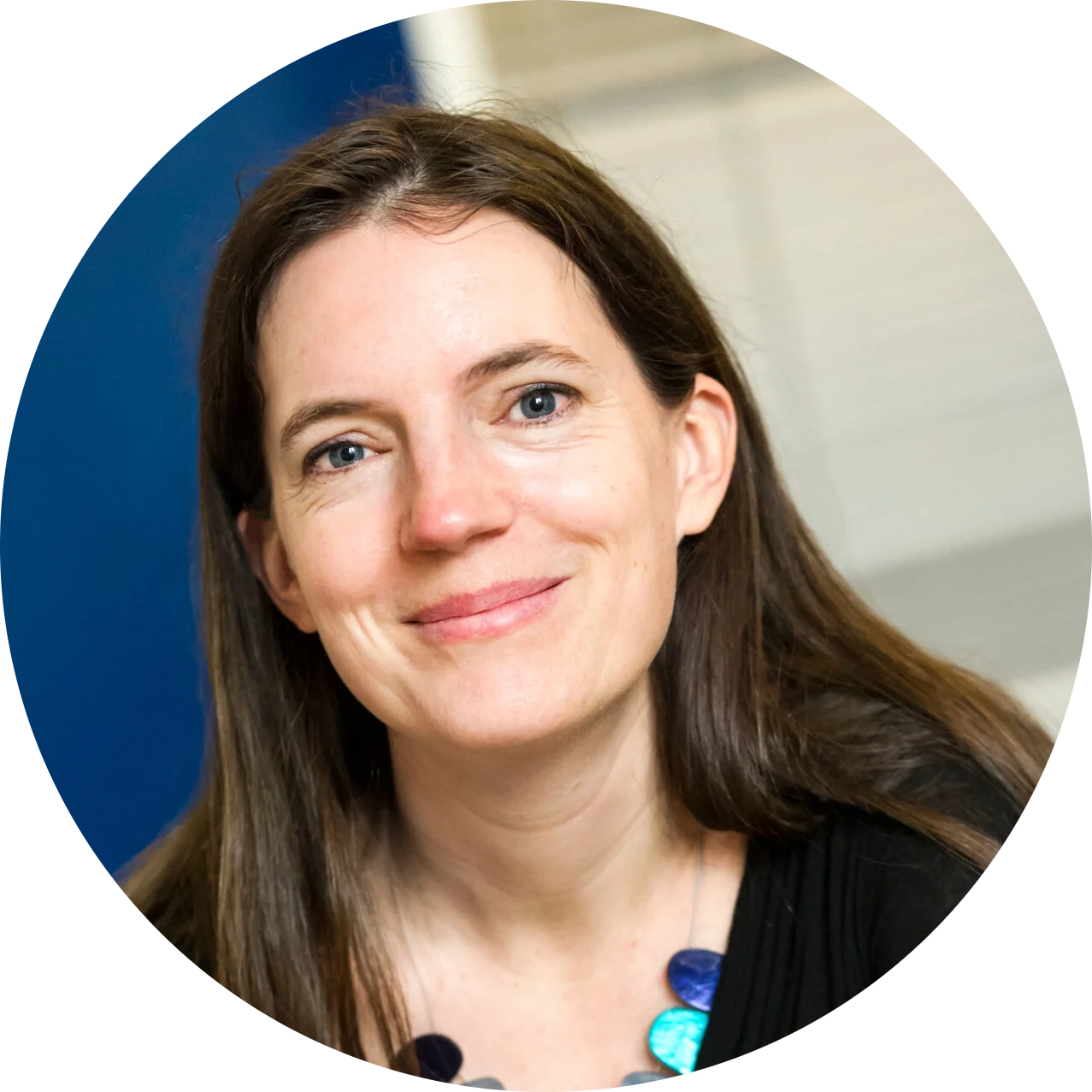
Prof. Dr. Anthony Guiseppi-Elie |
Prof. Dr. Anthony Guiseppi-Elie is an international medical sciences, engineering, and innovation consultant at the American International Institute of Medical Sciences, Engineering, and Innovation. A former Vice President and Chief Academic Officer at Tri-County Technical College. He has 15 years of industrial research and product development experience and 18 years of experience as a tenured, titled, and endowed full professor at universities that include Virginia Commonwealth University, Clemson University, Texas A&M University, and Anderson University, where he was the Founding Dean of the College of Engineering. He has been associated with three startup companies and is Founder, President, and Scientific Director of ABTECH Scientific, Inc. A US citizen who was born in Trinidad and Tobago, he holds the Sc.D. in Materials Science and Engineering from MIT, the M.Sc. in Chemical Engineering from the University of Manchester (UMIST), and the B.Sc. (First Class Honors) in Applied, Analytical, and Biochemistry from the University of the West Indies (UWI). Click to expandHe has published over 225 peer-reviewed journal articles, holds 8 patents, and is a fellow of IEEE, AIMBE, BMES and the RSC. His research interests are in physiological monitoring during hemorrhagic trauma and allotransplantation, polymeric nanobiomaterials in drug delivery and tissue regeneration, and microanalytical systems in the service of human health and medicine. |
|
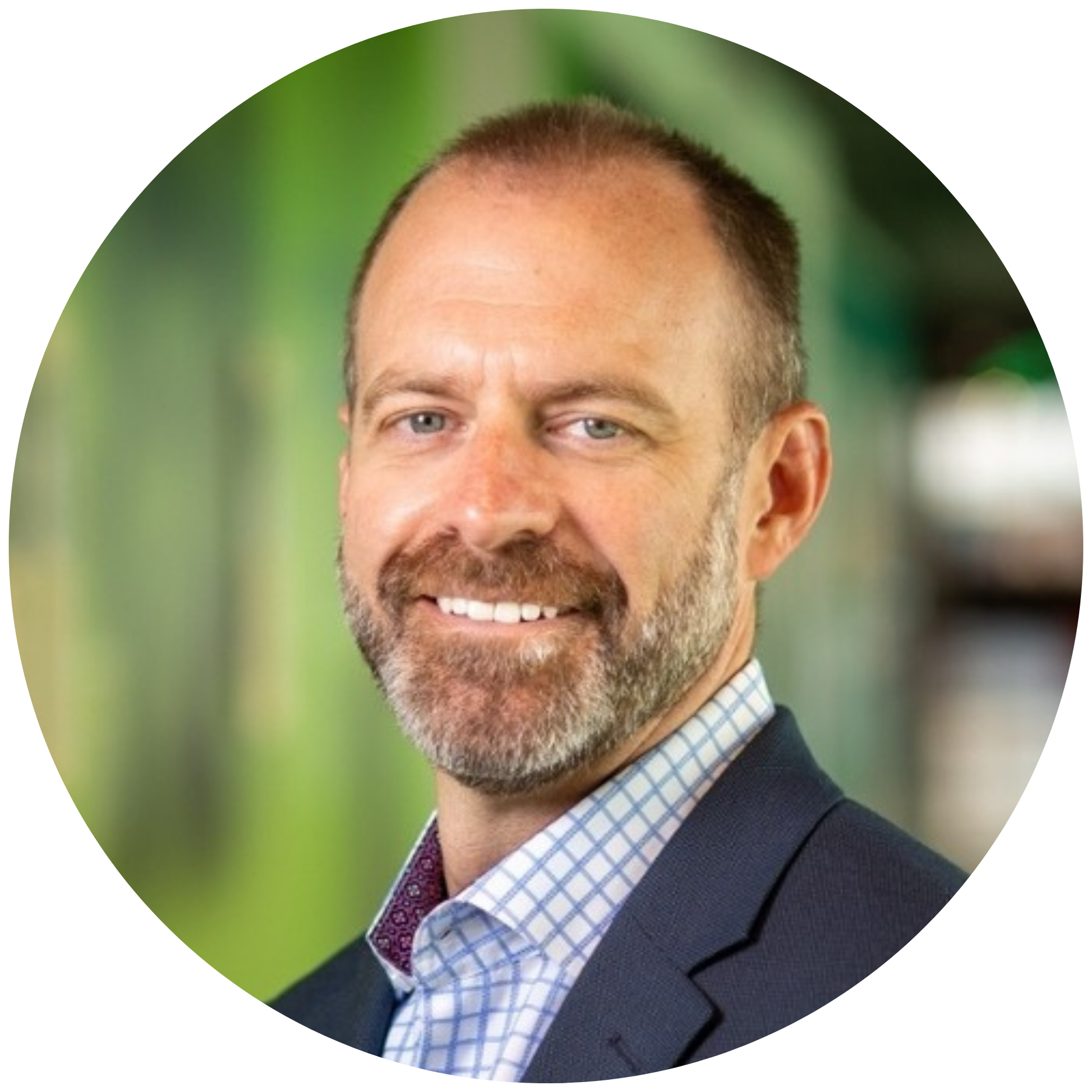
Prof. Dr. Louis Andrew Lyon |
Prof. Andrew Lyon is an American chemist, bioengineer, and academic leader specializing in soft matter materials, particularly the design and application of microgels and hydrogels for biomedical uses such as regenerative medicine and hemostasis. Born in the US, he earned a B.A. in Chemistry from Rutgers College in 1992, followed by an M.S. in 1993 and a Ph.D. in Physical Chemistry in 1996, both from Northwestern University. Prof. Lyon joined the Georgia Institute of Technology as an assistant professor in 1999, advancing to associate professor in 2003 and full professor in 2007; In 2014, he moved to Chapman University as dean of the Schmid College of Science and Technology, a position he held until 2018, before becoming the founding dean of the Dale E. and Sarah Ann Fowler School of Engineering in 2019, serving until 2023. He currently holds professorships in both Chemistry and Electrical Engineering & Computer Science there. Click to expandProf. Lyon's research has centered on colloid chemistry, nanomaterials, and extracellular matrix mimics, leading to innovations like ultrasoft platelet-like particles for trauma treatment and AI-augmented anemia-screening technologies, with over 150 peer-reviewed publications in journals such as Science Translational Medicine and Advanced Materials. His contributions have earned prestigious awards, including the NSF CAREER Award (2000), Beckman Young Investigator Award (2000), Alfred P. Sloan Research Fellowship (2002), Camille Dreyfus Teacher-Scholar Award (2003), and National Fresenius Award (2006), as well as election as a Senior Member of the National Academy of Inventors in 2020. Beyond academia, Prof. Lyon is a serial entrepreneur, co-founding Sanguina, Inc., as Chief Scientific Officer to develop point of care diagnostics , and SelSym Biotech, Inc., focusing on next generation treatments for trauma, post-surgical bleeding, and wound healing. |
|
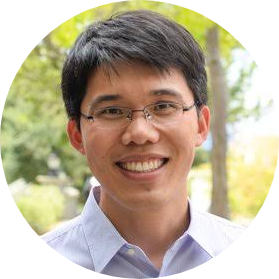
Prof. Dr. Wei Gao |
Wei Gao is a Professor of Medical Engineering and a Heritage Medical Research Institute Investigator in the Division of Engineering and Applied Science at the California Institute of Technology. He received his Ph.D. in Chemical Engineering from the University of California, San Diego in 2014, and completed his postdoctoral training from 2014 to 2017 in the Department of Electrical Engineering and Computer Sciences at the University of California, Berkeley. He is a recipient of the NSF Career Award, ONR Young Investigator Award, IAMBE Early Career Award, Sloan Research Fellowship, Pittcon Achievement Award, IEEE EMBS Early Career Achievement Award, IEEE EMBS Technical Achievement Award, IEEE Sensor Council Technical Achievement Award, MIT Technology Review 35 Innovators Under 35, and the Falling Walls Breakthrough of the Year in Engineering and Technology. He is also recognized as a World Economic Forum Young Scientist, a Highly Cited Researcher (Web of Science, since 2020). Click to expandProf. Gao is an elected Fellow of the American Institute for Medical and Biological Engineering (AIMBE), the Royal Society of Chemistry (RSC), and the Institute of Electrical and Electronics Engineers (IEEE). Professor Gao's primary research interest is in the development of novel bioelectronic devices for personalized and precision medicine: wearable and flexible biosensors that can analyze the various biomarkers in body fluids for real-time continuous health monitoring and early diagnosis, and synthetic micro/nanomachines for rapid drug delivery and precision surgery. His research thrusts include fundamental materials innovation as well as practical device and system level applications in translational medicine. |
|
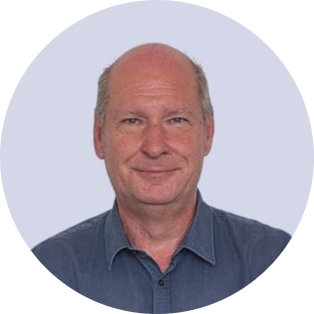
Prof. Dr. Franz Konstantin Fuss |
Prof. Dr. Franz Konstantin Fuss serves as the Chair of Biomechanics at the Faculty of Engineering Science at the University of Bayreuth, where he leads cutting-edge research at the intersection of human movement science and advanced engineering. Professor Fuss holds degrees in Medicine from Vienna University and in Engineering from the University of Strathclyde. This dual expertise allows him to approach biomechanical challenges with both clinical insight and technical precision, bridging the gap between human physiology and engineered systems. Click to expandProfessor Fuss has also made significant contributions to sports aerodynamics, investigating performance factors in activities such as skiing, the design of athletic garments, and even horse racing. His work in this domain combines fluid dynamics with biomechanics to enhance efficiency and competitive advantage. Complementing these research areas is his engagement with advanced manufacturing techniques, where he explores novel production methods and materials to bring biomechanical innovations from concept to reality. |
 Prof. Dr. Ennio Tasciotti (San Raffaele University, Italy) |
Professor Ennio Tasciotti is Head of the Human Longevity Program Laboratory at IRCCS San Raffaele. He graduated in Molecular Biology from the Scuola Normale Superiore in Pisa and earned a PhD in Molecular Medicine from the International Center for Genetic Engineering & Biotechnology , a specialization in Molecular Imaging from the Molecular Biomedicine Consortium of AREA Science Park, and a second specialization in Nanomedicine from the University of Texas Health Science Center in Houston. Professor Tasciotti is considered a pioneer in the development of bioinspired materials and nanotechnologies for targeted drug delivery, inflammation control, and regenerative medicine. |
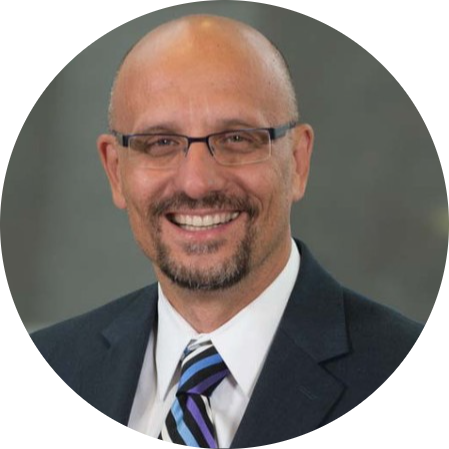 Prof. Dr. Stelios Andreadis (State University of New York at Buffalo, USA) |
Prof. Stelios T. Andreadis is a SUNY Distinguished Professor at the State University of New York at Buffalo, where he directs the Cell, Gene and Tissue Engineering Center and previously led the SCiRM training program. He earned his PhD from the University of Michigan and completed postdoctoral training at Harvard Medical School in gene therapy and regenerative medicine. His research spans stem cell bioengineering, tissue regeneration, biomaterials, and gene delivery systems, with key contributions to vascular, skin, and gland tissue engineering as well as lentiviral-based gene analysis. He co-founded Angiograft, LLC to commercialize vascular graft technologies, has secured over $20 million in research funding. |
 Prof. Dr. Dana Al-Sulaiman (King Abdullah University of Science and Technology, Saudi Arabia) |
Prof. Dana Al-Sulaiman joined KAUST in 2021 as an assistant professor of materials science andbioengineering. She is the principal investigator of the BioMAD Lab, which focuses on developing advanced materials and next-generation technologies for minimally-invasive disease diagnosis, monitoring and precision healthcare. She is a contributing faculty member in the KAUSTSmart Health Center of Excellence. Prior to KAUST, Professor Alsulaiman completed her postdoctoral fellowship in the lab of Prof Patrick Doyle at MIT, where she focused on developments in the fields of encoded hydrogel biosensors and microfluidic technologies. Throughout her academic career, Prof. Al-Sulaiman has received many prestigious international awards, among them the distinguished L’Oréal-UNESCO For Women in Science Regional Young TalentAward (2023) and the RSC Materials Horizons Emerging Investigator Award (2025). |
 Prof. Dr. Carmen Mayorga (UPC - Peruvian University of Applied Science, Peru) |
Prof. Dr. Carmen Mayorga is a Professor at the Peruvian University of Applied Sciences (UPC). She previously served as a Senior Scientist at the Technical University of Ostrava and led the Kralupy unit of the Centre for Advanced Functional Nanorobots at UCT Prague. She was also a research fellow at ICN2 in Barcelona, Spain, and at Nanyang Technological University, Singapore. Her research focuses on electrochemical studies of nanomaterials, including nanoparticles and two-dimensional materials, as well as the development of autonomous micro/nanomotors for sensing applications and pollutant remediation. Prof. Mayorga has contributed to several innovative research directions, including a novel gas sensing system based on impedance phase detection, the use of bipolar electrochemistry for exfoliating layered two-dimensional materials, and the development of a magnetic rotating field setup for the precise control of magnetic micro/nanorobots. |
|
|
Dr. Selim Bozkurt is a Lecturer in Mechanical Engineering at Ulster University's School of Engineering. He holds a PhD in Biomedical Engineering from Eindhoven University of Technology, as well as an MSc and BSc in Mechanical Engineering from Yeditepe University and Eskisehir Osmangazi University, respectively. Prior to his current role, he served as a Post-Doctoral Research Associate at University College London and a Researcher at Great Ormond Street Hospital for Children in London. His main research interests focus on in-silico medicine, digital twins, and patient-specific computational modelling. His specific areas of expertise include the hemodynamic evaluation and optimisation of continuous-flow left ventricular assist devices, modelling of physiological systems, medical devices and biomechanical modelling for paediatric craniofacial surgeries. Click to expandDr. Bozkurt is an accomplished researcher who has successfully secured competitive grant funding for collaborative innovation projects. He serves as an Associate Editor for peer-reviewed journals in the fields of medical engineering and digital technologies. Additionally, he holds active committee roles within national research networks dedicated to digital twinning. |
|
|
Leopoldo Angrisani is Full Professor of Electrical and Electronic Measurements with the Department of Information Technology and Electrical Engineering of the University of Naples Federico II, Italy. He is also Chair of the Board of the Ph.D. Program ICTH - Information and Communication Technology for Health of the same University. His current research interests include the role of AI in measurement science, measurement uncertainty in AI-based measurement processes, the impact of quantum technologies on measurements, metrological characterization of advanced human–machine interfaces, measurements for IoT, Industry 4.0, and Health 4.0 applications, and cyber-physical measurement systems. Click to expandHe is currently the Coordinator of the Technical/Scientific Committee of MedITech – one of the eight Italian Competence Centers on I4.0 enabling technologies. He is Fellow Member of the IEEE, Fellow of the European Academy of Sciences, chair of the Italian Association “GMEE-Electrical and Electronic Measurements Group”, and corresponding member of the Accademia Pontaniana in Naples, the oldest Italian academy. He authored and co-authored about 350 scientific papers, more than one third of which were published in international journals with relevant impact. |
|
|
Prof. Dr. Maribel Vazquez is Professor and Principal Investigator in the Department of Biomedical Engineering at Rutgers, The State University of New Jersey, and a Fellow of AIMBE and BMES. Her research integrates biomedical engineering systems, mechanistic biology, and clinical applications to advance regenerative and cell-based therapies across the nervous system. Her laboratory has pioneered microfluidic technologies that correlate cell migration with altered signaling pathways in applications involving central, visual, and peripheral nervous system repair, while also leading educational initiatives focused on health disparities in U.S. healthcare. Supported by funding from the NIH, NSF, and DoD, she has held numerous academic and professional leadership roles in biomedical engineering and translational medicine. She earned Sc.D. and M.S. degrees in Mechanical Engineering from Massachusetts Institute of Technology and a B.S. in Mechanical and Aerospace Engineering from Cornell University. |
|
|
Silviya Petrova Zustiak is a Professor and Associate Chairin the Department of Biomedical Engineering at Saint Louis University and co-director of the SLU Institute for Drug and Biotherapeutic Innovation. She earned her B.S./M.S. in Bioelectrical Engineering from the Technical University in Sofia, Bulgaria, and her Ph.D. in Chemical and Biochemical Engineering from University of Maryland, Baltimore County, followed by a postdoctoral fellowship in biophysics at the National Institutes of Health. Her research focuses on hydrogel biomaterials, tissue engineering, drug delivery systems, and cell–matrix interactions, integrating engineering, materials science, and biology. Click to expandDr. Zustiak leads the Zustiak Soft Tissue Engineering Laboratory, where she develops innovative biomaterials for cell scaffolds, drug screening platforms, and sustained-release therapeutic delivery. Dr. Zustiak has editorial roles in several journals, including npj Biomedical Innovations, Tissue Engineering, and Scientific Reports. She has received multiple awards for her work, including the NIH Fellows Award for Research Excellence during her postdoc, Scholarly Works Award for a Junior Faculty, Woman of the Year Award, Faculty Innovation Grantwinner Award, and Faculty Award for Excellence in Research at SLU, and was inducted as a senior member at the National Academy of Inventors. Dr. Zustiak's work has been funded by various government agencies, foundations, and industry and has resulted in >90 publications, >300 conference presentations, and 5 patents. |
|
|
Dr. Hana Lísalová is Head of the Laboratory of Functional Biointerfaces within the Department of Optical and Biophysical Systems, Division of Optics, at the Institute of Physics of the Czech Academy of Sciences. Her research focuses on functional biointerfaces, biomimetic systems, and biological processes in native environments, with an emphasis on the development of tailor-made functional surfaces and advanced experimental methodologies. Her interdisciplinary approach integrates biomolecular physics, chemical engineering, material surface science, optics, nanotechnology, and biology to advance understanding at the interface between synthetic materials and biological systems. A major area of research is the study of interactions between biomolecules and complex biological systems and ultrathin polymer architectures exhibiting |
- Symposium: "Perspectives on Aging"
This symposium explores foundational studies of aging across multiple scales, from molecular and cellular mechanisms to tissue-level, biomechanical, and functional implications. Emphasis is placed on integrative insights that link biological aging processes to structural integrity, mechanical performance, and age-associated decline, with attention to translational relevance for health, resilience, and longevity.
Speakers:
 Prof. Dr. Ennio Tasciotti
(San Raffaele University, Italy) Prof. Dr. Stelios Andreadis
(State University of New York at Buffalo, USA) - Symposium: "WearTech for Sports and Health"
This symposium examines emerging wearable technologies for continuous health monitoring and for performance assessment, optimization, and training in sport. Topics include sensor design and integration, data analytics and AI-enabled insights, biomechanics and physiology tracking, user-centered design, and translational pathways from laboratory innovation to real-world health and athletic performance applications.
Speakers:
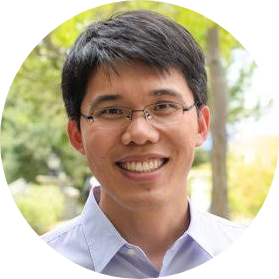
Prof. Dr. Wei Gao
(Division of Engineering and Applied Science, California Institute of Technology, USA)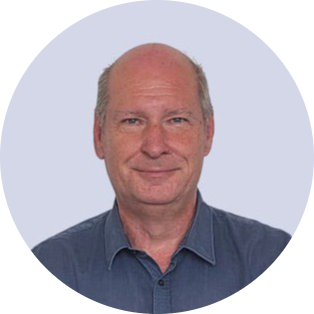 Prof. Dr. Franz Konstantin Fuss
(University of Bayreuth, Germany) Prof. Dr. Dana Al-Sulaiman
(King Abdullah University of Science and Technology, Saudi Arabia) - Symposium: "BioInnovation to Commercialization"
This symposium brings together leading bio-innovators to present translational innovations and to profile their emerging companies before a curated audience of venture capitalists, angel investors, technology advisors, and philanthropic foundations. Presentations emphasize the pathway from scientific discovery to market adoption, including value proposition, intellectual property strategy, regulatory considerations, and early commercialization milestones.
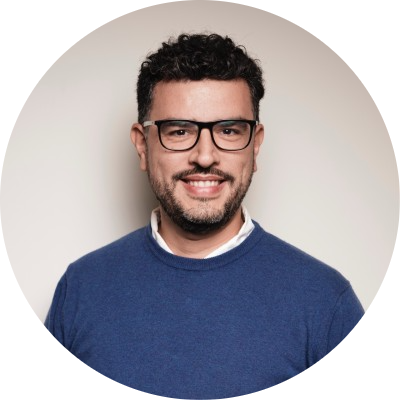 Dr. Luciano Sappia Dr. Luciano Sappia(Scientific Advisor and Innovation Consultant, TotemXR, Catalonia, Spain) |
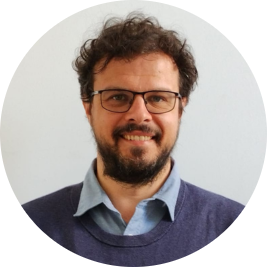 Dr. Claudio Parolo Dr. Claudio Parolo(Ramón y Cajal Fellow, Universitat Rovira i Virgili and Co-founder, Global Health Innovative Solutions, Spain) |
















Ms. Adelina Platon
Ms. Gabriela Vint
Dr. Alina-Andrada Igna