Molecules Webinar | 2026 Molecules Best Paper Award Ceremony
the chair
42nd Molecules Webinar
Molecules Webinar | 2026 Molecules Best Paper Award Ceremony
Molecules is very happy to invite you to this webinar celebrating this year’s Molecules Best Paper Award. The award is granted annually to recognize the outstanding results of cutting-edge research and new developments in chemistry and its associated fields. This time, we will have the pleasure to learn about three awardees’ ground-breaking work in the following topics (*):
- Nanoparticle Tracking Analysis: An Effective Tool to Characterize Extracellular Vesicles
- Rational Design of Magnetic Nanoparticles as T1–T2 Dual-Mode MRI Contrast Agents
- Synergistic Effects of Temozolomide and Doxorubicin in the Treatment of Glioblastoma Multiforme: Enhancing Efficacy through Combination Therapy
We look forward to the exciting insights!
Date: 21 October 2026
Time: 16:00 (CEST) | 9:00 CDT
Webinar ID: 896 8585 2167
Webinar Secretariat: journal.webinar@mdpi.com
Meet Our Chair
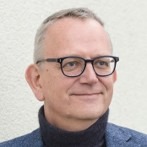
Institute of Pharmaceutical Biology and Phytochemistry, University of Münster, Münster, Germany;Thomas J. Schmidt, born in 1963, studied Pharmacy (1986-1990) and obtained his doctorate in Pharmaceutical Biology (1990-1994) as well as the habilitation (1999) at the University of Düsseldorf, Germany. He was a DFG post-doctoral research fellow at the Department of Chemistry, Louisiana State University, Baton Rouge, LA, USA, in 1995. After habilitation, he became an assistant professor in Düsseldorf and then took a professorship of Pharmaceutical Biology and Phytochemistry at the University of Münster, Germany, in 2005. In 2009, he was a visiting Professor at the University of Sao Paulo, Brazil, and is the founder and European coordinator of the Research Network Natural Products against Neglected Diseases (ResNet NPND). He is a member of various scientific societies and boards and has received several awards for his work, which was published in over 200 publications. Most of his scientific work is dedicated to the isolation, structural characterization and computer-aided structure–bioactivity relationship studies of new natural products from plants, with a strong emphasis on anti-cancer and anti-infective compounds against neglected tropical diseases. He has served on the editorial board of Molecules as Associate Editor since 2014, was the section Editor-in-Chief for Natural Products Chemistry from 2016 to 2023 and is the journal’s EiC since September 2023.
Meet Our Speakers
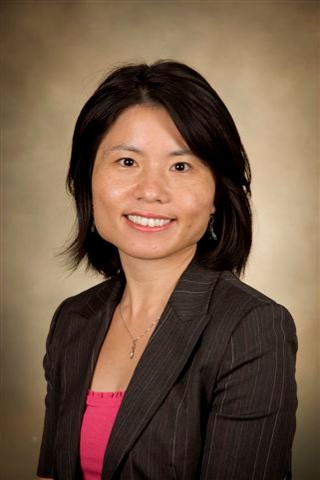
Chemical and Biological Engineering, The University of Alabama, USA;Dr. Yuping Bao is currently an Associate Professor and Associate Department Head for the Graduate Program in the Department of Chemical and Biological Engineering at The University of Alabama. She received her B.S. in Chemistry from East China University of Science and Technology and studied M.S. in Physics at Tongji University in Shanghai, China. She earned her Ph.D. in Materials Science and Engineering from University of Washington. Following two years of postdoctoral research in the Center for Integrated Nanotechnology at Los Alamos National Laboratory, she joined the Department of Chemical and Biological Engineering at The University of Alabama in Tuscaloosa. Dr. Bao’s research focuses on the rational design and development of nanosystems for drug discovery and drug delivery, with an emphasis on developing nanomaterials and analytical approaches for biomedical applications. She has received several prestigious honors, including an NSF CAREER Award. She also served as a meeting chair for the 2019 Materials Research Society (MRS) Spring Meeting. Dr. Bao currently serves as an Associate Editor for Inorganic and Nano-Metal Chemistry.
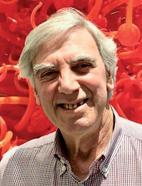
Department of Life Sciences and Coimbra Chemistry Center (CQC-IMS), University of Coimbra, Coimbra, Portugal;Carlos F.G.C. Geraldes is a retired Full Professor at the Department of Life Sciences, University of Coimbra. He graduated in Chemistry from UC in 1972 with an average grade of 19 out of 20. He began his research in Nuclear Magnetic Resonance Spectroscopy in 1968, under the supervision of Prof. Victor Gil. He obtained his PhD (D.Phil.) in 1976 from the University of Oxford, in the area of Bio-inorganic Chemistry under the supervision of Prof. R. J. P. Williams, FRS. He was a visiting professor and researcher at several foreign universities, with grants, for example, from the Fulbright Foundation (USA). He is the President of the NMR Section of the Portuguese Chemical Society and a Member of the Lisbon Academy of Sciences. He has been a Principal Investigator and Collaborator in approximately twenty national and international research projects. He has supervised 25 PhD students. He is the author or co-author of 338 peer-reviewed research articles, one book and 25 book chapters, 230 oral presentations, more than 200 poster presentations at national and international conferences, and 65 seminars at national and international universities and companies. He was the guest editor of issue number 27 of the book series "Metal Ions in Life Sciences" dedicated to contrast agents in magnetic resonance imaging (MRI). He has received several awards, including those from the Gulbenkian Foundation, the Foundation for Science and Technology, the "António Xavier" award and the “Frausto da Silva” award. His current research focuses on contrast agents for MRI and nanosystems for molecular imaging and theranostics. ORCID iD: 0000-0002-0837-8329; Scopus Author ID: 35477589200: https://www.scopus.com/authid/detail.uri?authorid=35477589200, 11,099 citations, h factor = 55; https://scholar.google.com/citations?user=j__EOhMAAAAJ&hl=en, 14746 citations, h índex = 65, i10 index = 288
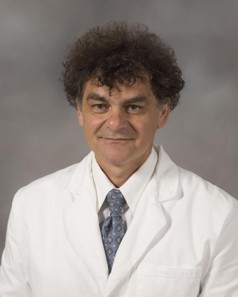
Department of Cell and Molecular Biology, University of Mississippi Medical Center, USA;Drazen Raucher, PhD, is a Professor in the Department of Cell and Molecular Biology at the University of Mississippi Medical Center. He earned his PhD in molecular biophysics from Florida State University and completed postdoctoral training in cell biology at Duke University. His research focuses on the design and development of targeted drug-delivery systems, particularly genetically engineered elastin-like polypeptides. His laboratory develops ELP fusion proteins, therapeutic peptides, and injectable hydrogels for the treatment of glioblastoma and other cancers. His group is also developing small-molecule therapeutic approaches for Huntington’s disease. This work aims to improve intracellular and central nervous system delivery, enhance drug accumulation in diseased tissues, and reduce toxicity to healthy tissues. Dr. Raucher’s research has been supported by the National Institutes of Health, the National Science Foundation, and the Department of Defense and has resulted in numerous peer-reviewed publications and patents in targeted therapeutic delivery.
This is a FREE webinar. After registering, you will receive a confirmation email containing information on how to join the webinar. Registrations with academic institutional email addresses will be prioritized.
Certificates of attendance will be delivered to those who attend the live webinar.
Can’t attend? Register anyway and we’ll let you know when the recording is available to watch.