Non-Destructive Testing Webinar | A Journey Across Past, Present and Future of Non-destructive Testing Science—Colloquium With Professor Andrea Benedetto
the chair
1st Webinar on NDT
A Journey Across Past, Present and Future of Non-destructive Testing Science—Colloquium With Professor Andrea Benedetto
Non-destructive testing (NDT) is a wide-ranging area of science with applications in a variety of sectors, including, but not limited to, archaeology, forensic engineering, geophysics, mechanical engineering, petroleum engineering, electrical and electronic engineering, civil and environmental engineering, systems engineering, aeronautical engineering, data science and artificial intelligence, medicine and biological sciences, and arts.
From the past to the present, the tremendous and transdisciplinary growth in the use of non-destructive theories and approaches has raised new exciting research questions and stimulated the NDT community to find solutions to increasingly complex challenges These include the development of new concepts, theories, and paradigms that are shaping the future of the NDT sector.
In this webinar, Professor Andrea Benedetto will give a colloquium regarding the past pillars, the present focus and the future trends of the NDT area of science.
Date: 26 June 2024Time: 1 pm CEST | 12 pm BST | 7 am EDT
Webinar ID: 816 3853 7699
Webinar Secretariat: journal.webinar@mdpi.com
Meet Our Chair
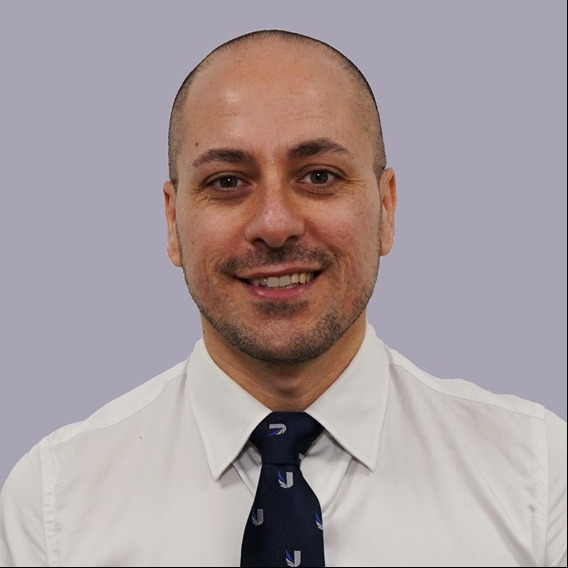
School of Computing and Engineering, University of West London, London, UK;The Faringdon Research Centre for Non-Destructive Testing and Remote Sensing, University of West London, London, UK;Fabio Tosti is a registered Chartered Engineer, a Professor of Civil Engineering at the School of Computing and Engineering, University of West London (UWL), London, U.K., and the Director of “The Faringdon Research Centre for Non-Destructive Testing and Remote Sensing” at UWL. His research interests include the development of new algorithms, methodologies, and models for geoscience applications and the non-destructive and remote sensing assessment of civil and green infrastructure, and cultural heritage. He has authored/co-authored over 210 research publication records and delivered numerous keynotes and invited lectures. Prof. Tosti was a recipient of the ECSs Award by the European Geosciences Union (EGU) in 2017 and several Best Paper Awards at international conferences, including the TSP 2020, IEEE AGERS 2021 and GIRST 2023. He was the General Co-Chair of the 3rd and 2nd Int. Workshop on Signal Processing Techniques for GPR Applications (SPT4GPRA) in 2022 and 2020, respectively, and he has led technical sessions in 50+ international conferences. He is the Founding Editor-in-Chief of NDT (MDPI), and an Associate Editor of various international peer-reviewed journals.
Meet Our Speaker
Department of Civil, Computer Science and Aeronautical Technologies Engineering, Roma Tre University, Rome, Italy;Full professor in Civil Engineering at University of Roma Tre. He has developed relevant research in the field of planning, design, safety sustainability and development of transport infrastructure. He is the author of pioneering studies on NDT and remote sensing applied to infrastructure monitoring and maintenance, which are published and cited internationally. He has coordinated numerous international research projects and served as Editor, Associate Editor and Reviewer of the most important and prestigious international journals. He played also prominent institutional roles as international consultant for EU research programmed, national expert supporting ministries and director of the Department of Engineering at University of Roma Tre.


Summary of the 1st Webinar on NDT
The inaugural NDT webinar titled "Non-Destructive Testing Webinar | A Journey Across Past, Present and Future of Non-destructive Testing Science—Colloquium With Professor Andrea Benedetto" took place on June 26, 2024, led by Professor Andrea Benedetto, from Roma Tre University, Italy. Prof. Benedetto delivered a thought-provoking talk, outlining the historical journey of NDT science and its main milestones. Moving from past pillars, including a review of the early direct and indirect methods in metrology, through the present developments in software and hardware technology and onto to the future directions and challenges that NDT will likely face, such as the utilization of data fusion-based approached and sustainability-related concerns, respectively, an interesting alternation of historical milestones and scientific findings was provided. The well-attended webinar instigated several interesting questions from the audience on NDT science.
Recording
In this section, you will find the recordings of this webinar to watch, re-watch and share with your colleagues!