Sustainability Webinar | Green and Nature-Based Solutions for Climate Change – Resilient Infrastructure
the chair
Dear Colleagues,
For the last two decades, water security and climate-resilient infrastructure have been in the spotlight as key concepts for sustainable development. Almost two-thirds of cities around the world believe that climate change will negatively affect their water resilience. Infrastructure will be affected by the physical impacts of climate variability and change, but will also play an essential role in building resilience to those impacts. Extreme events illustrate the extent of this potential exposure. Water and waste companies and administrations are under increasing pressure to invest in new ways to meet new demands due to population growth, climate change and tightening environmental standards. Many companies are concerned about business risks related to water supplies. The COVID-19 pandemic has caused profound changes in the way we live and work, and digitalization is playing an important role globally in the water and waste sectors and beyond, boosting knowledge sharing and collaboration to address these challenges.
Against the backdrop of growing global urbanization and climate change and unforeseen challenges such as those we have recently seen with the COVID-19 pandemic, this webinar focuses on innovative initiatives to address climate-resilient infrastructure and water resilience, as well as the socio-economic factors influencing vulnerability to climate change, and the wider adoption and replication of green and nature-based solutions for climate change, resilient infrastructure and water security.
The aim of this webinar is to provide evidence of the opportunities that blue-green infrastructures and ecosystems-based approaches bring towards climate-resilient infrastructure and water security. Three prominent keynote speakers will talk about the antecedents of the LIFE GREEN ADAPT PROJECT co-funded with the contribution of the LIFE Programme of the European Union under grant agreement No LIFE20 CCA/ES/00179, that will be used as a case study, the technology advances, global experiences as well as barriers and enablers to accelerate adoption and replication of innovation.
We look forward to seeing you at the webinar and participating during our panel discussion and questions and answers session.
Prof. Dr. Blanca Antizar
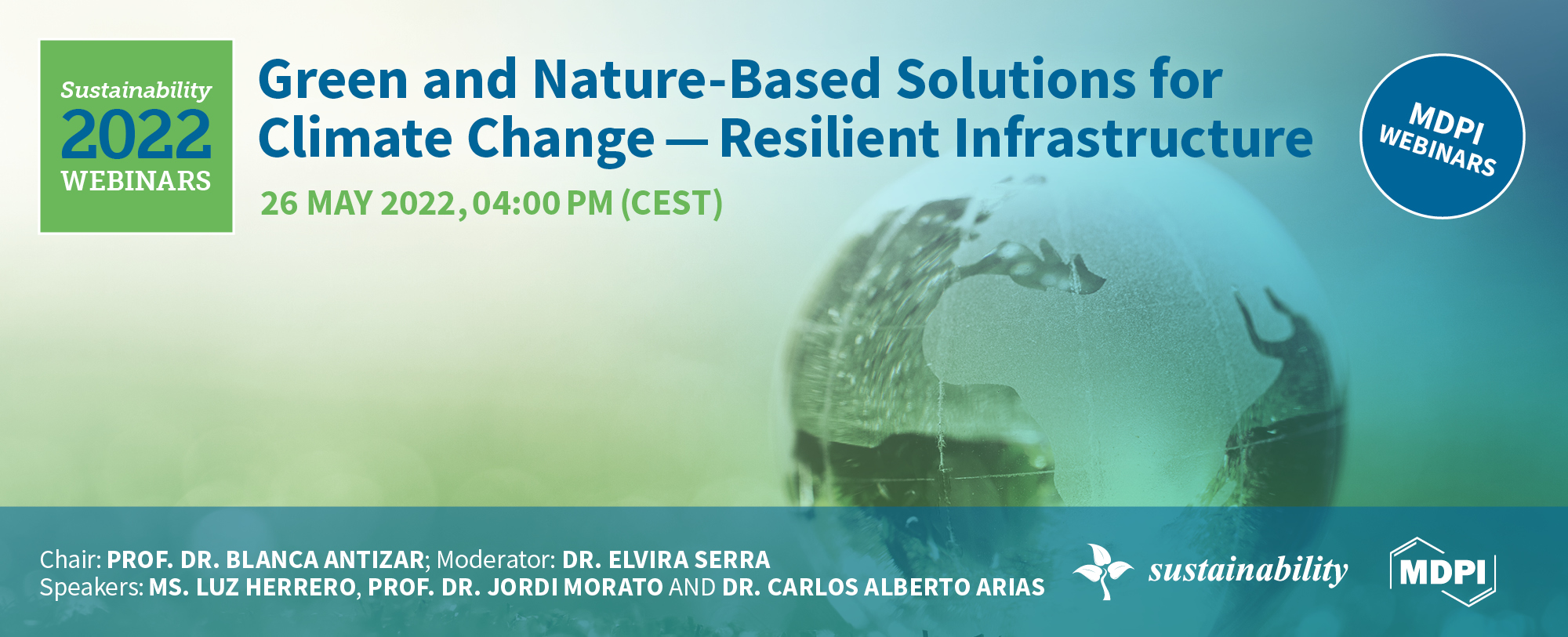
Date: 26 May 2022
Time: 4:00 pm CEST | 10:00 am EDT | 10:00 pm CST Asia
Webinar ID: 884 7918 7695
Webinar Secretariat: sustainability.webinar@mdpi.com
Meet Our Speaker
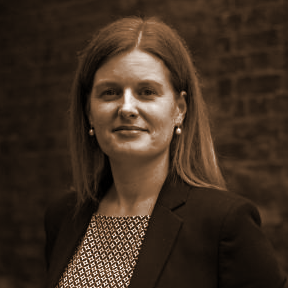
European Director of Consultancy, Isle, Royal Academy of Engineering Visiting Professor in Environmental Security and Resilience, UCL, United Kingdom;Prof Antizar is the Director of Consultancy at Isle and Royal Academy of Engineering Visiting Professor in Environmental Security and Resilience at University College of London with over twenty years of experience in the development of water and wastewater treatment projects globally. Prior to joining Isle, Blanca held various academic roles for 15 years in research-led universities including The University of Edinburgh and University College London, becoming an international expert in environmental remediation technologies. Blanca is the author of more than 100 peer reviewed scientific papers and technical reports. Her interests are centered in the development and implementation of new technologies in the context of water security and resource recovery. Over the years Blanca has gained considerable experience both in the UK and overseas, working alongside technology companies, end users of technology and investors. She has managed complex projects, coordinated strategic partnerships, and identified and secured appropriate funding sources. Blanca has an extensive portfolio of projects including the World Bank’s Utility of the Future program, and the EU funded projects INCOVER, RUN4LIFE, VIVALDI, PROMICON, BATRAW, LIFE GREEN ADAPT AND LIFE WASTE2COAG. Blanca holds a PhD in Civil and Environmental Engineering from the Technion Israel Institute of Technology. She serves as member of the Industrial Advisory Board for the School of Engineering at the University of Glasgow, she is Member of the IWA, and Co-Chair of the Europe Water ‘Water Security’ and ‘Resource Recovery’ working groups. She is member of the Editorial Board of ‘Environmental Technology & Innovation’ (Elsevier) and Sustainability – Sustainable Water Management (mdpi).
On Thursday, 26 May 2022, MDPI and the Journal Sustainability organized a webinar on Sustainability, entitled: “Green and Nature-Based Solutions for Climate Change - Resilient Infrastructure”.
The introduction was held by the Chair of the webinar, Prof. Dr. Blanca Antizar, European Director at Isle Utilities, and Royal Academy of Engineering Visiting Professor in Environmental Security and Resilience at University College London, UK. Blanca is the author of more than 100 peer-reviewed scientific articles and technical reports, and her interests are focused on the development and implementation of technologies in the context of water security. She has been recognised as an international expert in environmental remediation technologies, and has recently been awarded the Woman of the Year at the 8th edition of the prestigious iAgua awards held in Madrid. The awards recognise the most outstanding professionals and organisations in the field of water resources management.
The first speaker was Ms Luz Herrero, Coordinator of the Environment Unit at Aimen, and Coordinator of the LIFE GREEN ADAPT project (Grant Agreement No LIFE20 CCA/ES/00179). She presented an overview of the project with a focus on addressing resilience, climate change and infrastructure.
The second speaker was Prof. Dr. Jordi Morato, Chair of UNESCO of Sustainability at the Polytechnic University of Catalonia. He presented general principles of circular economy and previous global experiences using nature based solutions to manage landfill sites and risks, as well as projects that address social and economic aspects of waste management. Finally he also provided an overview of the international networks involved in the use of nature based solutions, including Natura Network and RECNET.
The third speaker was Dr. Carlos Arias, Senior Researcher at the Department of Bioscience, Aarhus University. His presentation started with a detailed overview of the barriers and enablers to ensure adoption and replication of innovative technologies, and then presented a portfolio of global experiences using nature based solutions to address culture aspects of waste management.
The presentations were followed by a Q&A and a discussion, moderated by Dr Elvira Serra, Senior Technology Consultant at Isle. During the discussion, the opportunity for the use of nature based solutions as an innovative approach in the waste sector to treat the wastewater (e.g., leachage, run-off) generated, the need for public-private partnerships as well use of appropriate technologies as opposed to the most advanced technologies to mitigate failure of projects were highlighted.
The webinar was offered via Zoom and required registration to attend. The full recording can be found here on Sciforum website. In order to stay updated on the next webinars on Sustainability, be sure to sign up for our newsletter by clicking on “Subscribe” at the top of the page.
Guest Editors: Prof. Dr. Blanca Antizar, Prof. Dr. Jo Burgess & Prof. Dr. Jan Hofman
Deadline for manuscript submissions: 20 August 2022