Water Webinar | Crop Evapotranspiration: Innovative Approaches in Calculation, Application in Practice, and Water Saving
the chair
9th Water Webinar
Crop Evapotranspiration: Innovative Approaches in Calculation, Application in Practice, and Water Saving
Evapotranspiration (ET) plays a main role in the water balance at various scales, from the plant and the field to the irrigation system or the river basin. ET allows for understanding the hydrological behaviour of natural and cropped ecosystems and adopting improved water resource planning and management. With the increasing competition for water and decreasing water resource availability, the need to cope with water scarcity, droughts and climate change increases the importance of the accurate knowledge and estimation of ET for annual and perennial crops and landscapes. Improved use of ET information allows for enhanced water use performance at various scales. Therefore, there is a great need for an accurate scrutiny of ET measurements, of weather data collection and of data processing.
Date: 24 October 2025
Time: 4:00PM CEST | 10:00AM EDT | 10:00PM CST (Asia)
Webinar ID: 898 6594 1253
Webinar Secretariat: journal.webinar@mdpi.com
Meet Our Chair
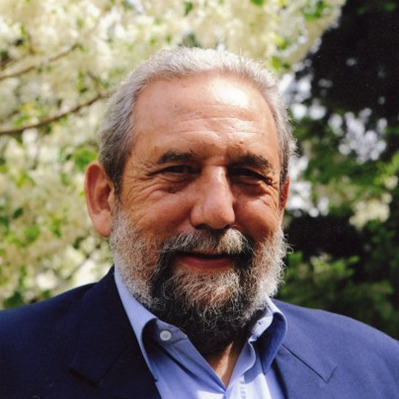
Research Center on Landscape, Environment, Agriculture and Food (LEAF), School of Agriculture (ISA), University of Lisbon, 1649-004 Lisbon, Portugal.;Agricultural Engineer from the University of Lisbon, Portugal (ISA-UL), PhD from Federal High School of Technology, Zurich Switzerland (ETH). Prof. Emeritus of the University of Lisbon. Dr.h.c., the University Angel Kanchev, Rousse, Bulgaria. Director of research projects in Europe, Asia and Latin America and Consultant of FAO, UNDP, UNESCO, mainly on irrigation, evapotranspiration and vegetation water use, droughts and water scarcity. Co-Author of FAO Irrig Drain pap 56 on Guidelines for Crop Water Requirements, with more than 40 000 citations. Member of Scientific/Professional Academies of Portugal, Italy, France, the USA, iAABE, and European AWRES; Vice president Hon. ICID, President Hon. CIGR, and recipient of numerous awards from China, Egypt, Equador, India, Italy, Mexico, and Spain (H= 83). Author/Co-author of 400 papers in journals and books, Author/Editor of more than 40 books on irrigation engineering and management and water availability, drought and water scarcity.
Meet Our Speakers
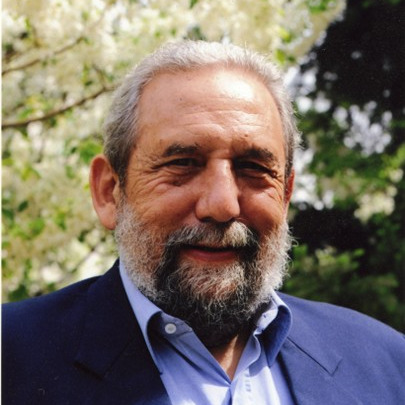
Research Center on Landscape, Environment, Agriculture and Food (LEAF), School of Agriculture (ISA), University of Lisbon, 1649-004 Lisbon, Portugal.;Agricultural Engineer from the University of Lisbon, Portugal (ISA-UL), PhD from Federal High School of Technology, Zurich Switzerland (ETH). Prof. Emeritus of the University of Lisbon. Dr.h.c., the University Angel Kanchev, Rousse, Bulgaria. Director of research projects in Europe, Asia and Latin America and Consultant of FAO, UNDP, UNESCO, mainly on irrigation, evapotranspiration and vegetation water use, droughts and water scarcity. Co-Author of FAO Irrig Drain pap 56 on Guidelines for Crop Water Requirements, with more than 40 000 citations. Member of Scientific/Professional Academies of Portugal, Italy, France, the USA, iAABE, and European AWRES; Vice president Hon. ICID, President Hon. CIGR, and recipient of numerous awards from China, Egypt, Equador, India, Italy, Mexico, and Spain (H= 83). Author/Co-author of 400 papers in journals and books, Author/Editor of more than 40 books on irrigation engineering and management and water availability, drought and water scarcity.
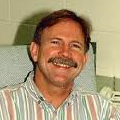
Prof. Dr. Richard Glen Allen
Evapotranspiration Plus, LLC, Gainesville, FL, USA.;Dr. Richard Allen has 40+ years of experience in evapotranspiration (ET) measurement and calculation and irrigation technology. He has been a pioneer in developing surface energy balance determination by satellite and is the codeveloper of the METRIC, eeFLUX and eeMETRIC processing systems. Allen has applied the METRIC process to a wide variety of application areas, including thirty US states and eight countries. Allen has taught university courses and training workshops on irrigation design, hydraulics, hydrology, evapotranspiration, crop coefficients, micrometeorology and surface energy balance processes. He has published more than 170 refereed papers and has an H-index of 81. He was the lead author of the 1998 edition of the FAO56 publication on Crop Evapotranspiration. The FAO56 publication has been cited in the literature more than 40,000 times.

Research Center on Landscape, Environment, Agriculture and Food (LEAF), School of Agriculture (ISA), University of Lisbon, Lisbon, Portugal.;Paula Paredes (Assistant Professor) has been conducting research on crop water requirements, soil water modelling, and irrigation scheduling using real-time data and weather forecasts. She has also been working on crop growth modelling and water productivity. She is the author (or co-author) of 82 SCOPUS-indexed papers (h-index: 38). She is an Associate Editor of the ISI journal Agricultural Water Management (since 2020) and Irrigation Science (since 2025) and the Academic editor of Agronomy (MDPI) (since 2024). She has contributed to the development of the soil–water balance model SIMDualKc, which adopts the dual crop coefficient approach. This model is used operationally and for research by various institutions in several countries, and has been the subject of numerous publications focusing on crop water use, irrigation scheduling, transpiration, yield, water productivity, and the impact of water stress and salinity.
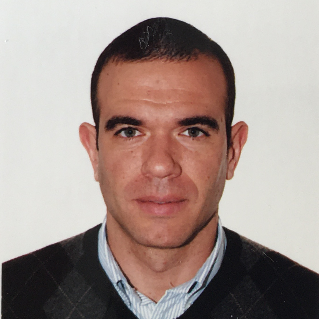
Desertification Research Centre (CIDE), CSIC-UV-GVA, Ctra CV 315, Km 10.7, 46113 Moncada, Valencia, Spain.;Dr. Ramón López-Urrea) (PhD in Agricultural Engineering, UCLM, Spain, 2004). He is currently a Research Scientist with the Desertification Research Center (CIDE), CSIC-UV-GVA, in Valencia, Spain. His expertise (26-year career) includes determining crop evapotranspiration, the optimization of irrigation scheduling and improving water use efficiency and productivity in farming systems. Recently, he has focused on remote sensing-based phenotyping methods to assess crop ET, biophysical variables and the water status of wine grapes. During 2015-2017, he was the Director of two Spanish research and extension institutions (ITAP and FUNDESCAM). He has authored 65 papers in peer-reviewed journals with an impact factor (indexed in JCR). He has been an Associate Editor for the scientific journal Irrigation Science since July 2018 (Editorial Contribution Award 2025).


The webinar was hosted via Zoom and required registration to attend. The full recording can be found below. In order to learn about future webinars, you can sign up to our newsletter by clicking “Subscribe” at the top of the page. View the chair's closing summary as follows:
The Guidelines for the Computation of Crop Water Requirements were published in 1998 under FAO Irrigation and Drainage Paper 56 (FAO56). Over the past 25 years, the guidelines have been widely used in the practice of agricultural water management, mainly irrigation, as well as in research, with nearly 50,000 related citations. They have resulted in a large number of innovative and scientifically sound approaches that authors and the FAO consider to be of great importance, leading to an update to FAO56. The new FAO56rev is nearly ready for launch; therefore, a group of related authors decided to produce a webinar on "Crop Evapotranspiration: Innovative Approaches in Calculation, Application in Practice, and Water Saving”.
Keeping the computation of crop water requirements as the product of a crop coefficient (Kc) and reference grass evapotranspiration (ETo), innovations focused on ETo, Kc, and various other technologies. Relative to ETo, innovations refer mainly to the implementation of hourly time steps, QAQC of base data, the use of remote sensing, and computations with reduced weather variables. Kc data are now available for new crops and natural vegetation, new approaches are available for actual observations, and thermal time has been adopted to draw the Kc curves. In addition, a Kc for woody fruit crops is now available with increased detail. The applicability of approaches is extended, mostly focusing on irrigation water saving.
Crop Evapotranspiration, Crop Irrigation and Water Savings
Special Issue Editors: Prof. Dr. Luis Santos Pereira and Dr. Paula Paredes
Deadline for manuscript submissions: 10 February 2026