Event submissions
Published

This submission belongs to the session S7. Exploring Biomedicines in Behavioral Neurology and Neuropsychiatry of the event 1st International Electronic Conference on Biomedicine
Published date
01 Jun, 2021
Citation
Oliwia Koszła, Przemysław Sołek, Agnieszka A. Kaczor, Neuroprotective therapeutic strategy against neuronal damage, in Proceedings of 1st International Electronic Conference on Biomedicine, 1 June–26 June 2021, MDPI: Basel, Switzerland, doi: 10.3390/ECB2021-10287
Share
Email
Facebook
Twitter
LinkedIn
Neuroprotective therapeutic strategy against neuronal damage
'%3e%3cpath%20d='M12.6647%2010.9104C12.4176%2010.325%2012.0589%209.7933%2011.6088%209.34485C11.16%208.89511%2010.6283%208.53653%2010.0432%208.28891C10.038%208.28629%2010.0327%208.28498%2010.0275%208.28236C10.8437%207.69282%2011.3743%206.73252%2011.3743%205.64907C11.3743%203.85423%209.92005%202.40002%208.12522%202.40002C6.33038%202.40002%204.87618%203.85423%204.87618%205.64907C4.87618%206.73252%205.40677%207.69282%206.22296%208.28367C6.21772%208.28629%206.21248%208.2876%206.20724%208.29022C5.62031%208.53783%205.09365%208.89287%204.64167%209.34616C4.19192%209.79496%203.83334%2010.3266%203.58573%2010.9117C3.34247%2011.4846%203.21128%2012.0987%203.19925%2012.721C3.1989%2012.735%203.20135%2012.7489%203.20646%2012.7619C3.21157%2012.7749%203.21924%2012.7868%203.22901%2012.7968C3.23877%2012.8068%203.25045%2012.8148%203.26334%2012.8202C3.27623%2012.8256%203.29007%2012.8284%203.30406%2012.8284H4.09012C4.14776%2012.8284%204.19362%2012.7825%204.19493%2012.7262C4.22113%2011.7148%204.62726%2010.7676%205.34519%2010.0497C6.08802%209.30686%207.07452%208.89811%208.12522%208.89811C9.17592%208.89811%2010.1624%209.30686%2010.9052%2010.0497C11.6232%2010.7676%2012.0293%2011.7148%2012.0555%2012.7262C12.0568%2012.7839%2012.1027%2012.8284%2012.1603%2012.8284H12.9464C12.9604%2012.8284%2012.9742%2012.8256%2012.9871%2012.8202C13%2012.8148%2013.0117%2012.8068%2013.0214%2012.7968C13.0312%2012.7868%2013.0389%2012.7749%2013.044%2012.7619C13.0491%2012.7489%2013.0515%2012.735%2013.0512%2012.721C13.0381%2012.0947%2012.9084%2011.4856%2012.6647%2010.9104ZM8.12522%207.90243C7.52388%207.90243%206.95792%207.66793%206.53214%207.24215C6.10636%206.81636%205.87185%206.2504%205.87185%205.64907C5.87185%205.04773%206.10636%204.48177%206.53214%204.05599C6.95792%203.63021%207.52388%203.3957%208.12522%203.3957C8.72655%203.3957%209.29252%203.63021%209.7183%204.05599C10.1441%204.48177%2010.3786%205.04773%2010.3786%205.64907C10.3786%206.2504%2010.1441%206.81636%209.7183%207.24215C9.29252%207.66793%208.72655%207.90243%208.12522%207.90243Z'%20fill='%235D1EE1'/%3e%3c/g%3e%3c/svg%3e)
Oliwia Koszła 1
Przemysław Sołek 2

Agnieszka A. Kaczor 1,3
1. Department of Synthesis and Chemical Technology of Pharmaceutical Substances with Computer Modeling Laboratory, Faculty of Pharmacy, Medical University of Lublin, 4A Chodzki St., 20-093 Lublin, Poland
2. Department of Biotechnology, Institute of Biology and Biotechnology, University of Rzeszow, 1 Pigonia St., 35-310 Rzeszow, Poland
3. University of Eastern Finland, Yliopistonranta 1, FI-70211 Kuopio, Finland
Abstract
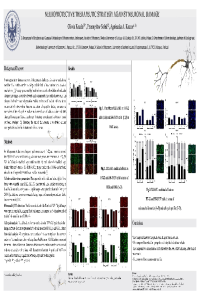
Currently, the methods of treating neurodegenerative diseases are not fully effective. The available drugs are not able to stop the disease process, but to slow it down, [1] therefore, research on new compounds and new approaches to treating these disorders is still ongoing. We are looking for compounds with neuroprotective properties that will prevent cell death as well as restore the function and number of damaged neurons [2].
The presented research focuses on developing an effective treatment of neurodegenerative diseases based on the compound with neuroprotective properties.
A multi-target antipsychotic compound, D2AAK1, was used in the conducted research. The experiments were carried out on mouse hippocampal neuron cells (HT-22), neuroblastoma cells (SH-SY5Y) and male Swiss mice. The conducted studies showed that the compound causes an increase in cell proliferation and improves memory in mice models. Moreover, the compound caused a reduction in the level of reactive oxygen species (ROS), nitrogen (RNS), a decrease in intracellular calcium levels (Ca2+) and the level of DNA damage in the form of micronuclei (MN).
Summarizing, the obtained preliminary results are promising for the future development of treatment for neurodegenerative diseases.
[1] F.J.E. Vajda, Neuroprotection and neurodegenerative disease, Journal of Clinical Neuroscience. 9 (2002) 4–8. https://doi.org/10.1054/jocn.2001.1027.
[2] M.C. Monteiro, M.D. Coleman, E.J. Hill, R.D. Prediger, C.S.F. Maia, Neuroprotection in Neurodegenerative Disease: From Basic Science to Clinical Applications, Oxid Med Cell Longev. 2017 (2017) 2949102. https://doi.org/10.1155/2017/2949102.
Keywords
neuroprotection
neurodegenerative diease
neuron
Manuscript
sciforum-044774.pdf
Poster
poster.pdf
Covalent Electrosprayed Nanoparticles Based on Protease Treated Arabinoxylans
Hypolipidemic properties of cocoa and coffee by-products after simulated gastrointestinal digestion: A comparative approach.