Event submissions
EventsThe 1st International Electronic Conference on Chemical Sensors and Analytical Chemistry
Published
 10.3390/CSAC2021-10555 (registering DOI)
 This submission belongs to the session G. General: Poster of the event The 1st International Electronic Conference on Chemical Sensors and Analytical Chemistry
Published date
01 Jul, 2021
Academic Editor
'%3e%3cpath%20d='M12.6657%2010.9104C12.4185%2010.325%2012.0599%209.79327%2011.6097%209.34482C11.1609%208.89508%2010.6293%208.5365%2010.0442%208.28888C10.0389%208.28626%2010.0337%208.28495%2010.0285%208.28233C10.8446%207.69279%2011.3752%206.73249%2011.3752%205.64904C11.3752%203.8542%209.92103%202.39999%208.1262%202.39999C6.33136%202.39999%204.87715%203.8542%204.87715%205.64904C4.87715%206.73249%205.40774%207.69279%206.22393%208.28364C6.21869%208.28626%206.21345%208.28757%206.20821%208.29019C5.62129%208.5378%205.09463%208.89284%204.64265%209.34613C4.1929%209.79493%203.83432%2010.3266%203.58671%2010.9117C3.34345%2011.4845%203.21226%2012.0987%203.20023%2012.7209C3.19988%2012.7349%203.20233%2012.7488%203.20744%2012.7619C3.21255%2012.7749%203.22022%2012.7867%203.22998%2012.7968C3.23975%2012.8068%203.25142%2012.8147%203.26431%2012.8202C3.2772%2012.8256%203.29105%2012.8284%203.30504%2012.8284H4.09109C4.14874%2012.8284%204.19459%2012.7825%204.1959%2012.7262C4.2221%2011.7148%204.62823%2010.7676%205.34617%2010.0497C6.08899%209.30683%207.0755%208.89808%208.1262%208.89808C9.17689%208.89808%2010.1634%209.30683%2010.9062%2010.0497C11.6242%2010.7676%2012.0303%2011.7148%2012.0565%2012.7262C12.0578%2012.7838%2012.1037%2012.8284%2012.1613%2012.8284H12.9474C12.9613%2012.8284%2012.9752%2012.8256%2012.9881%2012.8202C13.001%2012.8147%2013.0126%2012.8068%2013.0224%2012.7968C13.0322%2012.7867%2013.0398%2012.7749%2013.0449%2012.7619C13.0501%2012.7488%2013.0525%2012.7349%2013.0522%2012.7209C13.0391%2012.0947%2012.9094%2011.4855%2012.6657%2010.9104ZM8.1262%207.9024C7.52486%207.9024%206.9589%207.6679%206.53312%207.24211C6.10733%206.81633%205.87283%206.25037%205.87283%205.64904C5.87283%205.0477%206.10733%204.48174%206.53312%204.05596C6.9589%203.63018%207.52486%203.39567%208.1262%203.39567C8.72753%203.39567%209.29349%203.63018%209.71927%204.05596C10.1451%204.48174%2010.3796%205.0477%2010.3796%205.64904C10.3796%206.25037%2010.1451%206.81633%209.71927%207.24211C9.29349%207.6679%208.72753%207.9024%208.1262%207.9024Z'%20fill='%235D1EE1'/%3e%3c/g%3e%3c/svg%3e) Victor Borovkov
Victor BorovkovCitation
Iryna Makarchuk, Anton Nikolaev, Alexander Thesseling, Lisa Dejon, Daniel Lamberty, Laura Stief, Thorsten Friedrich, Petra Hellwig, Hamid Nasiri, Frederic Melin, The inhibition study of cytochrome bd oxidase using the enzyme-based electrochemical sensor, in Proceedings of The 1st International Electronic Conference on Chemical Sensors and Analytical Chemistry, 1 July–15 July 2021, MDPI: Basel, Switzerland, doi: 10.3390/CSAC2021-10555
Share
Email
Facebook
Twitter
LinkedIn
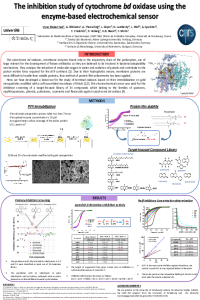
The inhibition study of cytochrome bd oxidase using the enzyme-based electrochemical sensor
'%3e%3cpath%20d='M12.6647%2010.9104C12.4176%2010.325%2012.0589%209.7933%2011.6088%209.34485C11.16%208.89511%2010.6283%208.53653%2010.0432%208.28891C10.038%208.28629%2010.0327%208.28498%2010.0275%208.28236C10.8437%207.69282%2011.3743%206.73252%2011.3743%205.64907C11.3743%203.85423%209.92005%202.40002%208.12522%202.40002C6.33038%202.40002%204.87618%203.85423%204.87618%205.64907C4.87618%206.73252%205.40677%207.69282%206.22296%208.28367C6.21772%208.28629%206.21248%208.2876%206.20724%208.29022C5.62031%208.53783%205.09365%208.89287%204.64167%209.34616C4.19192%209.79496%203.83334%2010.3266%203.58573%2010.9117C3.34247%2011.4846%203.21128%2012.0987%203.19925%2012.721C3.1989%2012.735%203.20135%2012.7489%203.20646%2012.7619C3.21157%2012.7749%203.21924%2012.7868%203.22901%2012.7968C3.23877%2012.8068%203.25045%2012.8148%203.26334%2012.8202C3.27623%2012.8256%203.29007%2012.8284%203.30406%2012.8284H4.09012C4.14776%2012.8284%204.19362%2012.7825%204.19493%2012.7262C4.22113%2011.7148%204.62726%2010.7676%205.34519%2010.0497C6.08802%209.30686%207.07452%208.89811%208.12522%208.89811C9.17592%208.89811%2010.1624%209.30686%2010.9052%2010.0497C11.6232%2010.7676%2012.0293%2011.7148%2012.0555%2012.7262C12.0568%2012.7839%2012.1027%2012.8284%2012.1603%2012.8284H12.9464C12.9604%2012.8284%2012.9742%2012.8256%2012.9871%2012.8202C13%2012.8148%2013.0117%2012.8068%2013.0214%2012.7968C13.0312%2012.7868%2013.0389%2012.7749%2013.044%2012.7619C13.0491%2012.7489%2013.0515%2012.735%2013.0512%2012.721C13.0381%2012.0947%2012.9084%2011.4856%2012.6647%2010.9104ZM8.12522%207.90243C7.52388%207.90243%206.95792%207.66793%206.53214%207.24215C6.10636%206.81636%205.87185%206.2504%205.87185%205.64907C5.87185%205.04773%206.10636%204.48177%206.53214%204.05599C6.95792%203.63021%207.52388%203.3957%208.12522%203.3957C8.72655%203.3957%209.29252%203.63021%209.7183%204.05599C10.1441%204.48177%2010.3786%205.04773%2010.3786%205.64907C10.3786%206.2504%2010.1441%206.81636%209.7183%207.24215C9.29252%207.66793%208.72655%207.90243%208.12522%207.90243Z'%20fill='%235D1EE1'/%3e%3c/g%3e%3c/svg%3e)
Iryna Makarchuk 1
Anton Nikolaev 1
Alexander Thesseling 2
Lisa Dejon 3
Daniel Lamberty 3
Laura Stief 3
Thorsten Friedrich 2

Petra Hellwig 1
Hamid Nasiri 4

Frederic Melin 1
1. Laboratoire de Bioélectrochimie et Spectroscopie, UMR 7140, Chimie de la Matière Complexe, Université de Strasbourg-CNRS, 67000 Strasbourg, France
2. Institut für Biochemie, Albert-Ludwigs-Universität, Freiburg, Germany
3. Fachbereich 11 Organische Chemie, Universität des Saarlandes, Saarbrücken, Germany
4. Institute of Microbiology, University of Hohenheim, Stuttgart, Germany
Abstract
Membrane proteins that participate in multiple vital functions of every living organism such as transport, signaling and respiration, provide 80 to 90% of the relevant targets for the pharmaceutical industries. The family of cytochrome bd oxidase enzymes is of large interest for the development of future antibiotics as they were found only in the respiratory chain of the prokaryotes and they are believed to be involved in bacterial adaptability mechanisms. They catalyze the reduction of molecular oxygen in water and oxidation of quinols and contribute to the proton motive force required for ATP synthesis. Due to their hydrophobic nature, membrane proteins are more difficult to handle than soluble proteins. Protein film voltammetry is a very convenient technique, because it allows working at a very low concentration and optimize the electrode surface to the nature of the enzyme. Here, we have developed a biosensor for the study of terminal oxidases based on their immobilization on gold nanoparticles modified with a self-assembled monolayer of thiols. The stability of the protein films can be optimized by varying the nature of thiols and amount of lipids.
This enzyme-based electrochemical sensor was successfully used for the inhibition screening of a target-focused library of 34 compounds which belong to the families of quinones, naphthoquinones, phenols, quinolones, coumarins and flavonoids against cytochrome bd oxidase. Moreover, the developed device was applied for the study of the catalytic reaction of the enzyme with small gaseous signaling molecules.
Keywords
Membrane proteins
bioelectrochemistry
inhibition
Manuscript
Poster_Sensors 2021_Makarchuk.pdf
Poster
Poster_Sensors 2021_Makarchuk.pdf
SILVER NANOMATERIALS AS ELECTRON MEDIATORS IN A BIO-ELETRONIC TONGUE DEDICATED TO THE ANALYSIS OF MILKS. THE ROLE OF THE ASPECT RATIO OF NANOPARTICLES VS. NANOWIRES
Evaluation the effect of extracted time conditions on the phenolic content of olive pastes from cv. Arbequina and discrimination using a lab-made potentiometric electronic tongue