Event submissions
EventsThe 1st International Electronic Conference on Chemical Sensors and Analytical Chemistry
Published
 10.3390/CSAC2021-10636 (registering DOI)
 This submission belongs to the session G. General: Poster of the event The 1st International Electronic Conference on Chemical Sensors and Analytical Chemistry
Published date
07 Jul, 2021
Academic Editor
'%3e%3cpath%20d='M12.6657%2010.9104C12.4185%2010.325%2012.0599%209.79327%2011.6097%209.34482C11.1609%208.89508%2010.6293%208.5365%2010.0442%208.28888C10.0389%208.28626%2010.0337%208.28495%2010.0285%208.28233C10.8446%207.69279%2011.3752%206.73249%2011.3752%205.64904C11.3752%203.8542%209.92103%202.39999%208.1262%202.39999C6.33136%202.39999%204.87715%203.8542%204.87715%205.64904C4.87715%206.73249%205.40774%207.69279%206.22393%208.28364C6.21869%208.28626%206.21345%208.28757%206.20821%208.29019C5.62129%208.5378%205.09463%208.89284%204.64265%209.34613C4.1929%209.79493%203.83432%2010.3266%203.58671%2010.9117C3.34345%2011.4845%203.21226%2012.0987%203.20023%2012.7209C3.19988%2012.7349%203.20233%2012.7488%203.20744%2012.7619C3.21255%2012.7749%203.22022%2012.7867%203.22998%2012.7968C3.23975%2012.8068%203.25142%2012.8147%203.26431%2012.8202C3.2772%2012.8256%203.29105%2012.8284%203.30504%2012.8284H4.09109C4.14874%2012.8284%204.19459%2012.7825%204.1959%2012.7262C4.2221%2011.7148%204.62823%2010.7676%205.34617%2010.0497C6.08899%209.30683%207.0755%208.89808%208.1262%208.89808C9.17689%208.89808%2010.1634%209.30683%2010.9062%2010.0497C11.6242%2010.7676%2012.0303%2011.7148%2012.0565%2012.7262C12.0578%2012.7838%2012.1037%2012.8284%2012.1613%2012.8284H12.9474C12.9613%2012.8284%2012.9752%2012.8256%2012.9881%2012.8202C13.001%2012.8147%2013.0126%2012.8068%2013.0224%2012.7968C13.0322%2012.7867%2013.0398%2012.7749%2013.0449%2012.7619C13.0501%2012.7488%2013.0525%2012.7349%2013.0522%2012.7209C13.0391%2012.0947%2012.9094%2011.4855%2012.6657%2010.9104ZM8.1262%207.9024C7.52486%207.9024%206.9589%207.6679%206.53312%207.24211C6.10733%206.81633%205.87283%206.25037%205.87283%205.64904C5.87283%205.0477%206.10733%204.48174%206.53312%204.05596C6.9589%203.63018%207.52486%203.39567%208.1262%203.39567C8.72753%203.39567%209.29349%203.63018%209.71927%204.05596C10.1451%204.48174%2010.3796%205.0477%2010.3796%205.64904C10.3796%206.25037%2010.1451%206.81633%209.71927%207.24211C9.29349%207.6679%208.72753%207.9024%208.1262%207.9024Z'%20fill='%235D1EE1'/%3e%3c/g%3e%3c/svg%3e) Constantin Apetrei
Constantin ApetreiCitation
Xavier Cetó, Sandra Pérez, Electronic tongue for the evaluation of vinegar varieties, in Proceedings of The 1st International Electronic Conference on Chemical Sensors and Analytical Chemistry, 1 July–15 July 2021, MDPI: Basel, Switzerland, doi: 10.3390/CSAC2021-10636
Share
Email
Facebook
Twitter
LinkedIn
Electronic tongue for the evaluation of vinegar varieties

Xavier Cetó 1
'%3e%3cpath%20d='M12.6647%2010.9104C12.4176%2010.325%2012.0589%209.7933%2011.6088%209.34485C11.16%208.89511%2010.6283%208.53653%2010.0432%208.28891C10.038%208.28629%2010.0327%208.28498%2010.0275%208.28236C10.8437%207.69282%2011.3743%206.73252%2011.3743%205.64907C11.3743%203.85423%209.92005%202.40002%208.12522%202.40002C6.33038%202.40002%204.87618%203.85423%204.87618%205.64907C4.87618%206.73252%205.40677%207.69282%206.22296%208.28367C6.21772%208.28629%206.21248%208.2876%206.20724%208.29022C5.62031%208.53783%205.09365%208.89287%204.64167%209.34616C4.19192%209.79496%203.83334%2010.3266%203.58573%2010.9117C3.34247%2011.4846%203.21128%2012.0987%203.19925%2012.721C3.1989%2012.735%203.20135%2012.7489%203.20646%2012.7619C3.21157%2012.7749%203.21924%2012.7868%203.22901%2012.7968C3.23877%2012.8068%203.25045%2012.8148%203.26334%2012.8202C3.27623%2012.8256%203.29007%2012.8284%203.30406%2012.8284H4.09012C4.14776%2012.8284%204.19362%2012.7825%204.19493%2012.7262C4.22113%2011.7148%204.62726%2010.7676%205.34519%2010.0497C6.08802%209.30686%207.07452%208.89811%208.12522%208.89811C9.17592%208.89811%2010.1624%209.30686%2010.9052%2010.0497C11.6232%2010.7676%2012.0293%2011.7148%2012.0555%2012.7262C12.0568%2012.7839%2012.1027%2012.8284%2012.1603%2012.8284H12.9464C12.9604%2012.8284%2012.9742%2012.8256%2012.9871%2012.8202C13%2012.8148%2013.0117%2012.8068%2013.0214%2012.7968C13.0312%2012.7868%2013.0389%2012.7749%2013.044%2012.7619C13.0491%2012.7489%2013.0515%2012.735%2013.0512%2012.721C13.0381%2012.0947%2012.9084%2011.4856%2012.6647%2010.9104ZM8.12522%207.90243C7.52388%207.90243%206.95792%207.66793%206.53214%207.24215C6.10636%206.81636%205.87185%206.2504%205.87185%205.64907C5.87185%205.04773%206.10636%204.48177%206.53214%204.05599C6.95792%203.63021%207.52388%203.3957%208.12522%203.3957C8.72655%203.3957%209.29252%203.63021%209.7183%204.05599C10.1441%204.48177%2010.3786%205.04773%2010.3786%205.64907C10.3786%206.2504%2010.1441%206.81636%209.7183%207.24215C9.29252%207.66793%208.72655%207.90243%208.12522%207.90243Z'%20fill='%235D1EE1'/%3e%3c/g%3e%3c/svg%3e)
Sandra Pérez 1
1. Department of Chemistry, Faculty of Sciences, Universitat Autònoma de Barcelona, 08193 Bellaterra, Barcelona, Spain
Abstract
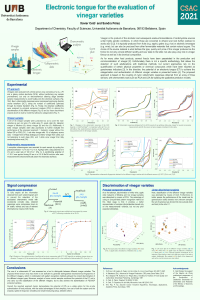
Vinegar is the product of the alcoholic and subsequent acetous fermentations of carbohydrate sources under highly aerobic conditions. It is typically produced from fruits (e.g. apple), grains (e.g. rice) or alcoholic beverages (e.g. wine), but can also be produced from other fermentable materials that contain natural sugars. Those are first converted to ethanol by yeast, and then further oxidized to acetic acid by bacteria. The choice of the source material is what defines the type, quality and price of the vinegar produced as the former do not only provide different acidity and sour taste to the latter, but also play a key role in vinegar flavour as well as in its chemical composition.
The global vinegar market reached a value of over a billion USD in 2020, and is expected to keep increasing over the next years. Precisely, this increasing demand, especially of the finest vinegars, means fraudulent products can be a tempting prize. Unfortunately, there is not a specific methodology that allows the detection of such frauds with traditional methods, but current approaches rely on the quantification of certain physical properties or chemical compounds which have been reported as genuineness indicators. Consequently, the development of novel methodologies that allow to assess the authenticity and traceability of food products is of huge interest.
In this direction, the potential of a voltammetric electronic tongue (ET) to achieve the categorization and authentication of different vinegar varieties is presented herein. To this aim, a proper sensor array was selected and employed to extract the voltammetric profiles of different vinegar varieties, which along with the use of chemometric methods such as principal component analysis (PCA) and linear discriminant analysis (LDA) allowed the identification of characteristic fingerprints for each of the varieties and its discrimination.
Keywords
vinegar
voltammetric sensors
electronic tongue
principal component analysis
linear discriminant analysis
Manuscript
sciforum_046896 (2).pdf
Poster
Poster.pdf
Development of electrochemical genosensors applied to cardiovascular pharmacogenetics
An electrochemical sensor based on molecularly imprinted polymers for the detection of acetaminophen