Event submissions
Events1st International Electronic Conference on Molecular Sciences: Druggable Targets of Emerging Infectious Diseases
Published

This submission belongs to the session S1. Emerging and Re-Emerging Infectious Diseases in Human and Veterinary Medicine of the event 1st International Electronic Conference on Molecular Sciences: Druggable Targets of Emerging Infectious Diseases
Published date
26 Jan, 2022
Academic Editor
'%3e%3cpath%20d='M12.6657%2010.9104C12.4185%2010.325%2012.0599%209.79327%2011.6097%209.34482C11.1609%208.89508%2010.6293%208.5365%2010.0442%208.28888C10.0389%208.28626%2010.0337%208.28495%2010.0285%208.28233C10.8446%207.69279%2011.3752%206.73249%2011.3752%205.64904C11.3752%203.8542%209.92103%202.39999%208.1262%202.39999C6.33136%202.39999%204.87715%203.8542%204.87715%205.64904C4.87715%206.73249%205.40774%207.69279%206.22393%208.28364C6.21869%208.28626%206.21345%208.28757%206.20821%208.29019C5.62129%208.5378%205.09463%208.89284%204.64265%209.34613C4.1929%209.79493%203.83432%2010.3266%203.58671%2010.9117C3.34345%2011.4845%203.21226%2012.0987%203.20023%2012.7209C3.19988%2012.7349%203.20233%2012.7488%203.20744%2012.7619C3.21255%2012.7749%203.22022%2012.7867%203.22998%2012.7968C3.23975%2012.8068%203.25142%2012.8147%203.26431%2012.8202C3.2772%2012.8256%203.29105%2012.8284%203.30504%2012.8284H4.09109C4.14874%2012.8284%204.19459%2012.7825%204.1959%2012.7262C4.2221%2011.7148%204.62823%2010.7676%205.34617%2010.0497C6.08899%209.30683%207.0755%208.89808%208.1262%208.89808C9.17689%208.89808%2010.1634%209.30683%2010.9062%2010.0497C11.6242%2010.7676%2012.0303%2011.7148%2012.0565%2012.7262C12.0578%2012.7838%2012.1037%2012.8284%2012.1613%2012.8284H12.9474C12.9613%2012.8284%2012.9752%2012.8256%2012.9881%2012.8202C13.001%2012.8147%2013.0126%2012.8068%2013.0224%2012.7968C13.0322%2012.7867%2013.0398%2012.7749%2013.0449%2012.7619C13.0501%2012.7488%2013.0525%2012.7349%2013.0522%2012.7209C13.0391%2012.0947%2012.9094%2011.4855%2012.6657%2010.9104ZM8.1262%207.9024C7.52486%207.9024%206.9589%207.6679%206.53312%207.24211C6.10733%206.81633%205.87283%206.25037%205.87283%205.64904C5.87283%205.0477%206.10733%204.48174%206.53312%204.05596C6.9589%203.63018%207.52486%203.39567%208.1262%203.39567C8.72753%203.39567%209.29349%203.63018%209.71927%204.05596C10.1451%204.48174%2010.3796%205.0477%2010.3796%205.64904C10.3796%206.25037%2010.1451%206.81633%209.71927%207.24211C9.29349%207.6679%208.72753%207.9024%208.1262%207.9024Z'%20fill='%235D1EE1'/%3e%3c/g%3e%3c/svg%3e) Clemente Capasso
Clemente CapassoCitation
Dzhuliia Dzhalilova, Anna Kosyreva, Polina Vishnyakova, Ivan Tsvetkov, Natalia Zolotova, Vladimir Mkhitarov, Olga Makarova, Age-related features in systemic inflammatory response in male Wistar rats with different hypoxia tolerance, in Proceedings of 1st International Electronic Conference on Molecular Sciences: Druggable Targets of Emerging Infectious Diseases, 1 September–14 September 2021, MDPI: Basel, Switzerland, doi: 10.3390/ECMS2021-10831
Share
Email
Facebook
Twitter
LinkedIn
Age-related features in systemic inflammatory response in male Wistar rats with different hypoxia tolerance
'%3e%3cpath%20d='M12.6647%2010.9104C12.4176%2010.325%2012.0589%209.7933%2011.6088%209.34485C11.16%208.89511%2010.6283%208.53653%2010.0432%208.28891C10.038%208.28629%2010.0327%208.28498%2010.0275%208.28236C10.8437%207.69282%2011.3743%206.73252%2011.3743%205.64907C11.3743%203.85423%209.92005%202.40002%208.12522%202.40002C6.33038%202.40002%204.87618%203.85423%204.87618%205.64907C4.87618%206.73252%205.40677%207.69282%206.22296%208.28367C6.21772%208.28629%206.21248%208.2876%206.20724%208.29022C5.62031%208.53783%205.09365%208.89287%204.64167%209.34616C4.19192%209.79496%203.83334%2010.3266%203.58573%2010.9117C3.34247%2011.4846%203.21128%2012.0987%203.19925%2012.721C3.1989%2012.735%203.20135%2012.7489%203.20646%2012.7619C3.21157%2012.7749%203.21924%2012.7868%203.22901%2012.7968C3.23877%2012.8068%203.25045%2012.8148%203.26334%2012.8202C3.27623%2012.8256%203.29007%2012.8284%203.30406%2012.8284H4.09012C4.14776%2012.8284%204.19362%2012.7825%204.19493%2012.7262C4.22113%2011.7148%204.62726%2010.7676%205.34519%2010.0497C6.08802%209.30686%207.07452%208.89811%208.12522%208.89811C9.17592%208.89811%2010.1624%209.30686%2010.9052%2010.0497C11.6232%2010.7676%2012.0293%2011.7148%2012.0555%2012.7262C12.0568%2012.7839%2012.1027%2012.8284%2012.1603%2012.8284H12.9464C12.9604%2012.8284%2012.9742%2012.8256%2012.9871%2012.8202C13%2012.8148%2013.0117%2012.8068%2013.0214%2012.7968C13.0312%2012.7868%2013.0389%2012.7749%2013.044%2012.7619C13.0491%2012.7489%2013.0515%2012.735%2013.0512%2012.721C13.0381%2012.0947%2012.9084%2011.4856%2012.6647%2010.9104ZM8.12522%207.90243C7.52388%207.90243%206.95792%207.66793%206.53214%207.24215C6.10636%206.81636%205.87185%206.2504%205.87185%205.64907C5.87185%205.04773%206.10636%204.48177%206.53214%204.05599C6.95792%203.63021%207.52388%203.3957%208.12522%203.3957C8.72655%203.3957%209.29252%203.63021%209.7183%204.05599C10.1441%204.48177%2010.3786%205.04773%2010.3786%205.64907C10.3786%206.2504%2010.1441%206.81636%209.7183%207.24215C9.29252%207.66793%208.72655%207.90243%208.12522%207.90243Z'%20fill='%235D1EE1'/%3e%3c/g%3e%3c/svg%3e)
Dzhuliia Dzhalilova 1
Anna Kosyreva 2

Polina Vishnyakova 3
Ivan Tsvetkov 1

Natalia Zolotova 1
Vladimir Mkhitarov 1
Olga Makarova 1
1. Federal State Budgetary Institution “Research Institute of Human Morphology”
2. Federal State Budgetary Institution "Research Institute of Human Morphology"
3. National Medical Research Center for Obstetrics, Gynecology and Perinatology Named after Academician V.I. Kulakov of Ministry of Healthcare of Russian Federation
Abstract
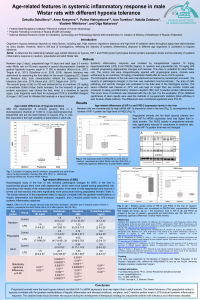
Organism’s hypoxia tolerance depends on many factors, including age. High newborn organism’s tolerance and high level of oxidative stress throughout aging were demonstrated by many studies. However, there is still lack of investigations, reflecting the intensity of systemic inflammatory response in different age organisms in correlation to hypoxia tolerance. The aim of study was to determine the relationship between age-related tolerance to hypoxia, HIF-1 and PHD2 (prolyl hydroxylase domain protein) expression levels and the intensity of systemic inflammatory response in newborn, prepubertal and adult Wistar rats. In case of investigation the tolerance to hypoxia, rats were placed into a decompression chamber at altitude simulation of 11,500 m. It was demonstrated that prepubertal rats are the least tolerant to hypoxia and newborns are the most tolerant. Newborn rats are characterized by high mRNA Hif-1α expression level in the liver, accompanied by low content of HIF-1 protein and high level of PHD2. The growth in HIF-1α protein level throughout the age is accompanied by the growth of pro-inflammatory cytokines level. Prepubertal animals are the least hypoxia tolerant and their HIF-1α mRNA expression level was higher than in adult animals. The PHD2 activity in prepubertal animals was significantly reduced in comparison to newborn rats, and the HIF-1α protein level was not changed. The lowest tolerance of the prepubertal males to hypoxia correlated with the greatest manifestations of hepatic inflammation and elevated endotoxin, neopterin, and C-reactive protein levels in LPS-induced systemic inflammatory response. The growth of serum HIF-1α in 3 h after LPS injection was observed only in prepubertal rats. The obtained data should be taken into account during the development of therapeutic strategy for prepubertal children with infectious and inflammatory diseases.
Keywords
hypoxia tolerance
HIF-1
PHD2
age-related differences
systemic inflammatory response
prepubertal age
Manuscript
sciforum-047499.pdf
Poster
Poster_Dzhalilova_final.pdf
Biodegradable wet-spun fibers loaded with antimicrobial peptides as a tool against Staphylococcus aureus induced infections
Polyelectrolyte complexed nanoparticles loaded with eugenol-containing essential oils against Staphylococcus aureus and Pseudomonas aeruginosa