Event submissions
Events1st International Electronic Conference on Molecular Sciences: Druggable Targets of Emerging Infectious Diseases
Published

This submission belongs to the session S4. Nanoparticles, New Materials and Sustainable Chemistry in Drugs of the event 1st International Electronic Conference on Molecular Sciences: Druggable Targets of Emerging Infectious Diseases
Published date
31 Aug, 2021
Academic Editor
'%3e%3cpath%20d='M12.6657%2010.9104C12.4185%2010.325%2012.0599%209.79327%2011.6097%209.34482C11.1609%208.89508%2010.6293%208.5365%2010.0442%208.28888C10.0389%208.28626%2010.0337%208.28495%2010.0285%208.28233C10.8446%207.69279%2011.3752%206.73249%2011.3752%205.64904C11.3752%203.8542%209.92103%202.39999%208.1262%202.39999C6.33136%202.39999%204.87715%203.8542%204.87715%205.64904C4.87715%206.73249%205.40774%207.69279%206.22393%208.28364C6.21869%208.28626%206.21345%208.28757%206.20821%208.29019C5.62129%208.5378%205.09463%208.89284%204.64265%209.34613C4.1929%209.79493%203.83432%2010.3266%203.58671%2010.9117C3.34345%2011.4845%203.21226%2012.0987%203.20023%2012.7209C3.19988%2012.7349%203.20233%2012.7488%203.20744%2012.7619C3.21255%2012.7749%203.22022%2012.7867%203.22998%2012.7968C3.23975%2012.8068%203.25142%2012.8147%203.26431%2012.8202C3.2772%2012.8256%203.29105%2012.8284%203.30504%2012.8284H4.09109C4.14874%2012.8284%204.19459%2012.7825%204.1959%2012.7262C4.2221%2011.7148%204.62823%2010.7676%205.34617%2010.0497C6.08899%209.30683%207.0755%208.89808%208.1262%208.89808C9.17689%208.89808%2010.1634%209.30683%2010.9062%2010.0497C11.6242%2010.7676%2012.0303%2011.7148%2012.0565%2012.7262C12.0578%2012.7838%2012.1037%2012.8284%2012.1613%2012.8284H12.9474C12.9613%2012.8284%2012.9752%2012.8256%2012.9881%2012.8202C13.001%2012.8147%2013.0126%2012.8068%2013.0224%2012.7968C13.0322%2012.7867%2013.0398%2012.7749%2013.0449%2012.7619C13.0501%2012.7488%2013.0525%2012.7349%2013.0522%2012.7209C13.0391%2012.0947%2012.9094%2011.4855%2012.6657%2010.9104ZM8.1262%207.9024C7.52486%207.9024%206.9589%207.6679%206.53312%207.24211C6.10733%206.81633%205.87283%206.25037%205.87283%205.64904C5.87283%205.0477%206.10733%204.48174%206.53312%204.05596C6.9589%203.63018%207.52486%203.39567%208.1262%203.39567C8.72753%203.39567%209.29349%203.63018%209.71927%204.05596C10.1451%204.48174%2010.3796%205.0477%2010.3796%205.64904C10.3796%206.25037%2010.1451%206.81633%209.71927%207.24211C9.29349%207.6679%208.72753%207.9024%208.1262%207.9024Z'%20fill='%235D1EE1'/%3e%3c/g%3e%3c/svg%3e) Clemente Capasso
Clemente CapassoCitation
Silvana Alfei, Gabriella Piatti, Debora Caviglia, Gian Carlo Schito, Guendalina Zuccari, Anna Maria Schito, Biocidal cationic macromolecules active on resistant bacteria: our experience., in Proceedings of 1st International Electronic Conference on Molecular Sciences: Druggable Targets of Emerging Infectious Diseases, 1 September–14 September 2021, MDPI: Basel, Switzerland, doi: 10.3390/ECMS2021-10833
Share
Email
Facebook
Twitter
LinkedIn
Biocidal cationic macromolecules active on resistant bacteria: our experience.

Silvana Alfei 1
'%3e%3cpath%20d='M12.6647%2010.9104C12.4176%2010.325%2012.0589%209.7933%2011.6088%209.34485C11.16%208.89511%2010.6283%208.53653%2010.0432%208.28891C10.038%208.28629%2010.0327%208.28498%2010.0275%208.28236C10.8437%207.69282%2011.3743%206.73252%2011.3743%205.64907C11.3743%203.85423%209.92005%202.40002%208.12522%202.40002C6.33038%202.40002%204.87618%203.85423%204.87618%205.64907C4.87618%206.73252%205.40677%207.69282%206.22296%208.28367C6.21772%208.28629%206.21248%208.2876%206.20724%208.29022C5.62031%208.53783%205.09365%208.89287%204.64167%209.34616C4.19192%209.79496%203.83334%2010.3266%203.58573%2010.9117C3.34247%2011.4846%203.21128%2012.0987%203.19925%2012.721C3.1989%2012.735%203.20135%2012.7489%203.20646%2012.7619C3.21157%2012.7749%203.21924%2012.7868%203.22901%2012.7968C3.23877%2012.8068%203.25045%2012.8148%203.26334%2012.8202C3.27623%2012.8256%203.29007%2012.8284%203.30406%2012.8284H4.09012C4.14776%2012.8284%204.19362%2012.7825%204.19493%2012.7262C4.22113%2011.7148%204.62726%2010.7676%205.34519%2010.0497C6.08802%209.30686%207.07452%208.89811%208.12522%208.89811C9.17592%208.89811%2010.1624%209.30686%2010.9052%2010.0497C11.6232%2010.7676%2012.0293%2011.7148%2012.0555%2012.7262C12.0568%2012.7839%2012.1027%2012.8284%2012.1603%2012.8284H12.9464C12.9604%2012.8284%2012.9742%2012.8256%2012.9871%2012.8202C13%2012.8148%2013.0117%2012.8068%2013.0214%2012.7968C13.0312%2012.7868%2013.0389%2012.7749%2013.044%2012.7619C13.0491%2012.7489%2013.0515%2012.735%2013.0512%2012.721C13.0381%2012.0947%2012.9084%2011.4856%2012.6647%2010.9104ZM8.12522%207.90243C7.52388%207.90243%206.95792%207.66793%206.53214%207.24215C6.10636%206.81636%205.87185%206.2504%205.87185%205.64907C5.87185%205.04773%206.10636%204.48177%206.53214%204.05599C6.95792%203.63021%207.52388%203.3957%208.12522%203.3957C8.72655%203.3957%209.29252%203.63021%209.7183%204.05599C10.1441%204.48177%2010.3786%205.04773%2010.3786%205.64907C10.3786%206.2504%2010.1441%206.81636%209.7183%207.24215C9.29252%207.66793%208.72655%207.90243%208.12522%207.90243Z'%20fill='%235D1EE1'/%3e%3c/g%3e%3c/svg%3e)
Gabriella Piatti 2
Debora Caviglia 2
Gian Carlo Schito 2

Guendalina Zuccari 3
Anna Maria Schito 2
1. Department of Pharmacy University of Genoa, Viale Cembrano 4, 16148, Genova, Italy
2. Department of Surgical Sciences and Integrated Diagnostics (DISC), University of Genoa
3. Department of Pharmacy University of Genoa
Abstract
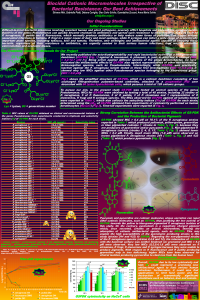
The global emerging infectious diseases caused by multi-drug resistant (MDR) bacteria necessitates worldwide systematic efforts to discover new effective antibacterial agents, replacing traditional antibiotics no longer active. For this purpose, we recently synthetized amino acid-modified cationic dendrimers and ammonium hydrochloride copolymers and evaluated their antibacterial activity on several MDR clinical isolates. As natural antibacterial peptides (AMPs), the prepared cationic macromolecules were capable to electrostatically interact with the membranes of pathogens, causing irreversible damage and inhibition of bacterial growth, regardless of their resistance to most conventional antibiotics. The dendrimers, depending on their amino acid composition, the number of cationic groups and the structure of the internal matrix, showed a target specific antibacterial activity. Indeed, those containing lysine and/or histidine, having 192 cationic groups (N+), were active on non-fermenting Gram-negative species. In particular, the G5K dendrimer showed a very low MIC value on P. aeruginosa (2.1 µM), comparable to that of colistin. The arginine and/or lysine dendrimers with 70-136 N+ were specifically active on Enterococci and Staphylococci, while the lysine dendrimer, with 128 N+, based on the results obtained so far, is active on Acinetobacter (6.3-12.7 µM). Unlike the dendrimers, the copolymers showed MICs as low as 0.6-1.2 µM against several Gram-positive and Gram-negative isolates. In this communication review, we examined the preparation and antibacterial effects of the best performing cationic macromolecules mentioned above. In turbidimetric and 24 hour-killing studies, both the dendrimers and copolymers here examined displayed a rapid bactericidal activity. Thanks to their physicochemical properties, suitable for biomedical applications, and to the observed bactericidal effects, our new cationic dendrimers and copolymers could represent novel tools, with narrow and/or broad-spectrum activity against MDR strains, regardless of their resistance to current antibiotics.
Keywords
Multi-drugs resistant bacteria
Gram-positive and Gram-negative bacteria
cationic biocidal dendrimers
cationic biocidal co-polymers
membranes disruptors.
Manuscript
sciforum-047519-2.pdf
Poster
ECMS_Poster_Alfei.pdf
Polyelectrolyte complexed nanoparticles loaded with eugenol-containing essential oils against Staphylococcus aureus and Pseudomonas aeruginosa
Morphological and biochemical value of nephrotoxic effects of doxorubicin and PLGA-doxorubicin