Event submissions
EventsThe 2nd International Electronic Conference on Foods - "Future Foods and Food Technologies for a Sustainable World"
Published

This submission belongs to the session 10. Poster of the event The 2nd International Electronic Conference on Foods - "Future Foods and Food Technologies for a Sustainable World"
Published date
03 Oct, 2021
Academic Editor
'%3e%3cpath%20d='M12.6657%2010.9104C12.4185%2010.325%2012.0599%209.79327%2011.6097%209.34482C11.1609%208.89508%2010.6293%208.5365%2010.0442%208.28888C10.0389%208.28626%2010.0337%208.28495%2010.0285%208.28233C10.8446%207.69279%2011.3752%206.73249%2011.3752%205.64904C11.3752%203.8542%209.92103%202.39999%208.1262%202.39999C6.33136%202.39999%204.87715%203.8542%204.87715%205.64904C4.87715%206.73249%205.40774%207.69279%206.22393%208.28364C6.21869%208.28626%206.21345%208.28757%206.20821%208.29019C5.62129%208.5378%205.09463%208.89284%204.64265%209.34613C4.1929%209.79493%203.83432%2010.3266%203.58671%2010.9117C3.34345%2011.4845%203.21226%2012.0987%203.20023%2012.7209C3.19988%2012.7349%203.20233%2012.7488%203.20744%2012.7619C3.21255%2012.7749%203.22022%2012.7867%203.22998%2012.7968C3.23975%2012.8068%203.25142%2012.8147%203.26431%2012.8202C3.2772%2012.8256%203.29105%2012.8284%203.30504%2012.8284H4.09109C4.14874%2012.8284%204.19459%2012.7825%204.1959%2012.7262C4.2221%2011.7148%204.62823%2010.7676%205.34617%2010.0497C6.08899%209.30683%207.0755%208.89808%208.1262%208.89808C9.17689%208.89808%2010.1634%209.30683%2010.9062%2010.0497C11.6242%2010.7676%2012.0303%2011.7148%2012.0565%2012.7262C12.0578%2012.7838%2012.1037%2012.8284%2012.1613%2012.8284H12.9474C12.9613%2012.8284%2012.9752%2012.8256%2012.9881%2012.8202C13.001%2012.8147%2013.0126%2012.8068%2013.0224%2012.7968C13.0322%2012.7867%2013.0398%2012.7749%2013.0449%2012.7619C13.0501%2012.7488%2013.0525%2012.7349%2013.0522%2012.7209C13.0391%2012.0947%2012.9094%2011.4855%2012.6657%2010.9104ZM8.1262%207.9024C7.52486%207.9024%206.9589%207.6679%206.53312%207.24211C6.10733%206.81633%205.87283%206.25037%205.87283%205.64904C5.87283%205.0477%206.10733%204.48174%206.53312%204.05596C6.9589%203.63018%207.52486%203.39567%208.1262%203.39567C8.72753%203.39567%209.29349%203.63018%209.71927%204.05596C10.1451%204.48174%2010.3796%205.0477%2010.3796%205.64904C10.3796%206.25037%2010.1451%206.81633%209.71927%207.24211C9.29349%207.6679%208.72753%207.9024%208.1262%207.9024Z'%20fill='%235D1EE1'/%3e%3c/g%3e%3c/svg%3e) Christopher J. Smith
Christopher J. SmithCitation
Manuel Muñoz-Checa, Mussa Makran, Gabriel López-García, Antonio Cilla, Reyes Barberá, Amparo Alegría, Guadalupe García-Llatas, INFOGEST 2.0 digestion method: Characterization of the sterol content in the digestion reagents, in Proceedings of The 2nd International Electronic Conference on Foods - "Future Foods and Food Technologies for a Sustainable World", 15 October–30 October 2021, MDPI: Basel, Switzerland, doi: 10.3390/Foods2021-10932
Share
Email
Facebook
Twitter
LinkedIn
INFOGEST 2.0 digestion method: Characterization of the sterol content in the digestion reagents
'%3e%3cpath%20d='M12.6647%2010.9104C12.4176%2010.325%2012.0589%209.7933%2011.6088%209.34485C11.16%208.89511%2010.6283%208.53653%2010.0432%208.28891C10.038%208.28629%2010.0327%208.28498%2010.0275%208.28236C10.8437%207.69282%2011.3743%206.73252%2011.3743%205.64907C11.3743%203.85423%209.92005%202.40002%208.12522%202.40002C6.33038%202.40002%204.87618%203.85423%204.87618%205.64907C4.87618%206.73252%205.40677%207.69282%206.22296%208.28367C6.21772%208.28629%206.21248%208.2876%206.20724%208.29022C5.62031%208.53783%205.09365%208.89287%204.64167%209.34616C4.19192%209.79496%203.83334%2010.3266%203.58573%2010.9117C3.34247%2011.4846%203.21128%2012.0987%203.19925%2012.721C3.1989%2012.735%203.20135%2012.7489%203.20646%2012.7619C3.21157%2012.7749%203.21924%2012.7868%203.22901%2012.7968C3.23877%2012.8068%203.25045%2012.8148%203.26334%2012.8202C3.27623%2012.8256%203.29007%2012.8284%203.30406%2012.8284H4.09012C4.14776%2012.8284%204.19362%2012.7825%204.19493%2012.7262C4.22113%2011.7148%204.62726%2010.7676%205.34519%2010.0497C6.08802%209.30686%207.07452%208.89811%208.12522%208.89811C9.17592%208.89811%2010.1624%209.30686%2010.9052%2010.0497C11.6232%2010.7676%2012.0293%2011.7148%2012.0555%2012.7262C12.0568%2012.7839%2012.1027%2012.8284%2012.1603%2012.8284H12.9464C12.9604%2012.8284%2012.9742%2012.8256%2012.9871%2012.8202C13%2012.8148%2013.0117%2012.8068%2013.0214%2012.7968C13.0312%2012.7868%2013.0389%2012.7749%2013.044%2012.7619C13.0491%2012.7489%2013.0515%2012.735%2013.0512%2012.721C13.0381%2012.0947%2012.9084%2011.4856%2012.6647%2010.9104ZM8.12522%207.90243C7.52388%207.90243%206.95792%207.66793%206.53214%207.24215C6.10636%206.81636%205.87185%206.2504%205.87185%205.64907C5.87185%205.04773%206.10636%204.48177%206.53214%204.05599C6.95792%203.63021%207.52388%203.3957%208.12522%203.3957C8.72655%203.3957%209.29252%203.63021%209.7183%204.05599C10.1441%204.48177%2010.3786%205.04773%2010.3786%205.64907C10.3786%206.2504%2010.1441%206.81636%209.7183%207.24215C9.29252%207.66793%208.72655%207.90243%208.12522%207.90243Z'%20fill='%235D1EE1'/%3e%3c/g%3e%3c/svg%3e)
Manuel Muñoz-Checa 1

Mussa Makran 1
Gabriel López-García 1

Antonio Cilla 1
Reyes Barberá 1

Amparo Alegría 1

Guadalupe García-Llatas 1
1. Nutrition and Food Science Area. Faculty of Pharmacy. University of Valencia. Av. Vicente Andrés Estellés s/n. 46100. Burjassot, Valencia, Spain.
Abstract
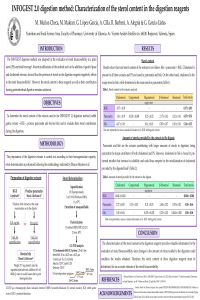
The INFOGEST digestion method was adapted for the evaluation of sterol bioaccessibility in a plant sterol (PS)-enriched beverage [1]. Recent modifications of the method such as the addition of gastric lipase and cholesterol esterase, showed that the presence of sterols in the digestion reagents has an important role on sterol bioaccessibility [2]. However, the specific sterol contribution from these extracts is unknown. Therefore, in the present study, the sterol content of the extracts used in the INFOGEST 2.0 digestion method (rabbit gastric extract – RGE –, porcine pancreatin and bovine bile) is determined by GC-FID. Results show that cholesterol content of the extracts is as follows: bovine bile > porcine pancreatin > RGE (4.07±0.18, 1.41±0.07 and 0.57±0.05 mg/g extract, respectively). Considering the amount of each extract added to the digestion, the greatest cholesterol contributor is porcine pancreatin followed by bovine bile and RGE (1.72±0.08, 1.00±0.04, and 0.046±0.004 mg, respectively). However, cholesterol in bile is found in pre-formed micelles that increase its solubility, and, therefore, it would compete for sterol micellarization against sterol provided by the digested foods. This fact has been observed in previous studies in which the cholesterol content of the blanks of digestion is inversely correlated with PS bioaccessibility [2]. On the other hand, bovine bile contains stigmasterol, β-sitosterol and sitostanol (0.14±0.01, 0.93±0.07 and 0.18±0.01 mg/g extract, respectively), while porcine pancreatin contains campesterol, stigmasterol, β-sitosterol and sitostanol (0.103±0.004, 0.25±0.02, 2.17±0.42 and 0.32±0.01 mg/g extract, respectively). Nevertheless, these PS present in the extracts appear in negligible amounts in the digestion blank, reflecting their low solubility vs. cholesterol. In conclusion, in order to optimize the INFOGEST 2.0 gastrointestinal method for the evaluation of sterol bioaccessibility, the characterization of the sterol content in the digestion reagents provides valuable information since it may condition their solubility.
References: [1]. Blanco-Morales et al. Food Funct, 2018, 9, 2080-2089; [2]. López-García et al. 2021, Book of abstracts “Virtual International Conference on Food Digestion”, pp 44 (https://www.cost-infogest.eu/content/download/4051/35805/file/V-ICFD%20Book%20of%20Abstracts.pdf)
Acknowledgements: Authors thank the financial support from project PID2019-104167RB-I00/AEI/10.13039/501100011033 (Ministry of Science and Innovation, Spain). Mussa Makran holds an FPU19/00156 grant from the Ministry of Universities (Spain). Gabriel López-García holds a junior doctor researcher contract within the aforementioned project (CPI-17-025).
Keywords
bovine bile
in vitro digestion
porcine pancreatin
rabbit gastric extract
sterols
Manuscript
Abstract - INFOGEST 2.0 digestion method Characterization of the sterol content in the digestion reagents.pdf
Poster
Poster - INFOGEST 2.0 digestion method Characterization of the sterol content in the digestion reagents.pdf
APPRAISING BLUEBERRY RESIDUES AS A NATURAL SOURCE OF BIOACTIVE COMPOUNDS
Characterization of active chitosan/hydroxypropyl methylcellulose/orange cellulose nanocrystals films enriched with LAE for food packaging applications