Event submissions
EventsThe 2nd International Electronic Conference on Foods - "Future Foods and Food Technologies for a Sustainable World"
Published

This submission belongs to the session 2. Novel Technologies and Future Food of the event The 2nd International Electronic Conference on Foods - "Future Foods and Food Technologies for a Sustainable World"
Published date
14 Oct, 2021
Academic Editor
'%3e%3cpath%20d='M12.6657%2010.9104C12.4185%2010.325%2012.0599%209.79327%2011.6097%209.34482C11.1609%208.89508%2010.6293%208.5365%2010.0442%208.28888C10.0389%208.28626%2010.0337%208.28495%2010.0285%208.28233C10.8446%207.69279%2011.3752%206.73249%2011.3752%205.64904C11.3752%203.8542%209.92103%202.39999%208.1262%202.39999C6.33136%202.39999%204.87715%203.8542%204.87715%205.64904C4.87715%206.73249%205.40774%207.69279%206.22393%208.28364C6.21869%208.28626%206.21345%208.28757%206.20821%208.29019C5.62129%208.5378%205.09463%208.89284%204.64265%209.34613C4.1929%209.79493%203.83432%2010.3266%203.58671%2010.9117C3.34345%2011.4845%203.21226%2012.0987%203.20023%2012.7209C3.19988%2012.7349%203.20233%2012.7488%203.20744%2012.7619C3.21255%2012.7749%203.22022%2012.7867%203.22998%2012.7968C3.23975%2012.8068%203.25142%2012.8147%203.26431%2012.8202C3.2772%2012.8256%203.29105%2012.8284%203.30504%2012.8284H4.09109C4.14874%2012.8284%204.19459%2012.7825%204.1959%2012.7262C4.2221%2011.7148%204.62823%2010.7676%205.34617%2010.0497C6.08899%209.30683%207.0755%208.89808%208.1262%208.89808C9.17689%208.89808%2010.1634%209.30683%2010.9062%2010.0497C11.6242%2010.7676%2012.0303%2011.7148%2012.0565%2012.7262C12.0578%2012.7838%2012.1037%2012.8284%2012.1613%2012.8284H12.9474C12.9613%2012.8284%2012.9752%2012.8256%2012.9881%2012.8202C13.001%2012.8147%2013.0126%2012.8068%2013.0224%2012.7968C13.0322%2012.7867%2013.0398%2012.7749%2013.0449%2012.7619C13.0501%2012.7488%2013.0525%2012.7349%2013.0522%2012.7209C13.0391%2012.0947%2012.9094%2011.4855%2012.6657%2010.9104ZM8.1262%207.9024C7.52486%207.9024%206.9589%207.6679%206.53312%207.24211C6.10733%206.81633%205.87283%206.25037%205.87283%205.64904C5.87283%205.0477%206.10733%204.48174%206.53312%204.05596C6.9589%203.63018%207.52486%203.39567%208.1262%203.39567C8.72753%203.39567%209.29349%203.63018%209.71927%204.05596C10.1451%204.48174%2010.3796%205.0477%2010.3796%205.64904C10.3796%206.25037%2010.1451%206.81633%209.71927%207.24211C9.29349%207.6679%208.72753%207.9024%208.1262%207.9024Z'%20fill='%235D1EE1'/%3e%3c/g%3e%3c/svg%3e) Diego Moreno-Fernandez
Diego Moreno-FernandezCitation
Victoria Olt, Adriana Maite Fernández, Claudia Alejandra Medrano, Jessica Báez, Tomás López, Santiago Jorcin, Development of a potential functional yogurt using bioactive compounds obtained from the by-product of the production of Tannat red wine, in Proceedings of The 2nd International Electronic Conference on Foods - "Future Foods and Food Technologies for a Sustainable World", 15 October–30 October 2021, MDPI: Basel, Switzerland, doi: 10.3390/Foods2021-10998
Share
Email
Facebook
Twitter
LinkedIn
Development of a potential functional yogurt using bioactive compounds obtained from the by-product of the production of Tannat red wine
'%3e%3cpath%20d='M12.6647%2010.9104C12.4176%2010.325%2012.0589%209.7933%2011.6088%209.34485C11.16%208.89511%2010.6283%208.53653%2010.0432%208.28891C10.038%208.28629%2010.0327%208.28498%2010.0275%208.28236C10.8437%207.69282%2011.3743%206.73252%2011.3743%205.64907C11.3743%203.85423%209.92005%202.40002%208.12522%202.40002C6.33038%202.40002%204.87618%203.85423%204.87618%205.64907C4.87618%206.73252%205.40677%207.69282%206.22296%208.28367C6.21772%208.28629%206.21248%208.2876%206.20724%208.29022C5.62031%208.53783%205.09365%208.89287%204.64167%209.34616C4.19192%209.79496%203.83334%2010.3266%203.58573%2010.9117C3.34247%2011.4846%203.21128%2012.0987%203.19925%2012.721C3.1989%2012.735%203.20135%2012.7489%203.20646%2012.7619C3.21157%2012.7749%203.21924%2012.7868%203.22901%2012.7968C3.23877%2012.8068%203.25045%2012.8148%203.26334%2012.8202C3.27623%2012.8256%203.29007%2012.8284%203.30406%2012.8284H4.09012C4.14776%2012.8284%204.19362%2012.7825%204.19493%2012.7262C4.22113%2011.7148%204.62726%2010.7676%205.34519%2010.0497C6.08802%209.30686%207.07452%208.89811%208.12522%208.89811C9.17592%208.89811%2010.1624%209.30686%2010.9052%2010.0497C11.6232%2010.7676%2012.0293%2011.7148%2012.0555%2012.7262C12.0568%2012.7839%2012.1027%2012.8284%2012.1603%2012.8284H12.9464C12.9604%2012.8284%2012.9742%2012.8256%2012.9871%2012.8202C13%2012.8148%2013.0117%2012.8068%2013.0214%2012.7968C13.0312%2012.7868%2013.0389%2012.7749%2013.044%2012.7619C13.0491%2012.7489%2013.0515%2012.735%2013.0512%2012.721C13.0381%2012.0947%2012.9084%2011.4856%2012.6647%2010.9104ZM8.12522%207.90243C7.52388%207.90243%206.95792%207.66793%206.53214%207.24215C6.10636%206.81636%205.87185%206.2504%205.87185%205.64907C5.87185%205.04773%206.10636%204.48177%206.53214%204.05599C6.95792%203.63021%207.52388%203.3957%208.12522%203.3957C8.72655%203.3957%209.29252%203.63021%209.7183%204.05599C10.1441%204.48177%2010.3786%205.04773%2010.3786%205.64907C10.3786%206.2504%2010.1441%206.81636%209.7183%207.24215C9.29252%207.66793%208.72655%207.90243%208.12522%207.90243Z'%20fill='%235D1EE1'/%3e%3c/g%3e%3c/svg%3e)
Victoria Olt 1
Adriana Maite Fernández 2

Claudia Alejandra Medrano 2

Jessica Báez 2
Tomás López 3
Santiago Jorcin 3
1. Departamento de Ciencia y Tecnología de Alimentos, Facultad de Química, Universidad de la República
2. UdelaR, Faculty of Chemistry, Department of Food Science and Technology, Montevideo, Uruguay
3. Technological University of Uruguay, Southwest Technological Institute Department of Dairy Science, Processing and Technology, La Paz, Colonia Piamontesa, Colonia, Uruguay
Abstract
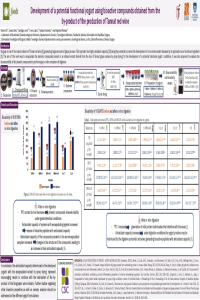
Tannat (Vitis vinifera cv. Tannat) grape pomace is an abundant by-product of the Uruguayan wine industry, which is mainly composed of peels and seeds. Tannat skin from grape pomace is a sustainable source of bioactive compounds and dietary fiber. In previous studies we have seen that it has antioxidant, antidiabetic, antiobesity and anti-inflammatory activity, with the potential to prevent the development of chronic diseases. In this work, the encapsulation of bioactive compounds of an ethanolic extract derived from Tannat grape skin by microparticles of whey protein isolate (without and with enzymatic hydrolysis) and inulin (3:1) is proposed, for its application in yogurt as a potential functional food. In addition, it is proposed to evaluate the bioaccessibility of the bioactive compounds for which an in vitro digestive simulation study is carried out simulating the conditions of the gastrointestinal tract. Among the most relevant results, it was found that the encapsulation efficiency was higher for the encapsulant without hydrolysis (29.7%). The incorporation of the encapsulated bioactive compounds in yogurt resulted in a significant increase (p<0.05) of antioxidant capacity by ORAC-FL compared to the controls. Also, after in vitro digestion, the extract did not lose antioxidant capacity (determinated by ABTS and ORAC-FL) and the different yogurt formulations have antioxidant capacity. In conclusion, spray drying is a suitable methodology for encapsulating Tannat grape skin extract for its application in yogurts as a natural colorant and antioxidant ingredient.
Keywords
Grape pomace
Tannat
Bioactivity
Bioaccessibility
Functional food
Yogurt
Manuscript
sciforum-048895 Proceedings-done.pdf
Poster
Poster.pdf
Impact of Fermentation Duration of Okara on Dough and Bread Properties
EMOTIONAL RESPONSE TO DIFFERENT TYPES OF CAKES THROUGH VISUAL ASSESSMENT