Event submissions
Published

This submission belongs to the session E. Biotechnologies and Functional Biopolymers of the event The 2nd International Online Conference on Polymer Science
Published date
01 Nov, 2021
Academic Editor
'%3e%3cpath%20d='M12.6657%2010.9104C12.4185%2010.325%2012.0599%209.79327%2011.6097%209.34482C11.1609%208.89508%2010.6293%208.5365%2010.0442%208.28888C10.0389%208.28626%2010.0337%208.28495%2010.0285%208.28233C10.8446%207.69279%2011.3752%206.73249%2011.3752%205.64904C11.3752%203.8542%209.92103%202.39999%208.1262%202.39999C6.33136%202.39999%204.87715%203.8542%204.87715%205.64904C4.87715%206.73249%205.40774%207.69279%206.22393%208.28364C6.21869%208.28626%206.21345%208.28757%206.20821%208.29019C5.62129%208.5378%205.09463%208.89284%204.64265%209.34613C4.1929%209.79493%203.83432%2010.3266%203.58671%2010.9117C3.34345%2011.4845%203.21226%2012.0987%203.20023%2012.7209C3.19988%2012.7349%203.20233%2012.7488%203.20744%2012.7619C3.21255%2012.7749%203.22022%2012.7867%203.22998%2012.7968C3.23975%2012.8068%203.25142%2012.8147%203.26431%2012.8202C3.2772%2012.8256%203.29105%2012.8284%203.30504%2012.8284H4.09109C4.14874%2012.8284%204.19459%2012.7825%204.1959%2012.7262C4.2221%2011.7148%204.62823%2010.7676%205.34617%2010.0497C6.08899%209.30683%207.0755%208.89808%208.1262%208.89808C9.17689%208.89808%2010.1634%209.30683%2010.9062%2010.0497C11.6242%2010.7676%2012.0303%2011.7148%2012.0565%2012.7262C12.0578%2012.7838%2012.1037%2012.8284%2012.1613%2012.8284H12.9474C12.9613%2012.8284%2012.9752%2012.8256%2012.9881%2012.8202C13.001%2012.8147%2013.0126%2012.8068%2013.0224%2012.7968C13.0322%2012.7867%2013.0398%2012.7749%2013.0449%2012.7619C13.0501%2012.7488%2013.0525%2012.7349%2013.0522%2012.7209C13.0391%2012.0947%2012.9094%2011.4855%2012.6657%2010.9104ZM8.1262%207.9024C7.52486%207.9024%206.9589%207.6679%206.53312%207.24211C6.10733%206.81633%205.87283%206.25037%205.87283%205.64904C5.87283%205.0477%206.10733%204.48174%206.53312%204.05596C6.9589%203.63018%207.52486%203.39567%208.1262%203.39567C8.72753%203.39567%209.29349%203.63018%209.71927%204.05596C10.1451%204.48174%2010.3796%205.0477%2010.3796%205.64904C10.3796%206.25037%2010.1451%206.81633%209.71927%207.24211C9.29349%207.6679%208.72753%207.9024%208.1262%207.9024Z'%20fill='%235D1EE1'/%3e%3c/g%3e%3c/svg%3e) Marina Arrieta
Marina ArrietaCitation
Christina I. Gkountela, Dimitrios N. Markoulakis, Dimitrios M. Korres, Stamatina N. Vouyiouka, Evaluation of the parameters of poly(butylene succinate) enzymatic polymerization, in Proceedings of The 2nd International Online Conference on Polymer Science, 1 November–15 November 2021, MDPI: Basel, Switzerland, doi: 10.3390/IOCPS2021-11274
Share
Email
Facebook
Twitter
LinkedIn
Evaluation of the parameters of poly(butylene succinate) enzymatic polymerization
'%3e%3cpath%20d='M12.6647%2010.9104C12.4176%2010.325%2012.0589%209.7933%2011.6088%209.34485C11.16%208.89511%2010.6283%208.53653%2010.0432%208.28891C10.038%208.28629%2010.0327%208.28498%2010.0275%208.28236C10.8437%207.69282%2011.3743%206.73252%2011.3743%205.64907C11.3743%203.85423%209.92005%202.40002%208.12522%202.40002C6.33038%202.40002%204.87618%203.85423%204.87618%205.64907C4.87618%206.73252%205.40677%207.69282%206.22296%208.28367C6.21772%208.28629%206.21248%208.2876%206.20724%208.29022C5.62031%208.53783%205.09365%208.89287%204.64167%209.34616C4.19192%209.79496%203.83334%2010.3266%203.58573%2010.9117C3.34247%2011.4846%203.21128%2012.0987%203.19925%2012.721C3.1989%2012.735%203.20135%2012.7489%203.20646%2012.7619C3.21157%2012.7749%203.21924%2012.7868%203.22901%2012.7968C3.23877%2012.8068%203.25045%2012.8148%203.26334%2012.8202C3.27623%2012.8256%203.29007%2012.8284%203.30406%2012.8284H4.09012C4.14776%2012.8284%204.19362%2012.7825%204.19493%2012.7262C4.22113%2011.7148%204.62726%2010.7676%205.34519%2010.0497C6.08802%209.30686%207.07452%208.89811%208.12522%208.89811C9.17592%208.89811%2010.1624%209.30686%2010.9052%2010.0497C11.6232%2010.7676%2012.0293%2011.7148%2012.0555%2012.7262C12.0568%2012.7839%2012.1027%2012.8284%2012.1603%2012.8284H12.9464C12.9604%2012.8284%2012.9742%2012.8256%2012.9871%2012.8202C13%2012.8148%2013.0117%2012.8068%2013.0214%2012.7968C13.0312%2012.7868%2013.0389%2012.7749%2013.044%2012.7619C13.0491%2012.7489%2013.0515%2012.735%2013.0512%2012.721C13.0381%2012.0947%2012.9084%2011.4856%2012.6647%2010.9104ZM8.12522%207.90243C7.52388%207.90243%206.95792%207.66793%206.53214%207.24215C6.10636%206.81636%205.87185%206.2504%205.87185%205.64907C5.87185%205.04773%206.10636%204.48177%206.53214%204.05599C6.95792%203.63021%207.52388%203.3957%208.12522%203.3957C8.72655%203.3957%209.29252%203.63021%209.7183%204.05599C10.1441%204.48177%2010.3786%205.04773%2010.3786%205.64907C10.3786%206.2504%2010.1441%206.81636%209.7183%207.24215C9.29252%207.66793%208.72655%207.90243%208.12522%207.90243Z'%20fill='%235D1EE1'/%3e%3c/g%3e%3c/svg%3e)
Christina I. Gkountela 1
Dimitrios N. Markoulakis 1

Dimitrios M. Korres 1

Stamatina N. Vouyiouka 1
1. Laboratory of Polymer Technology, School of Chemical Engineering, National Technical University of Athens, Greece
Abstract
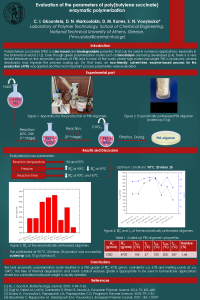
Poly(butylene succinate) (PBS) is a bio-based and biodegradable polyester, that can be used in numerous applications ranging from clothing to food packaging and from car industry to biomedical sector (e.g. drug release systems). PBS conventional polymerization method requires the presence of metal-based transesterification catalysts (e.g. titanium-based catalysts) and high reaction temperatures (T>150 °C). However, under these conditions side reactions may occur along with undesirable yellowing.
Green polymerization routes such as biocatalysis are being developed. However, there is a very limited literature on the enzymatic synthesis of PBS. Additionally, in most of the works where high-molecular-weight PBS is produced from the typical monomers (BDO and DES), several drawbacks e.g. the use of various solvents for polymer isolation, the requirement of high vacuum for by-products removal may impede the process scaling up.
On that basis, an eco-friendly, solvent-free, enzyme-based process for the production of PBS was applied. It was conducted in two steps with the use of Novozym 435: the first at 40°C, under atmospheric pressure for 24 h and the second at 90°C, 20 mbar for 2 h. This work focused on the optimization of the second step’s conditions, by varying reaction temperature (80°C-95°C), pressure (20 mbar, 200 mbar) and reaction time (2h, 6h). Based on the optimization results, the process was scaled up (ca. 10 g of product). A free of thermal degradation and metal catalyst residues PBS grade of weight-average molecular weight 4700 g/mol and melting point 103°C was obtained.
Keywords
bio-based/biodegradable polyester
enzymatic polymerization
lipase
poly(butylene succinate)
Manuscript
Poster_Gkountela_Christina.pdf
Poster
Poster_Gkountela_Christina.pdf
3D-Printed Polymeric heels for Orthopaedic Footwear: the Study of the Possibilities of Using Different Polymers and Methods
Antitumor cytokine DR5-B-conjugated polymeric poly(N-vinylpyrrolidone) nanoparticles with enhanced cytotoxicity in human colon carcinoma 3D cell spheroids.