Event submissions
Published

This submission belongs to the session S5. Round table on natural products of the event 7th International Electronic Conference on Medicinal Chemistry
Published date
02 Nov, 2021
Academic Editor
'%3e%3cpath%20d='M12.6657%2010.9104C12.4185%2010.325%2012.0599%209.79327%2011.6097%209.34482C11.1609%208.89508%2010.6293%208.5365%2010.0442%208.28888C10.0389%208.28626%2010.0337%208.28495%2010.0285%208.28233C10.8446%207.69279%2011.3752%206.73249%2011.3752%205.64904C11.3752%203.8542%209.92103%202.39999%208.1262%202.39999C6.33136%202.39999%204.87715%203.8542%204.87715%205.64904C4.87715%206.73249%205.40774%207.69279%206.22393%208.28364C6.21869%208.28626%206.21345%208.28757%206.20821%208.29019C5.62129%208.5378%205.09463%208.89284%204.64265%209.34613C4.1929%209.79493%203.83432%2010.3266%203.58671%2010.9117C3.34345%2011.4845%203.21226%2012.0987%203.20023%2012.7209C3.19988%2012.7349%203.20233%2012.7488%203.20744%2012.7619C3.21255%2012.7749%203.22022%2012.7867%203.22998%2012.7968C3.23975%2012.8068%203.25142%2012.8147%203.26431%2012.8202C3.2772%2012.8256%203.29105%2012.8284%203.30504%2012.8284H4.09109C4.14874%2012.8284%204.19459%2012.7825%204.1959%2012.7262C4.2221%2011.7148%204.62823%2010.7676%205.34617%2010.0497C6.08899%209.30683%207.0755%208.89808%208.1262%208.89808C9.17689%208.89808%2010.1634%209.30683%2010.9062%2010.0497C11.6242%2010.7676%2012.0303%2011.7148%2012.0565%2012.7262C12.0578%2012.7838%2012.1037%2012.8284%2012.1613%2012.8284H12.9474C12.9613%2012.8284%2012.9752%2012.8256%2012.9881%2012.8202C13.001%2012.8147%2013.0126%2012.8068%2013.0224%2012.7968C13.0322%2012.7867%2013.0398%2012.7749%2013.0449%2012.7619C13.0501%2012.7488%2013.0525%2012.7349%2013.0522%2012.7209C13.0391%2012.0947%2012.9094%2011.4855%2012.6657%2010.9104ZM8.1262%207.9024C7.52486%207.9024%206.9589%207.6679%206.53312%207.24211C6.10733%206.81633%205.87283%206.25037%205.87283%205.64904C5.87283%205.0477%206.10733%204.48174%206.53312%204.05596C6.9589%203.63018%207.52486%203.39567%208.1262%203.39567C8.72753%203.39567%209.29349%203.63018%209.71927%204.05596C10.1451%204.48174%2010.3796%205.0477%2010.3796%205.64904C10.3796%206.25037%2010.1451%206.81633%209.71927%207.24211C9.29349%207.6679%208.72753%207.9024%208.1262%207.9024Z'%20fill='%235D1EE1'/%3e%3c/g%3e%3c/svg%3e) Jean Jacques Vanden Eynde
Jean Jacques Vanden EyndeCitation
Ngozi Dorathy Idoko, Ifeoma Felicia Chukwuma, Florence Nkechi Nworah, Parker Elijah Joshua, Okwesilieze Fred Chiletugo Nwodo, Elucidation of immunomodulatory potential of methanol extracts of Loranthus micranthus leaves from two host plants: Guajava and Parkia biglobosa, in Proceedings of 7th International Electronic Conference on Medicinal Chemistry, 1 November–30 November 2021, MDPI: Basel, Switzerland, doi: 10.3390/ECMC2021-11423
Share
Email
Facebook
Twitter
LinkedIn
Elucidation of immunomodulatory potential of methanol extracts of Loranthus micranthus leaves from two host plants: Guajava and Parkia biglobosa
'%3e%3cpath%20d='M12.6647%2010.9104C12.4176%2010.325%2012.0589%209.7933%2011.6088%209.34485C11.16%208.89511%2010.6283%208.53653%2010.0432%208.28891C10.038%208.28629%2010.0327%208.28498%2010.0275%208.28236C10.8437%207.69282%2011.3743%206.73252%2011.3743%205.64907C11.3743%203.85423%209.92005%202.40002%208.12522%202.40002C6.33038%202.40002%204.87618%203.85423%204.87618%205.64907C4.87618%206.73252%205.40677%207.69282%206.22296%208.28367C6.21772%208.28629%206.21248%208.2876%206.20724%208.29022C5.62031%208.53783%205.09365%208.89287%204.64167%209.34616C4.19192%209.79496%203.83334%2010.3266%203.58573%2010.9117C3.34247%2011.4846%203.21128%2012.0987%203.19925%2012.721C3.1989%2012.735%203.20135%2012.7489%203.20646%2012.7619C3.21157%2012.7749%203.21924%2012.7868%203.22901%2012.7968C3.23877%2012.8068%203.25045%2012.8148%203.26334%2012.8202C3.27623%2012.8256%203.29007%2012.8284%203.30406%2012.8284H4.09012C4.14776%2012.8284%204.19362%2012.7825%204.19493%2012.7262C4.22113%2011.7148%204.62726%2010.7676%205.34519%2010.0497C6.08802%209.30686%207.07452%208.89811%208.12522%208.89811C9.17592%208.89811%2010.1624%209.30686%2010.9052%2010.0497C11.6232%2010.7676%2012.0293%2011.7148%2012.0555%2012.7262C12.0568%2012.7839%2012.1027%2012.8284%2012.1603%2012.8284H12.9464C12.9604%2012.8284%2012.9742%2012.8256%2012.9871%2012.8202C13%2012.8148%2013.0117%2012.8068%2013.0214%2012.7968C13.0312%2012.7868%2013.0389%2012.7749%2013.044%2012.7619C13.0491%2012.7489%2013.0515%2012.735%2013.0512%2012.721C13.0381%2012.0947%2012.9084%2011.4856%2012.6647%2010.9104ZM8.12522%207.90243C7.52388%207.90243%206.95792%207.66793%206.53214%207.24215C6.10636%206.81636%205.87185%206.2504%205.87185%205.64907C5.87185%205.04773%206.10636%204.48177%206.53214%204.05599C6.95792%203.63021%207.52388%203.3957%208.12522%203.3957C8.72655%203.3957%209.29252%203.63021%209.7183%204.05599C10.1441%204.48177%2010.3786%205.04773%2010.3786%205.64907C10.3786%206.2504%2010.1441%206.81636%209.7183%207.24215C9.29252%207.66793%208.72655%207.90243%208.12522%207.90243Z'%20fill='%235D1EE1'/%3e%3c/g%3e%3c/svg%3e)
Ngozi Dorathy Idoko 1
Ifeoma Felicia Chukwuma 2
Florence Nkechi Nworah 2
Parker Elijah Joshua 2
Okwesilieze Fred Chiletugo Nwodo 1,3
1. Department of Biochemistry, Faculty of Biological Sciences, University of Nigeria, Nsukka, Nigeria.
2. Department of Biochemistry, Faculty of Biological Sciences, University of Nigeria, Nsukka, Nigeria
3. Department of Biochemistry, Faculty of Medical, Pharmaceutical and Health Sciences, University of Mkar, Mkar Gboko, Nigeria
Abstract
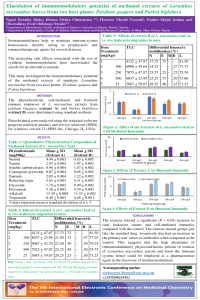
Immunomodulators help to maintain immune-system homeostasis, thereby acting as prophylactic and immunotherapeutic agents for several diseases. The increasing side effects associated with the use of synthetic immunomodulators have necessitated the search for an alternative remedy. This study investigated the immunomodulatory potential of the methanol extracts of epiphytic Loranthus micranthus from two host plants: Guajava and Parkia biglobosa. The phytochemicals, cell-mediated, and humoral immune responses were determined using standard methods. The result of the phytochemical screening shows that both extracts contain flavonoids, alkaloids, tannins, steroids, glycosides, saponins, carbohydrates, reducing sugar and cyanogenic glycosides in varying quantities, with the loranthus micranthus harvested from psidium guajava containing a higher quantity of the phytoconstituents. The extracts were found to be safe up to a dose of 5000 mg/kg body weight and elicited a significant (P < 0.05) increase in total leukocyte counts compared with the control. There was a significant (P < 0.05) increase in cell-mediated immunity as evidenced by an increase in edema produced after induction of delayed-type hypersensitivity in treated groups compared with the control. The extracts treated groups just like the standard drug. Levamisole also had an increase in the primary titer values of antibodies when compared to the control. Though the secondary titer value was also higher than the primary titer value, confirming the presence of memory cells after the first challenge. This suggests that the extracts of Loranthus micranthus restore and boost the immune system, hence could be employed as a pharmaceutical agent in the discovery of immunomodulators.
Keywords
Antibodies
cell mediated immunity
humoral immunity
immunomodulatory
loranthus micranthus
phytochemicals.
Poster
Dr Chukwuma SCIFORUM POSTER.pdf
Antioxidant and enzyme inhibiting properties of extracts of in vitro grown Nepeta cyrenaica Quézel & Zaffran (Lamiaceae)
GC-MS profile and antibacterial potency of thermophilic Bacillus licheniformis LMB3701 isolated from Dbagh hot spring in Algeria