Event submissions
Published

This submission belongs to the session S4. Fighting cancers of the event 7th International Electronic Conference on Medicinal Chemistry
Published date
03 Nov, 2021
Academic Editor
'%3e%3cpath%20d='M12.6657%2010.9104C12.4185%2010.325%2012.0599%209.79327%2011.6097%209.34482C11.1609%208.89508%2010.6293%208.5365%2010.0442%208.28888C10.0389%208.28626%2010.0337%208.28495%2010.0285%208.28233C10.8446%207.69279%2011.3752%206.73249%2011.3752%205.64904C11.3752%203.8542%209.92103%202.39999%208.1262%202.39999C6.33136%202.39999%204.87715%203.8542%204.87715%205.64904C4.87715%206.73249%205.40774%207.69279%206.22393%208.28364C6.21869%208.28626%206.21345%208.28757%206.20821%208.29019C5.62129%208.5378%205.09463%208.89284%204.64265%209.34613C4.1929%209.79493%203.83432%2010.3266%203.58671%2010.9117C3.34345%2011.4845%203.21226%2012.0987%203.20023%2012.7209C3.19988%2012.7349%203.20233%2012.7488%203.20744%2012.7619C3.21255%2012.7749%203.22022%2012.7867%203.22998%2012.7968C3.23975%2012.8068%203.25142%2012.8147%203.26431%2012.8202C3.2772%2012.8256%203.29105%2012.8284%203.30504%2012.8284H4.09109C4.14874%2012.8284%204.19459%2012.7825%204.1959%2012.7262C4.2221%2011.7148%204.62823%2010.7676%205.34617%2010.0497C6.08899%209.30683%207.0755%208.89808%208.1262%208.89808C9.17689%208.89808%2010.1634%209.30683%2010.9062%2010.0497C11.6242%2010.7676%2012.0303%2011.7148%2012.0565%2012.7262C12.0578%2012.7838%2012.1037%2012.8284%2012.1613%2012.8284H12.9474C12.9613%2012.8284%2012.9752%2012.8256%2012.9881%2012.8202C13.001%2012.8147%2013.0126%2012.8068%2013.0224%2012.7968C13.0322%2012.7867%2013.0398%2012.7749%2013.0449%2012.7619C13.0501%2012.7488%2013.0525%2012.7349%2013.0522%2012.7209C13.0391%2012.0947%2012.9094%2011.4855%2012.6657%2010.9104ZM8.1262%207.9024C7.52486%207.9024%206.9589%207.6679%206.53312%207.24211C6.10733%206.81633%205.87283%206.25037%205.87283%205.64904C5.87283%205.0477%206.10733%204.48174%206.53312%204.05596C6.9589%203.63018%207.52486%203.39567%208.1262%203.39567C8.72753%203.39567%209.29349%203.63018%209.71927%204.05596C10.1451%204.48174%2010.3796%205.0477%2010.3796%205.64904C10.3796%206.25037%2010.1451%206.81633%209.71927%207.24211C9.29349%207.6679%208.72753%207.9024%208.1262%207.9024Z'%20fill='%235D1EE1'/%3e%3c/g%3e%3c/svg%3e) Jean Jacques Vanden Eynde
Jean Jacques Vanden EyndeCitation
Uzoamaka Adaobi Okoli, Michael Tochukwu Okafor, Chioli Pascal Chijioke, Iroka Joseph Udeinya, Hormetic low dose effect of DFHCOP-A depletes ionic calcium and elevates serum pH to inhibit cancer in Nigerian triple-negative breast cancer PDX model, in Proceedings of 7th International Electronic Conference on Medicinal Chemistry, 1 November–30 November 2021, MDPI: Basel, Switzerland, doi: 10.3390/ECMC2021-11529
Share
Email
Facebook
Twitter
LinkedIn
Hormetic low dose effect of DFHCOP-A depletes ionic calcium and elevates serum pH to inhibit cancer in Nigerian triple-negative breast cancer PDX model
'%3e%3cpath%20d='M12.6647%2010.9104C12.4176%2010.325%2012.0589%209.7933%2011.6088%209.34485C11.16%208.89511%2010.6283%208.53653%2010.0432%208.28891C10.038%208.28629%2010.0327%208.28498%2010.0275%208.28236C10.8437%207.69282%2011.3743%206.73252%2011.3743%205.64907C11.3743%203.85423%209.92005%202.40002%208.12522%202.40002C6.33038%202.40002%204.87618%203.85423%204.87618%205.64907C4.87618%206.73252%205.40677%207.69282%206.22296%208.28367C6.21772%208.28629%206.21248%208.2876%206.20724%208.29022C5.62031%208.53783%205.09365%208.89287%204.64167%209.34616C4.19192%209.79496%203.83334%2010.3266%203.58573%2010.9117C3.34247%2011.4846%203.21128%2012.0987%203.19925%2012.721C3.1989%2012.735%203.20135%2012.7489%203.20646%2012.7619C3.21157%2012.7749%203.21924%2012.7868%203.22901%2012.7968C3.23877%2012.8068%203.25045%2012.8148%203.26334%2012.8202C3.27623%2012.8256%203.29007%2012.8284%203.30406%2012.8284H4.09012C4.14776%2012.8284%204.19362%2012.7825%204.19493%2012.7262C4.22113%2011.7148%204.62726%2010.7676%205.34519%2010.0497C6.08802%209.30686%207.07452%208.89811%208.12522%208.89811C9.17592%208.89811%2010.1624%209.30686%2010.9052%2010.0497C11.6232%2010.7676%2012.0293%2011.7148%2012.0555%2012.7262C12.0568%2012.7839%2012.1027%2012.8284%2012.1603%2012.8284H12.9464C12.9604%2012.8284%2012.9742%2012.8256%2012.9871%2012.8202C13%2012.8148%2013.0117%2012.8068%2013.0214%2012.7968C13.0312%2012.7868%2013.0389%2012.7749%2013.044%2012.7619C13.0491%2012.7489%2013.0515%2012.735%2013.0512%2012.721C13.0381%2012.0947%2012.9084%2011.4856%2012.6647%2010.9104ZM8.12522%207.90243C7.52388%207.90243%206.95792%207.66793%206.53214%207.24215C6.10636%206.81636%205.87185%206.2504%205.87185%205.64907C5.87185%205.04773%206.10636%204.48177%206.53214%204.05599C6.95792%203.63021%207.52388%203.3957%208.12522%203.3957C8.72655%203.3957%209.29252%203.63021%209.7183%204.05599C10.1441%204.48177%2010.3786%205.04773%2010.3786%205.64907C10.3786%206.2504%2010.1441%206.81636%209.7183%207.24215C9.29252%207.66793%208.72655%207.90243%208.12522%207.90243Z'%20fill='%235D1EE1'/%3e%3c/g%3e%3c/svg%3e)
Uzoamaka Adaobi Okoli 1,2
Michael Tochukwu Okafor 1,2
Chioli Pascal Chijioke 1
Iroka Joseph Udeinya 3
1. Department of Pharmacology and Therapeutics, Faculty of Medical Sciences, College of Medicine University of Nigeria Nsukka
2. Basic and Translational Cancer Research Group, College of Medicine, University of Nigeria Nsukka
3. Department of Pharmacology and Therapeutics, College of Medicine, Enugu State University of Science and Technology, Enugu State, Nigeria
Abstract
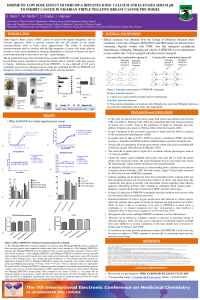
Introduction Triple-Negative Breast Cancer (TNBC) is clinically aggressive. There is growing evidence that low pH (acidity) of the tumour microenvironment tends to boost cancer aggressiveness. The acidity of tumour microenvironment tends to correlate with high TNBC chemo-resistance. Strategic manipulation to raise pH of tumour micro-environment may help in discovery of new anti-cancer therapies. The de-seeded fruit head of oil palm (DFHCOP), ash filtrate, is used as an ingredient of food delicacies like ‘Abacha’ (made from cassava) in Africa. An anhydrous chemical derived from DFHCOP(-A) has high pH of 10.5 and remarkably non-corrosive. Although no known study has established the effect of DFHCOP-A in altering pH of the tumour microenvironment.
Material and Methods Ethical clearance was obtained from the College of Medicine Research Ethics Committee, University of Nigeria (065/03/2019), and Patient-Derived Xenograft (PDX) model from a consenting Nigerian woman with TNBC who had undergone neoadjuvant chemotherapy. 100mg/kg, 300mg/kg and vehicle of DFHCOP-A were administered to mice models after 1-week xenograft and after 6-weeks xenograft in a time/dose-dependent manner.
Results and Discussions 100mg/kg DFHCOP-A treatment inhibited cancer growth while 300mg/kg DFHCOP-A had no significant effect on cancer growth when compared to vehicle control after 1-week xenograft. Paradoxically, there was significant elevation of serum pH and ionic calcium depletion in 100mg/kg treated group when compared to the vehicle control and 300mg/kg-treated groups.
Conclusion This study provides preliminary evidence that DFHCOP-A at low dose may increase pH of extracellular space to potentiate cancer drug.
Keywords
Triple Negative Breast Cancer
pH
Tumour microenviroment
patient derived xenograft
Nigerian woman
DFHCOP-A
Poster
7th ECMC Uzoamaka Okoli.pdf
Formylation of bile acid oxo derivatives - synthesis of new glucocorticoid precursors
Cyanoarylporphyrazines with high viscosity sensitivity in dosimetry-assisted photodynamic cancer treatment