Event submissions
EventsThe 2nd International Electronic Conference on Animals - Global Sustainability and Animals: Welfare, Policies and Technologies
Published
 10.3390/IECA2021-12025 (registering DOI)
 This submission belongs to the session B. Sustainability of animal use and demand for animal products of the event The 2nd International Electronic Conference on Animals - Global Sustainability and Animals: Welfare, Policies and Technologies
Published date
02 Dec, 2021
Academic Editor
'%3e%3cpath%20d='M12.6657%2010.9104C12.4185%2010.325%2012.0599%209.79327%2011.6097%209.34482C11.1609%208.89508%2010.6293%208.5365%2010.0442%208.28888C10.0389%208.28626%2010.0337%208.28495%2010.0285%208.28233C10.8446%207.69279%2011.3752%206.73249%2011.3752%205.64904C11.3752%203.8542%209.92103%202.39999%208.1262%202.39999C6.33136%202.39999%204.87715%203.8542%204.87715%205.64904C4.87715%206.73249%205.40774%207.69279%206.22393%208.28364C6.21869%208.28626%206.21345%208.28757%206.20821%208.29019C5.62129%208.5378%205.09463%208.89284%204.64265%209.34613C4.1929%209.79493%203.83432%2010.3266%203.58671%2010.9117C3.34345%2011.4845%203.21226%2012.0987%203.20023%2012.7209C3.19988%2012.7349%203.20233%2012.7488%203.20744%2012.7619C3.21255%2012.7749%203.22022%2012.7867%203.22998%2012.7968C3.23975%2012.8068%203.25142%2012.8147%203.26431%2012.8202C3.2772%2012.8256%203.29105%2012.8284%203.30504%2012.8284H4.09109C4.14874%2012.8284%204.19459%2012.7825%204.1959%2012.7262C4.2221%2011.7148%204.62823%2010.7676%205.34617%2010.0497C6.08899%209.30683%207.0755%208.89808%208.1262%208.89808C9.17689%208.89808%2010.1634%209.30683%2010.9062%2010.0497C11.6242%2010.7676%2012.0303%2011.7148%2012.0565%2012.7262C12.0578%2012.7838%2012.1037%2012.8284%2012.1613%2012.8284H12.9474C12.9613%2012.8284%2012.9752%2012.8256%2012.9881%2012.8202C13.001%2012.8147%2013.0126%2012.8068%2013.0224%2012.7968C13.0322%2012.7867%2013.0398%2012.7749%2013.0449%2012.7619C13.0501%2012.7488%2013.0525%2012.7349%2013.0522%2012.7209C13.0391%2012.0947%2012.9094%2011.4855%2012.6657%2010.9104ZM8.1262%207.9024C7.52486%207.9024%206.9589%207.6679%206.53312%207.24211C6.10733%206.81633%205.87283%206.25037%205.87283%205.64904C5.87283%205.0477%206.10733%204.48174%206.53312%204.05596C6.9589%203.63018%207.52486%203.39567%208.1262%203.39567C8.72753%203.39567%209.29349%203.63018%209.71927%204.05596C10.1451%204.48174%2010.3796%205.0477%2010.3796%205.64904C10.3796%206.25037%2010.1451%206.81633%209.71927%207.24211C9.29349%207.6679%208.72753%207.9024%208.1262%207.9024Z'%20fill='%235D1EE1'/%3e%3c/g%3e%3c/svg%3e) Andrea Pezzuolo
Andrea PezzuoloCitation
Ernie Muneerah Mohd Adhan, Salleh Sheikh Ibrahim, Zulkifli Ishak, Farid Zamani Che Rose, Saifullizam Abd Kadir, Review of Factors Influencing Local Beef Production in Malaysia, in Proceedings of The 2nd International Electronic Conference on Animals - Global Sustainability and Animals: Welfare, Policies and Technologies, 29 November–13 December 2021, MDPI: Basel, Switzerland, doi: 10.3390/IECA2021-12025
Share
Email
Facebook
Twitter
LinkedIn
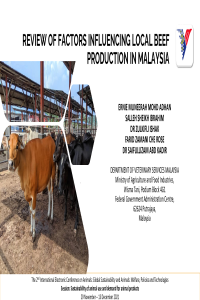
Review of Factors Influencing Local Beef Production in Malaysia
'%3e%3cpath%20d='M12.6647%2010.9104C12.4176%2010.325%2012.0589%209.7933%2011.6088%209.34485C11.16%208.89511%2010.6283%208.53653%2010.0432%208.28891C10.038%208.28629%2010.0327%208.28498%2010.0275%208.28236C10.8437%207.69282%2011.3743%206.73252%2011.3743%205.64907C11.3743%203.85423%209.92005%202.40002%208.12522%202.40002C6.33038%202.40002%204.87618%203.85423%204.87618%205.64907C4.87618%206.73252%205.40677%207.69282%206.22296%208.28367C6.21772%208.28629%206.21248%208.2876%206.20724%208.29022C5.62031%208.53783%205.09365%208.89287%204.64167%209.34616C4.19192%209.79496%203.83334%2010.3266%203.58573%2010.9117C3.34247%2011.4846%203.21128%2012.0987%203.19925%2012.721C3.1989%2012.735%203.20135%2012.7489%203.20646%2012.7619C3.21157%2012.7749%203.21924%2012.7868%203.22901%2012.7968C3.23877%2012.8068%203.25045%2012.8148%203.26334%2012.8202C3.27623%2012.8256%203.29007%2012.8284%203.30406%2012.8284H4.09012C4.14776%2012.8284%204.19362%2012.7825%204.19493%2012.7262C4.22113%2011.7148%204.62726%2010.7676%205.34519%2010.0497C6.08802%209.30686%207.07452%208.89811%208.12522%208.89811C9.17592%208.89811%2010.1624%209.30686%2010.9052%2010.0497C11.6232%2010.7676%2012.0293%2011.7148%2012.0555%2012.7262C12.0568%2012.7839%2012.1027%2012.8284%2012.1603%2012.8284H12.9464C12.9604%2012.8284%2012.9742%2012.8256%2012.9871%2012.8202C13%2012.8148%2013.0117%2012.8068%2013.0214%2012.7968C13.0312%2012.7868%2013.0389%2012.7749%2013.044%2012.7619C13.0491%2012.7489%2013.0515%2012.735%2013.0512%2012.721C13.0381%2012.0947%2012.9084%2011.4856%2012.6647%2010.9104ZM8.12522%207.90243C7.52388%207.90243%206.95792%207.66793%206.53214%207.24215C6.10636%206.81636%205.87185%206.2504%205.87185%205.64907C5.87185%205.04773%206.10636%204.48177%206.53214%204.05599C6.95792%203.63021%207.52388%203.3957%208.12522%203.3957C8.72655%203.3957%209.29252%203.63021%209.7183%204.05599C10.1441%204.48177%2010.3786%205.04773%2010.3786%205.64907C10.3786%206.2504%2010.1441%206.81636%209.7183%207.24215C9.29252%207.66793%208.72655%207.90243%208.12522%207.90243Z'%20fill='%235D1EE1'/%3e%3c/g%3e%3c/svg%3e)
Ernie Muneerah Mohd Adhan 1
Salleh Sheikh Ibrahim 1
Zulkifli Ishak 1
Farid Zamani Che Rose 1
Saifullizam Abd Kadir 1
1. Department of Veterinary Services Malaysia
Abstract
Malaysian local beef production, which is defined by meat produced from both domestic and imported slaughter cattle and buffalo, confer to merely 22.28 percent of total beef consumption in the year 2019. The inadequacy of local beef output necessitated the importation of chilled, frozen, and processed beef and buffalo meat, in tandem with live bovine animals. The primary source for imported live bovine animals was from Australia, with the neighboring country Thailand being the second largest, totaling approximately 84.1 and 15.8 percent respectively of the imported segment market share in the year 2020. In parallel, bovine meat was sourced primarily from India in frozen form (mainly buffalo meat), which made up 79.9 percent of all frozen bovine meat imported in the same year. For the same duration, imported chilled beef was mainly sourced from Australia, totaling approximately 87.5 percent from whole chilled beef imports. The dependency on beef and live animal imports lead to the vulnerability of the domestic beef supply. The import market is susceptible to global price and currency fluctuations, along with the availability and accessibility of the stock from the producing country. Presently, with the pandemic of COVID-19 affecting globally, the local beef supply chain is affected by regulations imposed to reduce the spread of the disease. Restrictions also have been placed on the entry of live cattle and buffalo from Thailand following the recent Lumpy Skin Disease outbreak in the region. In view of these, it is therefore imperative to ensure consistent local supply. In this paper, key and dynamic factors from findings based on various approaches including simulation models from research papers related to the Malaysian beef production industry were reviewed. Animal feed cost ratio, numbers of breeding cattle/buffalo female, technical efficiency (in integrated farming system), and the calving and mortality rate of cattle/buffalo were identified as among the major variables influencing the local beef production. Since the beef production system is a dynamic process, some factors such as economic importance disease, contribution from dairy cattle industries, locality, environmental effect, breed performance, beef supply chain, and government policy may also have the potential to significantly impact the local beef production.
Keywords
beef production
local beef supply
towards sustainability
food security
Poster
050192-REVIEW OF FACTORS INFLUENCING LOCAL BEEF PRODUCTION.pdf
Silvopastoral systems as a sustainable alternative to mitigate the effects of climate change on farm level
Livestock advisors’ perception of silvopastoral systems benefits in south Brazil