Event submissions
Events1st International Online Conference on Agriculture - Advances in Agricultural Science and Technology
Published

This submission belongs to the session 14. Poster Session of the event 1st International Online Conference on Agriculture - Advances in Agricultural Science and Technology
Published date
10 Feb, 2022
Academic Editor
'%3e%3cpath%20d='M12.6657%2010.9104C12.4185%2010.325%2012.0599%209.79327%2011.6097%209.34482C11.1609%208.89508%2010.6293%208.5365%2010.0442%208.28888C10.0389%208.28626%2010.0337%208.28495%2010.0285%208.28233C10.8446%207.69279%2011.3752%206.73249%2011.3752%205.64904C11.3752%203.8542%209.92103%202.39999%208.1262%202.39999C6.33136%202.39999%204.87715%203.8542%204.87715%205.64904C4.87715%206.73249%205.40774%207.69279%206.22393%208.28364C6.21869%208.28626%206.21345%208.28757%206.20821%208.29019C5.62129%208.5378%205.09463%208.89284%204.64265%209.34613C4.1929%209.79493%203.83432%2010.3266%203.58671%2010.9117C3.34345%2011.4845%203.21226%2012.0987%203.20023%2012.7209C3.19988%2012.7349%203.20233%2012.7488%203.20744%2012.7619C3.21255%2012.7749%203.22022%2012.7867%203.22998%2012.7968C3.23975%2012.8068%203.25142%2012.8147%203.26431%2012.8202C3.2772%2012.8256%203.29105%2012.8284%203.30504%2012.8284H4.09109C4.14874%2012.8284%204.19459%2012.7825%204.1959%2012.7262C4.2221%2011.7148%204.62823%2010.7676%205.34617%2010.0497C6.08899%209.30683%207.0755%208.89808%208.1262%208.89808C9.17689%208.89808%2010.1634%209.30683%2010.9062%2010.0497C11.6242%2010.7676%2012.0303%2011.7148%2012.0565%2012.7262C12.0578%2012.7838%2012.1037%2012.8284%2012.1613%2012.8284H12.9474C12.9613%2012.8284%2012.9752%2012.8256%2012.9881%2012.8202C13.001%2012.8147%2013.0126%2012.8068%2013.0224%2012.7968C13.0322%2012.7867%2013.0398%2012.7749%2013.0449%2012.7619C13.0501%2012.7488%2013.0525%2012.7349%2013.0522%2012.7209C13.0391%2012.0947%2012.9094%2011.4855%2012.6657%2010.9104ZM8.1262%207.9024C7.52486%207.9024%206.9589%207.6679%206.53312%207.24211C6.10733%206.81633%205.87283%206.25037%205.87283%205.64904C5.87283%205.0477%206.10733%204.48174%206.53312%204.05596C6.9589%203.63018%207.52486%203.39567%208.1262%203.39567C8.72753%203.39567%209.29349%203.63018%209.71927%204.05596C10.1451%204.48174%2010.3796%205.0477%2010.3796%205.64904C10.3796%206.25037%2010.1451%206.81633%209.71927%207.24211C9.29349%207.6679%208.72753%207.9024%208.1262%207.9024Z'%20fill='%235D1EE1'/%3e%3c/g%3e%3c/svg%3e) Bin Gao
Bin GaoCitation
Ana Isabel González-Hernández, Rodrigo Pérez-Sánchez, María Ángeles Gómez-Sánchez, Remedios Morales-Corts, COMPOST TEA AS BIOSTIMULANT: PROMOTING TOMATO ROOT DEVELOPMENT, in Proceedings of 1st International Online Conference on Agriculture - Advances in Agricultural Science and Technology, 10 February–25 February 2022, MDPI: Basel, Switzerland, doi: 10.3390/IOCAG2022-12224
Share
Email
Facebook
Twitter
LinkedIn
COMPOST TEA AS BIOSTIMULANT: PROMOTING TOMATO ROOT DEVELOPMENT
'%3e%3cpath%20d='M12.6647%2010.9104C12.4176%2010.325%2012.0589%209.7933%2011.6088%209.34485C11.16%208.89511%2010.6283%208.53653%2010.0432%208.28891C10.038%208.28629%2010.0327%208.28498%2010.0275%208.28236C10.8437%207.69282%2011.3743%206.73252%2011.3743%205.64907C11.3743%203.85423%209.92005%202.40002%208.12522%202.40002C6.33038%202.40002%204.87618%203.85423%204.87618%205.64907C4.87618%206.73252%205.40677%207.69282%206.22296%208.28367C6.21772%208.28629%206.21248%208.2876%206.20724%208.29022C5.62031%208.53783%205.09365%208.89287%204.64167%209.34616C4.19192%209.79496%203.83334%2010.3266%203.58573%2010.9117C3.34247%2011.4846%203.21128%2012.0987%203.19925%2012.721C3.1989%2012.735%203.20135%2012.7489%203.20646%2012.7619C3.21157%2012.7749%203.21924%2012.7868%203.22901%2012.7968C3.23877%2012.8068%203.25045%2012.8148%203.26334%2012.8202C3.27623%2012.8256%203.29007%2012.8284%203.30406%2012.8284H4.09012C4.14776%2012.8284%204.19362%2012.7825%204.19493%2012.7262C4.22113%2011.7148%204.62726%2010.7676%205.34519%2010.0497C6.08802%209.30686%207.07452%208.89811%208.12522%208.89811C9.17592%208.89811%2010.1624%209.30686%2010.9052%2010.0497C11.6232%2010.7676%2012.0293%2011.7148%2012.0555%2012.7262C12.0568%2012.7839%2012.1027%2012.8284%2012.1603%2012.8284H12.9464C12.9604%2012.8284%2012.9742%2012.8256%2012.9871%2012.8202C13%2012.8148%2013.0117%2012.8068%2013.0214%2012.7968C13.0312%2012.7868%2013.0389%2012.7749%2013.044%2012.7619C13.0491%2012.7489%2013.0515%2012.735%2013.0512%2012.721C13.0381%2012.0947%2012.9084%2011.4856%2012.6647%2010.9104ZM8.12522%207.90243C7.52388%207.90243%206.95792%207.66793%206.53214%207.24215C6.10636%206.81636%205.87185%206.2504%205.87185%205.64907C5.87185%205.04773%206.10636%204.48177%206.53214%204.05599C6.95792%203.63021%207.52388%203.3957%208.12522%203.3957C8.72655%203.3957%209.29252%203.63021%209.7183%204.05599C10.1441%204.48177%2010.3786%205.04773%2010.3786%205.64907C10.3786%206.2504%2010.1441%206.81636%209.7183%207.24215C9.29252%207.66793%208.72655%207.90243%208.12522%207.90243Z'%20fill='%235D1EE1'/%3e%3c/g%3e%3c/svg%3e)
Ana Isabel González-Hernández 1,2
Rodrigo Pérez-Sánchez 1
María Ángeles Gómez-Sánchez 1
Remedios Morales-Corts 1
1. Plant Production Group. University of Salamanca, Faculty of Environmental and Agricultural Sciences, Avenida Filiberto Villalobos 119, 37007 Salamanca, Spain
2. Institute of Natural Resources and Agrobiology of Salamanca (IRNASA), Consejo Superior de Investigaciones Científicas (CSIC), 37008 Salamanca, Spain
Abstract
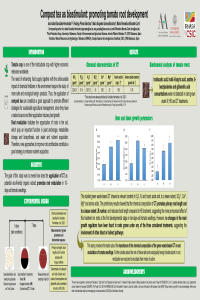
In the coming years, the application of biostimulants in agriculture will become a fundamental tool for reducing chemical fertilization, increasing the efficiency of soils and crops to face up to climate change conditions, as well as for the recovery of soils. Following this context, we have evaluated the effect of garden waste compost tea (CT) in a ratio of 1: 5 (v/v) with water on root morphology of tomato var. Tres Cantos plants. The studied CT showed a relevant content in K2O, N, humic acids and, to a lesser extent, amino acids. Three treatments were proposed: water, optimal tomato Hoagland solution and compost tea, which were axenically prepared. The tomato seeds were sterilized, germinated and then transferred to the considered treatments contained in Petri dishes, where plants were grown for seven days. Then, root growth parameters were measured and it was observed that CT induces the growth of the main root, as well as the number of lateral roots. Moreover, indolacetic acid, indol-3-butyric acid, zeatine, 6-benzyladenine and gibberellic acid were measured, but no changes were observed between treatments. Thus, other direct or indirect pathways seem to be involved in CT-mediated tomato root modulation.
Keywords
Solanum lycopersicum
compost tea
root development.
Manuscript
sciforum-054613-done.pdf
Poster
Poster.pdf
Alternative flooding management as environmental mitigation solution for rice cultivation in Italy. The BESTsomRICE project
Screening and assessment of microbial isolates of bulk soil and vegetable samples from north-eastern Poland for their potential plant growth promoting traits