Event submissions
Events1st International Online Conference on Agriculture - Advances in Agricultural Science and Technology
Published

This submission belongs to the session 14. Poster Session of the event 1st International Online Conference on Agriculture - Advances in Agricultural Science and Technology
Published date
10 Feb, 2022
Academic Editor
'%3e%3cpath%20d='M12.6657%2010.9104C12.4185%2010.325%2012.0599%209.79327%2011.6097%209.34482C11.1609%208.89508%2010.6293%208.5365%2010.0442%208.28888C10.0389%208.28626%2010.0337%208.28495%2010.0285%208.28233C10.8446%207.69279%2011.3752%206.73249%2011.3752%205.64904C11.3752%203.8542%209.92103%202.39999%208.1262%202.39999C6.33136%202.39999%204.87715%203.8542%204.87715%205.64904C4.87715%206.73249%205.40774%207.69279%206.22393%208.28364C6.21869%208.28626%206.21345%208.28757%206.20821%208.29019C5.62129%208.5378%205.09463%208.89284%204.64265%209.34613C4.1929%209.79493%203.83432%2010.3266%203.58671%2010.9117C3.34345%2011.4845%203.21226%2012.0987%203.20023%2012.7209C3.19988%2012.7349%203.20233%2012.7488%203.20744%2012.7619C3.21255%2012.7749%203.22022%2012.7867%203.22998%2012.7968C3.23975%2012.8068%203.25142%2012.8147%203.26431%2012.8202C3.2772%2012.8256%203.29105%2012.8284%203.30504%2012.8284H4.09109C4.14874%2012.8284%204.19459%2012.7825%204.1959%2012.7262C4.2221%2011.7148%204.62823%2010.7676%205.34617%2010.0497C6.08899%209.30683%207.0755%208.89808%208.1262%208.89808C9.17689%208.89808%2010.1634%209.30683%2010.9062%2010.0497C11.6242%2010.7676%2012.0303%2011.7148%2012.0565%2012.7262C12.0578%2012.7838%2012.1037%2012.8284%2012.1613%2012.8284H12.9474C12.9613%2012.8284%2012.9752%2012.8256%2012.9881%2012.8202C13.001%2012.8147%2013.0126%2012.8068%2013.0224%2012.7968C13.0322%2012.7867%2013.0398%2012.7749%2013.0449%2012.7619C13.0501%2012.7488%2013.0525%2012.7349%2013.0522%2012.7209C13.0391%2012.0947%2012.9094%2011.4855%2012.6657%2010.9104ZM8.1262%207.9024C7.52486%207.9024%206.9589%207.6679%206.53312%207.24211C6.10733%206.81633%205.87283%206.25037%205.87283%205.64904C5.87283%205.0477%206.10733%204.48174%206.53312%204.05596C6.9589%203.63018%207.52486%203.39567%208.1262%203.39567C8.72753%203.39567%209.29349%203.63018%209.71927%204.05596C10.1451%204.48174%2010.3796%205.0477%2010.3796%205.64904C10.3796%206.25037%2010.1451%206.81633%209.71927%207.24211C9.29349%207.6679%208.72753%207.9024%208.1262%207.9024Z'%20fill='%235D1EE1'/%3e%3c/g%3e%3c/svg%3e) Bin Gao
Bin GaoCitation
Nara Bueno-Ramos, Ana Isabel González-Hernández, Emilio L. Marcos-Barbero, Jon Miranda-Apodaca, Ouardia Bendou, Ismael Gutiérrez-Fernández, Juan B. Arellano, Rosa Morcuende, IMPACT OF WATER DEFICIT ON PRIMARY METABOLISM AT THE WHOLE PLANT LEVEL IN BREAD WHEAT GROWN UNDER ELEVATED CO₂ AND HIGH TEMPERATURE AT DIFFERENT DEVELOPMENTAL STAGES, in Proceedings of 1st International Online Conference on Agriculture - Advances in Agricultural Science and Technology, 10 February–25 February 2022, MDPI: Basel, Switzerland, doi: 10.3390/IOCAG2022-12232
Share
Email
Facebook
Twitter
LinkedIn
IMPACT OF WATER DEFICIT ON PRIMARY METABOLISM AT THE WHOLE PLANT LEVEL IN BREAD WHEAT GROWN UNDER ELEVATED CO2 AND HIGH TEMPERATURE AT DIFFERENT DEVELOPMENTAL STAGES

Nara Bueno-Ramos 1
'%3e%3cpath%20d='M12.6647%2010.9104C12.4176%2010.325%2012.0589%209.7933%2011.6088%209.34485C11.16%208.89511%2010.6283%208.53653%2010.0432%208.28891C10.038%208.28629%2010.0327%208.28498%2010.0275%208.28236C10.8437%207.69282%2011.3743%206.73252%2011.3743%205.64907C11.3743%203.85423%209.92005%202.40002%208.12522%202.40002C6.33038%202.40002%204.87618%203.85423%204.87618%205.64907C4.87618%206.73252%205.40677%207.69282%206.22296%208.28367C6.21772%208.28629%206.21248%208.2876%206.20724%208.29022C5.62031%208.53783%205.09365%208.89287%204.64167%209.34616C4.19192%209.79496%203.83334%2010.3266%203.58573%2010.9117C3.34247%2011.4846%203.21128%2012.0987%203.19925%2012.721C3.1989%2012.735%203.20135%2012.7489%203.20646%2012.7619C3.21157%2012.7749%203.21924%2012.7868%203.22901%2012.7968C3.23877%2012.8068%203.25045%2012.8148%203.26334%2012.8202C3.27623%2012.8256%203.29007%2012.8284%203.30406%2012.8284H4.09012C4.14776%2012.8284%204.19362%2012.7825%204.19493%2012.7262C4.22113%2011.7148%204.62726%2010.7676%205.34519%2010.0497C6.08802%209.30686%207.07452%208.89811%208.12522%208.89811C9.17592%208.89811%2010.1624%209.30686%2010.9052%2010.0497C11.6232%2010.7676%2012.0293%2011.7148%2012.0555%2012.7262C12.0568%2012.7839%2012.1027%2012.8284%2012.1603%2012.8284H12.9464C12.9604%2012.8284%2012.9742%2012.8256%2012.9871%2012.8202C13%2012.8148%2013.0117%2012.8068%2013.0214%2012.7968C13.0312%2012.7868%2013.0389%2012.7749%2013.044%2012.7619C13.0491%2012.7489%2013.0515%2012.735%2013.0512%2012.721C13.0381%2012.0947%2012.9084%2011.4856%2012.6647%2010.9104ZM8.12522%207.90243C7.52388%207.90243%206.95792%207.66793%206.53214%207.24215C6.10636%206.81636%205.87185%206.2504%205.87185%205.64907C5.87185%205.04773%206.10636%204.48177%206.53214%204.05599C6.95792%203.63021%207.52388%203.3957%208.12522%203.3957C8.72655%203.3957%209.29252%203.63021%209.7183%204.05599C10.1441%204.48177%2010.3786%205.04773%2010.3786%205.64907C10.3786%206.2504%2010.1441%206.81636%209.7183%207.24215C9.29252%207.66793%208.72655%207.90243%208.12522%207.90243Z'%20fill='%235D1EE1'/%3e%3c/g%3e%3c/svg%3e)
Ana Isabel González-Hernández 1
Emilio L. Marcos-Barbero 1
Jon Miranda-Apodaca 1,2
Ouardia Bendou 1
Ismael Gutiérrez-Fernández 1

Juan B. Arellano 1
Rosa Morcuende 1
1. Institute of Natural Resources and Agrobiology of Salamanca (IRNASA), Consejo Superior de Investigaciones Científicas (CSIC), 37008 Salamanca, Spain
2. Departamento de Biología Vegetal y Ecología, Facultad de Ciencia y Tecnología, Universidad del País Vasco, UPV/EHU, Apdo. 644, E-48080, Bilbao, Spain
Abstract
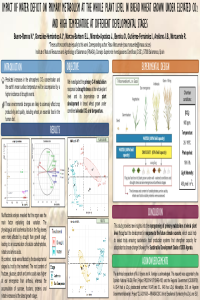
Predicted increases in the atmospheric CO2 concentration and the earth's mean surface temperature will be accompanied by a higher incidence of drought events. These environmental changes are likely to adversely affect crop productivity and quality, including wheat, an essential food in the human diet. We investigated the primary C-N metabolism response to drought stress at the whole-plant level and its dependence on plant development in bread wheat grown under combined elevated CO2 and temperature. With this aim, the content of carbohydrates, nitrate, proteins and amino acids, together with the biomass were assessed in flag leaves and roots of wheat grown in controlled environment chambers at both ear emergence and anthesis stages. Multifactorial analysis revealed that the organ was the main factor explaining data variation. The physiological and biochemical traits in the flag leaves were more affected by drought than growth stage, leading to an accumulation of soluble carbohydrates, nitrate and amino acids. By contrast, roots were affected by the developmental stages but not by the treatment. The root content of fructose, glucose, starch and amino acids was higher at ear emergence than anthesis, whereas the accumulation of sucrose, fructans, proteins and nitrate increased at the latest growth stage. This study provides new insights into the reprograming of primary metabolism at whole plant level throughout the development in response to the future climate scenario, which could help to select traits ensuring sustainable food production systems that strengthen capacity for adaptation to climate change following the Sustainable Development Goals of 2030 Agenda.
Keywords
wheat
climate change
drought
C and N metabolisms
Manuscript
sciforum-054408-done.pdf
Poster
Poster SCIFORUM.pdf
Assessment of total phenolic and total flavonoid contents and their correlation with some physicochemical parameters of monofloral Romanian honey
A Context-Aware Method Based Cattle Vocal Classification for Livestock Monitoring in Smart Farm