Event submissions
Published
 10.3390/IECB2022-12279 (registering DOI)
 This submission belongs to the session G. Young Scientists Session of the event The 2nd International Electronic Conference on Biosensors
Published date
15 Feb, 2022
Academic Editor
'%3e%3cpath%20d='M12.6657%2010.9104C12.4185%2010.325%2012.0599%209.79327%2011.6097%209.34482C11.1609%208.89508%2010.6293%208.5365%2010.0442%208.28888C10.0389%208.28626%2010.0337%208.28495%2010.0285%208.28233C10.8446%207.69279%2011.3752%206.73249%2011.3752%205.64904C11.3752%203.8542%209.92103%202.39999%208.1262%202.39999C6.33136%202.39999%204.87715%203.8542%204.87715%205.64904C4.87715%206.73249%205.40774%207.69279%206.22393%208.28364C6.21869%208.28626%206.21345%208.28757%206.20821%208.29019C5.62129%208.5378%205.09463%208.89284%204.64265%209.34613C4.1929%209.79493%203.83432%2010.3266%203.58671%2010.9117C3.34345%2011.4845%203.21226%2012.0987%203.20023%2012.7209C3.19988%2012.7349%203.20233%2012.7488%203.20744%2012.7619C3.21255%2012.7749%203.22022%2012.7867%203.22998%2012.7968C3.23975%2012.8068%203.25142%2012.8147%203.26431%2012.8202C3.2772%2012.8256%203.29105%2012.8284%203.30504%2012.8284H4.09109C4.14874%2012.8284%204.19459%2012.7825%204.1959%2012.7262C4.2221%2011.7148%204.62823%2010.7676%205.34617%2010.0497C6.08899%209.30683%207.0755%208.89808%208.1262%208.89808C9.17689%208.89808%2010.1634%209.30683%2010.9062%2010.0497C11.6242%2010.7676%2012.0303%2011.7148%2012.0565%2012.7262C12.0578%2012.7838%2012.1037%2012.8284%2012.1613%2012.8284H12.9474C12.9613%2012.8284%2012.9752%2012.8256%2012.9881%2012.8202C13.001%2012.8147%2013.0126%2012.8068%2013.0224%2012.7968C13.0322%2012.7867%2013.0398%2012.7749%2013.0449%2012.7619C13.0501%2012.7488%2013.0525%2012.7349%2013.0522%2012.7209C13.0391%2012.0947%2012.9094%2011.4855%2012.6657%2010.9104ZM8.1262%207.9024C7.52486%207.9024%206.9589%207.6679%206.53312%207.24211C6.10733%206.81633%205.87283%206.25037%205.87283%205.64904C5.87283%205.0477%206.10733%204.48174%206.53312%204.05596C6.9589%203.63018%207.52486%203.39567%208.1262%203.39567C8.72753%203.39567%209.29349%203.63018%209.71927%204.05596C10.1451%204.48174%2010.3796%205.0477%2010.3796%205.64904C10.3796%206.25037%2010.1451%206.81633%209.71927%207.24211C9.29349%207.6679%208.72753%207.9024%208.1262%207.9024Z'%20fill='%235D1EE1'/%3e%3c/g%3e%3c/svg%3e) Sara Tombelli
Sara TombelliCitation
Ana-Maria Drăgan, Marc Parrilla, Amorn Slosse, Filip Van Durme, Cecilia Cristea, Radu Oprean, Karolien De Wael, Elucidation of the Electrochemical Behavior of Methamphetamine for Its Detection in Confiscated Samples Using a Portable Device, in Proceedings of The 2nd International Electronic Conference on Biosensors, 14 February–18 February 2022, MDPI: Basel, Switzerland, doi: 10.3390/IECB2022-12279
Share
Email
Facebook
Twitter
LinkedIn
Elucidation of the Electrochemical Behavior of Methamphetamine for Its Detection in Confiscated Samples Using a Portable Device
'%3e%3cpath%20d='M12.6647%2010.9104C12.4176%2010.325%2012.0589%209.7933%2011.6088%209.34485C11.16%208.89511%2010.6283%208.53653%2010.0432%208.28891C10.038%208.28629%2010.0327%208.28498%2010.0275%208.28236C10.8437%207.69282%2011.3743%206.73252%2011.3743%205.64907C11.3743%203.85423%209.92005%202.40002%208.12522%202.40002C6.33038%202.40002%204.87618%203.85423%204.87618%205.64907C4.87618%206.73252%205.40677%207.69282%206.22296%208.28367C6.21772%208.28629%206.21248%208.2876%206.20724%208.29022C5.62031%208.53783%205.09365%208.89287%204.64167%209.34616C4.19192%209.79496%203.83334%2010.3266%203.58573%2010.9117C3.34247%2011.4846%203.21128%2012.0987%203.19925%2012.721C3.1989%2012.735%203.20135%2012.7489%203.20646%2012.7619C3.21157%2012.7749%203.21924%2012.7868%203.22901%2012.7968C3.23877%2012.8068%203.25045%2012.8148%203.26334%2012.8202C3.27623%2012.8256%203.29007%2012.8284%203.30406%2012.8284H4.09012C4.14776%2012.8284%204.19362%2012.7825%204.19493%2012.7262C4.22113%2011.7148%204.62726%2010.7676%205.34519%2010.0497C6.08802%209.30686%207.07452%208.89811%208.12522%208.89811C9.17592%208.89811%2010.1624%209.30686%2010.9052%2010.0497C11.6232%2010.7676%2012.0293%2011.7148%2012.0555%2012.7262C12.0568%2012.7839%2012.1027%2012.8284%2012.1603%2012.8284H12.9464C12.9604%2012.8284%2012.9742%2012.8256%2012.9871%2012.8202C13%2012.8148%2013.0117%2012.8068%2013.0214%2012.7968C13.0312%2012.7868%2013.0389%2012.7749%2013.044%2012.7619C13.0491%2012.7489%2013.0515%2012.735%2013.0512%2012.721C13.0381%2012.0947%2012.9084%2011.4856%2012.6647%2010.9104ZM8.12522%207.90243C7.52388%207.90243%206.95792%207.66793%206.53214%207.24215C6.10636%206.81636%205.87185%206.2504%205.87185%205.64907C5.87185%205.04773%206.10636%204.48177%206.53214%204.05599C6.95792%203.63021%207.52388%203.3957%208.12522%203.3957C8.72655%203.3957%209.29252%203.63021%209.7183%204.05599C10.1441%204.48177%2010.3786%205.04773%2010.3786%205.64907C10.3786%206.2504%2010.1441%206.81636%209.7183%207.24215C9.29252%207.66793%208.72655%207.90243%208.12522%207.90243Z'%20fill='%235D1EE1'/%3e%3c/g%3e%3c/svg%3e)
Ana-Maria Drăgan 1,2

Marc Parrilla 2,3
Amorn Slosse 4
Filip Van Durme 4

Cecilia Cristea 1
Radu Oprean 1
Karolien De Wael 2,3
1. ‘Iuliu Hatieganu’ University of Medicine and Pharmacy Cluj-Napoca, Pasteur 6, Cluj-Napoca, Romania
2. A-Sens Lab, University of Antwerp, Groenenborgerlaan 171, 2010 Antwerp, Belgium
3. NANOlab Center of Excellence, University of Antwerp, Groenenborgerlaan 171, 2010 Antwerp, Belgium
4. Drugs and Toxicology Department, National Institute for Criminalistics and Criminology (NICC), Vilvoordsesteenweg 100, 1120, Brussels, Belgium
Abstract
Methamphetamine (MA) is a synthetic psychoactive drug with medical applicability, being prescribed for Attention-Deficit and Hyperactivity Disorder and short-term treatment of obesity. Most frequently though, it is abused for various effects such as euphoria, the stimulation of the reward centers, and hallucinations. This behavior is illustrated by the increased spread and abuse of MA, which had the largest increase in quantities seized in the last decade1. Therefore, analytical tools for the screening of suspected cargos by law enforcement agencies play an important role in the disruption of the illegal distribution of MA. Hence, the present study took advantage of the highly sensitive and accurate detection provided by the electrochemical techniques2,3, aiming for the detection of MA in confiscated samples using a portable device. In this regard, the electrochemical behavior of MA was investigated by means of square wave voltammetry on disposable graphite screen-printed electrodes. Firstly, the analytical characterization of the method was performed, exhibiting a LOD of 66.4 µM. Interestingly, two potential zones were identified for MA detection, depending on its concentration level. Thereafter, the selectivity of the method towards MA in mixtures with other drugs of abuse as well as common adulterants/cutting agents was evaluated. Finally, the described method was employed for the screening of confiscated samples with 100% true positive results, displaying its potential as a fast and easy to use method for on-site analysis.
Acknowledgements: This project was supported by a PhD Research Project no. PCD 1033/21/January 13, 2021, offered by “Iuliu Hatieganu” University of Medicine and Pharmacy, Cluj–Napoca, Romania.
References:
- European Drug Report 2021: Trends and Developments (DOI: 10.2810/18539).
- Dragan A-M, et al. Front Chem (DOI: 10.3389/fchem.2021.641147).
- Parrilla M, et al. Sens Actuators B Chem (DOI: 10.1016/j.snb.2021.129819).
Keywords
electrochemical analysis
methamphetamine
confiscated samples
forensic analysis.
Manuscript
Poster_IECB 2022_Ana-Maria Dragan.pdf
Poster
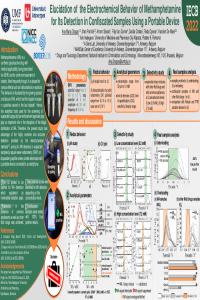
Poster_IECB 2022_Ana-Maria Dragan.pdf
Acetone-sensitive thin films of poly(vinyl alcohol)-g-poly(methyl acrylate) – properties and perspectives in optical detection of acetone in exhaled human breath
Biosensor for Electrochemical Detection of Amphetamine in Street Samples Using an innovative nanoMIPs-based Sensor