Event submissions
Published
 10.3390/IECD2022-12354 (registering DOI)
 This submission belongs to the session A. Animals Diversity of the event The 2nd International Electronic Conference on Diversity
Published date
14 Mar, 2022
Academic Editor
'%3e%3cpath%20d='M12.6657%2010.9104C12.4185%2010.325%2012.0599%209.79327%2011.6097%209.34482C11.1609%208.89508%2010.6293%208.5365%2010.0442%208.28888C10.0389%208.28626%2010.0337%208.28495%2010.0285%208.28233C10.8446%207.69279%2011.3752%206.73249%2011.3752%205.64904C11.3752%203.8542%209.92103%202.39999%208.1262%202.39999C6.33136%202.39999%204.87715%203.8542%204.87715%205.64904C4.87715%206.73249%205.40774%207.69279%206.22393%208.28364C6.21869%208.28626%206.21345%208.28757%206.20821%208.29019C5.62129%208.5378%205.09463%208.89284%204.64265%209.34613C4.1929%209.79493%203.83432%2010.3266%203.58671%2010.9117C3.34345%2011.4845%203.21226%2012.0987%203.20023%2012.7209C3.19988%2012.7349%203.20233%2012.7488%203.20744%2012.7619C3.21255%2012.7749%203.22022%2012.7867%203.22998%2012.7968C3.23975%2012.8068%203.25142%2012.8147%203.26431%2012.8202C3.2772%2012.8256%203.29105%2012.8284%203.30504%2012.8284H4.09109C4.14874%2012.8284%204.19459%2012.7825%204.1959%2012.7262C4.2221%2011.7148%204.62823%2010.7676%205.34617%2010.0497C6.08899%209.30683%207.0755%208.89808%208.1262%208.89808C9.17689%208.89808%2010.1634%209.30683%2010.9062%2010.0497C11.6242%2010.7676%2012.0303%2011.7148%2012.0565%2012.7262C12.0578%2012.7838%2012.1037%2012.8284%2012.1613%2012.8284H12.9474C12.9613%2012.8284%2012.9752%2012.8256%2012.9881%2012.8202C13.001%2012.8147%2013.0126%2012.8068%2013.0224%2012.7968C13.0322%2012.7867%2013.0398%2012.7749%2013.0449%2012.7619C13.0501%2012.7488%2013.0525%2012.7349%2013.0522%2012.7209C13.0391%2012.0947%2012.9094%2011.4855%2012.6657%2010.9104ZM8.1262%207.9024C7.52486%207.9024%206.9589%207.6679%206.53312%207.24211C6.10733%206.81633%205.87283%206.25037%205.87283%205.64904C5.87283%205.0477%206.10733%204.48174%206.53312%204.05596C6.9589%203.63018%207.52486%203.39567%208.1262%203.39567C8.72753%203.39567%209.29349%203.63018%209.71927%204.05596C10.1451%204.48174%2010.3796%205.0477%2010.3796%205.64904C10.3796%206.25037%2010.1451%206.81633%209.71927%207.24211C9.29349%207.6679%208.72753%207.9024%208.1262%207.9024Z'%20fill='%235D1EE1'/%3e%3c/g%3e%3c/svg%3e) Matthieu Chauvat
Matthieu ChauvatCitation
Nerivania Nunes Godeiro, Yinhuan Ding, Bruno Cavalcante Bellini, Nikolas Gioia Cipola, Sopark Jantarit, Feng Zhang, A genome-scale phylogeny of the superfamily Entomobryoidea (Entomobryomorpha: Collembola), in Proceedings of The 2nd International Electronic Conference on Diversity, 15 March–31 March 2022, MDPI: Basel, Switzerland, doi: 10.3390/IECD2022-12354
Share
Email
Facebook
Twitter
LinkedIn
A genome-scale phylogeny of the superfamily Entomobryoidea (Entomobryomorpha: Collembola)

Nerivania Nunes Godeiro 1
'%3e%3cpath%20d='M12.6647%2010.9104C12.4176%2010.325%2012.0589%209.7933%2011.6088%209.34485C11.16%208.89511%2010.6283%208.53653%2010.0432%208.28891C10.038%208.28629%2010.0327%208.28498%2010.0275%208.28236C10.8437%207.69282%2011.3743%206.73252%2011.3743%205.64907C11.3743%203.85423%209.92005%202.40002%208.12522%202.40002C6.33038%202.40002%204.87618%203.85423%204.87618%205.64907C4.87618%206.73252%205.40677%207.69282%206.22296%208.28367C6.21772%208.28629%206.21248%208.2876%206.20724%208.29022C5.62031%208.53783%205.09365%208.89287%204.64167%209.34616C4.19192%209.79496%203.83334%2010.3266%203.58573%2010.9117C3.34247%2011.4846%203.21128%2012.0987%203.19925%2012.721C3.1989%2012.735%203.20135%2012.7489%203.20646%2012.7619C3.21157%2012.7749%203.21924%2012.7868%203.22901%2012.7968C3.23877%2012.8068%203.25045%2012.8148%203.26334%2012.8202C3.27623%2012.8256%203.29007%2012.8284%203.30406%2012.8284H4.09012C4.14776%2012.8284%204.19362%2012.7825%204.19493%2012.7262C4.22113%2011.7148%204.62726%2010.7676%205.34519%2010.0497C6.08802%209.30686%207.07452%208.89811%208.12522%208.89811C9.17592%208.89811%2010.1624%209.30686%2010.9052%2010.0497C11.6232%2010.7676%2012.0293%2011.7148%2012.0555%2012.7262C12.0568%2012.7839%2012.1027%2012.8284%2012.1603%2012.8284H12.9464C12.9604%2012.8284%2012.9742%2012.8256%2012.9871%2012.8202C13%2012.8148%2013.0117%2012.8068%2013.0214%2012.7968C13.0312%2012.7868%2013.0389%2012.7749%2013.044%2012.7619C13.0491%2012.7489%2013.0515%2012.735%2013.0512%2012.721C13.0381%2012.0947%2012.9084%2011.4856%2012.6647%2010.9104ZM8.12522%207.90243C7.52388%207.90243%206.95792%207.66793%206.53214%207.24215C6.10636%206.81636%205.87185%206.2504%205.87185%205.64907C5.87185%205.04773%206.10636%204.48177%206.53214%204.05599C6.95792%203.63021%207.52388%203.3957%208.12522%203.3957C8.72655%203.3957%209.29252%203.63021%209.7183%204.05599C10.1441%204.48177%2010.3786%205.04773%2010.3786%205.64907C10.3786%206.2504%2010.1441%206.81636%209.7183%207.24215C9.29252%207.66793%208.72655%207.90243%208.12522%207.90243Z'%20fill='%235D1EE1'/%3e%3c/g%3e%3c/svg%3e)
Yinhuan Ding 2

Bruno Cavalcante Bellini 3
Nikolas Gioia Cipola 4
Sopark Jantarit 5
Feng Zhang 2
1. Shanghai Natural History Museum
2. Nanjing Agricultural University
3. Universidade Federal do Rio Grande do Norte
4. Instituto Nacional de Pesquisas da Amazônia
5. Prince of Songkla University
Abstract
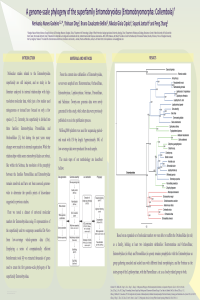
The superfamily Entomobryoidea has been the focus of molecular studies in recent years due to an intriguing divergence between morphological and genetic data. Recent studies have converged on a result that suggests the non-monophyly of the traditional Paronellidae and Entomobryidae. The most recent phylogeny proposed was based on mitogenomes and resulted in the monophyly of Orchesellidae, the basal Entomobryoidea, and non-monophyly of Paronellidae and Entomobryidae. To verify the accuracy of the phylogenetic signal of mitochondrial data, we reanalyzed some of the raw published data and newly sequenced species of Entomobryoidea to create phylogenetic independent matrices containing single-copy nuclear genes (USCOs) and ultraconserved elements (UCEs). All assemblies, gene extractions, and annotations were made using WGS-based pipelines available online. A USCO and UCE capture for the Entomobryoidea group previously designed was successfully tested with our data. Maximum likelihood analyses under different models using a matrix of 85% completeness were used to define the most reliable phylogenetic tree. Bayesian analyses, species-tree based on individual gene-trees, and divergence estimation time were performed as well. Our results corroborated with previous phylogenies and we recovered the Orchesellidae as an independent basal family, with the unscaled taxa (the Orchesellinae s. lat.) as the sister group of the scaled Heteromurinae; the Entomobryinae remained the most puzzling taxon gathering scaled and unscaled lineages of both traditional Entomobryidae and Paronellidae; and the Seirinae resulted in the sister-group of the Lepidocyrtinae. The sampled representatives of Paronellinae s. str. (Cyphoderus and Troglopedetes) were recovered as the sister group of Seirinae+Lepidocyrtinae, supporting their reduction on the dorsal macrochaetotaxy and trunk sensillar pattern occurred independently from the Lepidocyrtinae. All the main events of cladogenesis of the families and subfamilies of Entomobryoidea occurred during the Jurassic, with the split of the Orchesellidae from the derived Entomobryoidea; the separation of the Entomobryinae from the other taxa; and the posterior splits of the Paronellinae s. str., Lepidocyrtinae and Seirinae.
Keywords
Whole-genome assembly
low-coverage data
soil fauna
Paronellidae
Entomobryidae
Manuscript
sciforum-055749-publish.pdf
Poster
Poster.pdf
The species composition of microorganisms of the Triticum aestivum L., 1753
Conservation strategies of the culinary-medicinal mushroom Pleurotus nebrodensis (Basidiomycota, Fungi)