Event submissions
Published

This submission belongs to the session S5. Nutrition and Oxidative Stress of the event The 2nd International Electronic Conference on Nutrients
Published date
14 Mar, 2022
Academic Editor
'%3e%3cpath%20d='M12.6657%2010.9104C12.4185%2010.325%2012.0599%209.79327%2011.6097%209.34482C11.1609%208.89508%2010.6293%208.5365%2010.0442%208.28888C10.0389%208.28626%2010.0337%208.28495%2010.0285%208.28233C10.8446%207.69279%2011.3752%206.73249%2011.3752%205.64904C11.3752%203.8542%209.92103%202.39999%208.1262%202.39999C6.33136%202.39999%204.87715%203.8542%204.87715%205.64904C4.87715%206.73249%205.40774%207.69279%206.22393%208.28364C6.21869%208.28626%206.21345%208.28757%206.20821%208.29019C5.62129%208.5378%205.09463%208.89284%204.64265%209.34613C4.1929%209.79493%203.83432%2010.3266%203.58671%2010.9117C3.34345%2011.4845%203.21226%2012.0987%203.20023%2012.7209C3.19988%2012.7349%203.20233%2012.7488%203.20744%2012.7619C3.21255%2012.7749%203.22022%2012.7867%203.22998%2012.7968C3.23975%2012.8068%203.25142%2012.8147%203.26431%2012.8202C3.2772%2012.8256%203.29105%2012.8284%203.30504%2012.8284H4.09109C4.14874%2012.8284%204.19459%2012.7825%204.1959%2012.7262C4.2221%2011.7148%204.62823%2010.7676%205.34617%2010.0497C6.08899%209.30683%207.0755%208.89808%208.1262%208.89808C9.17689%208.89808%2010.1634%209.30683%2010.9062%2010.0497C11.6242%2010.7676%2012.0303%2011.7148%2012.0565%2012.7262C12.0578%2012.7838%2012.1037%2012.8284%2012.1613%2012.8284H12.9474C12.9613%2012.8284%2012.9752%2012.8256%2012.9881%2012.8202C13.001%2012.8147%2013.0126%2012.8068%2013.0224%2012.7968C13.0322%2012.7867%2013.0398%2012.7749%2013.0449%2012.7619C13.0501%2012.7488%2013.0525%2012.7349%2013.0522%2012.7209C13.0391%2012.0947%2012.9094%2011.4855%2012.6657%2010.9104ZM8.1262%207.9024C7.52486%207.9024%206.9589%207.6679%206.53312%207.24211C6.10733%206.81633%205.87283%206.25037%205.87283%205.64904C5.87283%205.0477%206.10733%204.48174%206.53312%204.05596C6.9589%203.63018%207.52486%203.39567%208.1262%203.39567C8.72753%203.39567%209.29349%203.63018%209.71927%204.05596C10.1451%204.48174%2010.3796%205.0477%2010.3796%205.64904C10.3796%206.25037%2010.1451%206.81633%209.71927%207.24211C9.29349%207.6679%208.72753%207.9024%208.1262%207.9024Z'%20fill='%235D1EE1'/%3e%3c/g%3e%3c/svg%3e) Torsten Bohn
Torsten BohnCitation
Daria Masztalerz-Kozubek, Monika A. Zielinska-Pukos, Jadwiga Hamulka, Fruits and Vegetables as Sources of Carotenoids in Complementary Feeding, in Proceedings of The 2nd International Electronic Conference on Nutrients, 15 March–31 March 2022, MDPI: Basel, Switzerland, doi: 10.3390/IECN2022-12390
Share
Email
Facebook
Twitter
LinkedIn
Fruits and Vegetables as Sources of Carotenoids in Complementary Feeding
'%3e%3cpath%20d='M12.6647%2010.9104C12.4176%2010.325%2012.0589%209.7933%2011.6088%209.34485C11.16%208.89511%2010.6283%208.53653%2010.0432%208.28891C10.038%208.28629%2010.0327%208.28498%2010.0275%208.28236C10.8437%207.69282%2011.3743%206.73252%2011.3743%205.64907C11.3743%203.85423%209.92005%202.40002%208.12522%202.40002C6.33038%202.40002%204.87618%203.85423%204.87618%205.64907C4.87618%206.73252%205.40677%207.69282%206.22296%208.28367C6.21772%208.28629%206.21248%208.2876%206.20724%208.29022C5.62031%208.53783%205.09365%208.89287%204.64167%209.34616C4.19192%209.79496%203.83334%2010.3266%203.58573%2010.9117C3.34247%2011.4846%203.21128%2012.0987%203.19925%2012.721C3.1989%2012.735%203.20135%2012.7489%203.20646%2012.7619C3.21157%2012.7749%203.21924%2012.7868%203.22901%2012.7968C3.23877%2012.8068%203.25045%2012.8148%203.26334%2012.8202C3.27623%2012.8256%203.29007%2012.8284%203.30406%2012.8284H4.09012C4.14776%2012.8284%204.19362%2012.7825%204.19493%2012.7262C4.22113%2011.7148%204.62726%2010.7676%205.34519%2010.0497C6.08802%209.30686%207.07452%208.89811%208.12522%208.89811C9.17592%208.89811%2010.1624%209.30686%2010.9052%2010.0497C11.6232%2010.7676%2012.0293%2011.7148%2012.0555%2012.7262C12.0568%2012.7839%2012.1027%2012.8284%2012.1603%2012.8284H12.9464C12.9604%2012.8284%2012.9742%2012.8256%2012.9871%2012.8202C13%2012.8148%2013.0117%2012.8068%2013.0214%2012.7968C13.0312%2012.7868%2013.0389%2012.7749%2013.044%2012.7619C13.0491%2012.7489%2013.0515%2012.735%2013.0512%2012.721C13.0381%2012.0947%2012.9084%2011.4856%2012.6647%2010.9104ZM8.12522%207.90243C7.52388%207.90243%206.95792%207.66793%206.53214%207.24215C6.10636%206.81636%205.87185%206.2504%205.87185%205.64907C5.87185%205.04773%206.10636%204.48177%206.53214%204.05599C6.95792%203.63021%207.52388%203.3957%208.12522%203.3957C8.72655%203.3957%209.29252%203.63021%209.7183%204.05599C10.1441%204.48177%2010.3786%205.04773%2010.3786%205.64907C10.3786%206.2504%2010.1441%206.81636%209.7183%207.24215C9.29252%207.66793%208.72655%207.90243%208.12522%207.90243Z'%20fill='%235D1EE1'/%3e%3c/g%3e%3c/svg%3e)
Daria Masztalerz-Kozubek 1

Monika A. Zielinska-Pukos 1

Jadwiga Hamulka 1
1. Department of Human Nutrition, Institute of Human Nutrition Sciences, Warsaw University of Life Sciences (SGGW-WULS)
Abstract
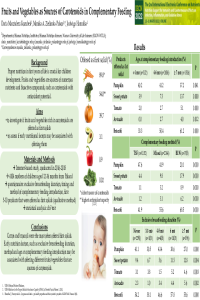
Introduction: Fruits and vegetables are sources of numerous nutrients and bioactive compounds. One of them are carotenoids with antioxidant potential, particularly abundant in yellow-orange, red and dark green fruits and vegetables.
Aim: The aims of this study were: (1) to investigate if fruits and vegetables rich in carotenoids are offered as first solids; (2) to assess if early nutritional factors, such as exclusive breastfeeding duration (EBF), timing (CFI) and method (CFM) of complementary feeding introduction may be associated with offering them.
Methods: This internet-based study was conducted in 2016-2018 among 4104 mothers of children aged 12-36 months, recruited through social media in Poland. Mothers were asked about EBF, CFI, CFM as well as first 5-10 products that were given to their infants as first solids. Data on the consumption of the first products were collected using the qualitative method.
Results: The majority of children was introduced to complementary feeding at 4-6 months (60.6%). The most often offered vegetables/fruits were carrot (89.8%), broccoli (54.0%) and pumpkin (39.7%), whereas avocado (3.1%), pepper (0.9%) and kale (0.02%) were rarely used as first weaning products. EBF, CFI and CFM were associated with offering pumpkin (p<0.001; p<0.05; p<0.001), sweet potato (p<0.01; p<0.001; p<0.001), tomato (p<0.01; p<0.001; p<0.001), avocado (p<0.01; p<0.05; p<0.001) and broccoli (p<0.001) as first vegetables/fruits. In a group with CFI ≥7 months, sweet potato (13.7%), tomato (5.1%), avocado (4.0%) and broccoli (61.2%) were more often offered as first vegetables/fruits than in a group with CFI at 4-6 months (7.5%, 2.7%, 2.7%, 50.4%; respectively) or CFI <4 months (3.9%, p<0.001; 2.0%, p<0.001; 0.0%, p<0.05; 33.3%, p<0.001; respectively).
Conclusions: Early nutrition may be a factor associated with offering different foods during weaning. Carrot and broccoli were the most often offered solids. According to the literature [1,2,3] carrot is the richest source of carotenoids, whereas broccoli has the highest antioxidant capacity.
- USDA National Nutrient Database
- USDA Database for the Oxygen Radical Absorbance Capacity (ORAC) of Selected Foods, Release 2, 2010
- Hamułka J., Wawrzyniak A.: Lycopene and lutein - pro-health properties and their content in products. SGGW Publ. Warsaw 2004.
Keywords
carotenoids
antioxidants
breastfeeding
complementary feeding
Manuscript
2 sciforum-056865-done.pdf
Poster
Poster _Fruits and Vegetables as Sources of Carotenoids in Complementary Feeding.pdf
Development of a UPLC-Q-ToF-MS method for the determination of sulforaphane and iberin in cruciferous vegetables
Comparing keywords associated with obesity before and after the COVID-19 pandemic using topic modeling: Analyzing the news big data of South Korea